Skip to main content
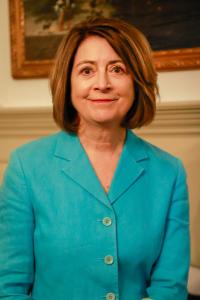
Ann Marie Stock
Presidential Liaison for Strategic Cultural Partnerships, Chancellor Professor of Modern Languages & Literatures
Office:
The Brafferton
Phone:
(757) 221-1975
Email:
[[amstoc]]
Ann Marie Stock serves as the Presidential Liaison for Strategic Cultural Partnerships at William & Mary. In her role, she leads initiatives that expand and enhance cultural collaborations, advance shared priorities, and increase visibility and impact. She oversees the William & Mary Bray School Lab, Muscarelle Museum of Art, Omohundro Institute of Early American History & Culture, and research at James Monroe's Highland.
From 2017-2021, Dr. Stock served as William & Mary's Vice Provost for Academic & Faculty Affairs, responsible for a range of initiatives designed to enhance teaching and learning at the institution, among them spearheading the creation of the Studio for Teaching & Learning Innovation and serving as P.I. on the Mellon Foundation "Sharing Authority" grant.
An exceptionally active and deeply engaged academic leader, Dr. Stock has contributed to William & Mary's inclusive excellence priorities, internationalization, interdisciplinary inquiry, and faculty-student research. She has directed three academic programs (Hispanic Studies, Film and Media Studies, and Latin American Studies), served as Acting Dean of International Affairs and Director of the Reves Center for International Studies, and was selected as the inaugural W&M Libraries Faculty Scholar where she led the creation of an open access resource devoted to Cuban cinema. Dr. Stock's efforts have been recognized in her selection as a recipient of the Plumeri Award for Faculty Excellence, the Alumni Association Staff Award for Excellence, and a Chancellor Professorship.
A specialist on cultural representation and identity, Dr. Stock has authored and edited more than 100 publications, including On Location in Cuba: Street Filmmaking during Times of Transition (UNC Press, 2009) and World Film Locations: Havana (Intellect, 2014). She founded the non-profit Cuban Cinema Classics and teamed up with library colleagues to create the digital humanities Cuba Media Project and co-curate several exhibits. Her expertise has been sought by such media outlets as NBC, ABC, Virginia Public Radio and the New York Times.
Dr. Stock, who received a Ph.D. from the University of Minnesota, an M.A. from Purdue University, and a B.A. from Hamline University, has been the recipient of numerous honors and awards, including a Rockefeller Fellowship in Museum Studies at the Smithsonian Center for Latino Initiatives, Fulbright Research-Lecture Award, and grants from the MacArthur Foundation, National Endowment for the Humanities, and Social Science Research Council, among others.
Strategic Cultulral Partnerships at W&M
The Cuban Media Project at W&M Libraries showcases the island’s films, filmmakers and graphic designers through collections and innovative collaborations.
The Cuban Media Project at W&M Libraries
Publications
|
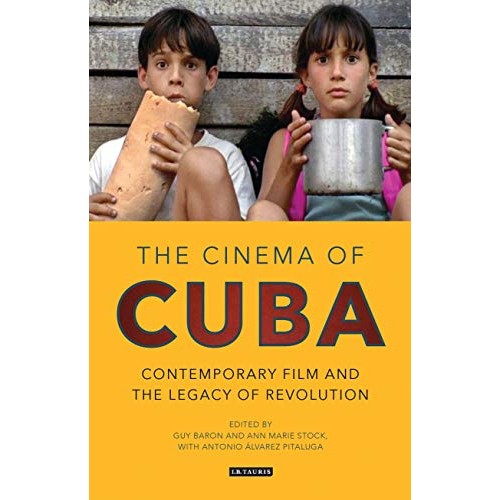
The Cinema of Cuba: Contemporary Film and the Legacy of Revolution (2017). Eds. Guy Baron and Ann Marie Stock. “These varied and vibrant essays at the cutting edge of Cuban cinema research offer important accounts of film directors…, analysis of headline themes…, and insider information to complement the assessments coming from abroad. A highly recommended collection!” –Stephen M. Hart, University College London |
 |
|
|
|
||
|
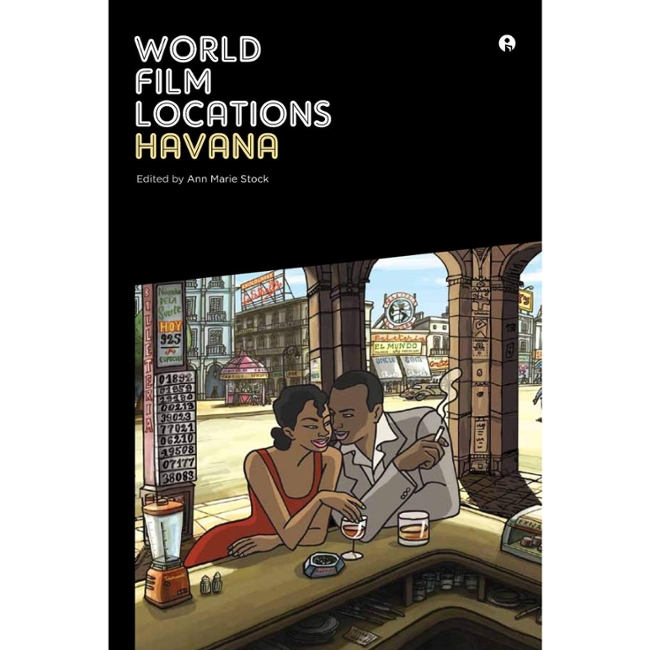
World Film Locations: Havana (2014). Ed. Ann Marie Stock. “Havana is a city imagined in pastel hues—tan linen suits and taupe straw hats and a rainbow of guayabera shirts, gray marble and cement-tone structures, minty-green mojitos and pale pink daiquiris. And always the aquamarine of the sea and sky…” |
 |
|
|
|
||
|
On Location in Cuba: Street Filmmaking during Times of Transition (2009). Ann Marie Stock. On Location in Cuba: Street Filmmaking during Times of Transition... "The 1990s were a time of dramatic transformation for Cuba. With the collapse of the Soviet Union, the island nation plummeted into an era of scarcity and uncertainty known as the Special Period, a time from which it emerged only slowly in the new century. On Location in Cuba views these pivotal decades through the lens of cinema. Ann Marie Stock conducted hundreds of interviews and conversations in Cuba to examine individual artists' lives and creative output--including film, video, and audiovisual art. She explores the impact of the Cold War's end, the economic crisis that ensued, and the decentralization of the state's political, economic and cultural apparatus." "The study is crafted with the nuance of an insider (the result of some 50 research trips to Cuba over a 20-year period), the perspective of an outsider, attuned to contemporary debates about globalization and transnational cinemas, and the commitment of a cultural bridge-builder, looking to increase dialogue and exchange between the U.S. and Cuba...Stock's book is a lively and indispensable guide to this transitional moment in Cuban culture and society." --John King, The Americas "This is an important work that contributes to broader questions about the response of the Cuban people to this pivotal moment in their island's history...The author addresses the theoretical questions that relate to cinema and identity, and finds intriguing answers in the cultural production of the Cubans themselves." --The Latin American Review of Books "Covering the important recent cultural debates and the opening up of Cuban screens to new work, On Location in Cuba makes a significant contribution." --Michael Chanan |
 |
|
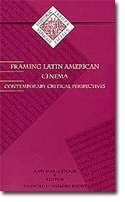
| Framing Latin American Cinema: Contemporary Critical Perspectives (1997). Ann Marie Stock, editor "Arguing for a 'postnational critical praxis,' Stock has gathered twelve essays on audiovisual culture in Latin America which, taken together, examine the geopolitical assumptions often underlying audiovisual criticism and the politics of production and reception across cinema's first century." --Kathleen Newman review |
|