 Skip to main content

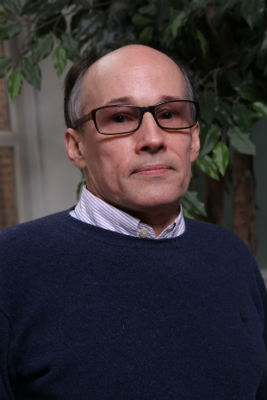
Thomas Payne
Professor (Musicology); David N. and Margaret C. Bottoms Professor of Music
Office:
Music Arts Center, room 210
Phone:
(757) 221-1502
Email:
[[tbpayn]]
Education
- B.A., Classics and Latin, Oberlin College
- Ph.D., Musicology, University of Chicago
Background
Tom Payne arrived at William and Mary in the Fall of 1999, after teaching for seven years at Columbia University. He held previous posts at the University of Chicago, where he served as a lecturer and a Visiting Assistant Professor. His primary research interests lie in medieval music, early musical notation, Latin lyric poetry, liturgy, and medieval musical culture, with a particular emphasis on the music of the Parisian Notre Dame School of the late twelfth and early thirteenth centuries.
Payne's professional interests include: Medieval, Renaissance, and Baroque music; J.S. Bach; and modern musical minimalism, especially the compositions of Steve Reich; and the music of the Beatles.
In a more informal vein he is an acoustic guitarist who is fascinated by Anglo-American folk music, bluegrass, acoustic finger-style guitarists (whose music he plays), and so-called "classic rock" from circa 1960-1975.
Courses Taught
Courses offered at William and Mary (as of the 2014 academic year):
- Music 100: Musical Revolutions
- Music 150W Freshman Seminar: The Music of J.S. Bach
- Music 213 History of Western Music
- Music 224 Bach and the Baroque
- Music 345 Music Research Seminar: The Challenges of Early Music
- Music 345 Music and Culture in Medieval Paris (1100-1300)
- Music 365 Music of J. S. Bach
- Music 379 The Music of the Beatles
- Music 381 Medieval and Renaissance Music
- Music 383 Baroque and Classical Music
Selected Publications
Books
(in press) (Co-editor) Editor, translator, commentator for the poetry of the Latin-texted musical works in a forthcoming two-volume facsimile and scholarly edition of the manuscript Torino, Biblioteca Reale, Vari 42 [Tu; I-Tr Vari 42], to be published by LIM [Libreria Musicale Italiana].
(Co-editor) Ars Antiqua: Music and Culture in Europe c. 1150-1330. Gregorio Bevilacqua and Thomas B. Payne, eds. Speculum Musicae, vol. 40. Turnhout: Brepols, 2020 (release date January 2021). ISBN: 978-2-503-59099-8. A co-edited volume (xviii+317 pp.) of conference proceedings from the gathering of the same name held in Lucca, Italy, 30 November-2 December 2018.
Philip the Chancellor: Motets and Prosulas. Recent Researches in the Music of the Middle Ages and Early Renaissance, no. 41. Middleton, Wisconsin: A-R Editions, 2011. A scholarly edition of thirty-eight songs and motets from the thirteenth century, with translations of all texts, a substantial introduction (26 pp.), and extensive commentary (xlii+221 pp.).
Les Organa à Deux Voix du Manuscrit de Wolfenbüttel, Herzog August Bibliothek, Cod. Guelf. 1099 Helmst. 2 vols. Le Magnus liber organi de Notre-Dame de Paris, no. 6. Les Remparts, Monaco: Éditions de L'Oiseau-Lyre, 1996. A 500-page scholarly edition of a medieval musical repertory of 50 two-voice organa (Gregorian chants with an added decorative vocal line) from the Notre Dame school. The transcriptions include a critical commentary and a substantial introduction in both French and English.
One of the items in the above publication, the organum Gaude Maria-Gabrielem archangelum (no. 3, pp. 12-19), was performed by the world-renowned Hilliard Ensemble as part of the multimedia DVD and CD package Thy Kiss of a Divine Nature: The Contemporary Perotin. Halle: Arthaus Musik, 2006. Catalogue no. 100-695.
Publications in journals, periodicals, chapters in books, entries in dictionaries and encyclopedias (see also “Published Internet Materials,” below).
(in preparation) “Hidden Figures in the Parisian Conductus” for inclusion in the multi-author volume Symbolism and Music in the Multimedia Middle Ages, co-edited by Mary Channen Caldwell (University of Pennsylvania) and Catherine Saucier (Arizona State University).
(in press) “Syllabic and Melismatic Identity in the Notre Dame Conductus,” for inclusion in the multi-author volume Latin Song in the Medieval World, co-edited by Mary Channen Caldwell (University of Pennsylvania) and Anne-Zoé Rillon-Marne (Université Catholique de l’Ouest-Angers); to be published by Liverpool University Press.
“Vetus abit littera: From the Old to the New Law in the Parisian Conductus.” Ars Antiqua: Music and Culture in Europe c. 1150-1330. Gregorio Bevilacqua and Thomas B. Payne, eds., 163-204. Speculum Musicae, no. 40. Turnhout: Brepols, 2020 (imprint date, actually released January 2021).
“Latin Song II: The Music and Texts of the Conductus.” The Cambridge History of Medieval Music. 2 vols, Mark E. Everist and Thomas Forrest Kelly, eds. 2: 1048-1078. Cambridge: Cambridge University Press, 2018.
(The Cambridge History of Medieval Music was a finalist for a 2019 PROSE award from the Association of American Publishers (AAP) in the category of Outstanding Multivolume Reference Work in the Humanities. The award recognizes publishers who produce books, journals, and digital products of extraordinary merit that make a significant contribution to a field of study in a given year.)
“Chancellor versus Bishop: the Conflict between Philip the Chancellor and Guillaume d’Auvergne in Poetry and Music.” Philippe le Chancelier: prédicateur, théologien, et poète parisien du début du XIIIe siècle. Gilbert Dahan, Anne-Zoé Rillon-Marne, eds., 265-306. Bibliothèque d’histoire culturelle du Moyen Âge 19. Turnhout: Brepols, 2017.
“Feature: Philip the Chancellor: Motets and Prosulas, edited by Thomas B. Payne.” Embellishments: A Newsletter about Recent Researches, Published by A-R Editions, Inc., 46 (Spring 2012): 1-2. A short, self-written promotional feature on my 2011 edition in the publisher’s thrice-yearly newsletter (see under Books).
Reprint of “Aurelianis civitas: Student Unrest in Medieval France and a Conductus by Philip the Chancellor” in Music in Medieval Europe: Ars Antiqua: Organum, Conductus, Motet. Edward H. Roesner, ed., 589-614, Burlington, VT, and Farnham, Surrey, UK: Ashgate Publishing, 2009 (each contribution separately paginated with its original page numbers)
“Walter von Châtillon.” Die Musik in Geschichte und Gegenwart. Personenteil, vol. 17, cols. 428-430. Kassel, Bärenreiter-Verlag, 2007.
“Philip the Chancellor and the Conductus Prosula: ‘Motetish’ Works from the School of Notre Dame.” Music in Medieval Europe: Studies in Honour of Bryan Gillingham. Terence Bailey and Alma Santosuosso, eds., 220-238. Aldershot, UK; Burlington, VT: Ashgate, 2007.
“Philippe le Chancelier.” Die Musik in Geschichte und Gegenwart. Personenteil, vol. 13, cols. 509-11. Kassel, Bärenreiter-Verlag, 2005.
“Datable Notre Dame Conductus: New Historical Observations on Style and Technique.” Current Musicology, 64 (2001): 104-151.
The following articles for the New Grove Dictionary of Music and Musicians, 7th ed. [New Grove II]. Stanley Sadie and John Tyrrell, eds. London: Macmillan, 2001:
Citations below are by volume and page numbers of the 2001 print edition; online, updated versions of these articles are accessible via the Grove Music Online service offered by Oxford Music Online (www.oxfordmusiconline.com), see also “Published Internet Materials,” below:
As sole author:
- “Carmina burana,” vol. 5, pp. 157-158.
- “Peter of Blois,” vol. 19, p. 489.
- “Philip the Chancellor,” vol. 19, pp. 594–597.
As collaborator:
- (with Gordon A. Anderson) “Alain de Lille,” vol. 1, p. 271.
- (with Werner Galluser) “Anderson, Gordon A[thol],” vol. 1, pp. 611-612.
- (with Gordon A. Anderson) “Archipoeta,” vol. 1, p. 857.
- (with Gordon A. Anderson) “Early Latin Secular Song, §3: The ‘Goliard’ Period up to c 1300” vol. 7, pp. 828-830.
- (with Gordon A. Anderson) “Goliards,” vol. 10, p. 112.
- (with Gordon A. Anderson) “Hugh Primas of Orléans,” vol. 11, p. 809.
- (with David Hiley) “Notation, [Western], §III, 2: Polyphony and secular monophony to c 1260,” vol. 18, p. 119-129 (credits on p. 189).
- (with Gordon A. Anderson) “Paris, §I, 1-4: to 1450,” vol. 19, pp. 76-79 (credits on p. 125).
- (with Gordon A. Anderson) “Serlo of Wilton,” vol. 23, pp. 126-127.
- (with Geoffery Chew) “Song, §3: Liturgical Song to the 9th Century,” 4: “Medieval Latin Song from the 9th Century,” vol. 23, pp. 706-707 (credits on p. 716).
- (with David Fallows) “Sources, MS, §III, 2: Secular monophony: Latin,” vol. 23, pp. 847-848 (credits on p. 930).
- (with Robert Falck) “Walter of Châtillon,” vol. 27, pp. 57-58.
“Aurelianis civitas: Student Unrest in Medieval France and a Conductus by Philip the Chancellor.” Speculum: A Journal of Medieval Studies, 75 (2000): 589-614.
Review Article: “Music and Ceremony at Notre Dame of Paris: 500-1550 by Craig Wright,” Cambridge Studies in Music (Cambridge: Cambridge University Press, 1989), Journal of Musicological Research, 12 (Supplement) (1992): 3S-17S.
“Associa tecum in patria: A Newly Identified Organum Trope by Philip the Chancellor,” Journal of the American Musicological Society, 39 (1986): 233-254.
“Musical Terminology in the Contrapuntal and Canonic Works of J.S. Bach,” Bach: The Quarterly Journal of the Riemenschneider Bach Institute, 17 (1986): 18-35.
Published Internet Materials.
“Fascicle 7: Second Conductus Fascicle,” at DIAMM (the Digital Image Archive of Medieval Music– https://www.diamm.ac.uk/). Editions with transcriptions, translations, and commentary (891 pages in PDF format) on both the text and music of the 130 compositions in the seventh fascicle of MS F (I-Fl Pluteus 29.1). Published to the web 20 June 2024.
- Link to header page: https://www.diamm.ac.uk/news/thomas-b-paynes-editions-pluteus-now-online/
- Direct link to the document: https://www.diamm.ac.uk/documents/714/F-Fascicle-7-Cond-a2.pdf
“Fascicle 6: First Conductus Fascicle,” at DIAMM (the Digital Image Archive of Medieval Music– https://www.diamm.ac.uk/). Editions with transcriptions, translations, and commentary (431 pages in PDF format) on both the text and music of the 61 compositions in the sixth fascicle of MS F (I-Fl Pluteus 29.1). Published to the web August 2022; updated 8 June 2024.
- Link to header page: https://www.diamm.ac.uk/news/thomas-b-paynes-editions-pluteus-now-online/
- Direct link to the document: https://www.diamm.ac.uk/documents/698/F-Fascicle-6-Cond-Motets-Prosulas-a3.pdf
“The Organa and Clausulae of MS I-Fl Pluteus 29.1,” at DIAMM (the Digital Image Archive of Medieval Music– https://www.diamm.ac.uk/). Newly revised and corrected transcriptions into modern notation (828 pages in PDF format) of the first 5 fascicles of MS F (I-Fl Pluteus 29.1), with a short introduction and table of symbols and abbreviations. Published to the web 21 June 2021, with later revisions and updates in August and December 2021 and on 3 June, 8 June, and 17 June, 2024.
- Link to header page: https://www.diamm.ac.uk/news/thomas-b-paynes-editions-pluteus-now-online/
- Direct link to the documents: https://www.diamm.ac.uk/resources/music-editions/organa-and-clausulae-ms-i-fl-pluteus-291/
Updated and revised versions (published to the web 1 July 2014) of the following New Grove Dictionary articles for the Grove Music Online service offered by Oxford Music Online (www.oxfordmusiconline.com):
- (with David Hiley) “Notation, [Western], §III, 2: Polyphony and secular monophony to c 1260.”
- “Peter of Blois.”
- “Philip the Chancellor.”
- “Walter of Châtillon.” (Payne is sole author of 2014 version)
“Organum.” in Oxford Bibliographies Online. https://www.oxfordbibliographies.com (published to the web April 2013): a copiously annotated bibliography (ca. 19,500 words) of ca.150 items for a peer-reviewed, online bibliographic reference sponsored by Oxford University Press. The service’s intended audience ranges from the undergraduate level to that of the specialized researcher. Each section and subsection of the bibliography contains an introduction to the topic and a survey of the literature within; each entry is also given a brief (50-word) annotation.
Contributor (1998-1999) to The Sonic Glossary. https://ccnmtl.columbia.edu/projects/sonicg/index.html an interactive web-based dictionary and encyclopedia of musical terms intended for Columbia University undergraduates. Access is restricted for copyright and security reasons to the faculty, students, and staff of Columbia University, but selected items are available for consultation via the links below:
- Author and Narrator: “Polyphony” (http://ccnmtl.columbia.edu/projects/sonicg/terms/polyphony.html),
- “Imitative Polyphony” (http://ccnmtl.columbia.edu/projects/sonicg/terms/imitative_polyphony.html),
- “Non-Imitative Polyphony” (not available online).
- Narrator: “Word Painting,”
- “Homophony,” (http://ccnmtl.columbia.edu/projects/sonicg/terms/homophony.html),
- “Lied” (not available online)
- “Monophony” (http://ccnmtl.columbia.edu/projects/sonicg/terms/monophony.html)
Radio episodes / Podcasts
“The Beatles 60 Years Later,” a portion of an episode of the radio show/podcast With Good Reason, broadcast on NPR out of Charlottesville, Virginia, and supported by The Joseph and Robert Cornell Memorial Foundation; interviewed by Sarah McConnell in an episode commemorating the 60th anniversary of the Beatles’ first recordings and touching on particular songs throughout their career; first broadcast May 26, 2023.
https://withgoodreasonradio.org/episode/music-for-life/?t=2472&autoplay=1#s2472
“Music of the Beatles with Tom Payne,” an episode of the radio show/podcast Watching America, broadcast on NPR station WHRO FM 90.3 out of Norfolk, Va; interviewed by program host Dr. Alan Campbell in a episode commemorating the 60th anniversary of the release of the Beatles’ first UK album, Please Please Me; first broadcast on March 23, 2023.
https://mediaplayer.whro.org/program/watchingamerica/e/watchingamerica-friday-march-24th-2023
Book Reviews.
Review of Mary Channen Caldwell. Devotional Refrains in Medieval Latin Song. New York: Cambridge University Press, 2022. (1500 words) In The Journal of the American Musicological Society, 76 (2023): 242-245.
Review of Catherine A. Bradley. Polyphony in Medieval Paris: The Art of Composing with Plainchant. Music in Context, 9. Cambridge: Cambridge University Press, 2018. In Music and Letters (2019, imprint year, actually released 2020): 713-715.
Review of The Montpellier Codex: The Final Fascicle: Contents, Contexts, Chronologies. Catherine A. Bradley, Karen Desmond, eds. Studies in Medieval and Renaissance Music, 16. Woodbridge, Suffolk; Rochester, New York: Boydell and Brewer, 2018. In Plainsong and Medieval Music, 28 (2019): 79-82.
Review of Christian Meyer, ed., and Karen Desmond, trans., The ‘Ars musica’ attributed to Magister Lambertus/ Aristoteles, Royal Musical Association Monographs, 27, Farnham, Surrey, UK, and Burlington, VT: Ashgate for the Royal Musical Association, 2015. In Speculum: A Journal of Medieval Studies, 93 (2018): 547-549.
Review of Anne-Zoé Rillon-Marne, Homo considera: La pastorale lyrique de Philippe le Chancelier, une étude des conduits monodiques. Studia artistarum: Études sur la Faculté des arts dans les Universités médiévales, 34 (Turnhout: Brepols, 2012). In Plainsong and Medieval Music, 23 (2014): 252-256.
Review of Guillaume Gross. Chanter en polyphonie à Notre-Dame de Paris aux 12e et 13e siècles. Studia Artistarum: Études sur la Faculté des arts dans les Universités médiévales, 14 (Turnhout: Brepols, 2007). In Plainsong and Medieval Music, 19 (2010): 213-217
Review of Jann Cosart, ed. Monophonic Tropes and Conductus of W1: The Tenth Fascicle. Recent Researches in the Music of the Middle Ages and Early Renaissance, 38 (Middleton, Wisconsin: A-R Editions, 2007). In Notes: Quarterly Journal of the Music Library Association, 65 (2009): 573-575.
Review of Anna Maria Busse Berger. Medieval Music and the Art of Memory (Berkeley, Los Angeles, and London: University of California Press, 2005). In Speculum: A Journal of Medieval Studies, 82 (2007): 412-415.
Review of Christopher Page, ed., The Summa Musicae: A Thirteenth-Century Manual for Singers. Cambridge Musical Texts and Monographs (Cambridge: Cambridge University Press, 1989). In Journal of Musicological Research, 14 (1995): 281-86.
Review of Mark E. Everist, Polyphonic Music in Thirteenth-Century France: Aspects of Sources and Distribution. Outstanding Dissertations in Music From British Universities (New York and London: Garland Publishing, Inc., 1989). In Journal of Musicological Research, 14 (1995): 286-92.