Skip to main content
Munyikwa ‘11 embraces the ampersand in multifaceted medical career
 As an undergraduate, Dr. Michelle Munyikwa ‘11 spent hours in Washington Hall, studying anthropology, connecting with professors, and dreaming up solutions to solve the world’s problems.
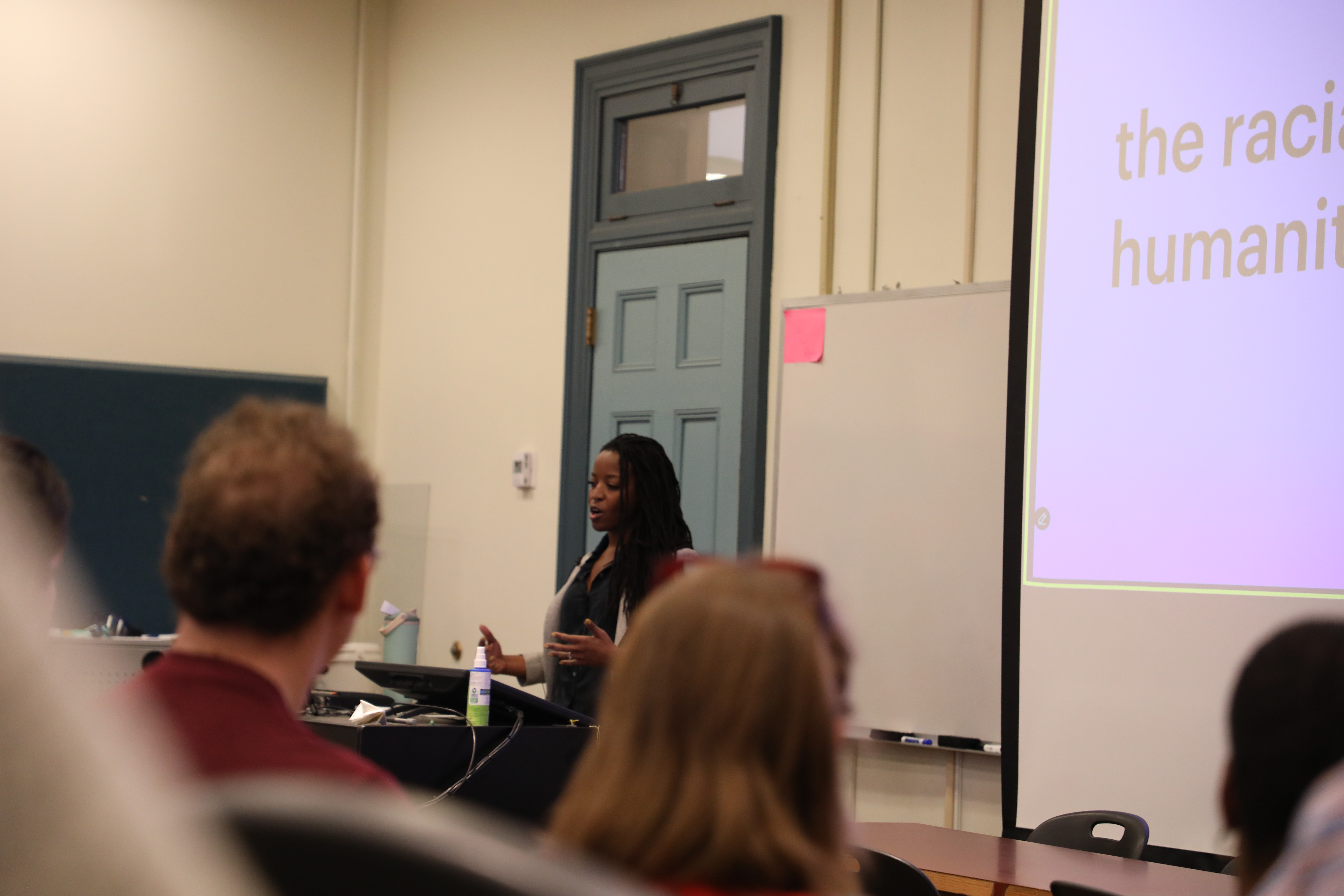
As this year’s Anthropology Homecoming Guest Lecturer, she returned to the very same building to share lessons from her work researching and realizing those solutions.
Munyikwa, a former 1693 Scholar and now physician and fellow at University of Pennsylvania and Children’s Hospital of Philadelphia, spoke to a crowd of more than 75 in Washington Hall 201 on Oct. 17, describing how an interdisciplinary approach to medicine — notably, through anthropology — is critical to understanding why and how institutions fail.
In her talk, “Structural Competency, Human Rights, and Medicine: Perspectives from the Field,” she discussed her research examining how medicine handles social differences and race, as well as its intersection with refugee politics.
Institutional failure, says Munyikwa, is most visible when patients encounter social suffering or barriers to medical access, as a result of unexpected changes to their housing, insurance coverage, or to migration policy.
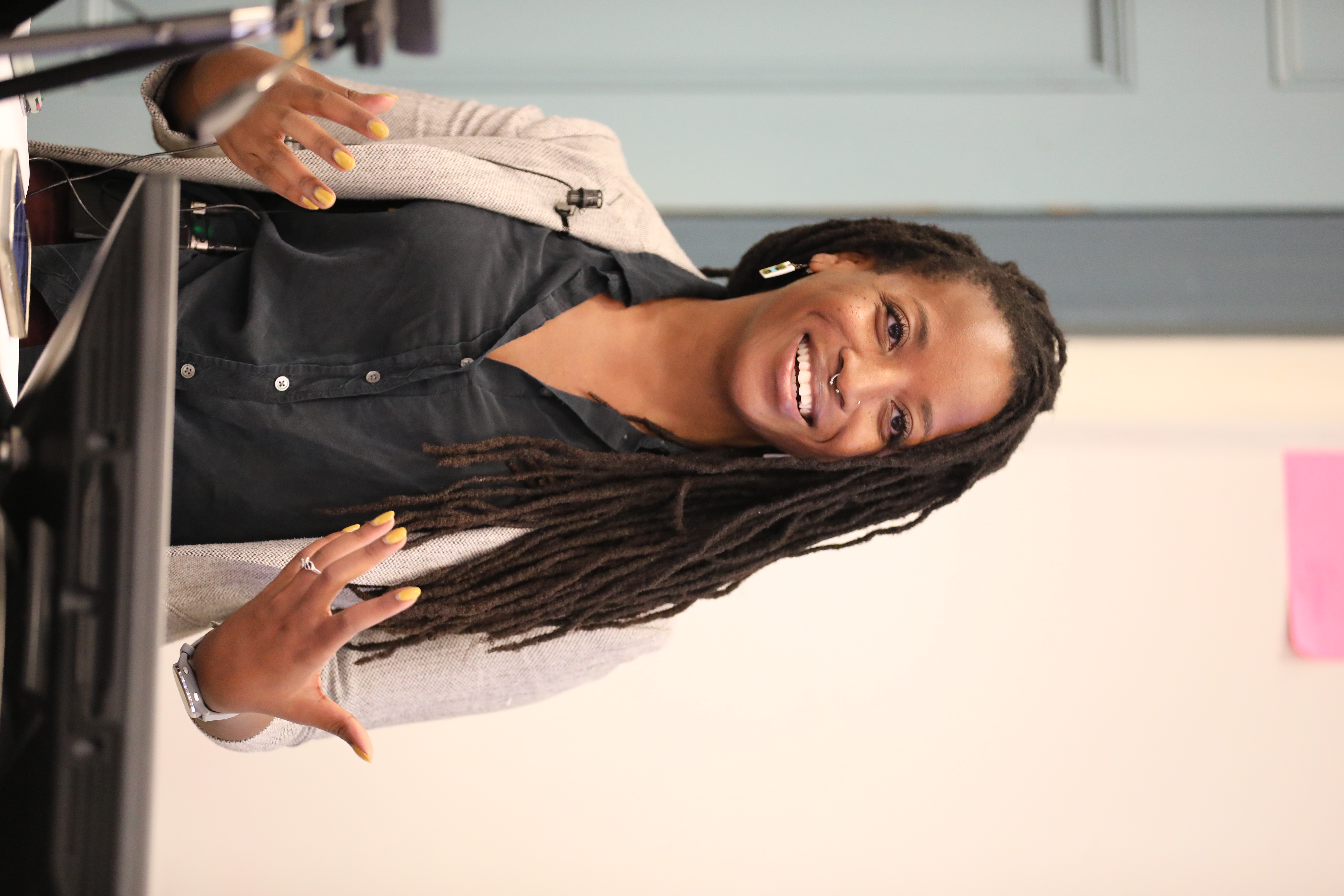 Race and refugee politics have long been at the forefront of Munyikwa’s research. Her dissertation, “Up from the dirt: Racializing refuge, rupture, and repair in Philadelphia,” centered on refugees and asylum seekers, the efficacy of institutions designed to help in the process, and how race factors into the refugee experience.
Her forthcoming book, The Spatial Promise of Refuge (Duke University Press) raises similar issues, examining how refugees acquire race, the ethics and unintended consequences of medical care, and how societies might seek to repair past injuries.
Her anthropology background, she says, offers a lens through which she studies these societal and ethical issues. “Physicians themselves are political actors with obligations beyond the individual patient, and we should have very ethical attunement to unintended consequences of our own actions” she said.
At the same time, Munyikwa’s anthropological perspective can relieve some of the pressure of uncertainty — “that deep and profound sense that you can’t always be sure that you’ve done the right thing, which is very hard to swallow in medicine.” An anthropological approach reminds her that many ethical quandaries aren’t anyone’s fault.
“They’re just what happens when you have to provide care across lines of difference,” she said.
Munyikwa’s interest in refugee politics is more than academic — it’s personal history, too. Her mother's family sought asylum to the U.S., and she herself immigrated from Zimbabwe as a child.
For Munyikwa, opportunities like those offered by William & Mary opened doors she never could have imagined. “The 1693 scholarship made a major difference in how I was able to afford to go to college,” she said, describing it as “the reason I could become an anthropologist and infectious disease doctor and not be worried about poverty.”
She was also drawn to W&M’s breadth of studies and designed her own major in biochemistry and molecular biology alongside a second major in anthropology.
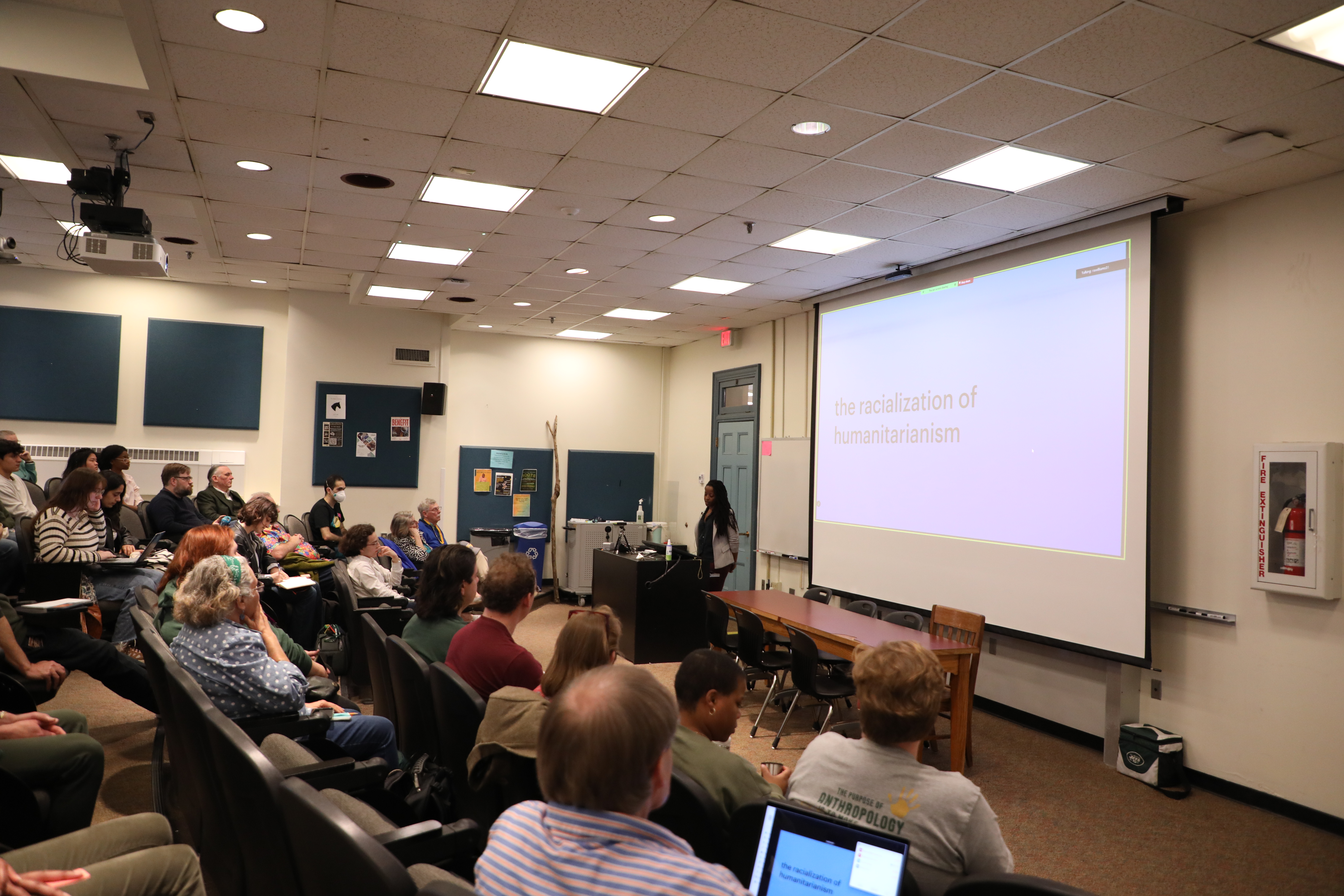 “As someone who enjoys being challenged, and who does not like to do only the same thing all the time — I think even when I was an undergraduate student I was always, like, sometimes in the lab, sometimes at a protest — and I think for me that is where I thrive,” said Munyikwa. “It can be very rewarding to be in the center of multiple different things that could actually make a huge difference if they speak to one another more.”
Her physician-anthropologist lens, she says, prepares her to address “structural incompetencies” — understanding how the clinical problems she faces as a physician, such as patients’ nonadherence, often trace back to upstream policy decisions on zoning, infrastructure, or housing. Improving medical education curriculum, emphasizing critical research, and investing in accessible healthcare and social resources are all solutions she’s working toward.
Always an embodiment of William & Mary’s ampersand, Munyikwa describes herself as a physician-anthropologist, advocate, mentor, and writer.
“I’m trying to figure out what it means to integrate all of those things, and to have a day-to-day life that reflects who I think I am at my core, which is indeed all of those things, and no one of them more than the other,” she said.
And being back on campus, Munyikwa is impressed by how connected she still feels. “There’s a large number of faculty that I’m still in touch with,” she remarked. “I think that [W&M] certainly embodies what a liberal arts education and institution dedicated to expanding the minds of young people and giving them tools for diverse careers looks like.”