 Skip to main content
Ewell Hall
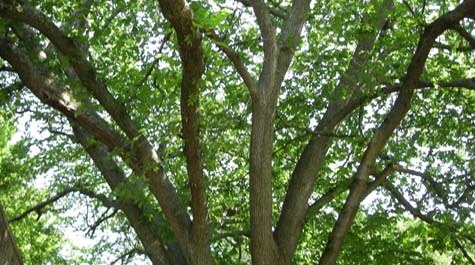
Ulmus americana
This large American Elm dominates the area to the east of Ewell Hall
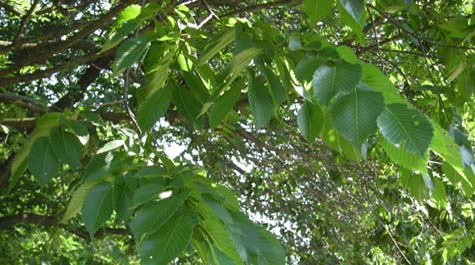
Ulmus americana
Closeup showing leaves of the American Elm.
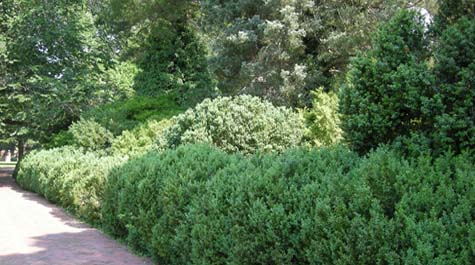
Various Boxwood
Professor Baldwin was a national authority on Boxwood and planted them widely on campus.
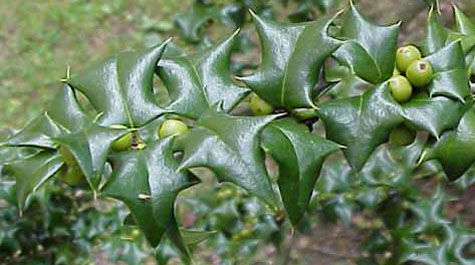
Ilex cornuta and Ilex pernyi
The protected niche formed by Ewell Hall provides shelter for a verdant alley of hybrid hollies
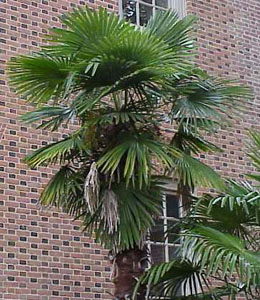
The Protected Niche
The sheltered alley formed by Ewell Hall creates a unique microclimate, warmed significantly by the College’s underground steam tunnels. This allows for the cultivation of species typically found much further south:
- Windmill Palms (Trachycarpus fortunei): These palms are rare this far north and thrive here due to the buffered climate.
- Hybrid Hollies: A unique cross between Ilex cornuta and Ilex pernyi.
Unusual Conifers
The courtyard between Ewell and Jefferson Halls contains two of the most distinct evergreens on campus:
- Monkey Puzzle Tree (Araucaria araucana): Native to Chile and Argentina, this tree is famous for its sharp, triangular leaves that cover both the branches and the trunk. It earned its name from the idea that its prickly nature would "puzzle a monkey" attempting to climb it.
- Asian Yew Plum Pine (Podocarpus macrophyllus): Located near the northeast corner of Jefferson Hall, identified by its long, strap-shaped leaves.
The Ewell Hall Elm
Commanding the space on the east side of the building is a massive American Elm (Ulmus americana). Its sweeping canopy is a dominant feature of this section of the campus tour.
Boxwood Variety Collection
Along the wall of the Wren Courtyard, you can observe a curated collection of diverse boxwood varieties. Each offers subtle differences in leaf shape and growth habit:
- Curly-locks Boxwood (Buxus microphylla ‘Curly-Locks’)
- Hardwick Boxwood (Buxus sempervirens ‘Hardwickensis’)
- Littleleaf Boxwood (Buxus microphylla)
- Harlands Boxwood (Buxus harlandi)
- Vardar Valley Boxwood (Buxus sempervirens ‘Vardar Valley’)