 Skip to main content

Campus Tour of Woody Species
Baldwin Memorial Collection of Woody Species
William & Mary’s campus is home to over 300 species and varieties of woody plants, many of which were gathered and planted by Professor John T. (J.T.) Baldwin, Jr., who taught biology here from 1946 to 1974. This remarkable collection serves as a living archive, supporting research and teaching for both College members and visitors. By vote of the Board of Visitors, it is officially named the Baldwin Memorial Collection of Woody Species.
Explore the Campus Tour
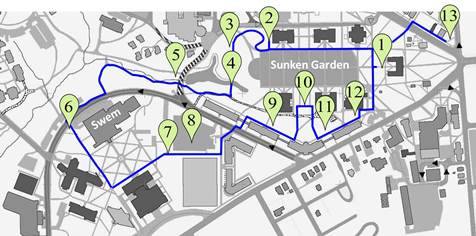
The self-guided tour features more than 70 different kinds of woody plants—a curated selection from the full collection. The route follows the original walking tour created by Professor Baldwin and includes several of his original plantings. The tour is regularly updated to reflect new additions, losses, and noteworthy native or naturally colonized trees.
Starting and ending near the Wren Building on the Old Campus, the tour covers 13 marked locations, each highlighting multiple specimens. A moderate pace will take about 45 minutes, not counting time spent observing and enjoying the plants.
About Professor John T. Baldwin Jr.
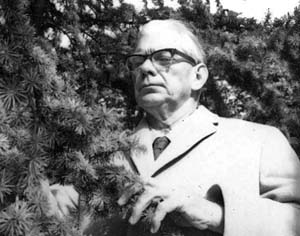
John T. Baldwin Jr. was more than a professor—he was a passionate botanist and a pioneer in plant research who left a lasting mark on William & Mary’s campus. A biology alumnus of the College, Baldwin earned his Ph.D. in cytogenetics from the University of Virginia in 1937, specializing in the study of plant chromosomes. He was nationally recognized for his expertise on boxwood and made key discoveries, including identifying natural sources of cortisone in plants like Strophantus sarmentosus.
Baldwin’s dedication went beyond research papers. Throughout his career, he traveled extensively across four continents, collecting unusual seeds and plants to enrich the College grounds. Alongside colleague Professor Bernice Speese, he transformed the campus into a living laboratory showcasing dozens of exotic species—some among the oldest cultivated examples in the United States.
His vision was to create a diverse, educational landscape that allowed students and faculty to engage directly with plant biology. Baldwin’s deep appreciation for plant diversity and hands-on learning still inspires the campus community today.
Preserving the Collection

After Professor Baldwin’s passing in 1974, stewardship of the collection was entrusted to his colleagues, ensuring his legacy would endure. Recognizing the importance of preserving this living archive, Biology Professor Martin Mathes spearheaded a comprehensive project in the late 1970s to systematically identify, inventory, and map the collection. With help from senior student Louise Mozingo and others, Mathes produced a detailed catalog documenting over 300 species and varieties of woody plants, along with maps marking their precise locations across campus. This catalog, along with his earlier work chronicling the history of campus vegetation, remain cornerstone resources housed in Swem Library.
Preservation efforts extend beyond documentation. The College’s Gardens and Grounds division plays a vital role in maintaining the health and vitality of the specimens, tending to their care year-round as part of the broader campus landscape management. Their work includes pruning, disease management, and replacement planting to ensure the collection’s longevity.
In recent years, Associate Professor of Biology Dr. Martha Case has taken on the role of College Conservator of Botanical Collections. She has expanded the original campus tour, updating it to reflect changes in the collection and incorporating modern tools such as geospatial mapping and digital photography. Her efforts include creating labels for individual plants and developing a comprehensive digital database, making the collection more accessible for research and education.
Community engagement is also a key part of preservation. Faculty-led walking tours and educational programs foster appreciation among students, staff, and visitors alike. The collection benefits from private donors, especially the late Jane Henley, whose generous support has helped fund ongoing care and expansion of the woody species on campus.
Together, these combined efforts—rooted in scientific rigor, dedicated care, and community involvement—ensure that the Baldwin Memorial Collection remains a vibrant, living resource for generations to come.
Continuing the Legacy
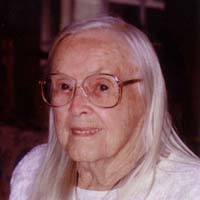
The collection thrives thanks to the dedication of many. Professor Mathes guided tours and expanded the collection, while the late Jane Henley was a generous advocate and donor. The College’s Gardens and Grounds division maintains the plants and landscape, and Dr. Martha Case, Associate Professor of Biology and Conservator of Botanical Collections, continues to update the tour with photos, labels, and geospatial data.
Together, these efforts connect people with the extraordinary plant heritage that defines William & Mary’s campus.
Learn More
- Swem Library Catalog of Woody Species (Collection of Woody Species, 1992)
- History of Campus Vegetation (The Planting of a Campus Tradition, 1987)
- Contact: Dr. Martha Case, College Conservator of Botanical Collections