 Skip to main content

A Conversation About Lethal Injection with Corinna Barrett Lain '92
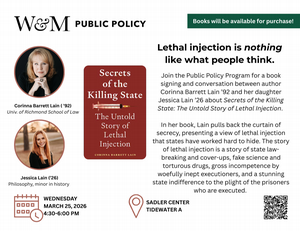
On March 25th, the Public Policy Program hosted a conversation with Corinna Barrett Lain, graduate of the W&M class of 1992 and author of Secrets of the Killing State: The Untold Story of Lethal Injection. The discussion, held in a conversational interview format, was led by her daughter, Jessica Lain, a philosophy major graduating this spring. The event took place just one day after the five-year anniversary of Virginia becoming the first Southern state—and the 23rd overall—to abolish the death penalty, adding particular relevance to the discussion.
 Lain described how her research on the death penalty, spanning nearly two decades, began with a narrow legal question: why do states struggle to carry out executions by lethal injection? Initially conceived as a law review article, the project expanded into a book as she uncovered the historical origins and systemic issues underlying the practice. She explained that the modern lethal injection protocol, first developed in 1977, was created without scientific testing or medical research. For decades, states relied on a three-drug sequence consisting of a barbiturate, a paralytic, and potassium chloride. While the procedure is often presented as clinical and humane, Lain emphasized that it can involve significant pain. She noted that the paralytic serves primarily to create the appearance of a peaceful death, while potassium chloride can produce an intense burning sensation.
A central theme of the discussion was the gap between the perception and reality of lethal injection. Lain explained that executions are often portrayed as highly medicalized procedures, reinforced by the imagery of white coats and controlled environments. In practice, however, executions are typically carried out by prison guards rather than physicians, as participation violates medical ethics. By presenting death as clinical and controlled, she argued, the process functions as a form of “stagecraft” that masks the violence of the process.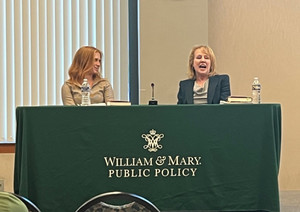
Lain also highlighted evidence of systemic failures, including botched executions and cases in which individuals regained consciousness during the procedure. She cited estimates suggesting that lethal injection has a botch rate of approximately 7—8 percent—higher than other methods—and pointed to autopsy findings indicating that many individuals who appear unconscious may instead be experiencing acute pulmonary edema, a condition likened to waterboarding.
Jessica Lain, drawing on her background in philosophy, raised questions about the morality of capital punishment. Corinna discussed how individuals on death row often change significantly over time, complicating assumptions about their deservingness of capital punishment. She emphasized the psychological toll on correctional officers, who often develop relationships with individuals on death row and may experience significant mental health challenges as a result of their role in executions. She also discussed the perspectives of victims’ families, noting that many do not support the death penalty and are frequently excluded from the process. She challenged the oft-repeated claim that capital punishment deters crime, referencing a study by the National Academy of Sciences that summarized a wealth of research on the subject and found no evidence of a deterrent effect.
The discussion also touched on the financial costs associated with the death penalty, with Lain citing studies estimating that executions can cost tens to hundreds of millions of dollars per case, largely due to the complexity of legal proceedings. She also addressed ongoing legal challenges under the Eighth Amendment, explaining that Supreme Court decisions have raised the evidentiary standards required to demonstrate that lethal injection constitutes cruel and unusual punishment.
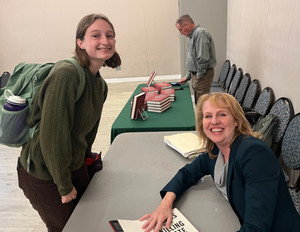 Lain concluded by reflecting on how her central question had evolved over time. Rather than asking why states perform lethal injections poorly, she now asks why they continue to use the method at all. Her answer, she suggested, lies in the practice’s ability to present execution as controlled and humane, thereby masking the underlying violence of state-sanctioned killing. The event left attendees with a deeper understanding of how the realities of capital punishment often diverge from its public perception, raising important questions about transparency and the role of the state in administering death.