 Skip to main content

W&M professor’s recent books explore Goan identity and migration
For R. Benedito Ferrão, identity isn’t defined by where one is, but by how a person moves through the world.
As William & Mary’s first tenured Asian & Pacific Islander American studies (APIA) faculty member as well as an associate English professor, Ferrão researches the literary representation of South Asian migrants whose identities are often obscured by displacement and colonialism.
For the 2026-2027 academic year, he serves as the Dr. Thomas Tam Visiting Professor at City University of New York’s (CUNY) Asian American/Asian Research Institute, where he is teaching a seminar and course on transnational Asian American literature. In addition to his new appointment, Ferrão also recently published two books: “Across Continents: Writing Goans, Making Worlds” and “The Girl Who was the Color of Nothing: A Children’s Book for Adults.”
Like those he studies, Ferrão is no stranger to traveling across borders. He received his undergraduate degree in English and master’s in Asian American studies from the University of California, Los Angeles. He combined these two fields when completing his Ph.D. thesis at the University of London, where he concentrated in post-colonial literature and connections between British and Portuguese legacies in South Asia and Africa. He then completed a post-doc program at La Trobe University in Australia through the Endeavour Research program. As he was completing more research, he found his travels influencing his research discoveries. 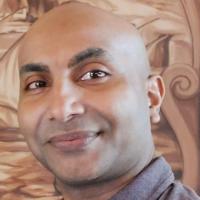
“For me, as somebody whose family and myself have moved quite a bit, it’s to never take fixity for granted, but then to also see that lack of fixity as being a condition of the world today,” Ferrão said. His family is from Goa, and has lived in Asia, Africa, Europe, Oceania and America.
After his stint in Australia, Ferrão joined W&M. His courses include Interpreting Literature, Anglophone Postcolonial Literature, Outside In: Transnational Asian American Literature, and Silver Sepia: Cinema of the South Asian Diaspora. Now teaching similar courses at CUNY, he hopes the insight he gains from his current students will inform his teaching upon his return to W&M next year.
“I've been quite fortunate to have a number of fellowships that have taken me to other countries, and New York City is a country unto itself in many ways," he said. “Every time I've gone to another place, it has influenced my research, writing and teaching. Teaching in a new setting gives me a little bit more freedom to experiment, see what works, and bring that back to William & Mary.”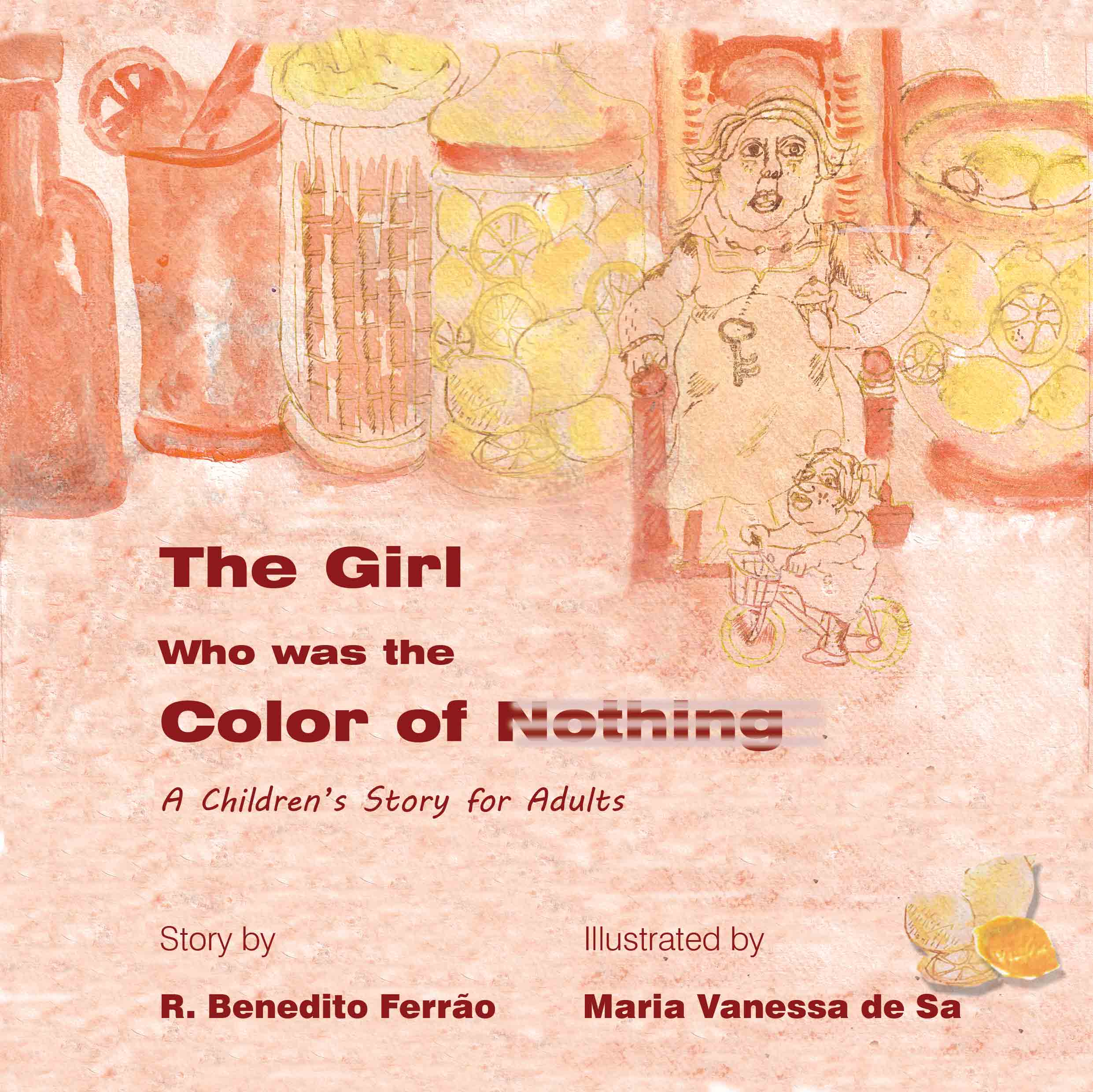
Ferrão returned to Williamsburg on Oct. 16 for the Banh Mi Lecture series, commemorating the 10th anniversary of the APIA Studies program at W&M. The event featured a reading of his new book, “The Girl Who was the Color of Nothing: A Children's Story for Adults,” and a conversation moderated by Addie Tsai, associate teaching professor of English. The event was funded by the Jinlan Liu Foundation and sponsored by the Creative Writing and APIA programs.
His new book is a departure from his largely academic body of work, but addresses theoretical frameworks around race and colorism that he teaches in his courses. The book follows an upper-class and caste Goan Catholic family that goes to extreme lengths to ensure their daughter’s skin never darkens. Goa, now a state in India and located on its southwestern coast, was colonized by Portugal from 1510 to 1961. He said he created the book, which is illustrated by Goan artist Maria Vanessa de Sa, to help parents understand the modern implications of colonial legacies and internalized biases.
“It's very strange when you see evidence of prejudice in somebody who is very young, which then demonstrates to us that it’s not something that they were born with. It's something they learn at a very young age from adults around them,” he said. “ I'm always thinking of ways of bridging the academic world with the public realm and so a children's book became the perfect vehicle through which to think about how to challenge prejudice at its very genesis.”
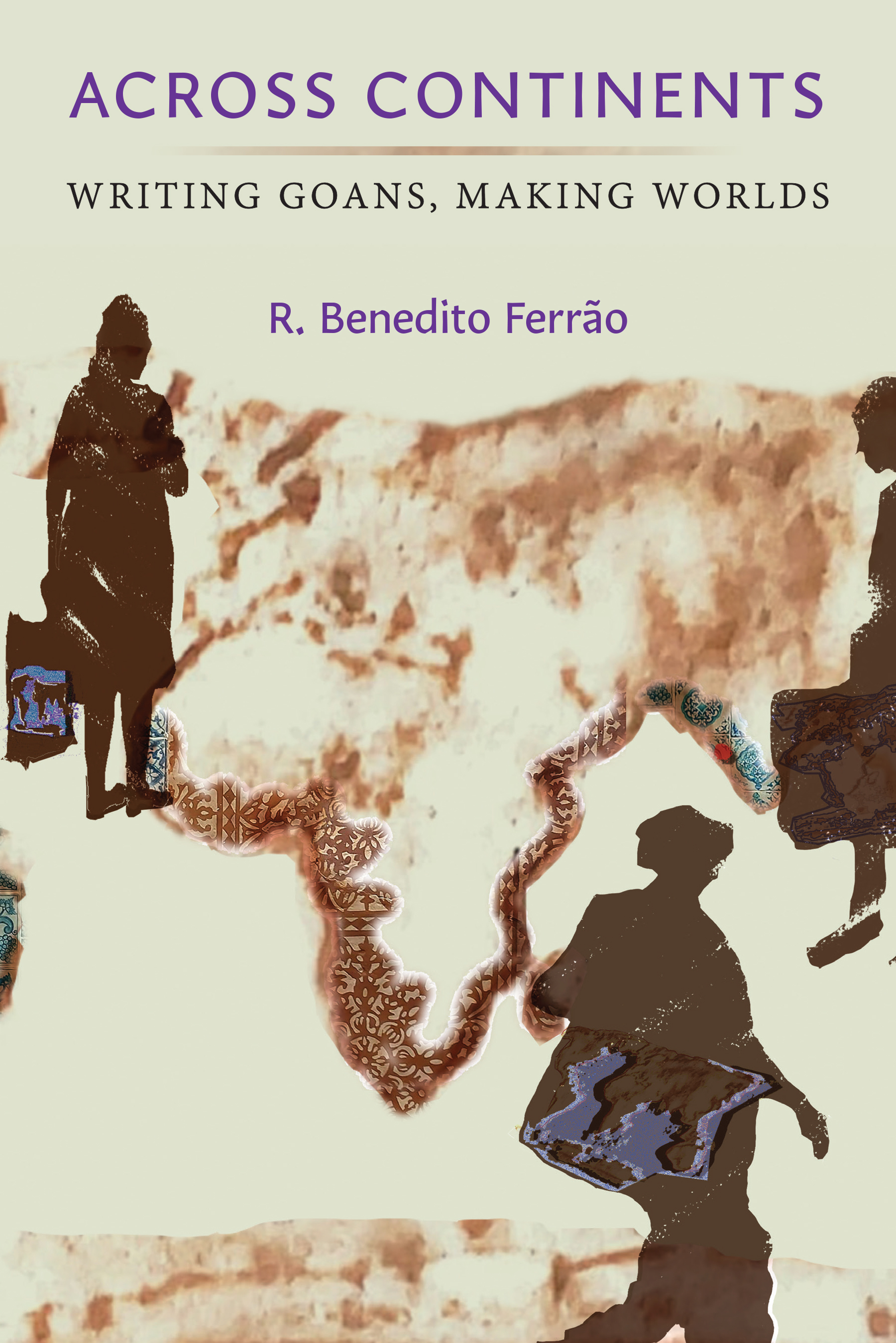
In addition to creating a space for reflection, he hopes to use his publications to elevate and promote artists. He has produced zines with and curated exhibits for Goan artists in the past, and Goan artist Maria Vanessa de Sa also created the cover of his academic book, “Across Continents: Writing Goans, Making Worlds,” The book uses the Goan experience to question the idea that identity is fixed by nation or nationality, and explores how fiction can reveal what official records may not. He has also worked with other Goan artists on other projects, including Angela Ferrão, Karishma D’Souza and Oriana Fernandez.
“I'm always thinking of different ways to do research and then make that available creatively through these collaborations with artists,” Ferrão said. “I'm very interested in working with artists who have strong ideas about the environment and feminism, and who think about coloniality and postcoloniality.”
As he continues the academic year in New York City, Ferrão says his next research project will continue to build upon his work with Goan artists by exploring visual culture across multiple continents through the lens of post-colonialism, providing context to current human experiences.
“It’s interesting being a postcolonialism scholar in Colonial Williamsburg," he said. “I want to diversify the study of postcolonialism by not just focusing on British colonialism, but by understanding how these colonialisms worked in partnership with one another. Their legacies continue to have a large impact on communities today.”