 Skip to main content

Where AI meets ethics: new interdisciplinary minor blends computer science and philosophy
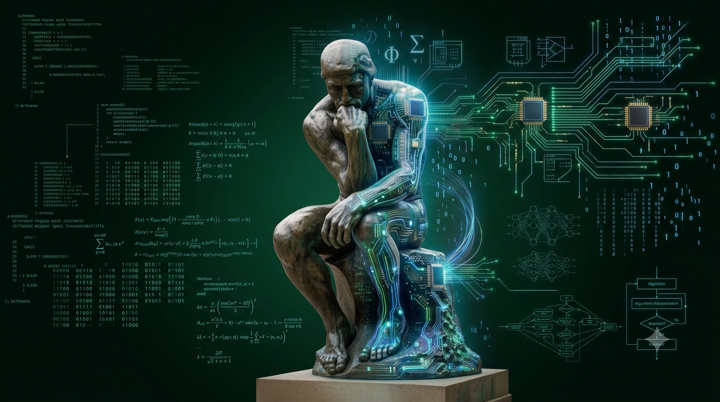
As artificial intelligence becomes increasingly woven into everyday life, William & Mary is expanding opportunities for students to understand not only how AI works, but also how it should be used. Guided by the university’s spirit of the ampersand — the idea that learning thrives at the intersection of disciplines — the College of Arts & Sciences and the School of Computing, Data Sciences & Physics (CDSP) are introducing a new interdisciplinary AI & Ethics minor, creating an opportunity for students to explore AI through both technical and ethical perspectives.
Drawing from expertise in both the computer science and philosophy departments, the minor combines AI-related courses with studies in ethics and philosophy. “Computer science provides background on the technology so that students know how AI functions. What the philosophy side does is give you training on how to evaluate values,” said Chris Tucker, Francis S. Haserot Professor of Philosophy.
William D’Alessandro, an assistant professor in the philosophy department and a member of the faculty team that developed the minor, mapped out the framework to include classes touching on AI, ethics and data science, philosophy, applied ethics, and more. “We want to teach the students to think more deeply about the human implications and ethical dimensions of AI. This minor is a more structured way to study that,” D’Alessandro said.
As AI continues to reshape nearly every field and the societies it serves, the next generation of leaders must be equipped with the ethical principles needed to guide the technology’s future. The growing demand for philosophers and ethicists at leading AI companies underscores that the most pressing challenges in AI are no longer solely technical – they are also deeply human.
Evgenia Smirni, the Sidney P. Chockley Professor of Computer Science, said the minor prepares students to engage with the technology responsibly. “Being able to know how to use, design, and build AI ethically is very important,” she said. To Smirni, it’s critical that AI users know how to engage responsibly in an age of rapid technological advancement. In collaboration with Smirni, Professor of Computer Science Andrea Stathopoulos was also part of the team working to create this minor.
As a student representative for CDSP, Israt Farah ‘28 took part in the minor’s approval process voting on certain motions, like adding or removing a class. “I was able to listen to what other members had to say, and I was able to also put in my own thoughts that would be taken into consideration," Farah said.
With career readiness in mind, Tucker emphasized that the ability to navigate AI is becoming an increasingly valuable skill in the workforce. W&M was recently named a “New Ivy” by Forbes for the second consecutive year, recognizing the university’s leadership in AI adoption and excellence in workforce preparation. Additionally, Williamsburg was recently listed in a Microsoft report as having the highest AI user share of any county in the United States, in large part due to the faculty and staff at W&M.
AI’s growing importance, however, also heightens the need for ethical decision making, Tucker said, as AI continues to evolve and shape more aspects of society. “AI isn’t going away; it’s going to continue raising ethical issues,” he said.
“Ethical thinking is absolutely necessary for careers. It’s extremely desirable to have ethics training because it makes you think differently,” Smirni said, emphasizing that this coupling of philosophy with computer science is critical for providing students with the skills to adapt, solve problems, and make thoughtful decisions as AI continues to transform the workplace.
Grounded in a liberal arts and sciences education, D’Alessandro said the coursework will teach students not just how to generate the best paper, but to develop their own critical thinking. “We want to give students valuable cognitive skills and mental habits,” D’Alessandro said.
As AI becomes more integrated into higher education, faculty members hope students will learn to engage with the technology thoughtfully rather than rely on it. Instead of viewing AI as a shortcut, the program encourages students to think critically about when and how it should be used — a perspective that resonates with students like Farah.
The value of the minor, she said, lies in preparing students to navigate AI responsibly within their primary discipline or major. “I think it’s important to combine ethics with data science because data science is a new realm in technology with lots of untapped potential," Farah said.
The new AI & Ethics minor reflects the university's broader liberal arts and sciences mission, pairing practical knowledge with humanistic inquiry. The new minor aims to further equip leaders who can think critically, engage with diverse perspectives, and navigate innovation with both technical expertise and ethical judgement.
For faculty involved in developing the program, the AI & Ethics minor exemplifies the kind of interdisciplinary learning that has long distinguished a William & Mary education.
“The William & Mary student goes out into the world as a thinker,” said Smirni.