 Skip to main content

Students explore Scotland’s geologic diversity, discover historical and cultural connections
What do ancient rock formations and golf have in common? This past summer, a group of 25 William & Mary students discovered the surprising connection while conducting geologic fieldwork in Scotland.
The annual GEOL 310: Regional Field Geology course allows students to explore geology topics hands-on beyond Williamsburg. The program consists of a preparatory class in the spring and culminates in a three-week experiential learning trip during the summer. Past destinations include California, Nevada and Hawaii. Only the introductory geology course is required as a prerequisite, providing the opportunity for majors and non-majors alike to apply and fulfill the COLL 300 requirement.
This year, the program ventured to a new location, studying the geology of Scotland. Led by Christopher ‘Chuck’ Bailey, professor of geology, and Linda Morse, teaching professor of geology, the class traveled the coast of the country, examining the geologic diversity across regions.
“It was a perfect combination of new experiences, a new city, and really cool geology,” said Hannah Denton ’28, a student on the trip.
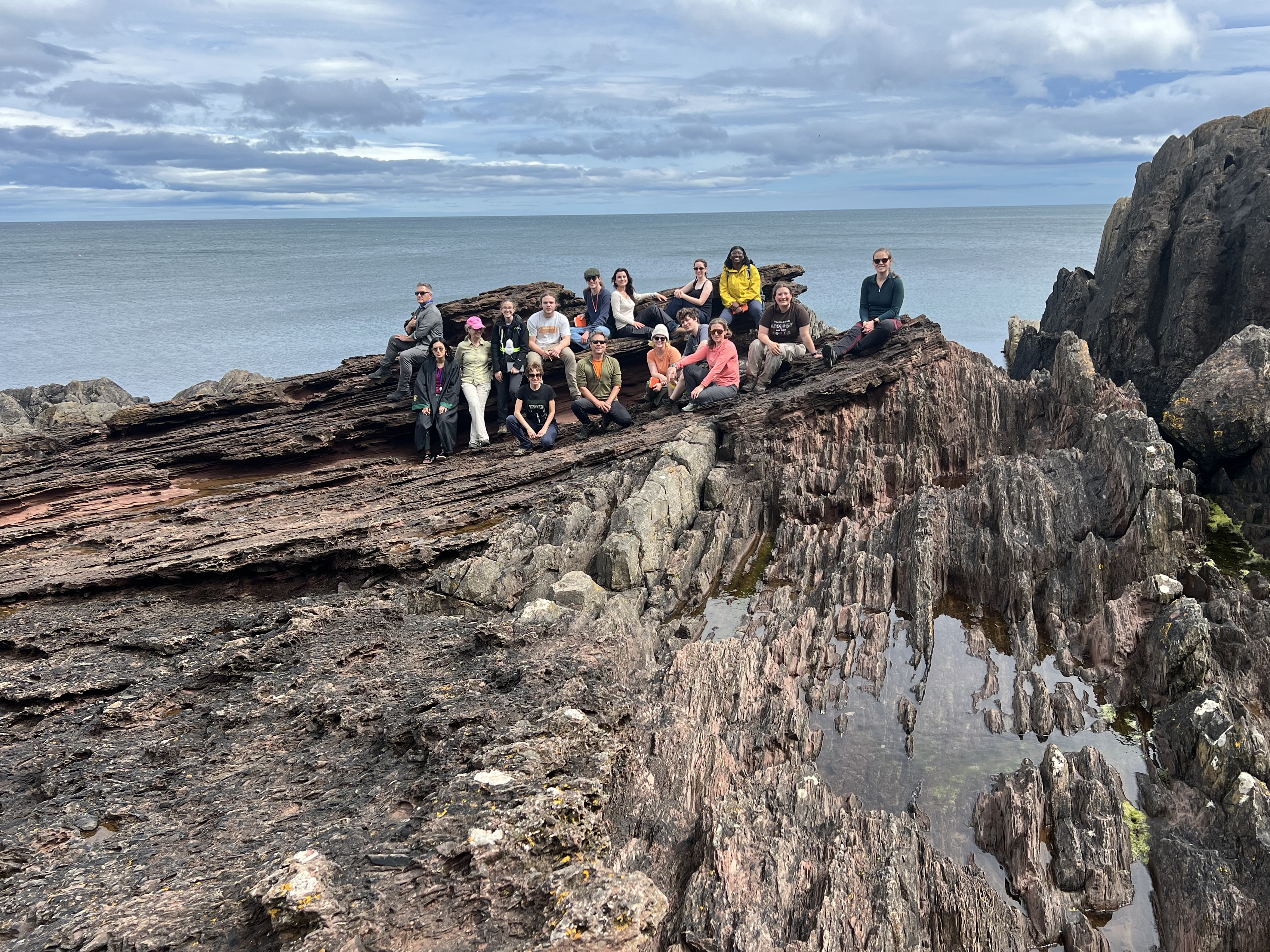
At the Fife Coast, near St. Andrews, the students studied strike faults and explored Edinburgh for three days. They also visited Arthur’s Seat, a key geologic formation that inspired James Hutton, the father of modern geology, to first propose the existence of igneous rocks. The trip coincided with the 300th anniversary of Hutton’s birth. Along the Moray Firth coastline near Inverness, they studied metamorphic rocks; at the Isle of Skye, they examined magmatism and unique rock formations.
The group explored one of the most significant sites of geologic history at Siccar Point, a rocky coast where in 1788, Hutton identified evidence that challenged the existing understanding of Earth’s history. At the site, vertical layers of ancient sedimentary rock lie below younger material, exhibiting a perfect example of deposition and tectonic sequences. This landform helped Hutton argue that Earth’s history extended much further back than thought at the time – and served as an ideal outdoor classroom for the class.
Combining history and geology, the class explored Scotland’s Old Course – the oldest golf course in the world that set the standard for most 18-hole golf courses worldwide. Built in the 15th century, the land was altered 150 years ago when the Scottish channelized streams coming in from the Highlands, turning them into meandering canals with quaint stone bridges over top.
The students explored the glacial carving that first formed the area of the golf course and discussed the windblown sand that later created the distinct landform full of dunes, bumps and wiggles. They learned that the quick draining quality of the land made it ideal for lush grasses to grow there. “Golfers come from all over the planet to see it, but it sits there for a very specific geologic reason,” Bailey said.
They examined the Old Course’s channelized streams, which are a real-world example of water hydraulics utilized for both aesthetic and utilitarian purposes. This “human-geologic interplay,” as Bailey calls it, gave students a hands-on example of how geology ties into a country’s identity.
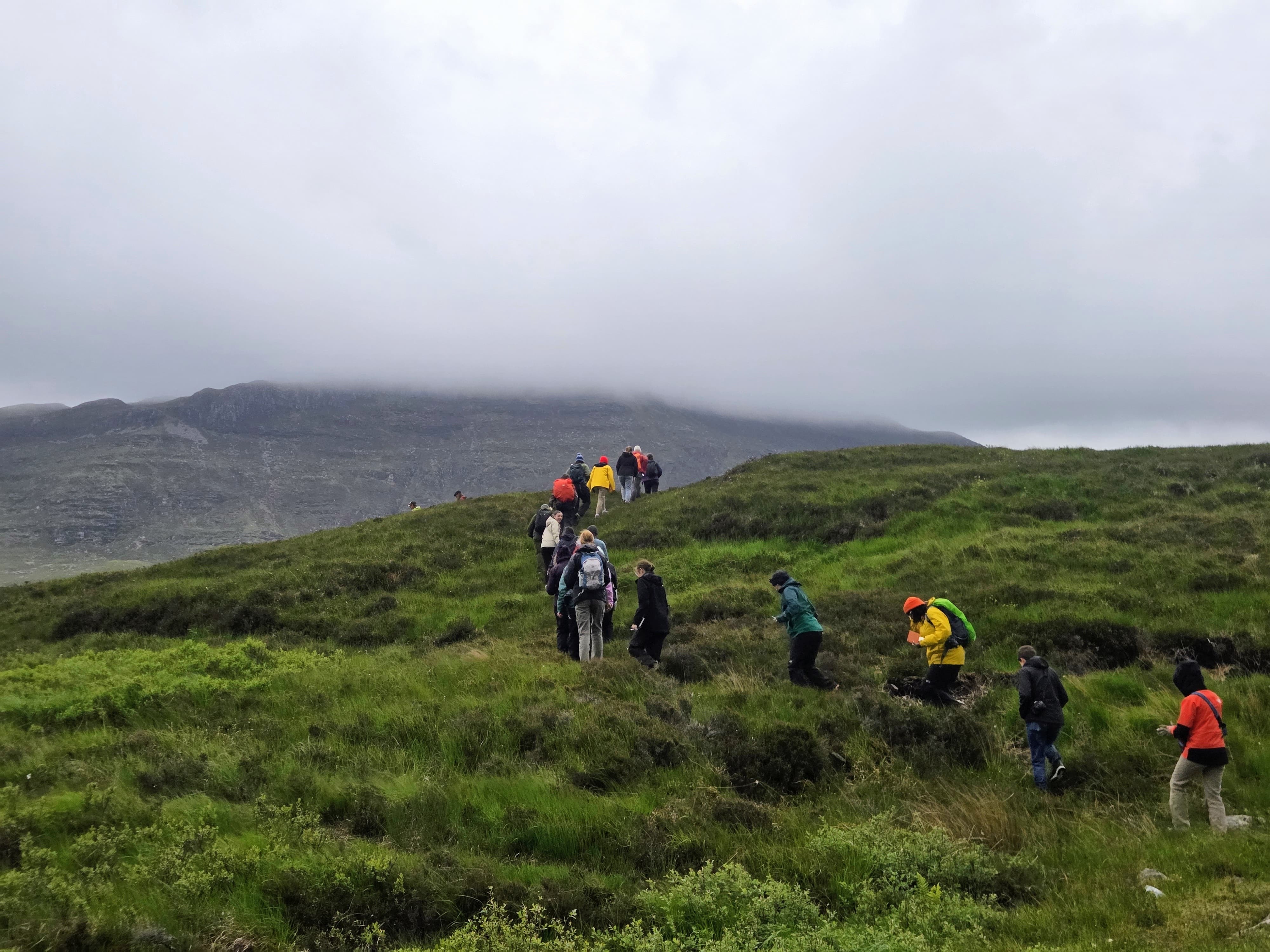
Andrew Fisher, associate professor of history, joined the Scotland trip to provide historical and cultural context to the locations they visited. Students learned Scottish history, from the medieval and Enlightenment periods to the urbanization of the lowlands. They explored 12th century castles, discussed the Battle of Culloden in the context of the Jacobite Rebellions, and learned about the evictions of tenant farmers during the Highland Clearances.
Bailey said he found the added history quite impactful, as he saw students experience place-based learning while finding connections to events globally. “It’s not all geology,” he said. “The other parts – history, culture – make it richer.”
Beyond learning how geology and history intersect, students came away with a greater understanding of what geologic field work entails.
“They got a real taste – field work is not always easy. It's not always exactly what you expect,” Bailey said.
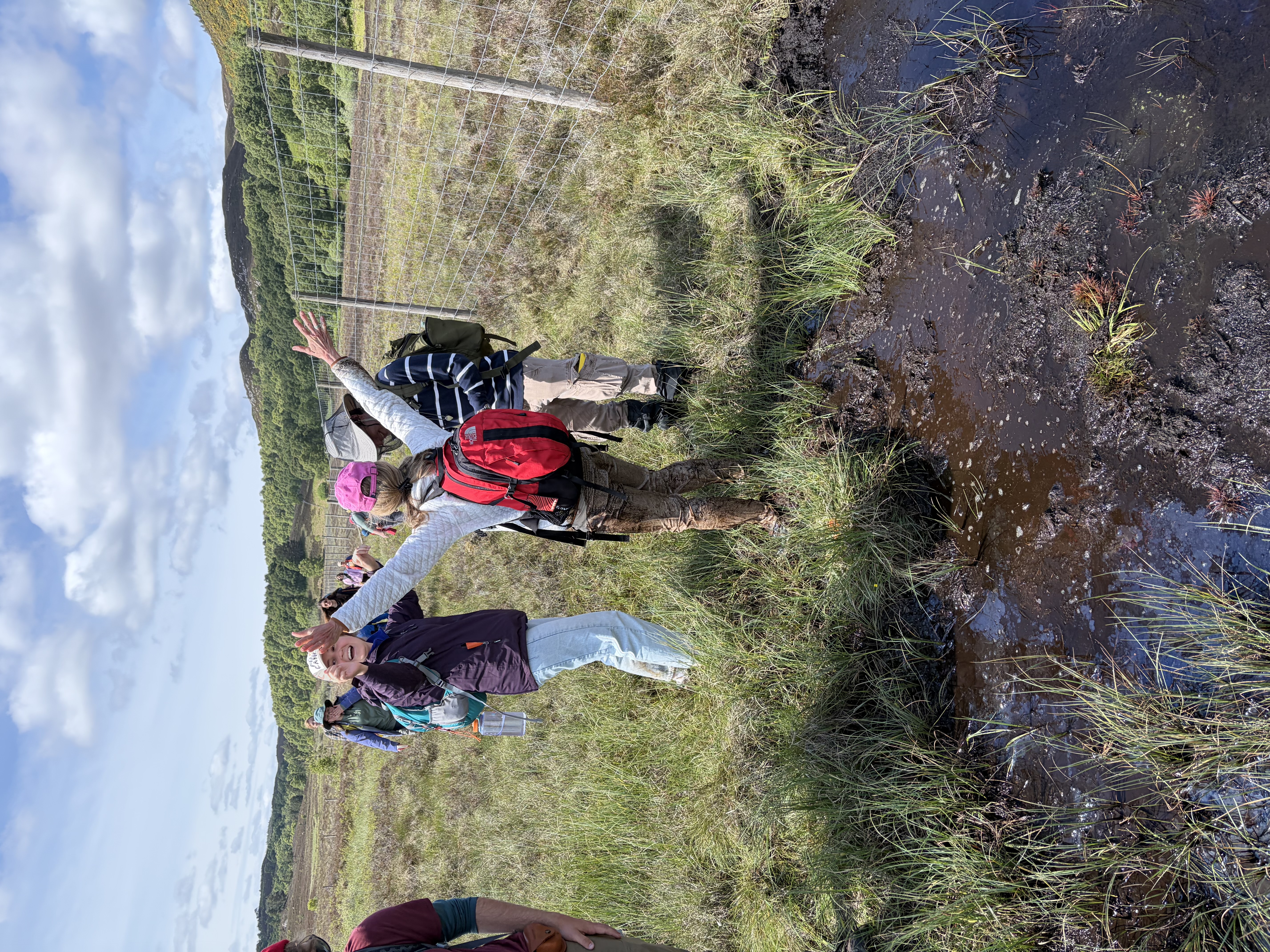
At a bog, located outside the Inverness region, the students learned how to better map land and identify rocks, while also learning the challenges of fieldwork. They learned “field flexibility,” as they came to call it, with some students going in waist deep into the bog and surviving tough weather. The class was especially inspired by Morse’s perseverance and positivity after falling into the bog. “Things don’t always go to plan, but we learned a lot,” said Denton. “In the end, our entire class was buzzing about how much fun it was despite being covered in peat and muck.”
Students kept field notebooks throughout the trip, documenting what they encountered from coast to coast. They also came together as a class, learning to work and travel together as a team.
“Going on the GEOL 310 field course was the most incredible experience I've ever had at William & Mary. I have never felt such a sense of camaraderie and community before,” Denton said.
She also reflected on the skills she learned while making unforgettable memories. From learning to navigate via topographic maps and the Universal Transverse Mercator coordinate system, to creating her own geologic map of the bog, Denton came away feeling ready for her future career.
“The trip was a taste of what working in the field looks like,” she said. “This field course truly is one-of-a-kind and was absolutely crucial to my development as a geologist and a student.”
The regional field geology prep course will be offered in the spring before a planned trip to California next summer. Applications for the program open on Nov. 6.