 Skip to main content

Professor Chris Howard recognized for enduring contributions to public policy
Before Chris Howard, Harriman Professor of Government & Public Policy, became an award-winning scholar, he was a graduate student at the Massachusetts Institute for Technology searching for something every researcher needs: a fresh idea. It was 1990 and Howard needed a research topic for his dissertation. He kept digging through the political science literature, hoping to find a question worth pursuing. Eventually, inspiration struck.
"There was a time in February 1990 where this idea came to me, and I had about three days where I didn’t sleep much because I was writing my ideas down,” Howard said.
This would become the basis of his influential 1997 book, “The Hidden Welfare State: Tax Expenditures and Social Policy in the United States,” published by Princeton University Press. According to Google Scholar, the book has been cited in more than 1,500 academic books and articles. 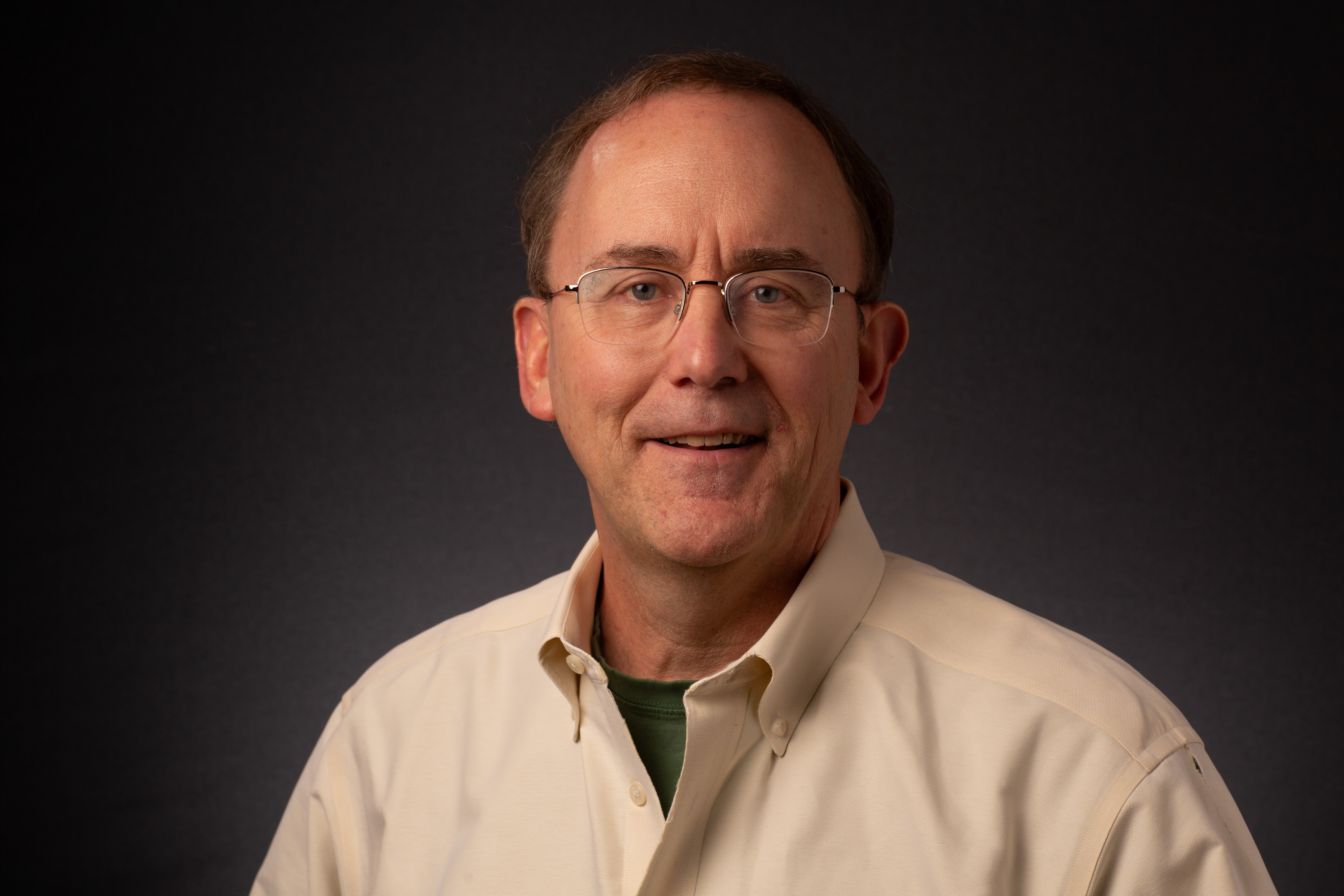
By revealing how tax breaks and incentives form a vast but largely overlooked system of social welfare, and that welfare programs often thought to target low-income individuals actually disproportionately benefit middle- and upper-income taxpayers, Howard’s book has become widely referenced in classrooms across the country.
This past August, Howard received the 2026 Aaron Wildavsky Enduring Contribution Award from the Public Policy section of the American Political Science Association (APSA). The award recognizes books or articles in public policy that have made a significant contribution to the field over the past 20 to 30 years. Past winners include presidents of the APSA Robert Putnam (2016) and Theda Skocpol (2013) as well as Nobel Laureate in Economics Elinor Ostrom (2000).
“A lot of previous winners, I’ve assigned their work to my classes. I know that a lot of good people win the award, so I’ve been privately hoping that I might win. But it was still a really nice surprise when it happened,” Howard said.
Receiving his bachelor’s degree in history from Duke University and his master’s and Ph.D. in political science from MIT, Howard found his interests leaning towards social policy in academia. Since joining William & Mary in 1993, Howard’s work has extended beyond his research. Having served as a Sharpe Scholar mentor and now as a mentor and a faculty fellow for the William & Mary Scholars Undergraduate Research Experience (WMSURE) — a program open to all students at W&M, with a special focus on W&M Scholars, first-generation students, and Pell-eligible students — Howard has made mentorship a large part of his work at the university. He has also published four other books during his time at W&M, on topics ranging from social policy to research methods.
“Chris Howard has found the perfect home at W&M,” said John McGlennon, Class of 1935 Professor of Government. “The care he takes in providing education in and out of the classroom is evident to me on a daily basis as I watch the parade of students at his office.” For Howard, that sense of home extends to his own experience in the classroom.
At W&M, he has found the space to pursue the questions that first drew him to academia while sharing those interests with his students. “I’ve also gotten freedom to teach the courses about social policy that I care about,” Howard said. Most recently, he’s taught a course on the Future of U.S. Social Policy and Policy History.
The freedom to explore beyond the bounds of a syllabus is something Howard says he hopes his students embrace, too. Especially with first-year students, he emphasizes a distinction central to his teaching: earning a degree is not the same as receiving an education. “Getting an education means a lot more than just getting a degree,” Howard said. For him, that can mean conducting research outside the classroom, attending panels and guest lectures, studying abroad or simply being “curious and open” when talking with people whose experiences differ from their own.
It is an approach that McGlennon sees reflected in Howard’s own career. “It is rare to find faculty members so balanced in their approach to teaching and research,” McGlennon said. “The kind of reputation that he has among his scholarly peers is evident in the honors he has received at every stage of his career.”
But from his neighboring office in Chancellors Hall, McGlennon sees Howard’s impact on a daily basis. He describes the professors’ offices as part of a small “pod,” where Howard’s door draws a steady stream of visitors.
“I can attest to the fact that the path to his office door gets a very high volume of traffic from colleagues, students, and alums,” McGlennon said More than three decades after Howard first arrived at W&M, that path to his office remains well-traveled as he continues to leave a lasting impact, both on his students and the public policy field.