 Skip to main content

Juan Gelman's Poetry Translated by HISP Faculty-Alum Collaboration
Almost a decade ago, in Prof. Tandeciarz’s class on creative writing in Spanish, Arianna Afsari (HISP & Russian & Post-Soviet Studies ’19) read a poem by Argentine Juan Gelman (1930-2014) for the first time. Little did she know that Gelman’s poetry would accompany her though graduate school; or that it would demand a visit to Princeton University’s Special Collections, where the Juan Gelman Papers are housed; or that it would lead to a collaboration with Prof. Tandeciarz to produce a bilingual publication of Gelman’s Notas / Notes (London, the87press, 2026). Now, this collaboration --the first full English translation of Gelman's book-- has been listed by the Poetry Book Society (UK) as a Translation Choice for Autumn 2026.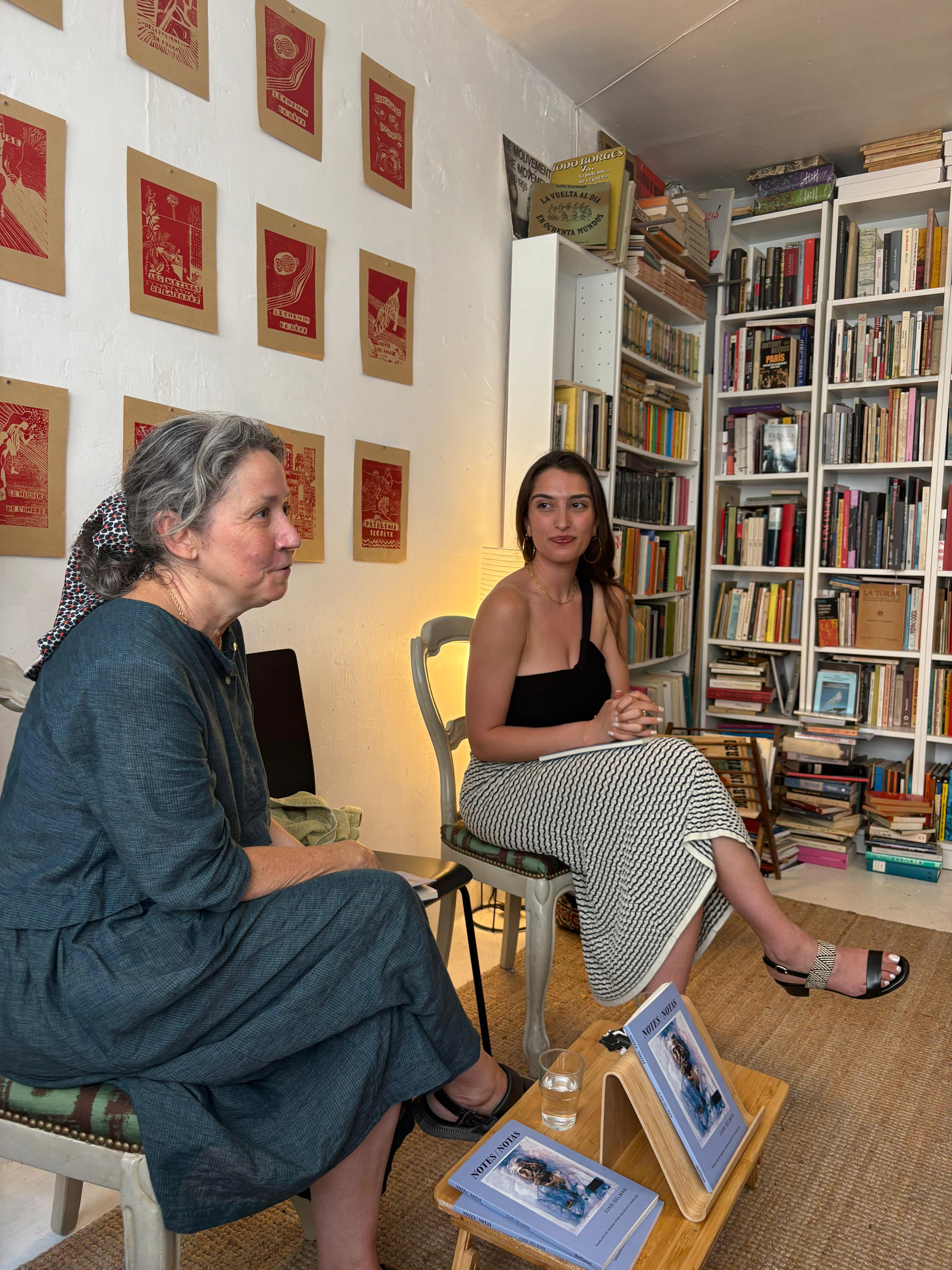 Juan Gelman is widely considered one of the most important contemporary Spanish-language poets. In 2007 he was honored with the Miguel de Cervantes Prize, the most prestigious Spanish-language literary award. Originally published in 1979, Gelman wrote Notas in exile, after the 1976 military coup d’etat in Argentina. The coup started a period of state terrorism that led to the ‘disappearance’ of thousands of people, including Gelman’s own son.
In the process of translating Gelman’s poetry, Arianna and Prof. Tandeciarz were challenged by Gelman’s linguistic innovations and his use of neologisms, including terms such as the verbs “niñar” (which they decided to render as ‘to child’), “vivirmorir” (‘to livdie’), and “enmorir” (‘to indeathen’), or the rich participle “envolvidos” (‘inobliviated’) that combined the idea of being wrapped (‘envuelto’) in an infinite cycle of oblivion (‘olvidos’).
For Afsari, following on an idea by Postcolonial theorist Spivak, translation is “the most intimate act of reading.” For Prof. Tandeciarz, who has translated, among others, the works by Chilean cultural theorist Nelly Richard and of Puerto Rican poet and academic Juana Goergen, the act of translation “has to be worth the effort in the sense that I believe making it available to a new audience is imperative given the perspective, corner of light it offers.”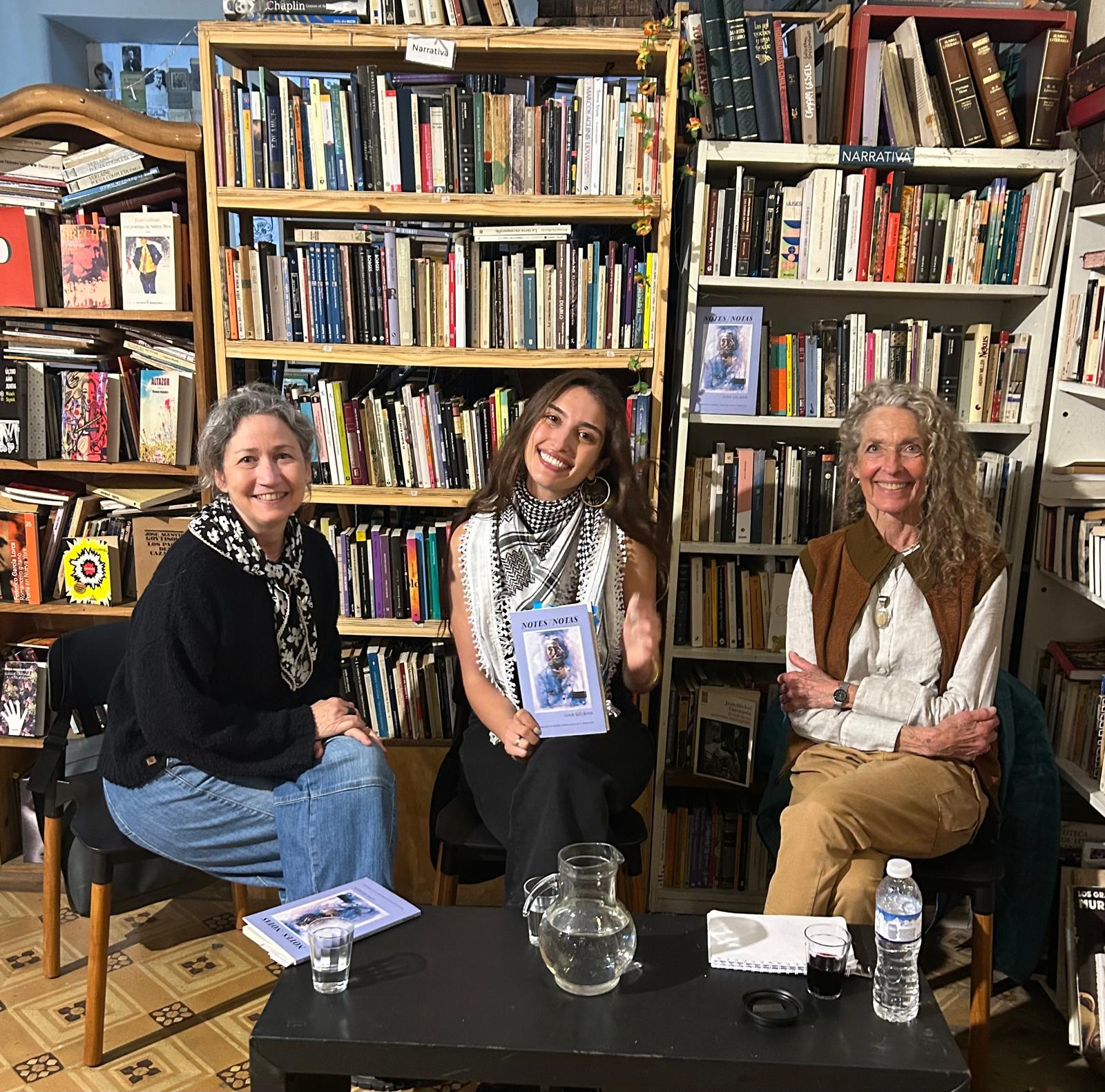 In a recent review, Argentine-British poet and translator Leo Boix comments that this translation "doesn't simply carry Gelman into English; it reinvigorates him. This is not a small feat. Gelman's poetry is a volatile mix of linguistic play, political fury, and philosophical depth, forged in the crucible of exile, political violence and loss." Moreover, Boix praises the translators because they honor these challenges "by embracing difficulty rather than smoothing it out;" and, in doing so, the translators generate "not merely translations" but rather "acts of listening and resistance." Perhaps the highest laud rests on the idea that the translation by Arianna and Prof. Tandeciarz "doesn't resolve Gelman's tensions--it lets them burn."
Currently a doctoral candidate in Comparative Literature at the University of Michigan, Arianna Afsari’s work on Gelman has previously appeared in Absinthe: World Literature in Translation (2023) and LIT: Literature Interpretation Theory (2025). She is currently a doctoral candidate in Comparative Literature at the University of Michigan. She commented on Notas/Notes at an event in London, UK. During her time at W&M, Arianna studied abroad in Seville and served as an undergraduate Teaching Assistant for Hispanic Studies. She also served as a research intern under Prof. Tandeciarz at the National Security Archive, working with declassified documents related to the dictatorship in Argentina.