 Skip to main content

Geology professor Chuck Bailey rocks Raft Debate All-Stars
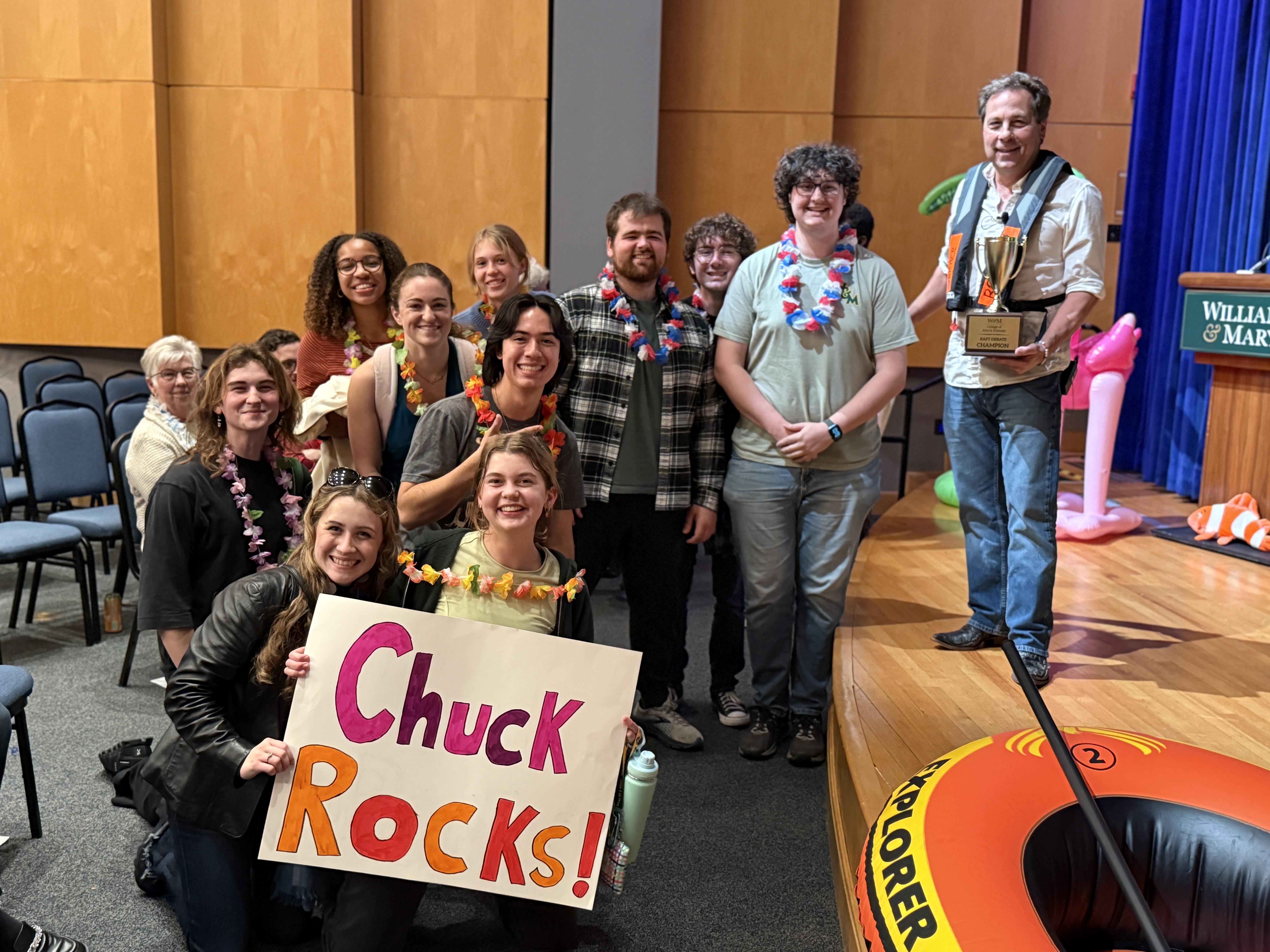
The Commonwealth Auditorium roared with applause the second geology professor Chuck Bailey took the stage at the 2026 Raft Debate. His students stomped in their seats and sang the Queen song “We Will Rock You” in support. One even held up a poster that said “Chuck Rocks.”
More than two decades after his first Raft Debate victory in 2003, Bailey “rocked’ the crowd once again to become the Raft Debate All-Stars champion on Tuesday, Oct. 27.
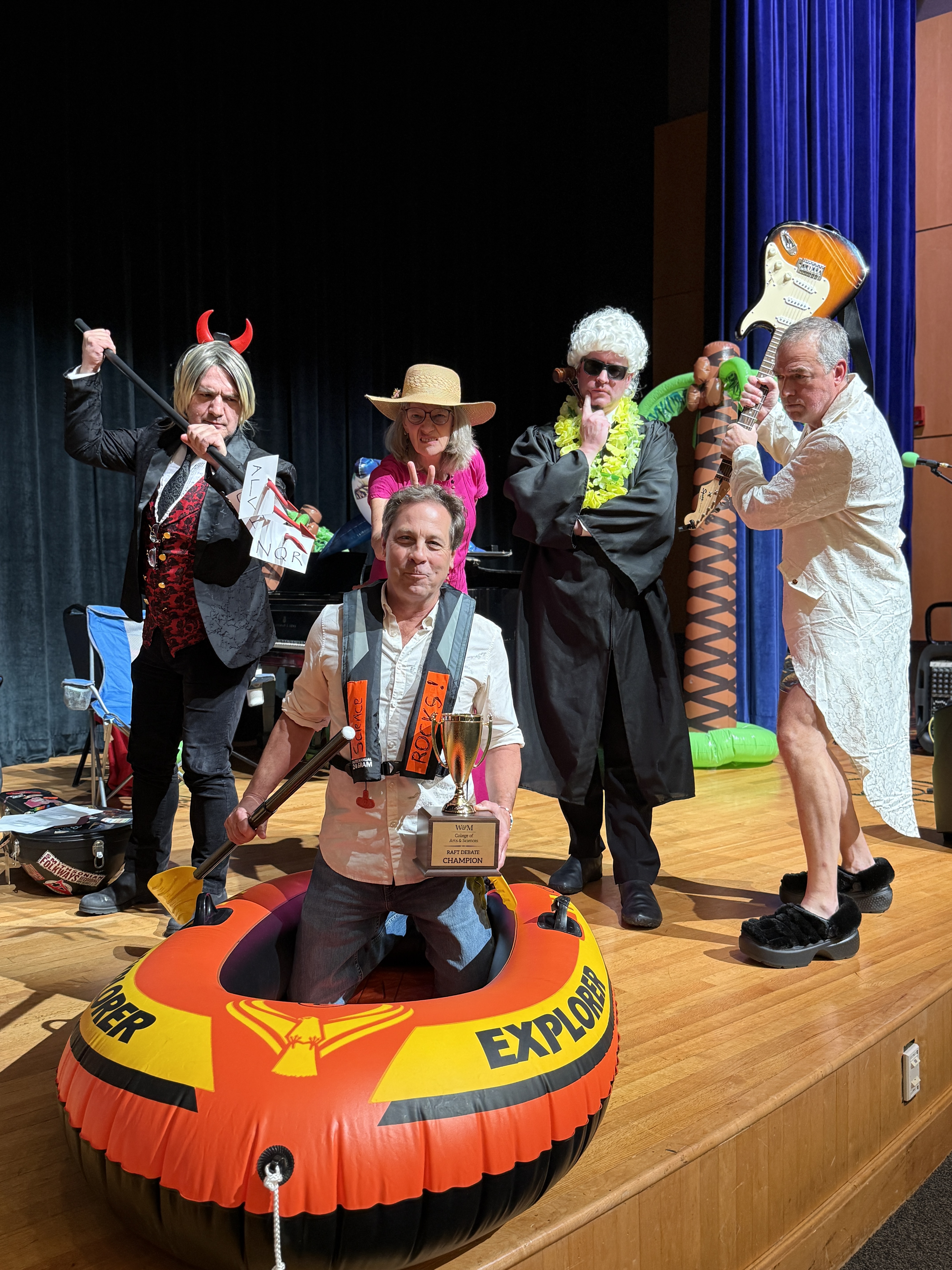
The William & Mary tradition places three professors — representing the sciences, social sciences, and the arts and humanities — plus a Devil’s Advocate, against each other in a fictional shipwreck scenario. Stranded on a deserted island, they must argue why their discipline is worth saving for the sake of humanity in order to escape on the one life raft. While the debate is beloved for its silly props, costumes and witty banter, it prompts thoughtful discussion on the value of each academic discipline and its role in society.
“I think it’s one of the best W&M traditions. It brings people together and truly captures that twamp spirit,” said Kailey Thom ’29.
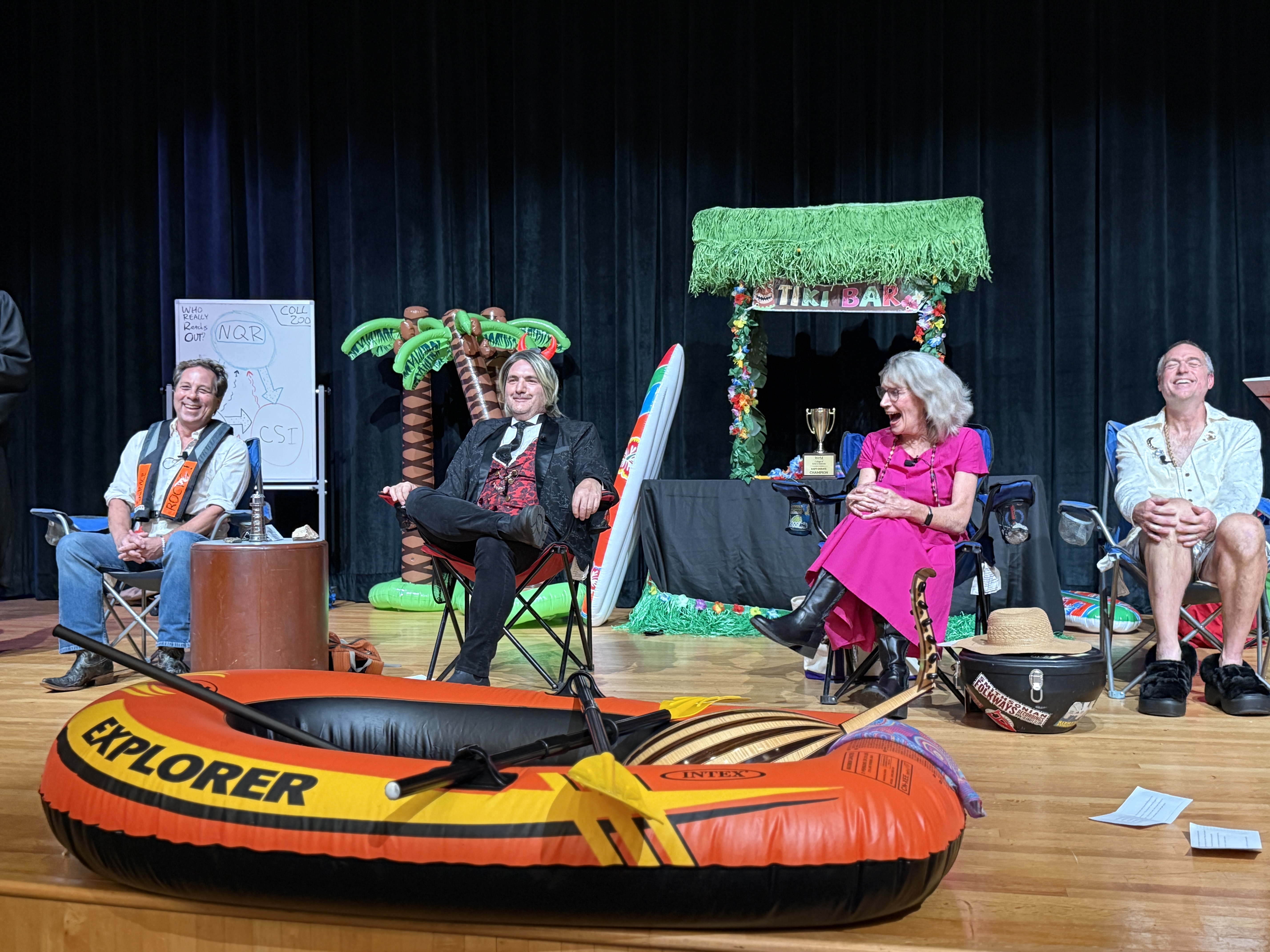
This year’s Raft Debate had a special twist: it was an All-Stars edition. Previous winners from years past found themselves back on the island after another shipwreck and faced fellow champions to settle the age-old question once again.
Joining Bailey, who represented the sciences, was Peter Vishton, associate professor of psychological sciences, who defended the social sciences, while Anne Rasmussen, professor of music/ethnomusicology and Bickers Professor of Middle Eastern Studies, argued for the arts and humanities. Rounding out the all-star cast was Andy Fisher, associate professor of history, as the Devil’s Advocate, who argued that none of the disciplines should leave the island.
Each contestant had seven minutes to make their case for why their academic discipline should get the coveted life raft, and the professors employed a range of elaborate (and musical) methods. After the first round, the tension only increases as each professor has just three minutes for a rebuttal against their opponents. The debate closes with questions from the audience, often helping — or hurting — a contestant in the final minutes. The winner is determined by the volume of applause in the audience, which is measured with a dosimeter.
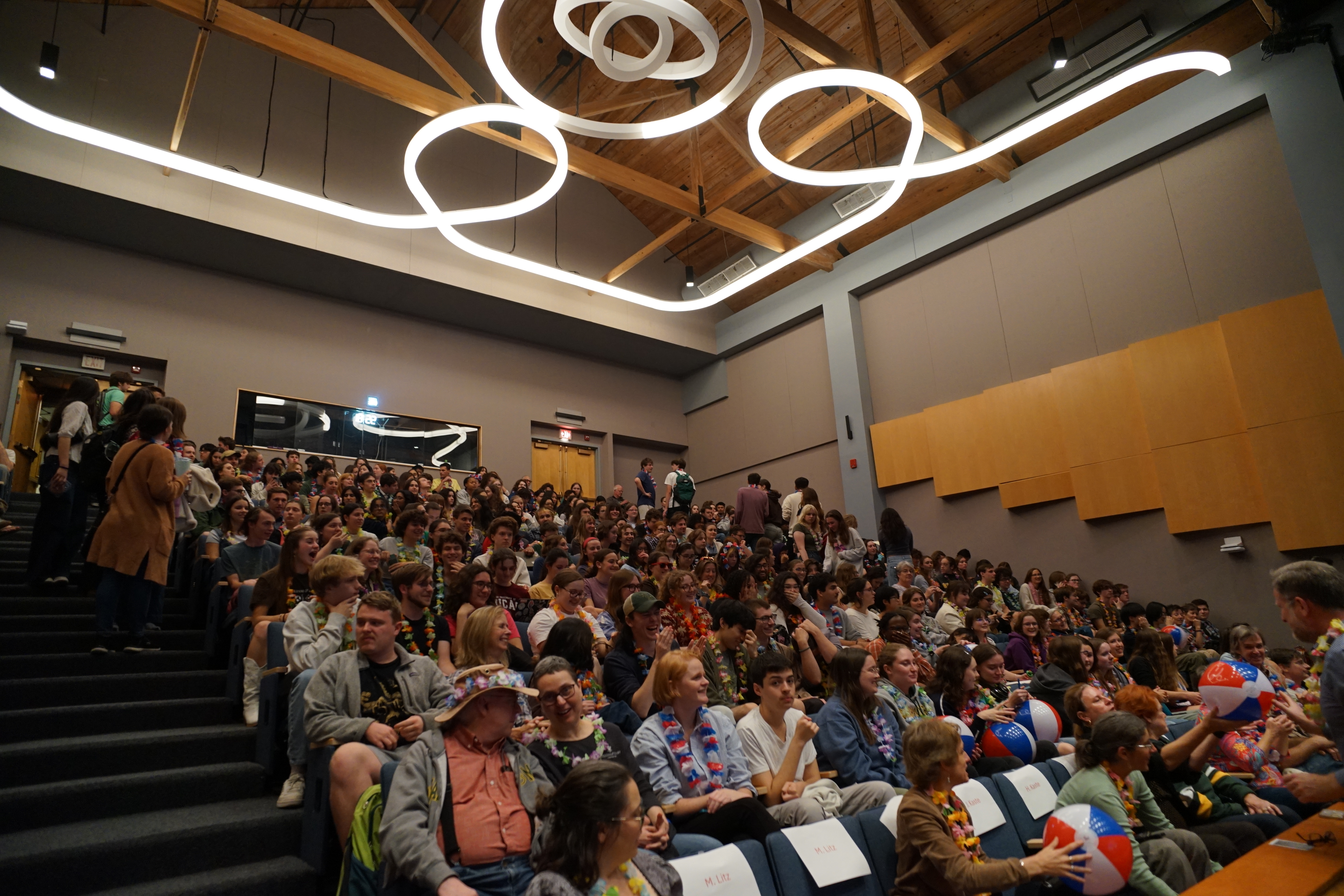
Students packed into the auditorium as soon as doors opened at 6 p.m., quickly filling in every row. Once the Commonwealth Auditorium reached full capacity, students were directed to the Chesapeake rooms where the debate was broadcast on Zoom. Hundreds more tuned into the livestream on YouTube.
Among the beach balls and leis scattered everywhere, students began the debate early among themselves, arguing for their favorite professor. “I think Vishton will win because a big part of this game is just psychological manipulation, and he has a very strong psych background,” said Avi Dabas ‘28.
The crowd suddenly went silent as the lights dimmed and the show began. A video clip from 1976 came into view on the screen, showing the final presidential debate between Gerald Ford and Jimmy Carter that occurred right on W&M’s campus in Phi Beta Kappa Hall. With the debate mood set, emcee and judge Trey Mayo, assistant dean for graduate studies of the School of Computing, Data Sciences & Physics, strutted on stage. Dressed in a white wig and black robes, Mayo asserted that the “spirit of that debate continues tonight at the alma mater of the nation.”
After the contestants were introduced on stage and the giant squid, now a crowd favorite, carried in this year’s championship trophy, the Raft Debate officially began.
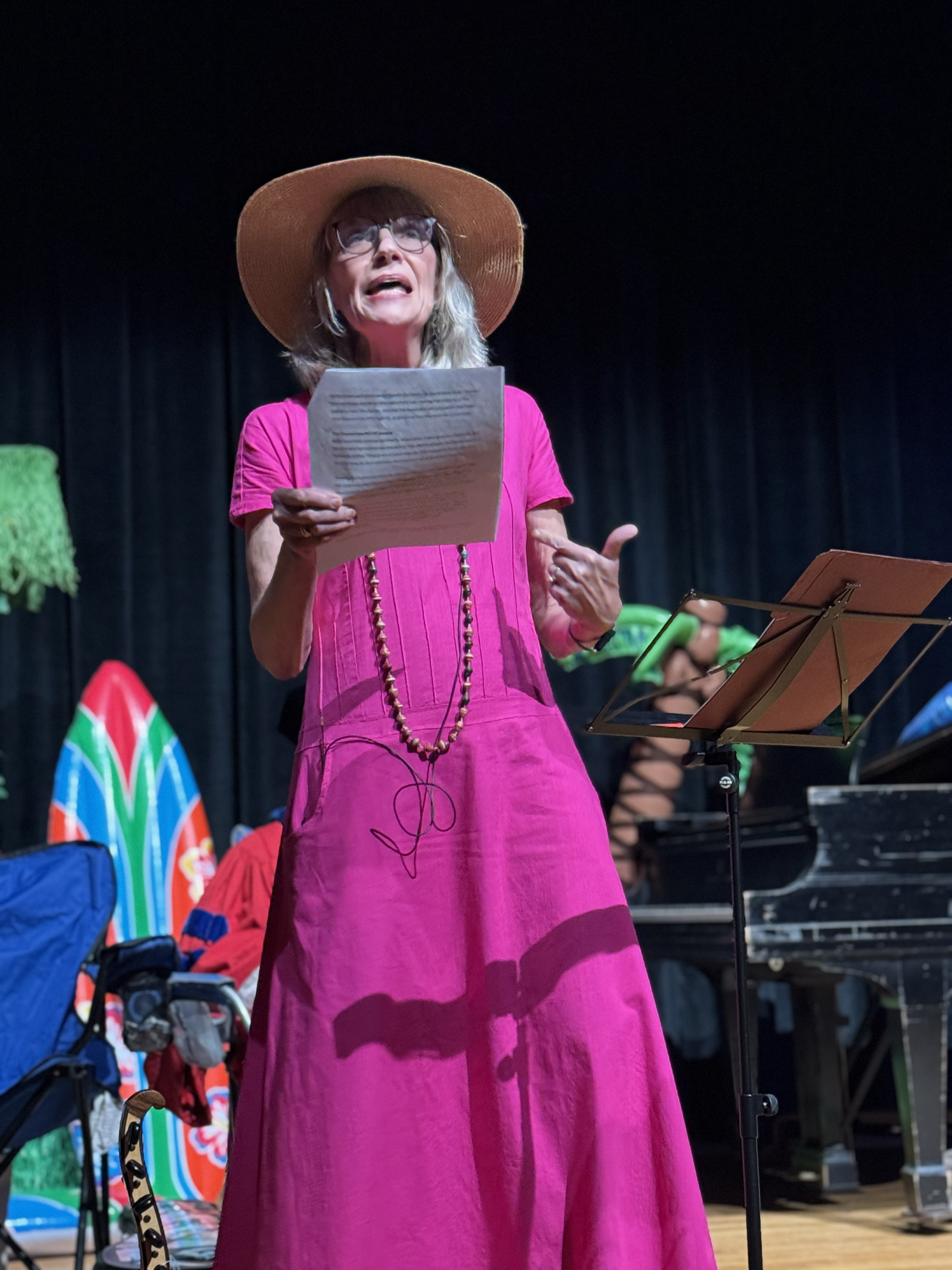
Starting on the piano, Rasmussen kicked off the debate with a tune she wrote to the theme song of “Gilligan’s Island” about the importance of arts while poking fun at her competitors. “I am an ethnomusicologist, and the others have no chance,” she sang. Dressed in a pink dress and floppy beach hat, Rasmussen clutched an Arabic oud as she argued how one instrument covers craftsmanship to culture-sharing — proving how art transcends all disciplines. “We need nothing more than art to save humanity,” she said. 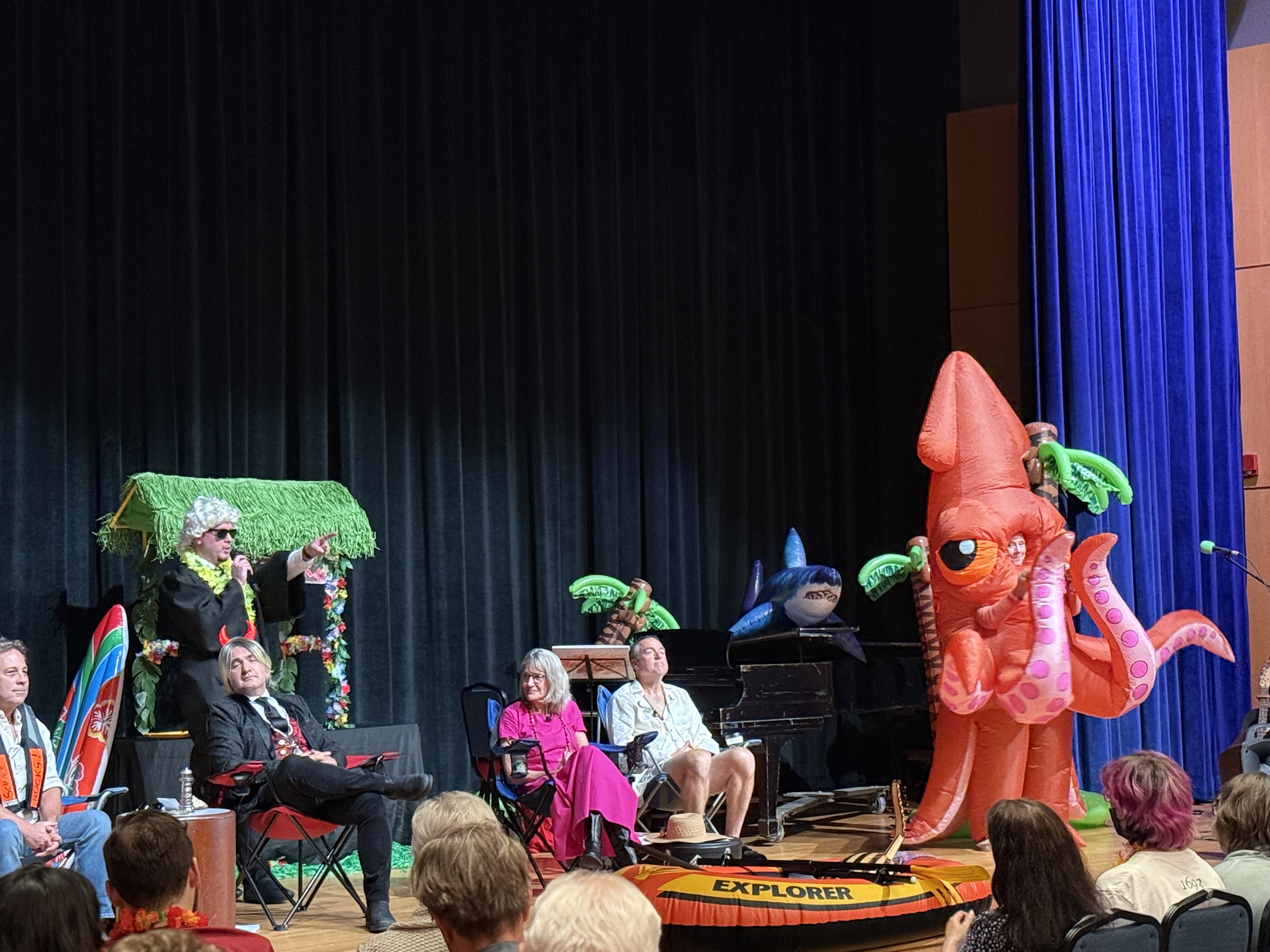
Bailey headed straight to the podium and declared “We are going to rock you tonight,” note the geology pun — a common occurrence in his arguments. Embracing his science background, he revealed an integral graph on a whiteboard depicting the other disciplines' contributions to humanity versus his own. With a large area under the curve— signifying that science gives more to the world — he declared his discipline the worthiest of boarding the raft. “Science is the way forward,” he said. Ending his first argument, Bailey held up a rock, cuing his geology students in the audience to stomp and sing “We Will Rock You,” which occurred at several points in the evening.
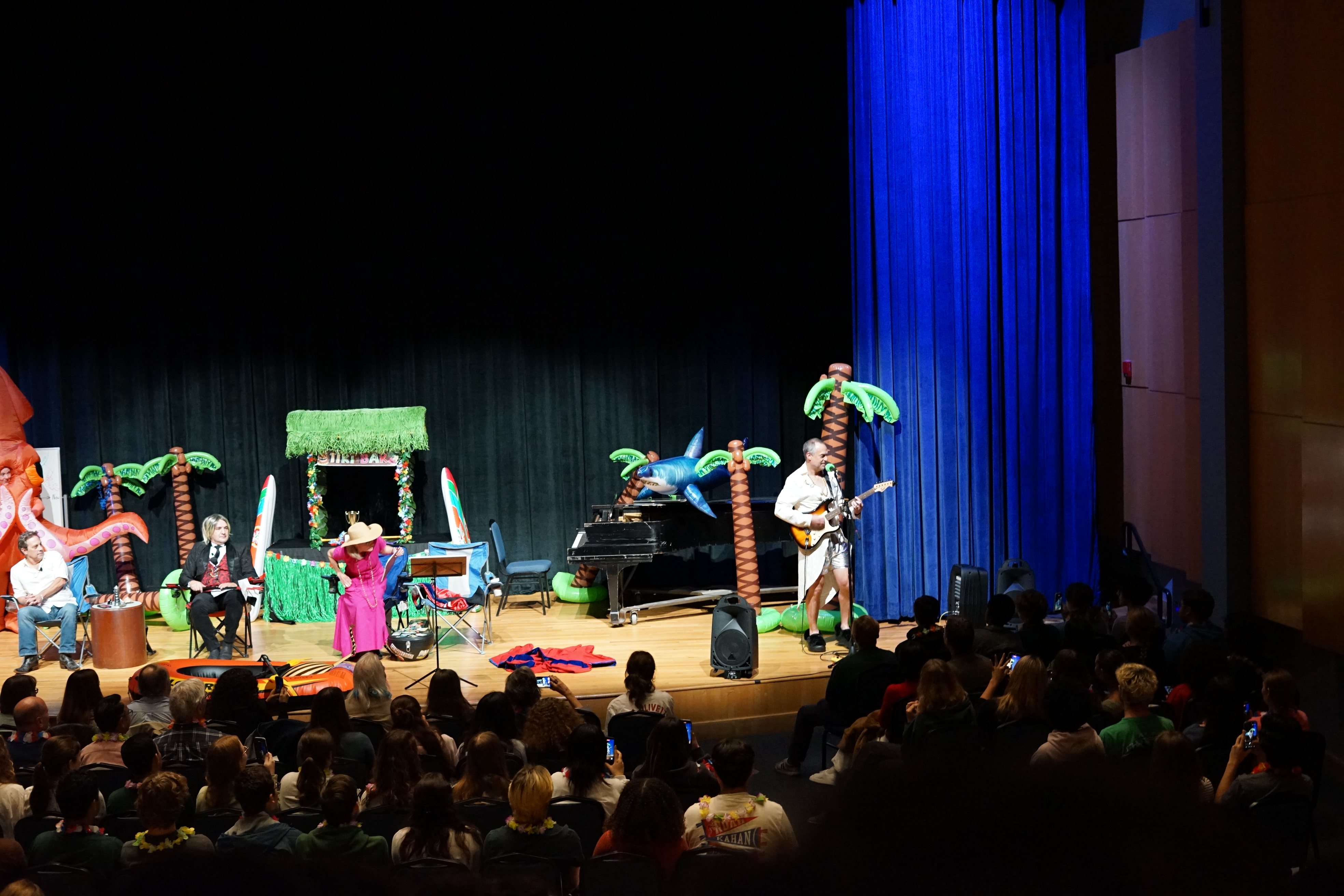
Upon Vishton’s turn, he graced the stage wearing his faculty graduation regalia. This changed after he asserted that the other disciplines could not function without the social sciences, and he ripped off his robes to reveal a shiny rockstar-esque outfit. With electric guitar in hand, Vishton proceeded to sing a social science parody of Harry Styles’ “Watermelon Sugar.” “I’m loving social science,” he sang. A student conductor even sprung up in the audience during one of Vishton’s choruses to reveal trumpet players in the back row of the auditorium to accompany Vishton’s song, evoking roars from the audience.
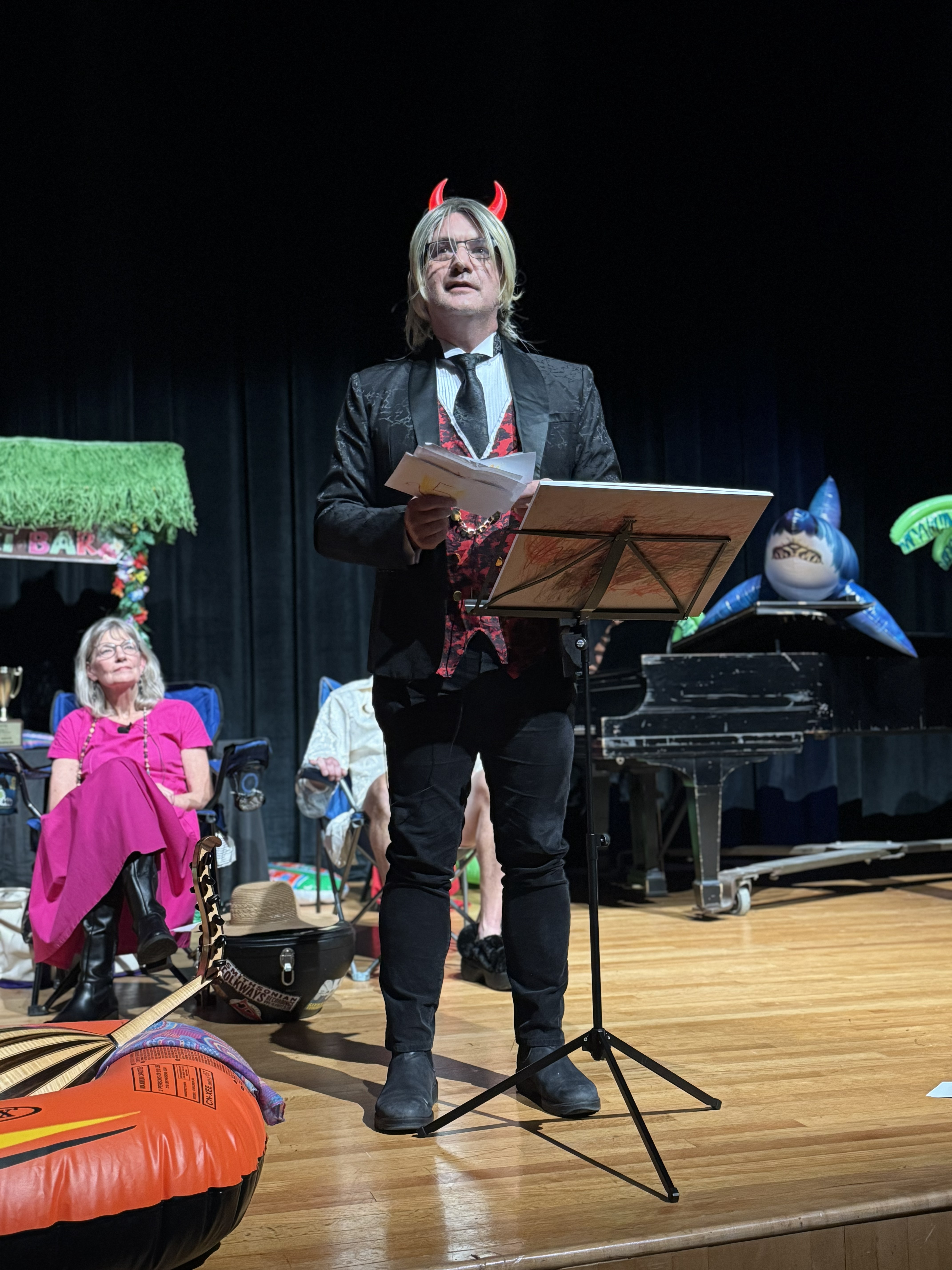
“Good evening and welcome to my nightmare,” Fisher greeted the crowd. As the Devil’s Advocate, Fisher embraced his role by wearing glowing red horns and a wig inspired by Haymitch, a famous character from “The Hunger Games.” “I won the second Quarter Quell in 2011,” Fisher said, staying on “The Hunger Games” theme. “Now I am back.”
Attacking his opponents, Fisher poked fun at every discipline. Rolling his eyes at the sciences’ invention of the cybertruck and claiming that the social sciences were "obsessed with the size of their datasets,” Fisher finished his remarks off by calling the arts the “goths and emos of academia,” which elicited laughter from the audience.
During the rebuttals, Rasmussen reiterated that “art is the portal to everything” while Bailey claimed none of the other disciplines could fix a torn rotator cuff if they tried. For his rebuttal, Vishton returned to his guitar to sing a social science parody of Britney Spears’ “...Baby One More Time.” To wrap up debate, Fisher conveyed an ideal world where artificial intelligence replaced the other disciplines, emphasizing how none of them deserved the raft.
After an evening of surprise musical performances, witty jabs and spirited arguments, Bailey emerged victorious. The crowd erupted in cheers as Bailey claimed the Raft Debate trophy, defending his place among the champions in this year’s All-Stars edition.
 “From my perspective of sitting up on the stage and looking out at the audience, which was fully engaged in the show, was awesome and I’m fortunate to have played my role in that drama,” Bailey said. “Sure, it’s a geeky W&M tradition, but it brought our intellectual community together for a gladiatorial spectacle that’s rather unique. I put effort into pre-debate prep to get the audience primed and ready — see, scientists are collaborative.”
With its blend of academic rivalry, humor and school spirit, the Raft Debate once again demonstrated why this uniquely W&M tradition continues to bring the campus community together year after year in celebration of the liberal arts and sciences.