 Skip to main content
Digging into the past: faculty-student research team investigates ancient Greek site
Growing up visiting her extended family in Varna, Bulgaria, Maya Parfitt ‘27 spent her summers immersed in thousands-year-old history. With the city’s deep ties to ancient Greek and Roman history, Parfitt remembers hearing stories of her mom playing among Roman ruins as a child in Bulgaria. Surrounded by this ancient archaeology, Parfitt became interested in classical studies from a young age.
During her first semester at William & Mary, Parfitt took a course in Greek archaeology and art, taught by Jess Paga, Gale & Steven Kohlhagen Associate Professor of Classical Studies. “It solidified my love for classics,” Parfitt said.
The course proved more meaningful than Parfitt could have anticipated. After taking more classes taught by Paga, the professor invited Parfitt to work as a research assistant under her. This role exposed Parfitt to the Naxos Quarry Project, which she joined in 2025.
The Naxos Quarry Project is an international archaeological project focused on the ancient marble quarries of the Greek island of Naxos, which is famous for its white marble used in architecture and sculpture. Since 2023, the project team has conducted on-site fieldwork in the Naxian quarries, studying the ancient process of quarrying.
Their research seeks to better understand ancient industrial landscapes, including the environmental impacts from such activity 2,500 years ago and the effects that remain today. “Our intention is to bring some new attention to these often-ignored areas of the ancient world,” Paga said.
This summer, the team focused their research on Palatia, an islet off the coast of the port town of Naxos. Palatia is home to an unfinished marble temple started in the 6th century BCE which was built with marble from one of the ancient Naxian quarries. The fieldwork this summer focused on analyzing the blocks of the unfinished temple, which helps them better understand the ancient processes of temple construction.
Paga began working on the project in 2023, with co-directors Rebecca Levitan and Evan Levine, undertaken in conjunction with the Ephorate of Antiquities of the Cyclades (Hellenic Ministry of Culture). Levitan, an expert in sculpture from King’s College London, and Levine, a leading scholar in environmental survey from the University of Copenhagen, brought in Paga for her expertise in Greek architecture. Each of the three professors have also included undergraduate and graduate student assistants in the project. “We wanted to start bringing in students as soon as we could,” Paga said.
She brought along three William & Mary classics students to Naxos this summer. Funding provided through Hogan Grants from the department of classical studies, the Charles Center, and a Dean’s Annual Fund made the international trip financially feasible for the students. “We prioritize giving students hands-on experience but not just limited to those who come from more privileged backgrounds,” Paga said.
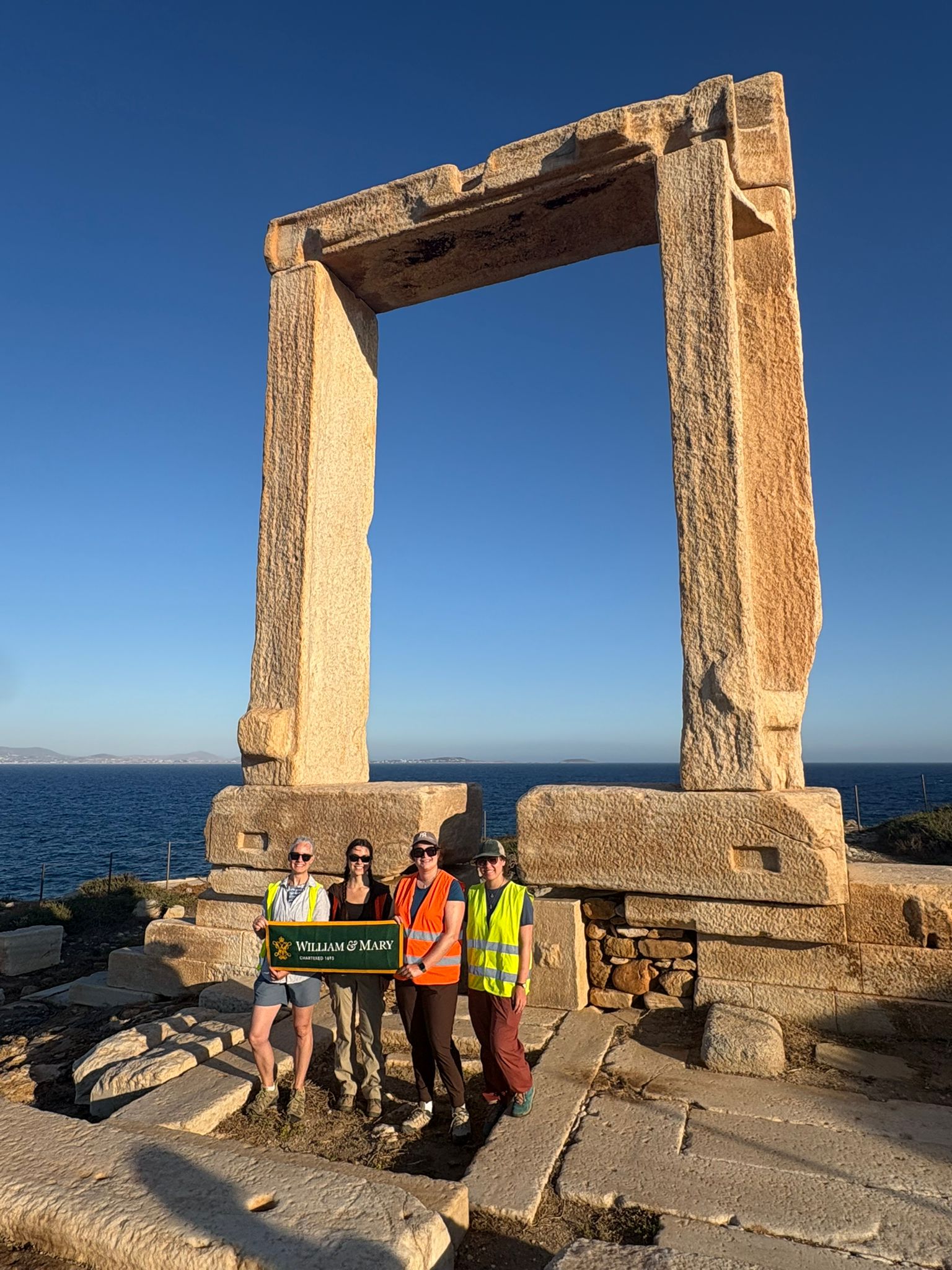
Her students participated in every aspect of the project; they worked on-site in the mornings and catalogued artifacts and processed data in the afternoons. The students learned field surveying, pottery identification, architectural drawing, block measuring and other hands-on tasks.
Beyond the labor, the students were involved in the analysis portion of the project. “We’re exposing students not just to manual work, but to the ideas and processes behind it,” Paga said. “We’re helping them understand how something as small as a piece of pottery can tell us something important.” Each student was also assigned to research and present on a topic specific to Naxos, helping them understand the cultural history behind the site.
Parfitt first joined the Naxos Quarry Project in the summer of 2025. That year, their efforts were focused on the quarries themselves, including analyzing a colossal marble block at one of the quarries. This past summer, she returned for a second year — this time at the Palatia islet site.
Parfitt particularly enjoyed improving her skills in architectural drawing and diving into her assigned research topic surrounding the ancient Greek god of wine Dionysus’s relation to Naxos. One major undertaking of this summer’s work was the creation of a detailed digital catalog of the temple’s marble blocks, documenting over 280 architectural blocks. The students also participated in a pedestrian survey of the site, recording materials that point to a continuous usage of the islet, from the Neolithic period through World War II occupation. 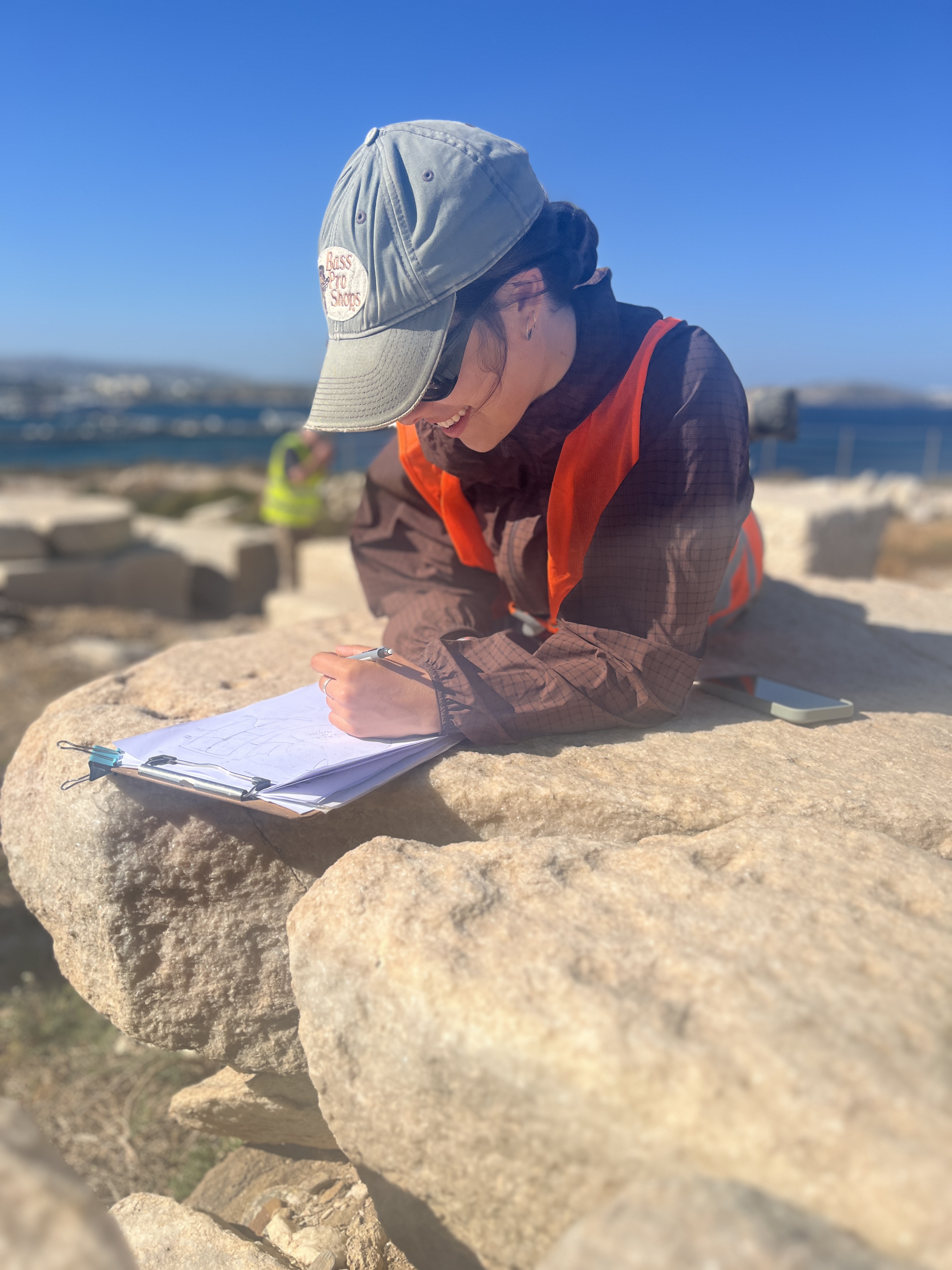
Besides traditional archaeological techniques, the students learned cutting-edge technology, employing the use of Geographic Information Systems (GIS) and photogrammetric 3D models for additional data gathering. These modern tools serve as a non-invasive method of research, keeping the key cultural sites of Naxos intact.
The field work concluded but Parfitt’s participation in the project did not end there. The team spent countless hours entering their findings into a database, which will allow scholars around the world to access the data and continue analysis even when not on the island. Parfitt was also tasked with leading the creation of the Naxos Quarry Project website. “I'd never designed a website before, so it was a learning process as I was doing it,” Parfitt said. She continues to manage the website, publishing blog posts by student participants and new updates on the project.
Parfitt attributes her success to the support from her fellow team members, as well as the confidence placed in her by the senior staff. “They put a lot of trust in the students that they take on, and that's something that is so, so valuable because you really feel like you're working towards something important,” Parfitt said. “You feel a responsibility to the project, and it becomes really close to your heart because of that."
Though the bulk of her work for the project is wrapping up, Parfitt is embarking on her next research project this fall with a new perspective. Inspired by the people who labored in the Naxos quarries, Parfitt will explore the ritual practices of ancient Greek craftspeople for her senior honors thesis. “Being on Naxos, I got to poke a little bit deeper into who the quarry workers worshipped and potential sacred sites for them. It's been really pivotal for my academic trajectory,” Parfitt said.
Beyond carving out an academic niche within classical studies, Parfitt came away from the project ready for her future career. “Getting to talk to experts in the field really opened my eyes to what classics is all about,” Parfitt said.