 Skip to main content
Beyond borders: A conversation with professor Claire Pamment
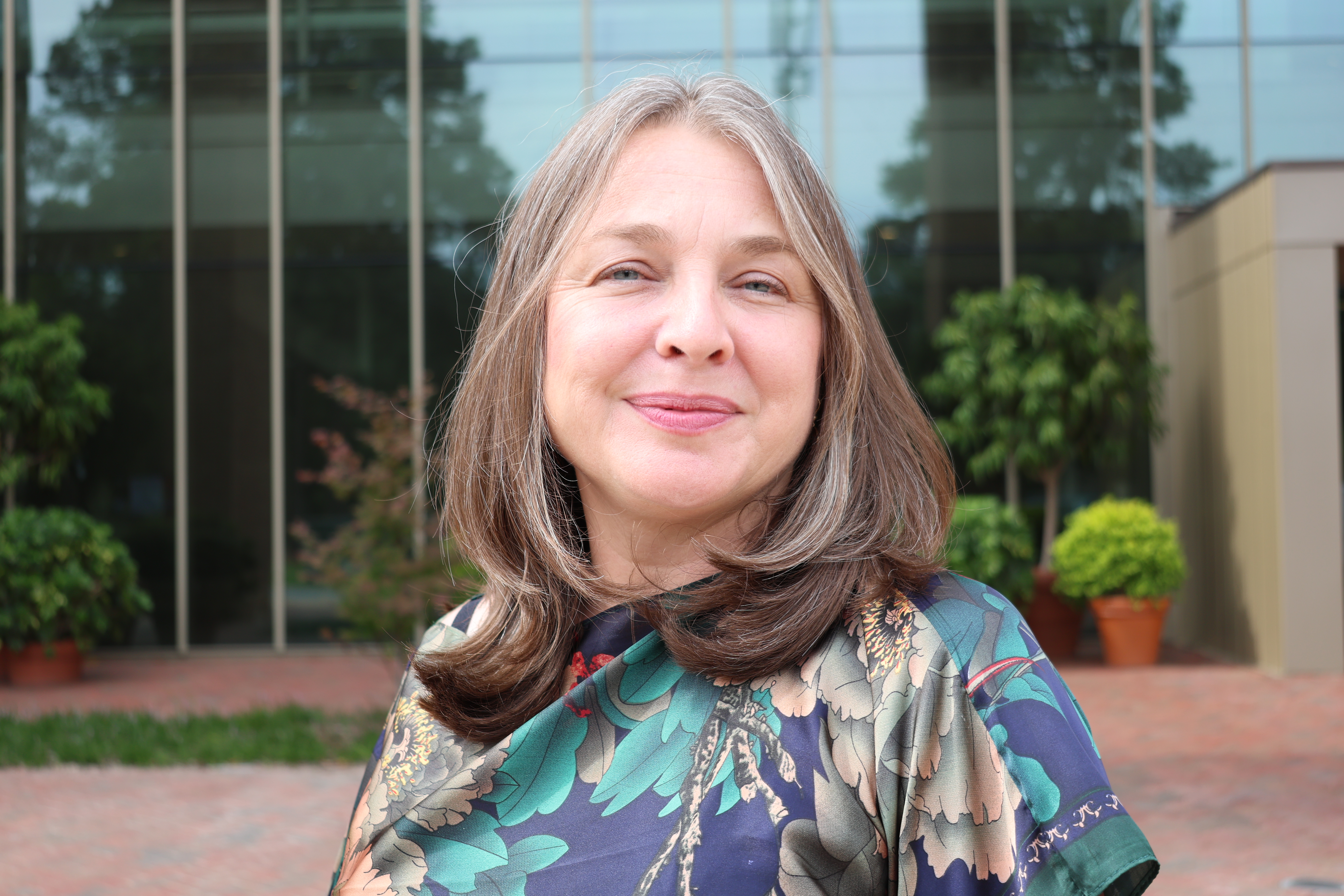
As a professor of theatre and gender, sexuality and women’s studies, collaboration has always been the norm for Claire Pamment. She has conducted several long-standing theatre and performance collaborations with trans communities in Pakistan over the last decade. With the creation of the Rasa Across Borders project, she's worked to expand sustainable artistic collaboration fusing digital and live performance, across Williamsburg to Karachi and Kolkata, offering an innovative model for transnational research.
Together with colleagues in W&M’s sociology and applied science departments, and in collaboration with student and faculty artists and audiences from the campus community and gender expansive communities from India and Pakistan, they dialogue across boundaries of gender, sexuality, class, caste, generation, nation, politics and genre. She will be presenting some of the discoveries of this collaborative work at the Faculty Research Forum on Oct. 5 from noon to 1 p.m. in the Muscarelle Museum of Art Event Hall. The Faculty Research Forum shines a spotlight on interdisciplinary scholarship happening across the College of Arts & Sciences.
Pamment recently shared insights about the pilot phase of the Rasa Across Borders project ahead of her talk at the forum.
Q: How would you describe the Rasa Across Borders project?
A: This project was launched through an award from the Art and Science Exchange at William & Mary, initiated by me, Dr. [Diya] Bose in sociology and GSWS, and Dr. Indranath Mitra from applied sciences and CAMS. We draw from the South Asian concept of rasa, or embodied emotion. This is central to South Asian aesthetics, though over time and through nationalist projects it has become highly codified. We stake out a new concept of rasa, that welcomes a multitude of embodied experiences and emotions and moves aesthetics beyond codifications and boxes. We stumbled upon this concept through our embodied explorations and found great possibilities to engage rasa as a mode of research though and as storytelling. Considering common threads that the three of us share with gender expansive and queer communities in South Asia, in this pilot phase we located partners variously in India and Pakistan to work with us on this initiative. They helped disseminate a call to performers for rasa video submissions, which could be made through low tech phone devices and take any genre: political manifesto, monologue, dance, comedy, etc. A big part of our call was to uplift the artistic and activist labor that already circulates through the community, often disseminated in TikToks, Instagram reels, and other social media formats. The call went viral and attracted an overwhelming range of submissions. Selected performance videos were drawn upon in a new devised theatre that we created at William & Mary with students and faculty. Considering that a lot of research is stacked in favor of the Global North and works on extractivist principles, we were committed to multidirectional exchange. All performers whose videos were selected went on to create their own devised theatres with our community partners in Kolkata and Karachi. Resources were shared between groups, and we all worked from the same archive of performance videos. This model meant that we were all in embodied dialogue with each others’ contributions, while creating work that had urgency in each local context.
Q: As you worked across disciplines with professors Bose and Mitra, what challenges did your work seek to address?
A: We were all keenly invested in alternative models of doing research that valorized creativity, collaboration, care and collectives. One of the challenges in any transnational endeavor is how such culturally specific embodied life experiences “translate” across different contexts. For example, while the three of us held deep attachments to these lifeworlds, how would these specific cultural contexts, performed in a multitude of genres and in several languages, be understood by our student and faculty collaborators and ultimately our audiences at William & Mary? How do we meaningfully begin to cross a multitude of borders that are steeped in hierarchies? The rasa techniques that we deployed through our devising, guided by embodied, sensorial and dialogical responses, enabled reciprocal research sharing. This led to some transformative experiences for our student performers, who made deep connections with our South Asian trans performers, discovering convergent story worlds. As one of our student devisors puts it, “emotion leads to motion.” Our audiences were also deeply moved, each evening there would be gasps of silence, joyful cheers, and tears. Audiences were invited, if they needed, to step out at any time to go and doodle in the foyer area, and we had a rasa wall where people could add their rasas in messages to some of our performers back in South Asia or here. The beautiful notes that emerged from that very wall itself continued the dialogue, further evidencing the power of shared storytelling as research.
Q: If you could describe your larger body of current work in one or two words, what would it be?
A: If I were to describe my larger body of work in two words, it would be ‘Trans- & Performance.’ For over a decade I've been working collaboratively with gender expansive performers in Pakistan who are using performance to cross or trans- a range of borders, hence the hyphen. My current book project explores how anti-trans sentiments often get caught up with anti-performance sentiments in Pakistan, and yet people persist and resist in using their bodies to find expression, pleasure, livelihood and make communities in many creative ways.
Q: How is the project continuing to live on?
A: Over a period of about six months, three new pieces of theatre were created at William & Mary, in Kolkata, and in Karachi, each in dialogue with one another. We are now catching our breath! I am presently reflecting on the dialogue and inter-referencing that was created through all three productions and how we may find creative ways of furthering that dialogue. I know our community partners in South Asia are keen to continue the work. There is also interest from other trans groups, extending further across South Asia, and into South East Asia. In the more distant future, we are interested in extending the Rasa project as a transnational dialogue engine for many types of projects that we are brainstorming, such as Indranath Mitra’s research in biomedical device innovation, centering lived experience, not just as data, but as knowledge held in the body. The futures of Rasa are abundant.
RSVP to the Faculty Research Forum and learn more about Pamment’s talk.