 Skip to main content

Uncovering the brain science behind artistic movement
What happens in the brain when a ballet dancer leaps in the air and then performs a pirouette? Or when a hip-hop dancer hears the beat drop? Two William & Mary professors formed an interdisciplinary research team to explore what happens in the subregions of the brain during a dancer’s creative process.
In the fall of 2023, during her first semester teaching at W&M, Stephanie Caligiuri, assistant professor of health sciences, approached Joan Gavaler, professor of dance, with a new research idea, drawing on their shared interests in dance and neuroscience. The study used Functional Near-Infrared Spectroscopy (fNIRS), a portable brain imaging device that studies cortical activity using near-infrared light. Currently, only 15 of these devices exist in North America, two of which were used in the study, as well as another study Caligiuri began in May 2024. Unlike traditional imaging methods, fNIRS are designed to measure brain activity while participants are actively moving, making them especially suited for studying dance. 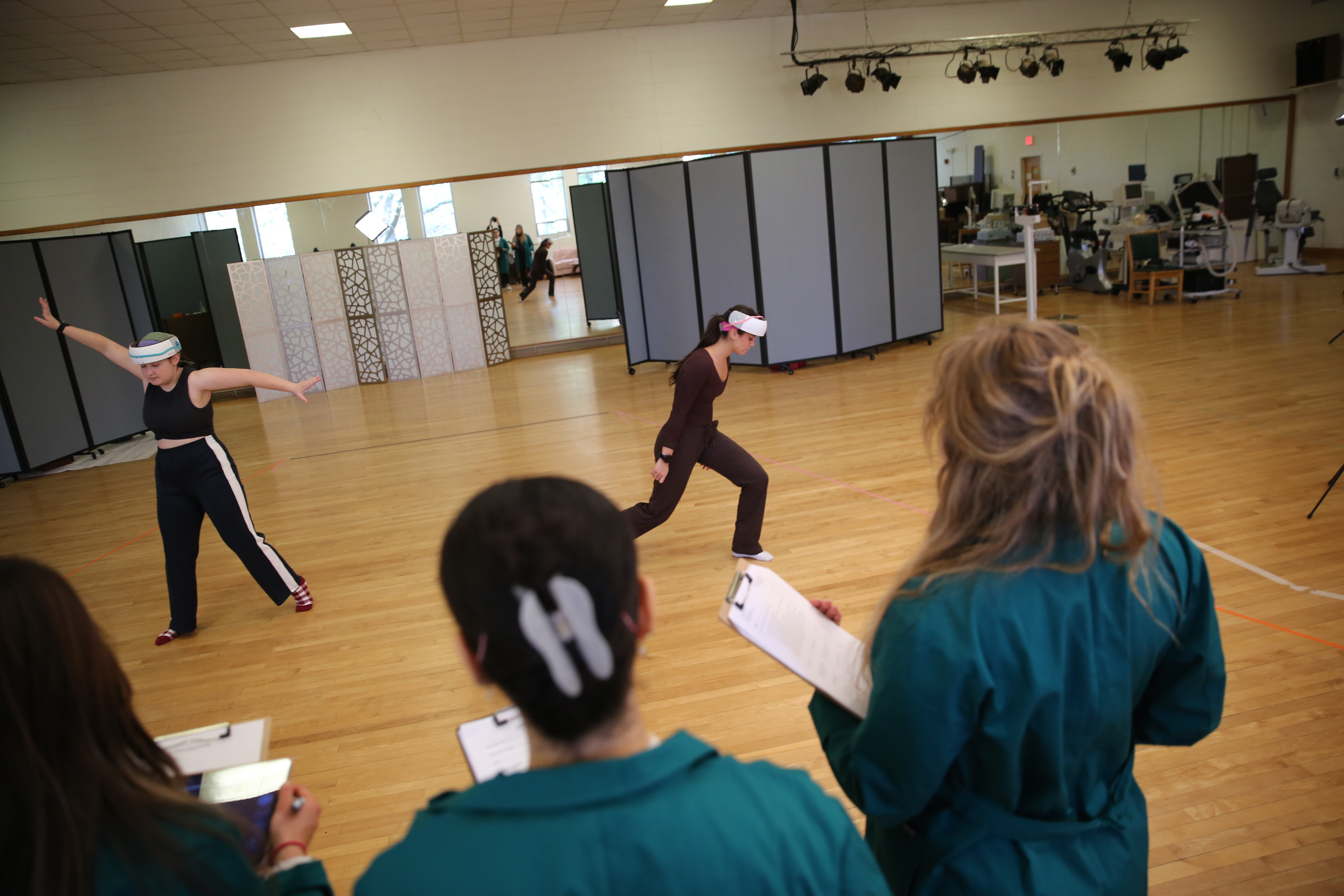
“Many times, we wonder what’s going on in a dancer’s brain,” Caligiuri said. “What's the neural state that helps someone be creative versus when someone really falters and can't be creative. We thought that this brain imaging technology might give us some insight into that.”
After testing the equipment themselves in summer 2024, Caligiuri and Gavaler began collecting data from 30 volunteer participants in the fall. During the study, pairs of dancers completed a choreographic task, performed what they created for each other, completed a questionnaire, refined their choreography, and then performed it again.
Some of the student researchers were Gavaler’s dance students who had an interest or background in neuroscience.
The participants were all given the same movement cues, including suggested actions and qualities, to help “get their minds focused on a common descriptor of suggested ways of moving,” Gavaler said.
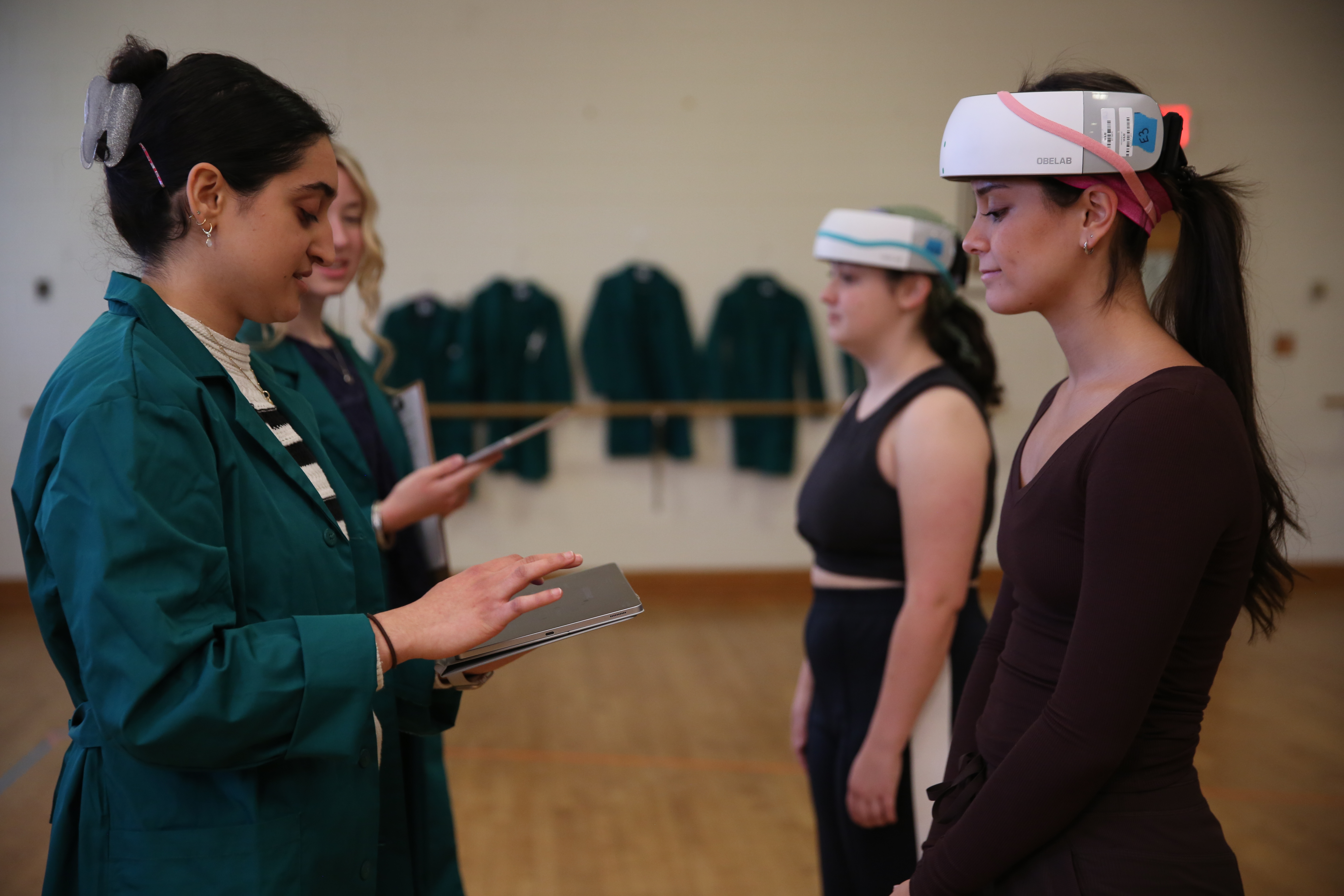 The questionnaire incorporated affect labeling to assess the participants’ emotional responses, including sensitivity to rejection and creativity. “Is the dancer feeling positive about this experience so far? Are they feeling like they have hit a wall creative-wise?” Caligiuri said.
The study ended in the fall of 2025. After analyzing the data so far, Caligiuri concludes that the orbital frontal cortex is important to the choreographic process because of the role it plays in positive reinforcement.
“We have looked so far at the entire cohort of people, but eventually we want to split that up into who reported feeling very creative versus those who reported feeling less creative,” Caligiuri said. “That is really getting at some of these applicability questions. What is the neural state that identifies someone who's feeling creative? And then how can we repeat that? How can we get someone into that neural state then time and time again?”
For Gavaler, the research connects directly to her career-long goal of helping students reach their most creative and uninhibited states.
“I was excited about Stephanie's openness about how we might frame questions that also answered questions I have as a teacher of dance,” Gavaler said. “How do I create an environment where the students can let their guard down and feel that they can take a risk?”
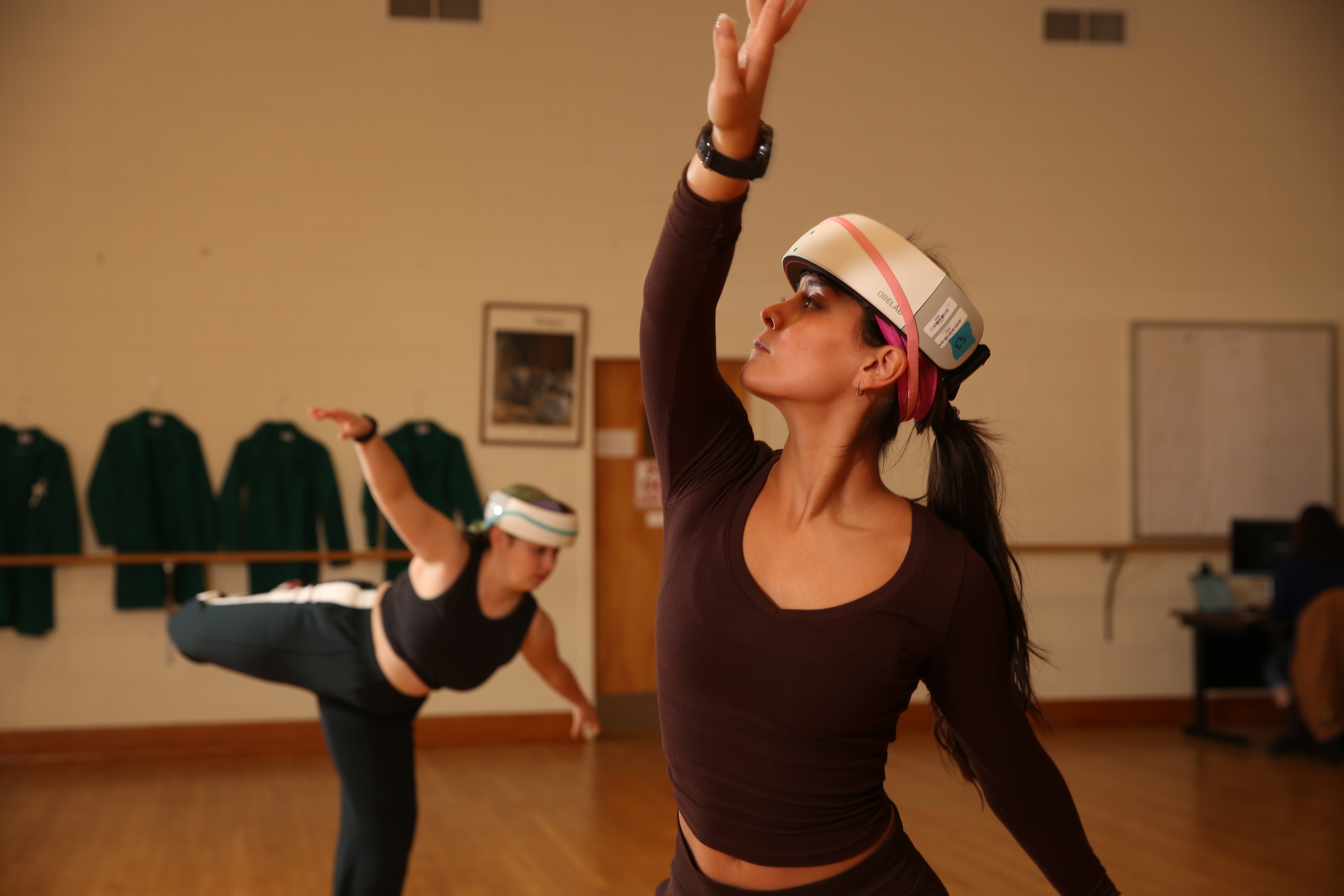 The study also contributes to the growing field of neuroaesthetics, which examines how engaging with artistic experiences affects the brain. Gavaler noted that scientific approaches can make the value of the arts more understandable to broader audiences.
“People who feel an easy connection to the arts don't need to be convinced that something happens in your brain when you do artistic practice. We experience it directly; we know it's happening,” Gavaler said.
Caligiuri hopes the research will have practical applications for dance educators.
“Let’s say that we understand the neural state that identifies the highest level of creativity is inhibition of the orbital frontal cortex,” Caligiuri said. “‘What can then inhibit the orbital frontal cortex? Is it affect labeling? Is it writing? Is it looking outside? Is it a specific dance technique?’ Then, it's opening the toolbox to replicate that brain state that we know is characteristic of creativity.”
The professors plan to publish two manuscripts on their findings, one of which is almost complete. As their findings continue to unfold, Caligiuri and Gavaler’s study opens new possibilities for understanding and cultivating creativity, both in the realm of dance and beyond.