 Skip to main content
The art and science of teaching: Faculty bring to life William & Mary’s No. 2 national ranking in undergraduate teaching among public universities
When undergraduate students enroll in a class taught by sociology professor Amy Quark, they shouldn't expect routine lectures and PowerPoint slides. Instead, students immerse themselves in hands-on learning experiences designed to make a tangible impact beyond the classroom.
At the heart of W&M’s educational approach is the scholar-teacher model, where rather than separating research and teaching, professors actively involve undergraduates in their scholarly work, allowing them to grow as independent learners.
These experiential learning opportunities are the rule, not the exception, at William & Mary, along with small class sizes, applied learning experiences, global opportunities, mentorship and cross-discipline learning. 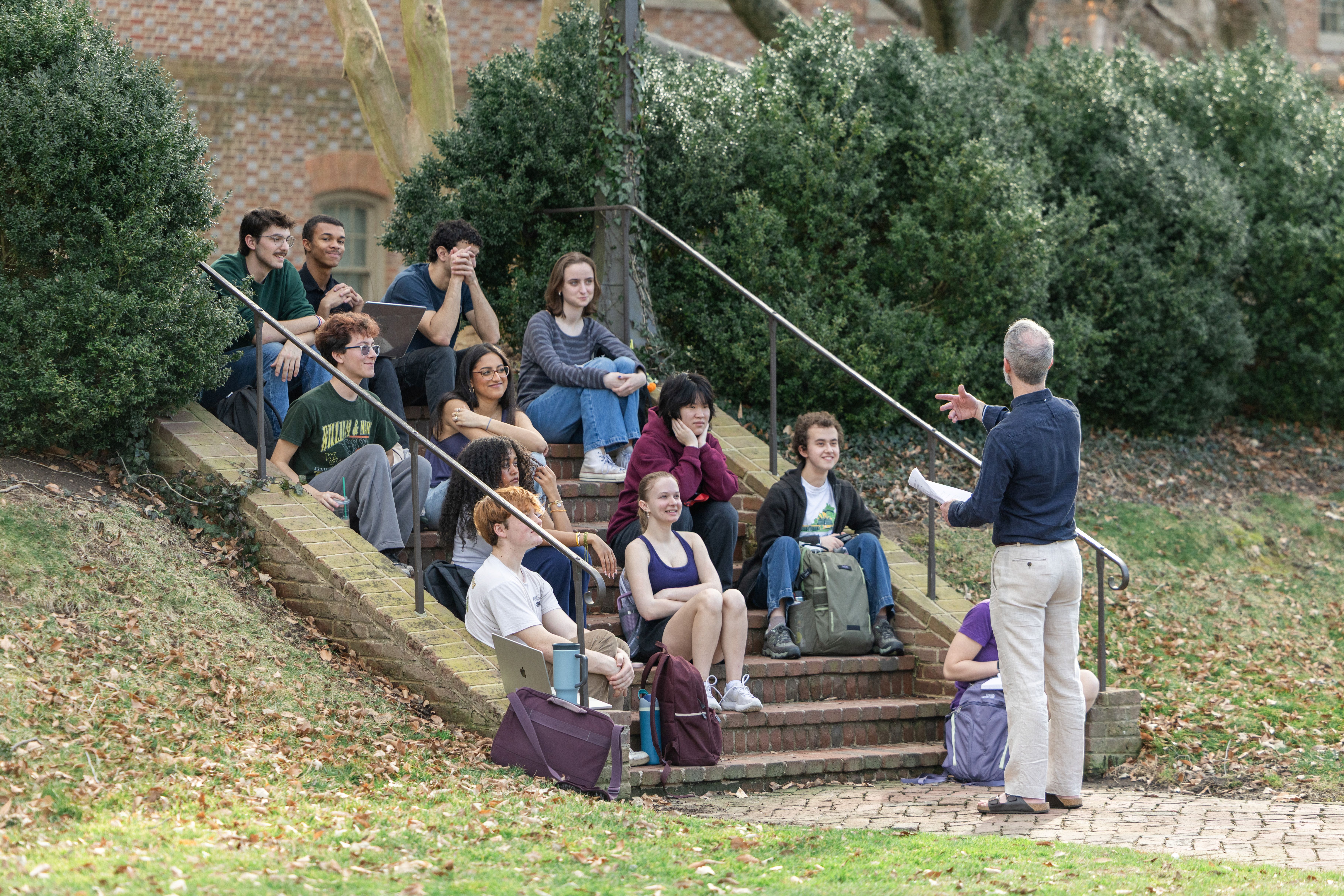
In 2025, U.S. News and World Report recognized W&M as second in the nation for undergraduate teaching among public universities — up from sixth — an achievement that reflects more than just strong academics. It highlights a culture built on mentorship, curiosity and meaningful student-faculty collaboration that continued to thrive this past academic year.
Behind the ranking are dedicated faculty leading in their fields and passionate about mentoring the next generation.
Quark currently facilitates a lab called the Local Black Histories Project that researches the histories of displaced Black communities in Williamsburg in the 20th century. Quark is assisted by 10 research students and additional students from her classes each semester.
“I take my classes of students, I break them into groups, and those groups each get assigned a particular family that they're going to research as part of this broader project. They also get assigned descendants from that family that they're going to collaborate with," Quark said. “Students have this amazing experience where they are doing hands-on research and learning hands-on research skills like collecting primary documents.”
Quark includes these research-based assignments in her classes to give students the opportunity to engage more deeply with the material they are learning.
“The kinds of skills that students gain by being directly involved in research are critical for their career readiness. Research is about learning how to know about the world and developing a whole range of skills and different kinds of methodologies to learn about our world,” Quark said.
Like Quark, Paul Heideman, faculty fellow emeritus at the Studio for Teaching & Learning Innovation (STLI) and emeritus professor of biology, uses his dual responsibilities as a teacher and researcher to best support his students’ learning.
“Teaching motivates me to seek answers to new questions. When I’m doing research, I’m often thinking, ‘How would I teach this to a class?’” Heideman said. “My understanding of research and the way knowledge develops underlies the way I give problems to students. Both in class and on exams, I tell them, ‘I don’t want answers you’ve only memorized, or answers you think I want. I want answers you can defend.’”
The art of good teaching often requires trial and error and an openness to experimentation. Nicole Brown, an American Studies Ph.D. student who previously worked as a graduate assistant in the W&M Bray Bray School Lab, maintains adaptability in her approach to teaching. For example, after learning that several community members that the Lab collaborates with were auditory processors, Brown reconsidered the accessibility of historical documents. Over the course of several months, she recorded herself, students, and staff reading the transcriptions of primary source documents to meet this community need. 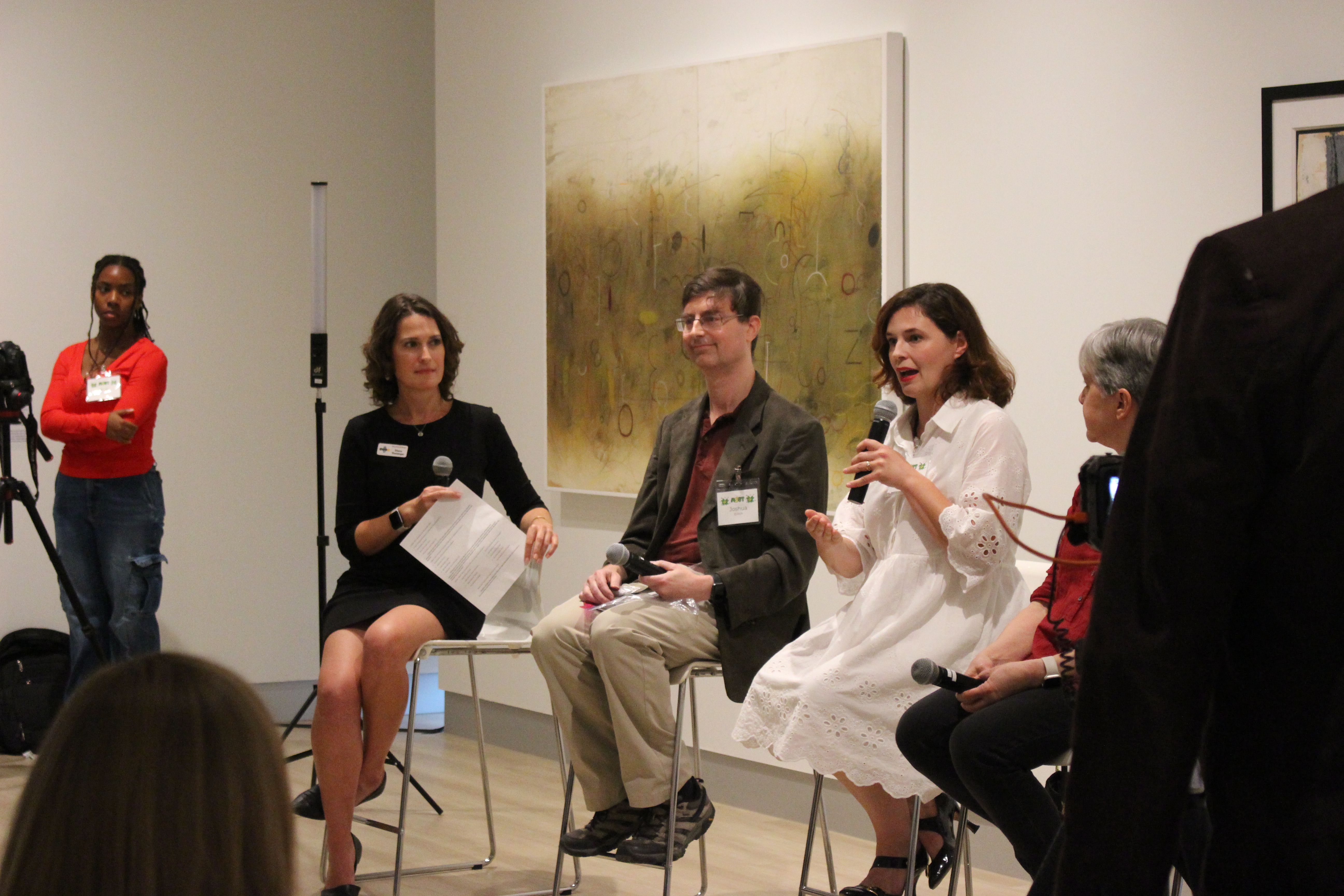
Brown shared this story at the Art & Science of Teaching event on Sept. 30, 2025, at the Muscarelle Museum, hosted by STLI and the College of Arts & Sciences.
“I ended up using my experience in voiceover training as a theatre major as an undergraduate of William & Mary,” Brown said. “I think when you engage with students in that way, it leads to you growing as a person, in ways you might not have anticipated, and certainly that is the case for me."
The smaller class sizes at W&M allow for “more innovative pedagogical strategies” to be used, according to Quark.
“We know all their names, and we can develop a rapport that contributes to a more comfortable and interactive class environment, better class discussions, and just a more engaging learning experience,” Quark said.
Caitlin McGill, associate teaching professor of English, echoes this sentiment, emphasizing the value of small class sizes to effective creative writing workshops.
“Without it, it would be difficult to get to know each student on the individual level that we need to build trust and community. Community is such a huge part to my approach to my classes... [I’m] really trying to set the tone that this is not a competitive environment, but a place for us all to discover our own stories and help each other do so,” McGill said.
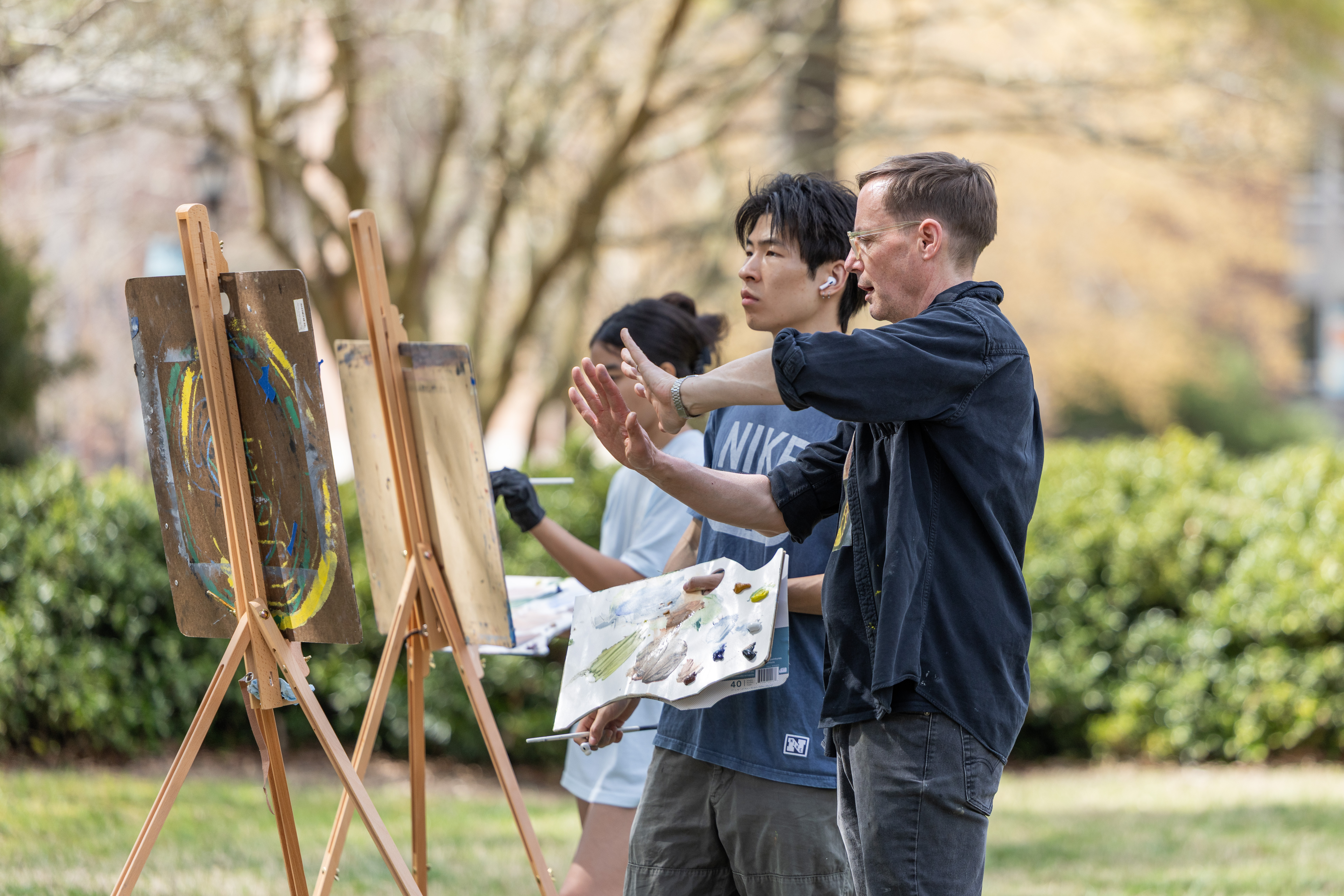 McGill also uses her own writing experience to guide students who are interested in publishing their work or pursuing similar applied learning experiences.
“When students do feel ready to explore [publishing], we are happy to start teaching them a little bit of the lay of the land of the literary publishing world, and how you submit your work and where to submit your work,” McGill said.
Outside of the classroom, learning at W&M includes global opportunities such as faculty-led study abroad programs. Tyler Meldrum, associate professor of chemistry and director of undergraduate research for the department, also runs a STEM-oriented three-week winter study abroad program.
The program is based on biomolecular imaging and gives students the opportunity to use x-rays and electrons to image molecules and practice other NMR (Nuclear Magnetic Resonance) and MRI-related work.
“We also have discussions with local scientists about what it means that their scientific research is happening in a different country. It's giving our students a different global context and idea of what different country and political borders mean in the context of making collaborative relationships with other scientists and other scholars,” Meldrum said.
Like Quark, Meldrum works to mentor students through the research process, helping them ultimately gain confidence and “take ownership of a project.”
“We want to teach them how to be effective and contemplative about how they're approaching their problem solving. That's a real strength that we have, is helping students learn how to do research in a very guided, mentored way,” Meldrum said. 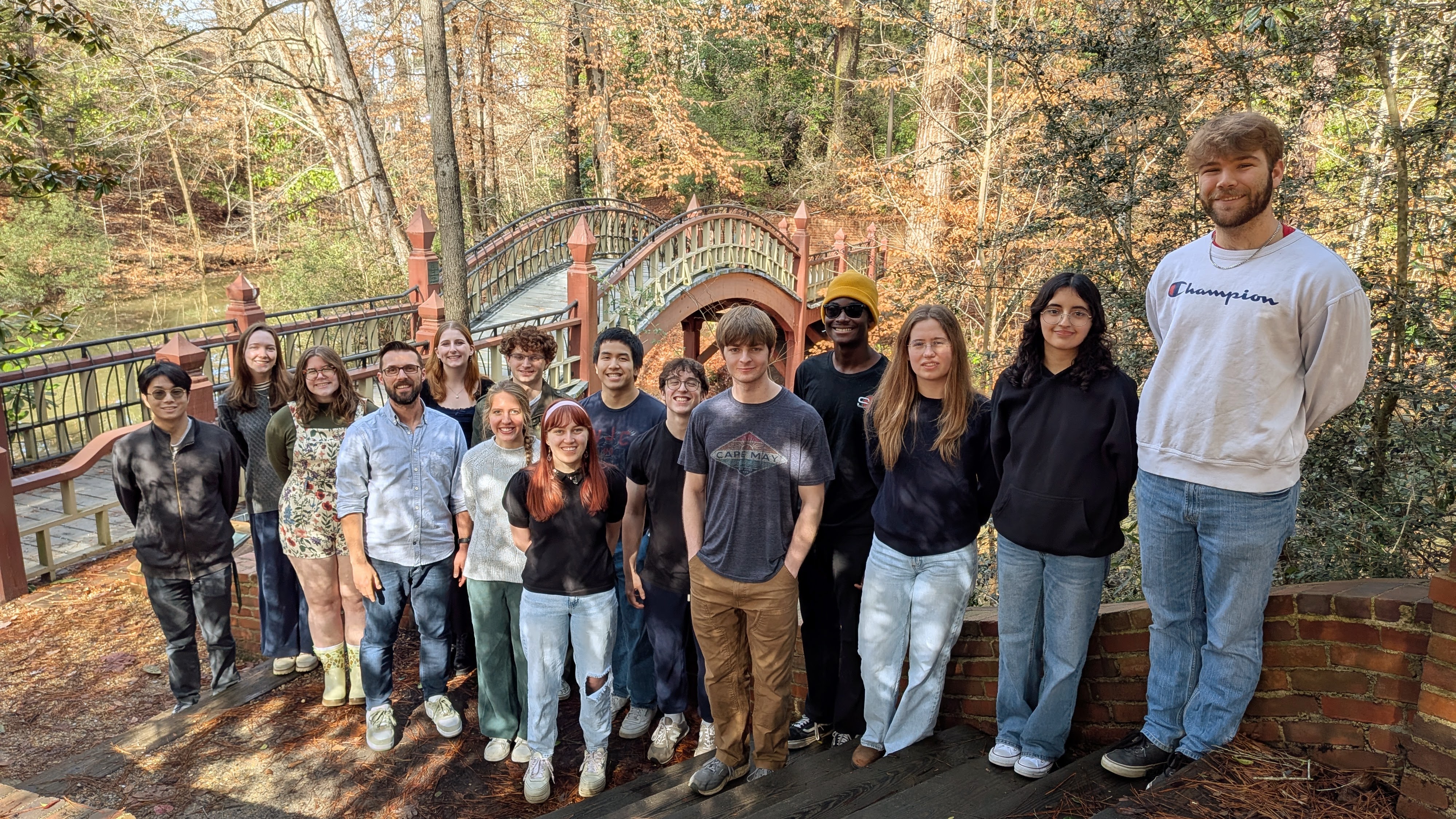
This mindset also reflects how faculty approach mentoring students who are completing departmental honors theses. "It's definitely a really exciting and meaningful way to spend a whole year with one student who's building a larger project, by giving feedback and helping them write and revise,” McGill said.
The College (COLL) Curriculum further distinguishes W&M’s approach by encouraging learning across the liberal arts and sciences. Students are challenged to think broadly and make connections between disciplines, developing well-rounded perspectives.
For Heideman, the mutual respect shared between faculty and students allows them to thrive in the liberal arts environment. "There are so many ways to see the connections. I don’t encourage it so much as I acknowledge it and incorporate into my research and teaching,” Heideman said.
Likewise, McGill encourages the cross-discipline connections that many students instinctively make.
“There are so many ways we can write stories that pull in theories and facts from other fields,” McGill said. “I will assign readings that exemplify that, where you don't have to necessarily even be an expert in another field, but you're interested, and you're doing some more research or reading maybe in some of your other classes that you can bring in.”
Any one of these experiences can be meaningful for students. Together, they are transformative, creating an educational environment where students are active participants in their own learning, and faculty are dedicated to helping them grow.
“I quickly learned that my initial assessments of students were useless as predictors of outcomes at graduation...I knew that every student had far more potential than I could see,” Heideman said. “I had to structure my advice and mentoring to help them develop in ways they often didn’t believe they could. Amazing things can happen in these four years.”