 Skip to main content
Russian Studies students and faculty support Ukraine through campus initiatives
While the war between Russia and Ukraine continues in Eastern Europe, students and faculty at William & Mary are building bridges between cultures and finding ways to support Ukrainians both near and far.
For students in the Russian Studies and Russian, East European and Eurasian Studies (REES) programs, it’s a chance to extend their learning beyond the classroom to the real world of geopolitics.
Led by Bella Ginzbursky-Blum, teaching professor of Russian Studies, Alexander Prokhorov, professor of Russian Studies, and director of REES, Elena Prokhorova, students are continuously raising awareness about the war in Ukraine while deepening their own connections to the region. As W&M continues its Year of Civic Leadership, these efforts demonstrate the importance of engaged, globally minded scholarship.
“It’s a collaboration and team effort on so many fronts, and I think [the war] profoundly redefined our program, our curriculum, and our activities outside of the classroom,” Prokhorov said.
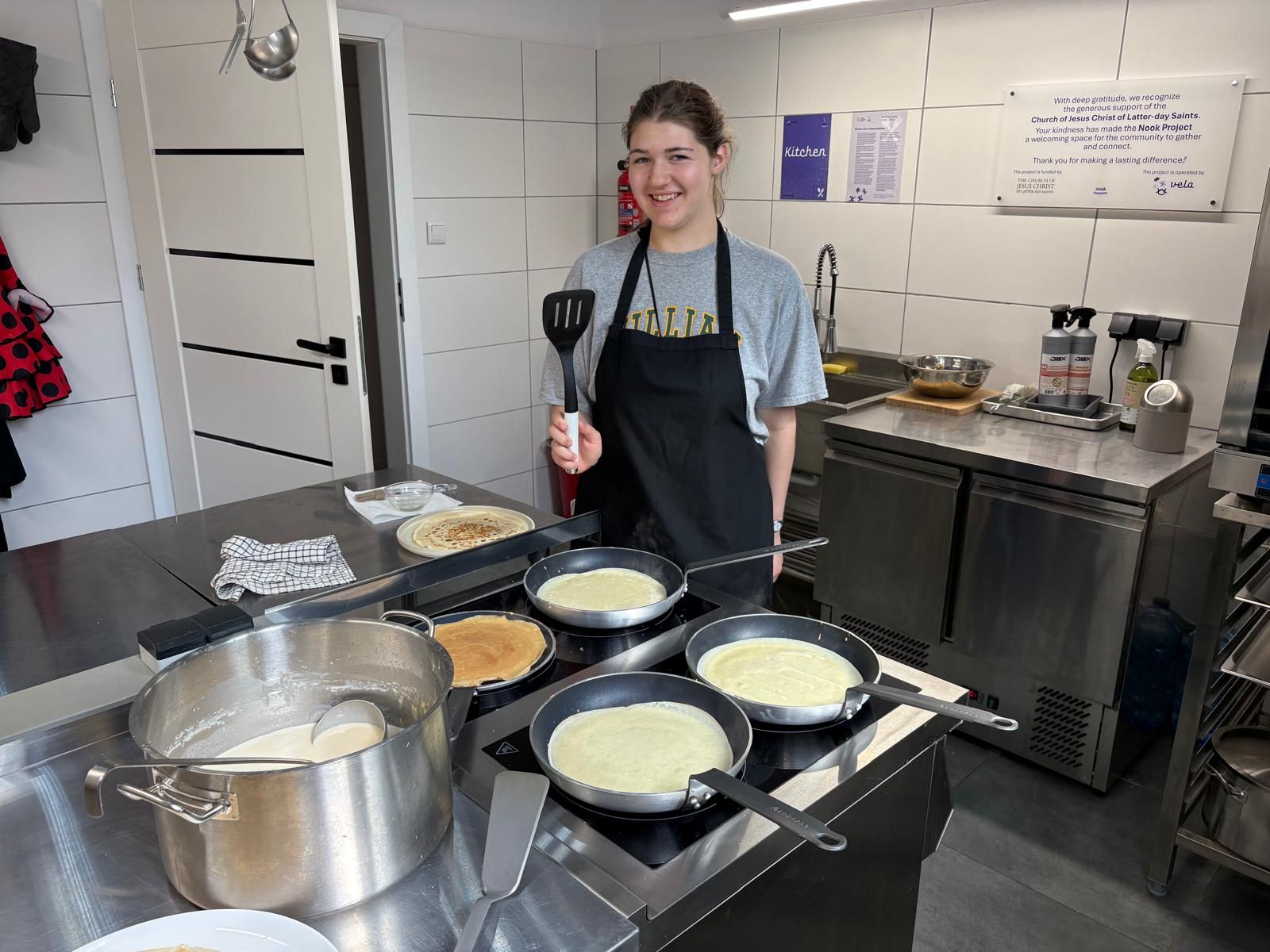 The sense of community among students and professors extends to study abroad experiences as well. Completing W&M’s study abroad program in Vilnius, Lithuania gave Celeste Edwards ‘28, a global studies major with a concentration in REES, the language skills to travel to Kraków, Poland, where she volunteered with Freedom Space. Edwards learned about this opportunity from Prokhorov.
Freedom Space Foundation is a grassroots organization in Poland with more than 150 volunteers who support Ukrainian refugees with food, shelter, and other essential services. While there, Edwards and Alina Cook ‘28 helped with a summer camp for Ukrainian children.
Edwards chose to study abroad after taking introductory Russian language classes during her freshman year. “I wanted to be able to speak the language more fluently and understand the region more,” Edwards said. “Now, I can connect with people who wouldn't otherwise be able to connect with me, and I can understand a culture that I didn't understand before. An amazing amount of time goes into learning the language because you're also learning the culture and the history of the place.”
Demetri Tymchynyuk ‘29 uses his Ukrainian heritage to inform and engage the W&M community about the war’s impact. Most notably, Tymchynyuk read “N.N.” by Taras Shevchenko in Ukrainian at “Melodies of a Heroic Nation: A Concert of Ukrainian Music.”
“[Shevchenko] stands among the greats of those who resisted forced Russification and promoted the survival of the Ukrainian identity," Tymchynyuk said. The event was held on Oct. 14 in the Music Arts Center, and Tymchynyuk read alongside Taras Filenko, a renowned Ukrainian pianist and music historian.
“Ukrainian was the first language I learned, and I went to Ukrainian school every Saturday. I feel very connected to the culture,” Tymchynyuk said.
Tymchynyuk, who is a part of the Joint Degree Programme with the University of St Andrews, hopes to form a Ukrainian Student Union with Prokhorov when he returns to W&M for his senior year to strengthen the Ukrainian community on campus. “Even while I’m at St Andrews, I’m trying to figure out a way to be very involved with the [Russian Studies and REES] program[s],” Tymchynyuk said.
 Ukrainian and Russian American groups have been thriving at W&M for many years, according to faculty members. "I can't overemphasize that there was a pre-existing community that our faculty members in REES have been cultivating for decades...I’ve never seen anything like that before. It’s a small group of faculty members and they are so dedicated to maintaining that community,” Michael Blum, associate director for faculty engagement at the Studio for Teaching & Learning Innovation (STLI) said.
At the same time, the students and faculty behind these initiatives welcome everyone to join their efforts and “see that there is this vibrant, powerful community,” Blum said.
Eva Meyer ’26 serves as a committee member of the Russian Studies’ student-run film series team. Every year, REES students choose a theme and select and curate films from Eastern Europe and Russia to screen each week. This semester's theme was "Children in Cinema."
“With every single event we do and every single talk we host, it's almost always about Ukraine,” Meyer said. “Especially in the film series, we always make sure to incorporate not just Russian or Soviet films, but also films from Ukraine, Central Asia, and Eastern Europe.”
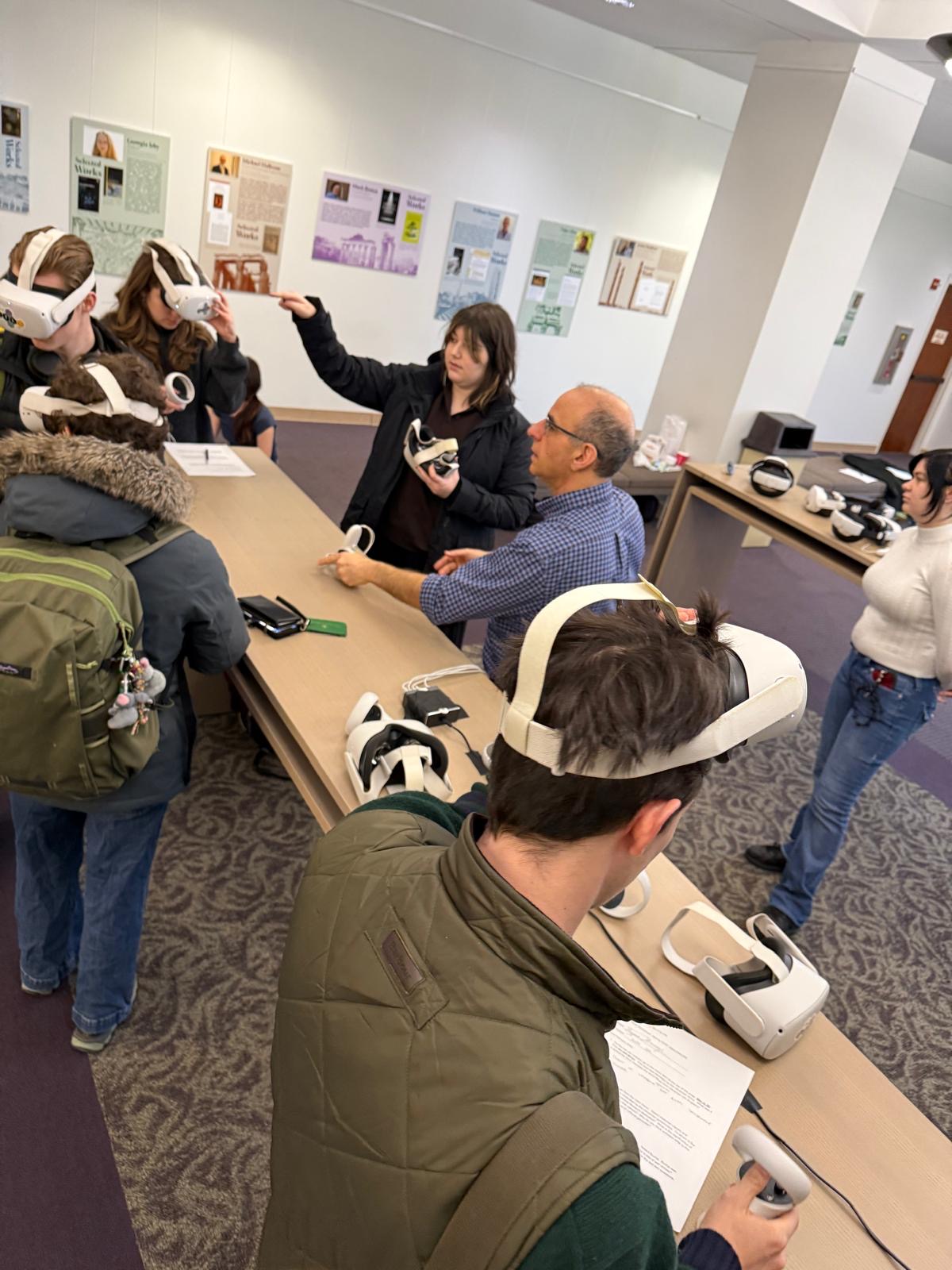
Meyer and Tymchynyuk also helped with the “War Up Close” virtual reality exhibition, held annually on Feb. 24, in collaboration with STLI and Swem Library, to mark the anniversary of Russia’s full-scale invasion of Ukraine in 2022. It features detailed images of the cities and towns that have been affected by the war, capturing how daily life has been impacted for Ukrainians.
“I got to meet a bunch of people who lived in Ukraine, people who were displaced from Ukraine. I think that was a great opportunity to bring more awareness to the war,” Meyer said.
Through cultural engagement and advocacy for Ukraine, with faculty and alumni support, students like Tymchynyuk, Edwards and Meyer are building networks of support and strengthening their own sense of global responsibility.