 Skip to main content

Music professor emerita leads effort to preserve 19th century American music
At 14, Katherine Preston sat at the piano bench flipping through sheet music when she was struck by an observation: among the numerous pieces by Beethoven, Mozart and other European classical musicians there were no American composers. Upon inquiring about the absence of American classical music, her music teacher responded with what Preston will always remember: "there is none."
Years later, those words lingered, shaping the trajectory of Preston’s distinguished career as a musicologist, scholar and professor. In 2022, she founded the project Forging an American Musical Identity (FAMI), in conjunction with five other champions of 19th century American music, including other musicologists, two composers, and a historian.
A longtime professor at W&M, Preston spent nearly three decades teaching across the full scope of Western music history — from medieval and Renaissance traditions to American music and film — while also serving for seven years as chair of the Department of Music. As the department’s first tenured female professor, she played a key role in shaping both its curriculum and its institutional legacy. 
At its core, musicology is about studying music beyond just how it sounds. Scholars in the field look at music as both an art form and a reflection of the world around it. As Preston explains, “Musicology is a combination of the study of music as a cultural artifact, music as an art, and how it fits into society." It's not just about the notes on a page, but the stories, people, and history behind them.
Designed as both a research and access-driven project, Preston created FAMI to recover, publicize, and make available 19th century American compositions that have long remained overlooked or inaccessible. Its very name is intentional: “FAMI,” Preston notes, echoes a play on the familiar “do–re–mi” scale, subtly and deliberately grounding the project in music itself.
Through its website, the initiative brings together scores, archival materials, recordings, and scholarly context, creating what Preston describes as “a smorgasbord of what we’re doing and what we’re trying to promote so that people can get access to [the music].”
Her work has recently extended beyond the digital archive. In January, the FAMI committee hosted a conference in New York City that brought together scholars and performers to engage directly with 19th century American music, highlighting both its historical significance and its importance as a part of American cultural history. The three-day conference featured the presentation of over 30 scholarly papers, three lecture recitals and two concerts (including a culminating performance at Carnegie Hall), with participants from all over the U.S., as well as the UK and Germany.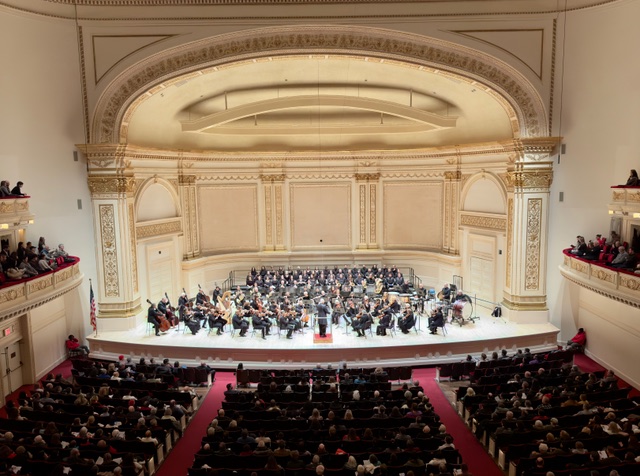
The project also comes at a particularly significant moment as the United States celebrates its 250th anniversary, with efforts like FAMI helping to preserve and reintroduce the musical traditions that shaped the nation’s cultural identity.
For Preston, FAMI grew out of both frustration and curiosity. “There’s this wealth of music out there that is just wonderful. Nobody plays it, nobody knows about it because they don’t teach it in American conservatories,” she said. That gap pushed her to ask bigger questions: what did music actually mean to 19th century Americans? How did they learn it, hear it, and use it in their daily lives? Unlike today, where music can be heard everywhere and is easily accessible, music in the past had to be actively made and shared. “Today, music is omnipresent, so to think about how people used music in their lives before it was electronically reproduced was very interesting to me,” she said. "I was initially surprised to learn just how important music was to Americans in the pre-recording era.”
Simply making materials available is only the first step. The larger goal for Preston is to bring American classical music into active circulation. “We’re continuing to spread the word,” she said. “We want this music to get out there and be in the repertory, which is a really hard task." In this sense, FAMI is not just preserving the past, it is actively reshaping the future of American music by challenging the long-held assumption that, as Preston once heard at 14, there was “none.”
For Preston, W&M was never just a place to teach — it was a place to think, write, and remain deeply engaged in the work she loves. That commitment hasn’t faded since she retired in 2019; if anything, it's intensified. Rather than stepping away, she chose to lean further into research, continuing the scholarly work that first drew her to musicology. “I’m a scholar, [research] makes me feel alive,” she said.
Preston continues to be a “pillar of excellence,” according to Sophia Serghi, professor of music and longtime colleague of Preston’s, who also called her “one of the most prolific and impactful scholar” in the field of American classical music.
“Professor Preston has gifted W&M with a monumental contribution through her stellar award-winning scholarship publications, her outstanding commitment to teaching and her visionary leadership and service in the Department of Music,” Serghi said. “She will always be an inspiration to me, personally, and to her peers for years to come. I feel immensely proud and fortunate to have her as a colleague and friend.” 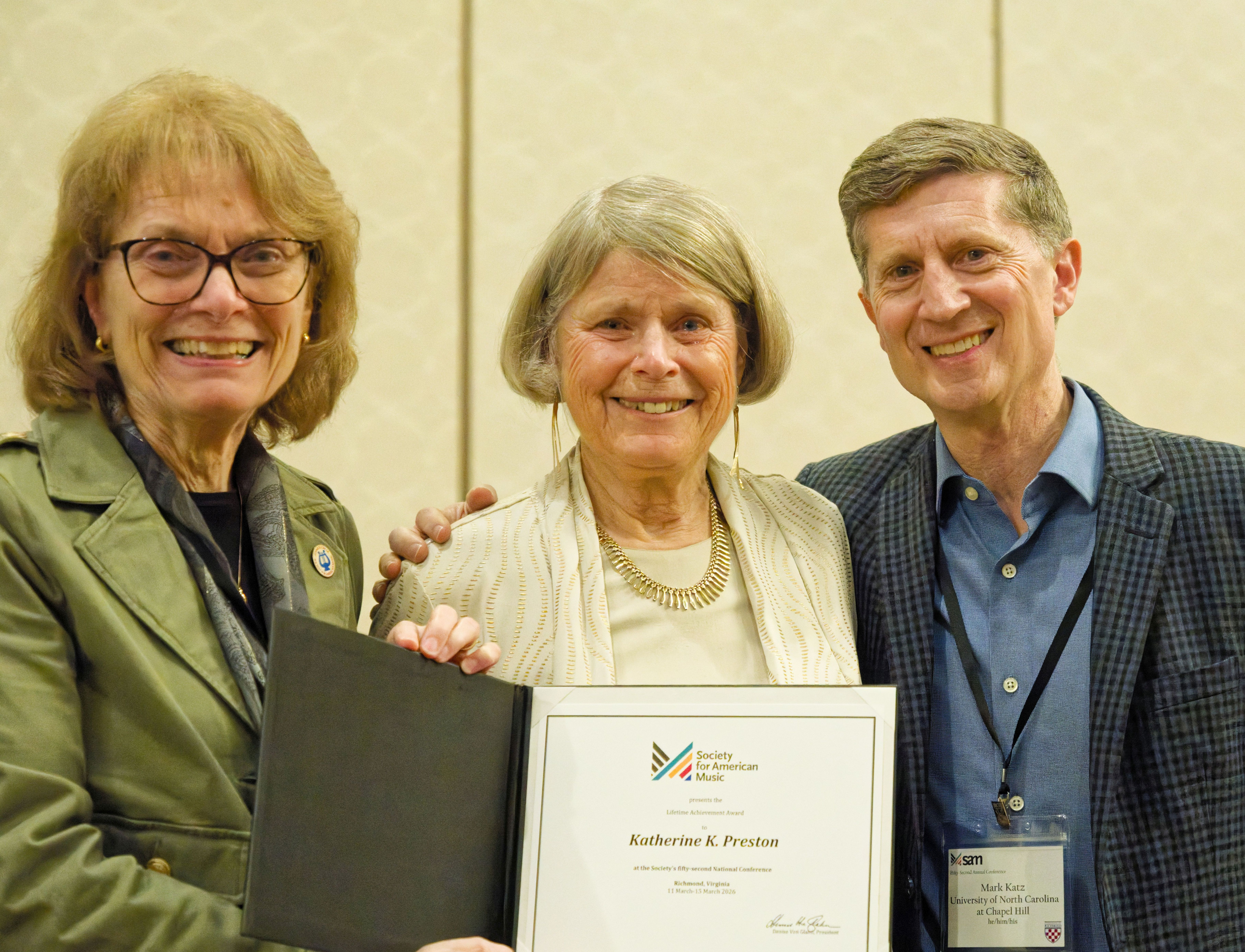
Serghi’s image of Preston is shared by others outside of the university. This past March, in fact, the Society for American Music, an international scholarly organization, awarded Preston its prestigious Lifetime Achievement Award in recognition of her “significant and substantial lifetime achievement in scholarship, performance, teaching, and/or support of American Music."
That spirit is what Preston hopes students carry forward, and to them she hopes to emphasize not just what to learn, but how to think: to see knowledge as something active, evolving, and open to challenge. Reflecting on her own field, she noted how dramatically musicology has shifted over the past 30 years, a reminder that disciplines themselves are constantly being reshaped.
“I want students to understand that there’s a world out there that they can seize and ask questions about, and there is no such thing as a monolith of knowledge — it’s always changing, and they can contribute to that change,” Preston said.