 Skip to main content

Former CNN Moscow bureau chief Jill Dougherty visits W&M
Sitting in front of a packed crowd in the Comey Recital Hall on Nov. 13, former CNN Moscow bureau chief Jill Dougherty captivated the W&M community with insights from her experiences reporting from the Kremlin as an American journalist for over three decades.
The event, sponsored by William & Mary’s International Justice Lab, the College of Arts & Sciences, the Charles Center, the Global Research Institute, and the International Relations and Russian programs, aligns with the university’s Vision 2026 Democracy Initiative, which aims to promote democratic ideals through research, strategic partnerships and campus dialogue. 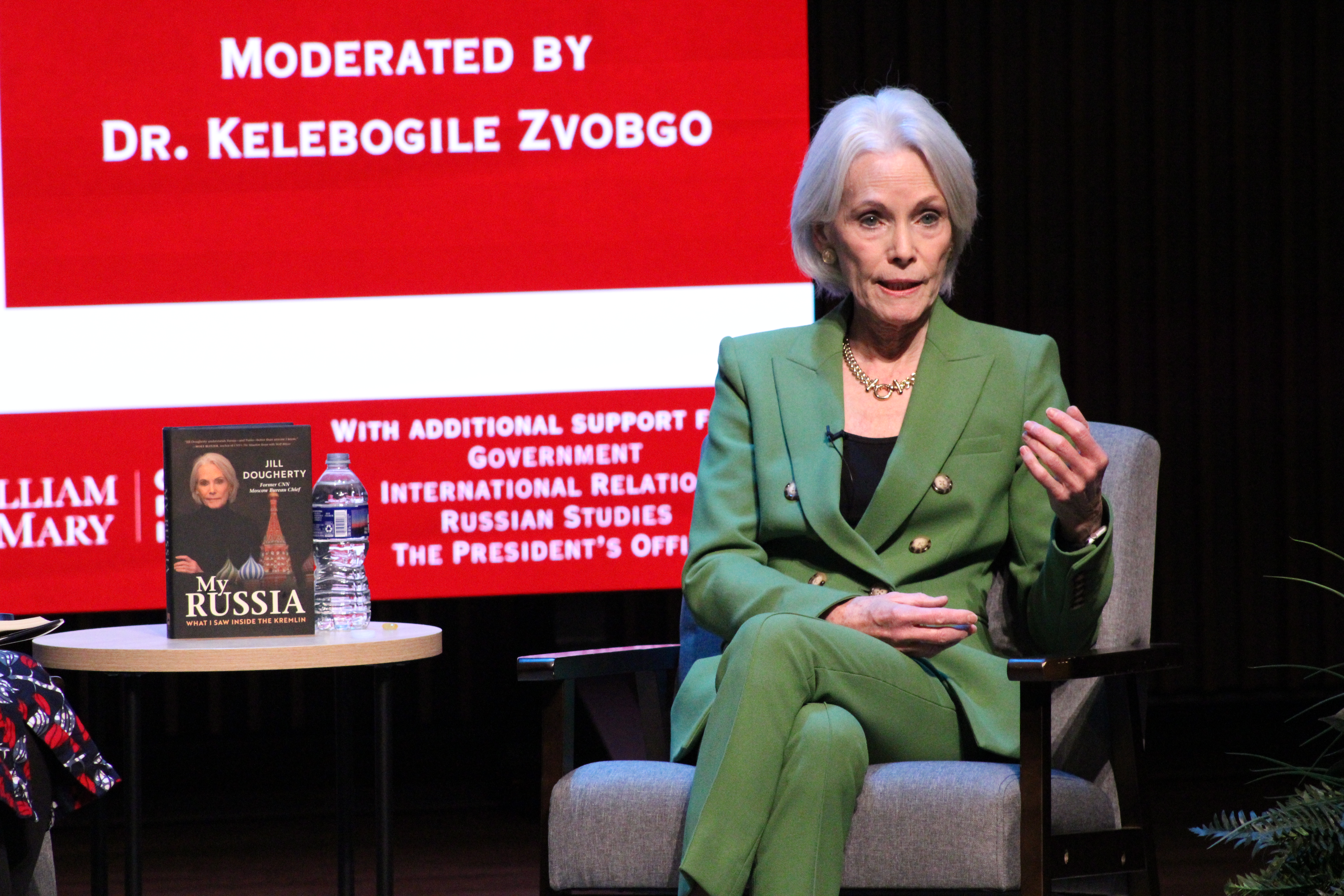
Moderated by Kelebogile Zvobgo, associate professor of government, Dougherty’s remarks spanned her illustrious career — from her time as an exchange student at Leningrad State University to covering Russia as a CNN foreign correspondent. Dougherty drew from her book, “My Russia: What I Saw Inside the Kremlin,” which documents the fall of the Soviet Union and the rise of Vladmir Putin through her own eyes.
Reflecting on her time in Leningrad (now Saint Petersburg) as an American exchange student, she recalled the striking cultural richness she encountered — from opera to ballet — while also noting the sense of caution that shaped the experience for visiting Americans during the Soviet era. Though the city offered beauty and excitement, elements of surveillance were an expected reality for foreign students. 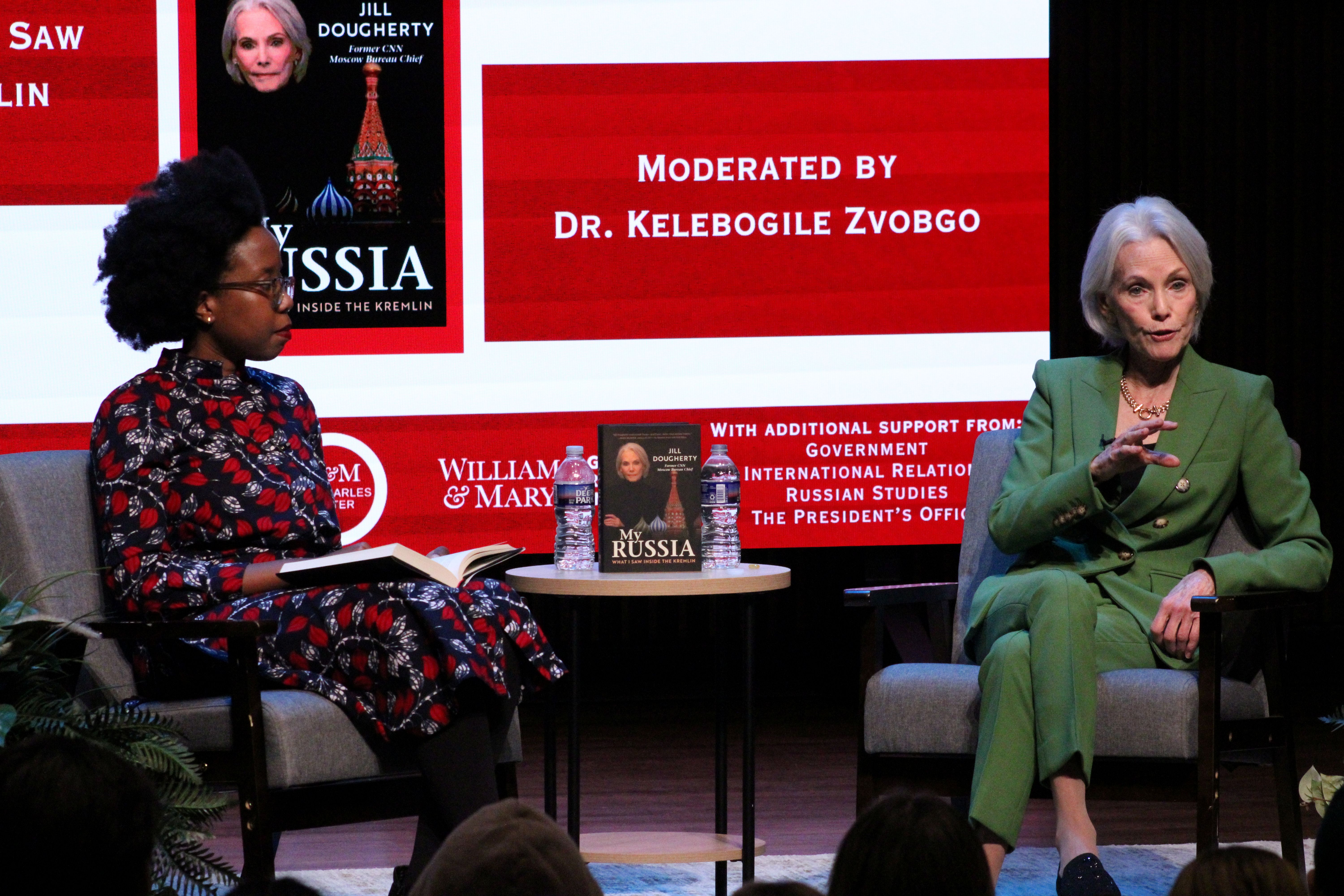
Drawing on decades of experiences reporting from Moscow, Dougherty reflected on how Russia’s political and media climate transformed over the course of her career, from early post-Soviet optimism to the far more restrictive environment that journalists face today.
She also spoke more broadly about the realities of reporting during times of crisis, including the need to evacuate foreign correspondents at the onset of Russia’s full-scale invasion of Ukraine in 2022. This brought her back to describing Moscow’s beauty, layered with its turbulence and unrest. 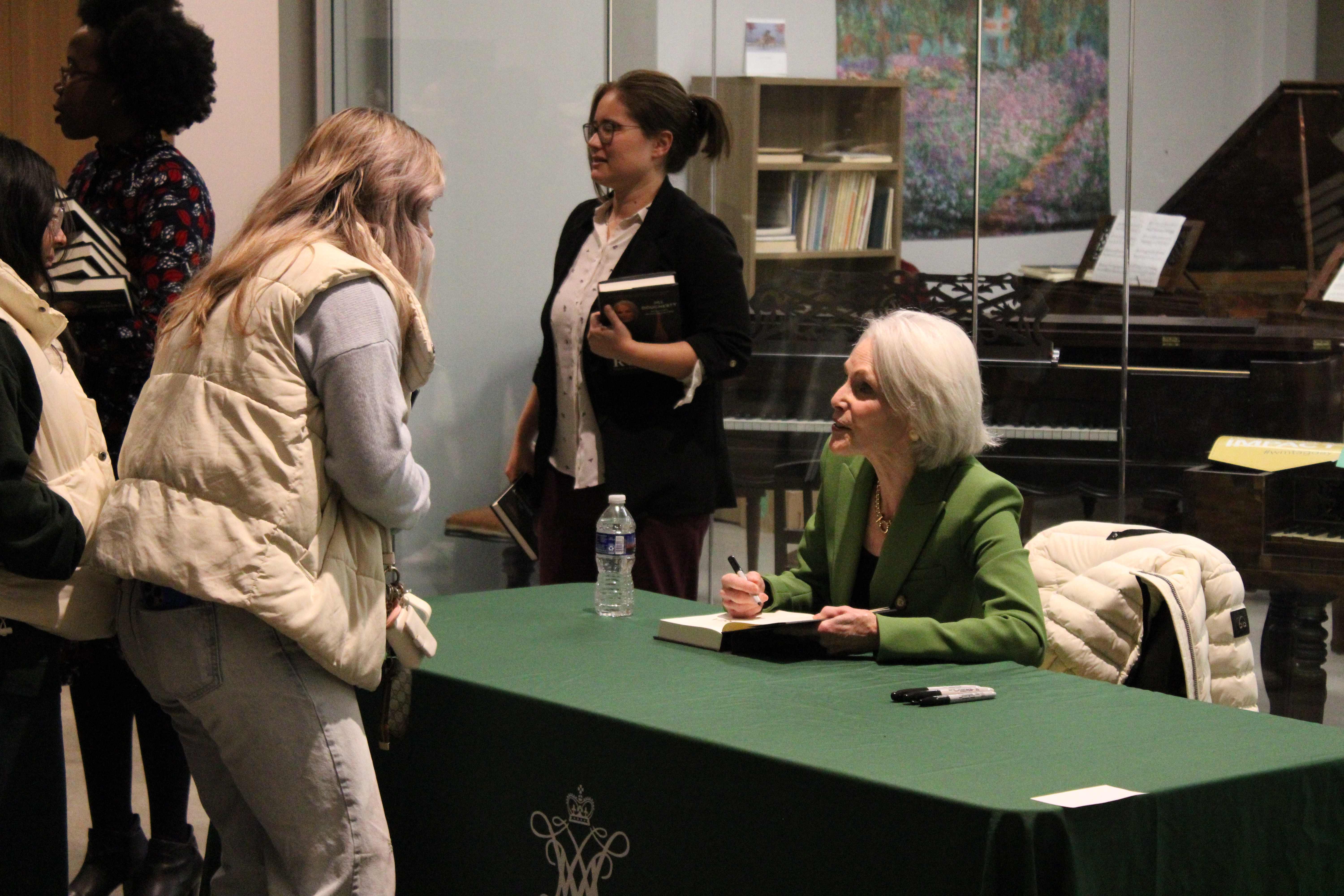
Dougherty closed with a note of hope for the country’s future. Engaging with attendees during the Q&A, Dougherty shared her thoughts in response to questions ranging from the militarization of Russia’s youth to the rise of the Russian oligarchy.
“I really appreciated how she uplifted the humanity of everyone she spoke about, whether from the U.S. or Russia, and how even when talking about sensitive topics she was intentional in emphasizing the hope for a global order that respects and supports everyone,” Eva Jaber ‘28 said. “It’s rare to hear a perspective that combines immense knowledge about a subject field with cultural humility and a narrative voice that speaks to the shared humanity between populations in a fraught geopolitical order.”
Reflecting on Dougherty’s talk afterwards, Zvobgo said Dougherty offered an important and refreshing perspective — one grounded in practitioner experience that complements the academic approach from the classroom. Echoing Dougherty’s abiding hope for Russia’s future, Zvobgo added, “We need both leaders and citizens who care about change and are committed to fighting for it.”