 Skip to main content
College of Arts & Sciences faculty awarded for excellent teaching, research and mentorship
The College of Arts & Sciences is proud to recognize faculty members from across disciplines and ranks for their remarkable achievements over the past academic year. Issued by both the College of Arts & Sciences and the Office of the Provost, the following 12 awards and professorships were given to faculty celebrating their pioneering research, innovative teaching and impactful mentorship to students, grounding the next generation of leaders, thinkers and creators through a liberal arts and sciences education.
Thomas Jefferson Awards
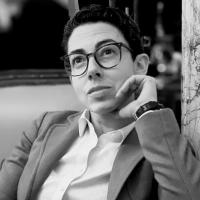 Jennifer Lorden, associate professor of English, was selected for the Thomas Jefferson Teaching Award. Since joining William & Mary in 2019, Jennifer Lorden has distinguished herself as a transformative classroom instructor and an innovator in early medieval literary studies. Colleagues and students describe her as one of the most inspiring educators they have encountered. She teaches some of the English department’s most demanding material, building students’ confidence and curiosity while they grapple with Old English. Students describe her classes as intellectually thrilling. Lorden creates welcoming spaces where students read aloud and translate with excitement, and where literary history feels alive and relevant. Several of these students write that it was Lorden's mentorship that reshaped their academic and professional trajectories.
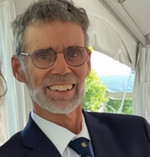 Randolph M. Chambers is the recipient of the Thomas Jefferson Award. Chambers has been the bedrock of environmental studies at William & Mary since 2000, advancing interdisciplinary learning across the university. His leadership roles are numerous: director of the environmental science & policy program, associate chair of biology, and director of the biology graduate program. Under Chambers' direction, the Keck Environmental Field Lab has flourished as a university-wide resource. In the field and in the classroom, Chambers has mentored the next generations of scientists and policymakers, teaching more than 2,000 students. He has published more than 60 articles and several book chapters and secured more than $1 million in funding from federal and state agencies. His research has influenced aquatic restoration, climate-related environmental planning, and his service has advanced sustainability initiatives on campus, contributing to energy, habitat and restoration efforts.
College of Arts & Sciences Faculty Awards for Teaching Excellence
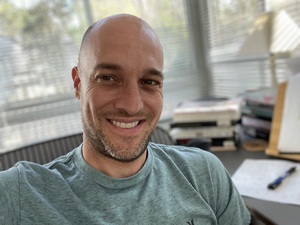 Patton Burchett, associate professor of religious studies, has been honored with one of this year's awards. Since joining W&M in 2015, Burchett has established himself as a transformative force in the classroom, recognized for his exceptional ability to blend rigorous intellectual inquiry with profound social and emotional impact. His work challenges students not only to master complex historical and conceptual material but also to examine their own perspectives and place in the world. A true innovator, Burchett spearheaded the department’s ad hoc committee to reconfigure the Bachelor of Arts degree, leading the creation of a new major in Contemplative Studies. This interdisciplinary track bridges religious studies with philosophy, psychological sciences, and neuroscience, offering students a unique opportunity to explore the nature of contemplative experience across diverse cultures and traditions.
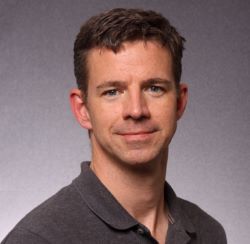 Martin Gallivan, professor of anthropology, has also received one of the CAS teaching excellence awards. A cornerstone of the Department of Anthropology since 2001, Gallivan is a scholar-educator whose work seamlessly bridges the gap between historical inquiry and contemporary community engagement. As a leading expert on the Indigenous history of the Chesapeake region, Gallivan has not only redefined our understanding of the Virginia landscape but has also transformed the way students interact with the past. At the heart of Gallivan’s pedagogical mission is a commitment to collaborative and ethical research. He has been a pioneer in involving students — both undergraduate and graduate — in significant field research, most notably at the Werowocomoco site and the Kiskiak site. Gallivan is widely recognized for his visionary leadership in the Department of Anthropology, his commitment to community-engaged scholarship, and his profound impact on the academic and professional lives of his students.
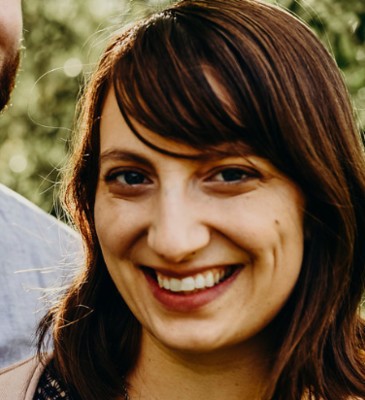 Madelyn Labella, assistant professor of psychological sciences, was chosen for this honor as a distinguished educator, mentor and researcher who has already deeply impressed her colleagues and students since joining W&M in 2021. Her dedication to student success is evident across every facet of her work, from large-enrollment lectures to the intensive supervision of her research lab. Her willingness to embrace the department’s most challenging assignments is further demonstrated by her volunteering to teach first-year graduate research methods and her successful rotation through the undergraduate methods curriculum — courses traditionally viewed by students as the most difficult. Beyond the traditional classroom, Labella’s RISE Lab serves as a vital hub of hands-on learning. She mentors a remarkable 20–25 undergraduate students each semester — a lab size significantly larger than the departmental norm — providing them with invaluable experience in sensitive clinical research involving physiological and behavioral data.
College of Arts & Sciences Awards for Faculty Governance
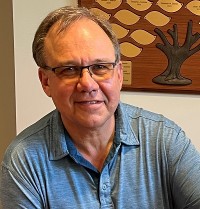 Matthias Leu, professor of biology, is the recipient of one of this year’s Faculty Governance Award from the College of Arts & Sciences. Leu is honored for his transformative leadership, his ability to foster consensus across diverse constituencies, and his tireless commitment to the structural and academic future of William & Mary since joining the Department of Biology in 2009. His most significant recent contribution has been his role as co-chair of the Future of Arts & Sciences Coordinating Committee. In this capacity, he led a diverse group of 16 members through the complex task of reimagining the organizational and administrative frameworks of the College. Leu has lent his expertise to nearly every facet of faculty governance, including the Educational Policy Committee, where he served as both chair and member, and the CAS Committee on Graduate Studies. He has been a consistent voice for equity and innovation, serving on numerous search and curriculum committees that have shaped the department’s current trajectory.
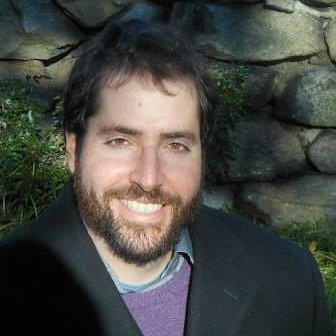 Andrew Tobolowsky, associate professor of religious studies, was also selected for the Faculty Governance Award this year. In his eighth year of service, Tobolowsky has demonstrated an extraordinary commitment to the vital, often behind-the-sciences work of faculty governance, tirelessly advocating for his colleagues, leading curriculum development, and exhibiting dedicated service across the department and university. He has served on every departmental committee, frequently taking on multiple assignments simultaneously. His contributions range from personnel and search committees to the critical work of reimagining the department’s digital presence and diversity initiatives. As a key member of the interdisciplinary Program in Judaic Studies, he has been a driving force behind its academic minor, public programming, and the production of its annual undergraduate research journal. He also serves on Faculty Assembly, where he acts as a vital liaison between the faculty and the administration.
Thomas A. Graves, Jr. Award for Sustained Excellence in Teaching
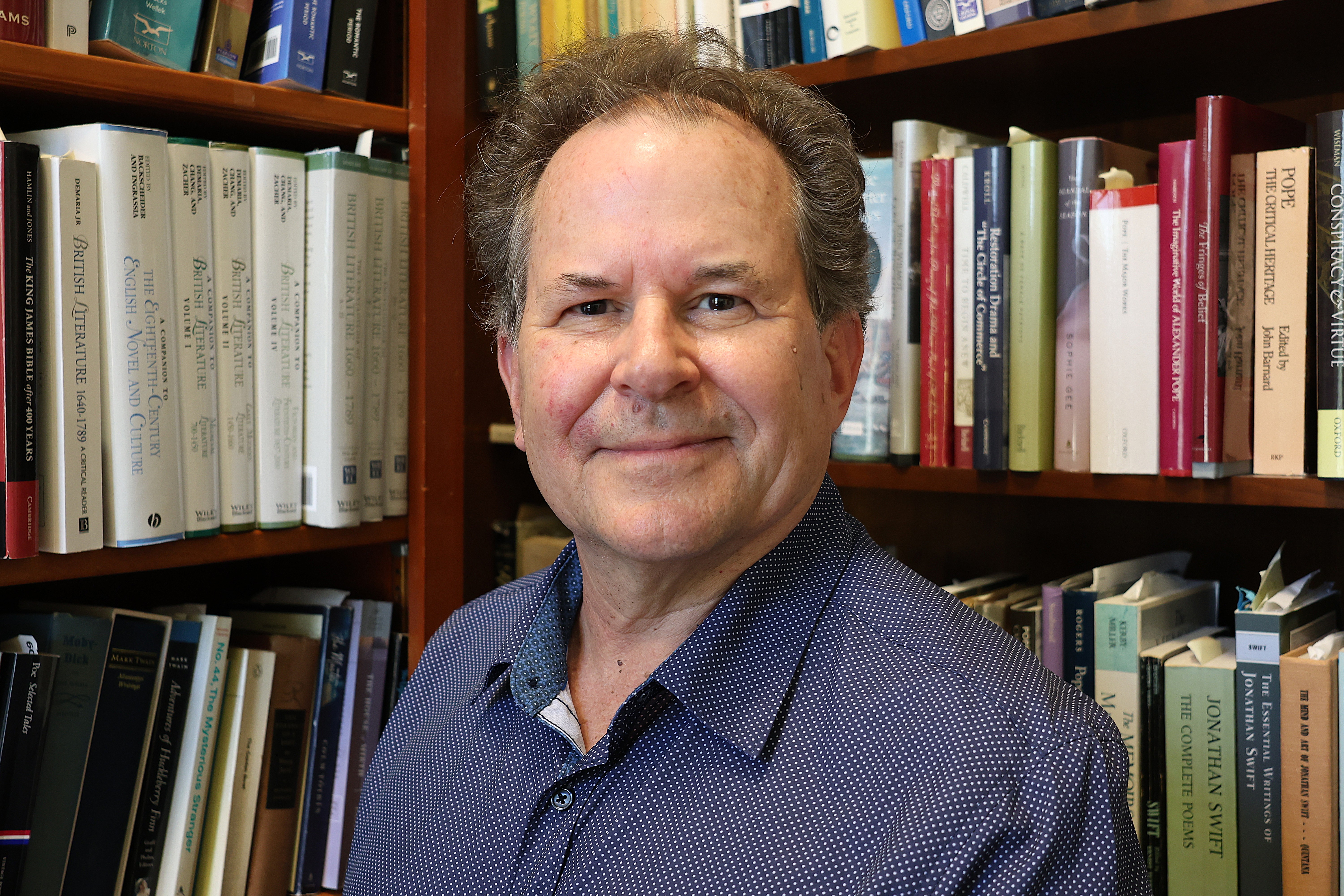 Adam Potkay, William R. Kenan Jr. Professor of Humanities and English, has been recognized with the Thomas A. Graves, Jr. Award. For more than three decades, Potkay has exemplified the highest ideals of sustained excellence in teaching at William & Mary as a scholar of extraordinary breadth and depth and rare intellectual vitality. Potkay has shaped the minds of generations of students through rigorous, transformative engagement with literature, philosophy, and the enduring questions of human experience. At the heart of Potkay’s pedagogy is a commitment to student growth. He sets high expectations and provides detailed, thoughtful feedback that strengthens students’ analytical and writing abilities. His teaching is inseparable from his distinguished scholarly career. An internationally recognized author of award-winning books and numerous articles, he brings cutting-edge research into the classroom, modeling for students a life of intellectual curiosity and inquiry.
Graduate Faculty Mentorship Award
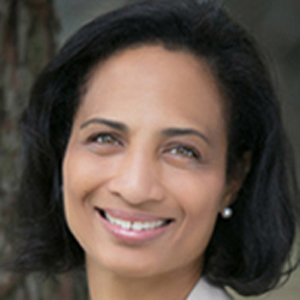 Adrienne Petty, associate professor of history, was awarded this year’s Graduate Faculty Mentorship Award. Petty has had a profound and uncommon impact upon graduate students in the Harrison Ruffin Tyler Department of History through her compassionate mentorship and her steadfast commitment to developing students into accomplished teachers. A historian of Southern farming and rural life since the Civil War, Petty is deeply invested in mentoring both M.A. and Ph.D. students, while also serving as the department’s director of undergraduate teaching. Petty serves on nearly every doctoral committee in the department and leads the teaching history course for history teaching fellows and is also in charge of the teaching assistant training program. Petty is an exemplary mentor in the realms of student advocacy, personal attention and care, and support of graduate student research and career development.
Glenn Award for Teaching Excellence
 Jackson Sasser, teaching professor of government, is this year’s recipient of the Glenn Award for Teaching Excellence. Since joining the Department of Government in 2011, Sasser is known for his "unparalleled dedication" and his ability to navigate complex, often sensitive topics with grace and intellectual rigor. Sasser’s teaching portfolio is centered on the intricacies of the American legal system, exploring the intersections of race, law, and politics, and his courses are highly sought-after. Sasser’s impact as a mentor is even more profound. Since 2021, he has served as the university’s pre-law advisor, providing essential guidance to over 100 students and alumni annually as they navigate the rigorous law school application process. He has also served as a mentor for Posse Scholars since 2022 and as a WMSURE Faculty Fellow, dedicated to supporting underrepresented scholars in their academic pursuits.
Jennifer and Devin Murphy Award
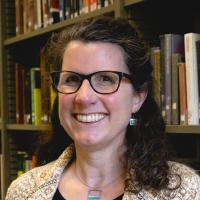 Molly Swetnam-Burland, professor of classical studies, is this year’s recipient of the Jennifer and Devin Murphy Award. Since joining the Department of Classical Studies in 2008, Swetnam-Burland has redefined the boundaries of undergraduate research in the humanities, transforming the study of the ancient world into a collaborative, hands-on laboratory experience. Swetnam-Burland’s most groundbreaking contribution is the Liber Memorialis Project, where she pioneered a "lab" model that invites undergraduate and post-baccalaureate students to serve as active collaborators. Through this project, students engage in the meticulous work of epigraphy and archaeological analysis, contributing to a digital resource that will benefit the global scholarly community. Her students do not merely assist in her work; they are trained as colleagues, presenting their findings at national professional conferences and contributing to forthcoming scholarly publications. She also led the curation of the Classical Studies Archaeological Collection, creating a bridge between the material culture of the Roman Empire and the modern classroom.
Lambert Scholarship
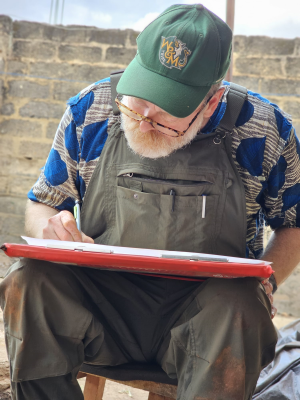 Neil Norman, associate professor of anthropology, has been honored with the Lambert Scholarship. An esteemed historical archaeologist whose research program in West Africa has garnered international recognition, Norman has served as a vital anchor of the Department of Anthropology and the Africana Studies program since he joined in 2008. During his 7-year tenure as director of graduate studies and 17 years on the graduate committee, he was a primary architect of the Bachelor’s-to-Master’s program, an innovative initiative that has allowed promising undergraduate majors to seamlessly transition into a one-year M.A., significantly expanding the department's reach and reputation. In the classroom, Norman is a versatile and engaging educator who has introduced hundreds of students to the complexities of archaeology and African history. In addition to his long-standing membership on the Lemon Project Steering Committee, his courses challenge students to confront the material realities of the past while engaging with critical contemporary issues of heritage and identity.