 Skip to main content
A quiet excellence: English professors honored with prestigious appointments
Two faculty members from William & Mary’s English department have been appointed to high-level roles for esteemed organizations in the literary world.
Taking the helm of a leading journal
Adam Potkay, William R. Kenan, Jr. professor of Humanities & English, was recently named the editor of the Publications of the Modern Language Association of America (PMLA), the leading academic journal for English literature, comparative literature, and modern languages. Additionally, Jon Pineda, associate professor of English, was recently selected as a judge for the 2026 National Book Awards poetry category. The awards, which are held by the National Book Foundation, celebrate the best of literature in the U.S.
“Their appointments make clear how our department, and the College of Arts & Sciences at William & Mary, fosters and supports strong work in literary scholarship and creative writing. We are gratified to see this being recognized by such important institutions in our fields, and we are very excited to see the fruits of Jon and Adam's work in these new endeavors,” Arthur Knight, chair of the English department, said. 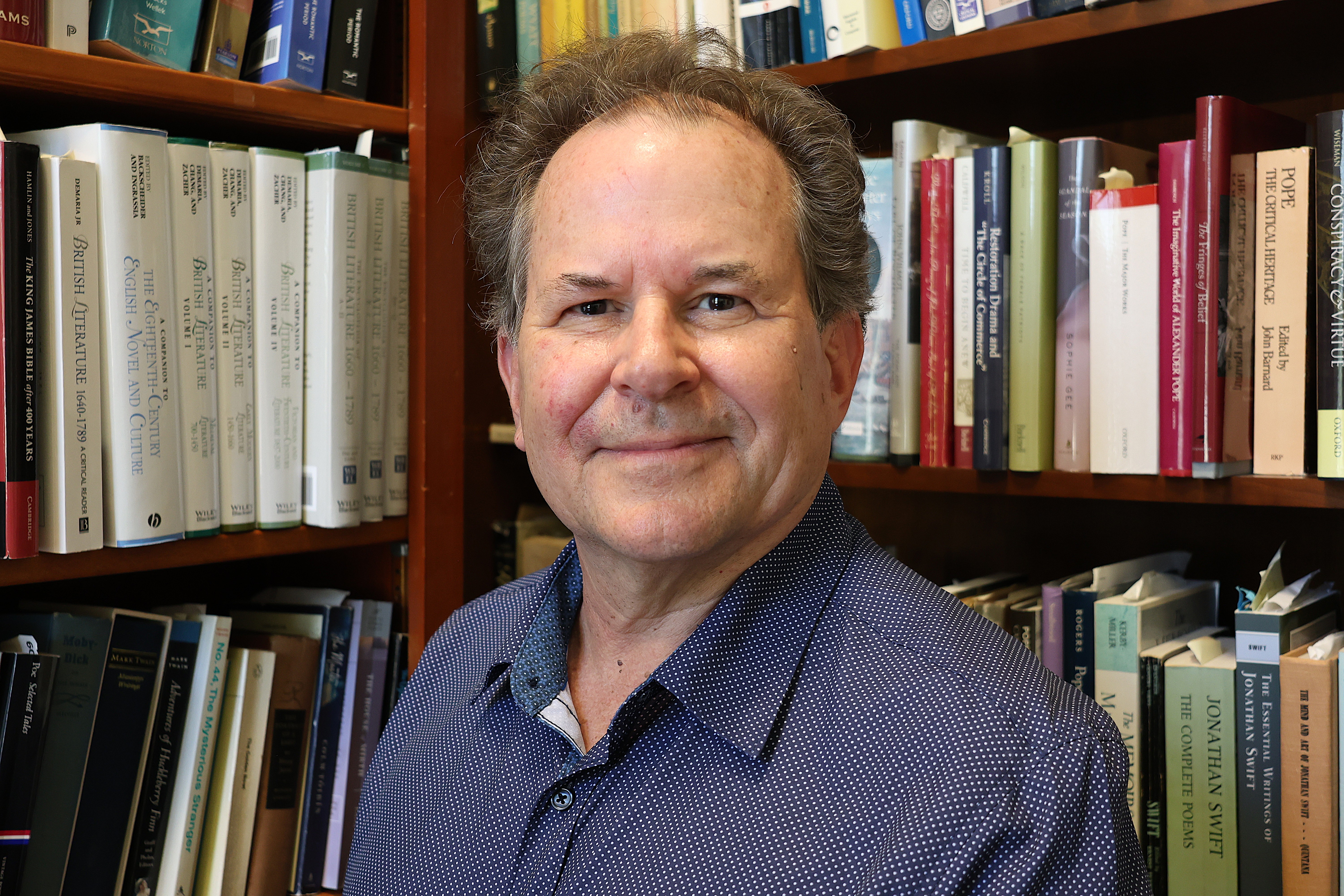
Potkay’s term runs for three years. Appointed by the MLA Executive Council, the process of becoming an editor has been a decade in the making for Potkay, who was named a finalist in 2015. Since then, he’s been an invited speaker for the talk “How to Publish in PMLA” at the 2016 MLA Convention. His PMLA writing experience spans decades, with articles published in 1992, 2008 and 2015.
In February 2026, the MLA Executive Council named Potkay as the next PMLA editor. With reading abilities in over six languages, Potkay values the focus that the journal places on non-English literature. He expressed his appreciation for the range of languages represented, and shared hopes to expand the journal's reach beyond the English-speaking world in his role.
Looking ahead, Potkay has enthusiasm and ambition for his role as editor. Another duty of the position includes organizing special forums on theories and methodologies in literature, and he hopes to add categories of history, genres, and authors to the forum structure. “My goal is to bring a broader swathe of the profession into the journal,” Potkay said.
Shaping top poetry contest with expertise
Pineda was hand-selected for his role by the National Book Foundation for his vast experience and expertise. The Foundation brings together 25 literary professionals to serve as the next crop of judges, nominated by previous National Book Awards winners and judges. With five categories of awards — Fiction, Nonfiction, Poetry, Translated Literature, and Young People's Literature — submissions range from 150 to 600 per category. As part of the poetry judge panel, Pineda will help narrow down all submissions to 10 top finalists, and finally a winner. 
Pineda’s own work includes a wide range of literature: three collections of poetry, two novels, and a memoir. He has received the Library of Virginia Literary Award twice, for both poetry and fiction.
Pineda’s courses at W&M inspire and motivate his upcoming work as a judge. Pineda will be teaching CRWR 369 Creative Writing: Poetry this fall. “I'm sure this experience of reading so many new collections will find its way into our class discussions. I look forward to it all," Pineda said.
As judges and editors, these English department faculty members exemplify the same excellence in teaching, publication, and knowledge of literature that they bring to the classroom. “I tell my W&M students that now I won't just be helping them to improve their writing and argumentation — I'll be helping hundreds of professors, too. It's all a continuum.” Potkay said.