 Skip to main content
The Naxos Quarry Project Summer 2026
This summer, Professor Jessica Paga took several W&M students into the field as part of the Naxos Quarry Project: Maya Parfitt (who also participated last year!), Phoebe Kirsch, and Paige Martin. They are part of an international team investigating an ancient quarry site – where Greeks found the marbles that they put to good use making temples, religious sculptures, funerary memorials, and more. They have been both investigating the quarries and the nearby Palatia islet site.
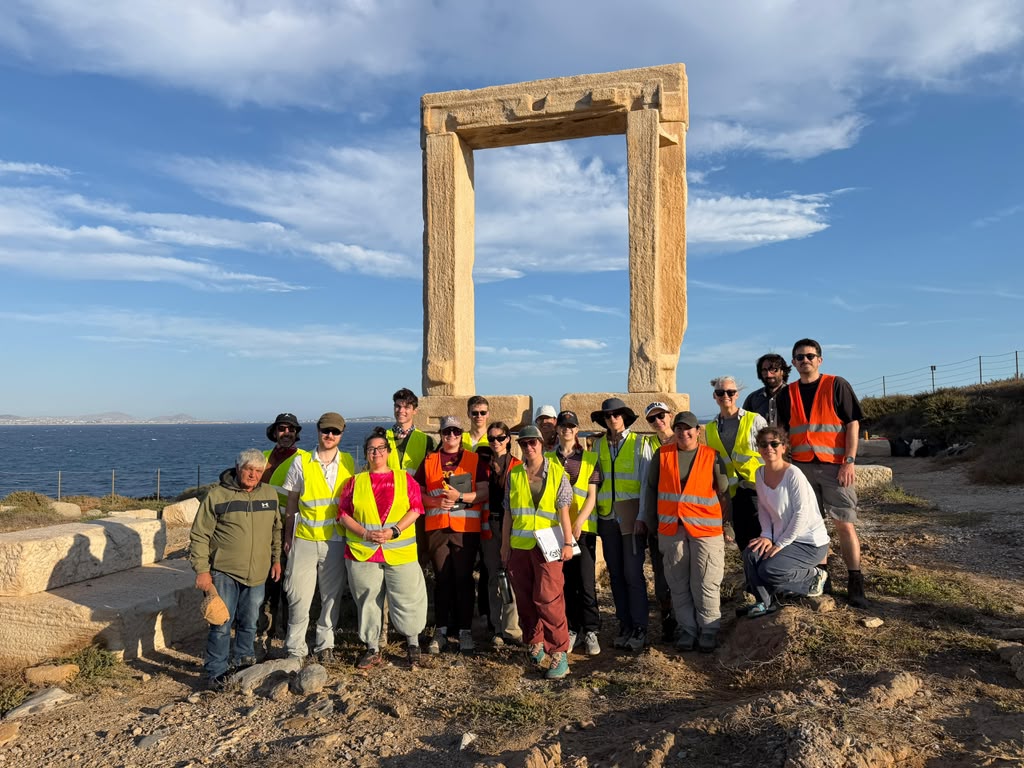
Recently, W&M News did a feature on Maya Parfitt and the NQP. About student participation in the project, Professor Paga says: “We’re exposing students not just to manual work, but to the ideas and processes behind it,” Paga said. “We’re helping them understand how something as small as a piece of pottery can tell us something important.”
Maya, Paige, and Phoebe particularly enjoyed improving their skills in architectural drawing. Maya’s also conducted a separate research project, on Dionysus relation to Naxos. One major undertaking of this summer’s work was the creation of a detailed digital catalog of the temple’s marble blocks, documenting over 280 architectural blocks. We cannot stress enough the value of these professional experiences for students. Last year, Maya and Devon Kesee received an award for a poster about their research at the annual meetings of the Archaeological Institute of America.
This year, Paige Martin participated both in our Rome Pompeii trip and the Naxos Quarry Project. We interviewed her about her experiences:
What was your experience like as a member of the Rome/Pompeii Study Abroad? Would you recommend the program to other students?
I had an amazing time on the Rome/Pompeii Study Abroad! While you see pictures in textbooks and movies and tv shows, it is special to actually be surrounded by their walls and scenery. Seeing the size and grandeur of the buildings and how they influenced the modern city of Rome deepened my appreciation of Roman culture and life. Although I learned much about the ancient Romans on this trip, I also immersed myself as much as I could in modern Italy. Wandering through Rome and finding interesting shops and restaurants is an experience I’ll never forget. It’s also a great opportunity to meet students and teachers in and outside of the Classics major. I’d highly recommend the program if you want to connect to ancient cultures or are at all interested in Classical history!
What was your favorite site or experience?
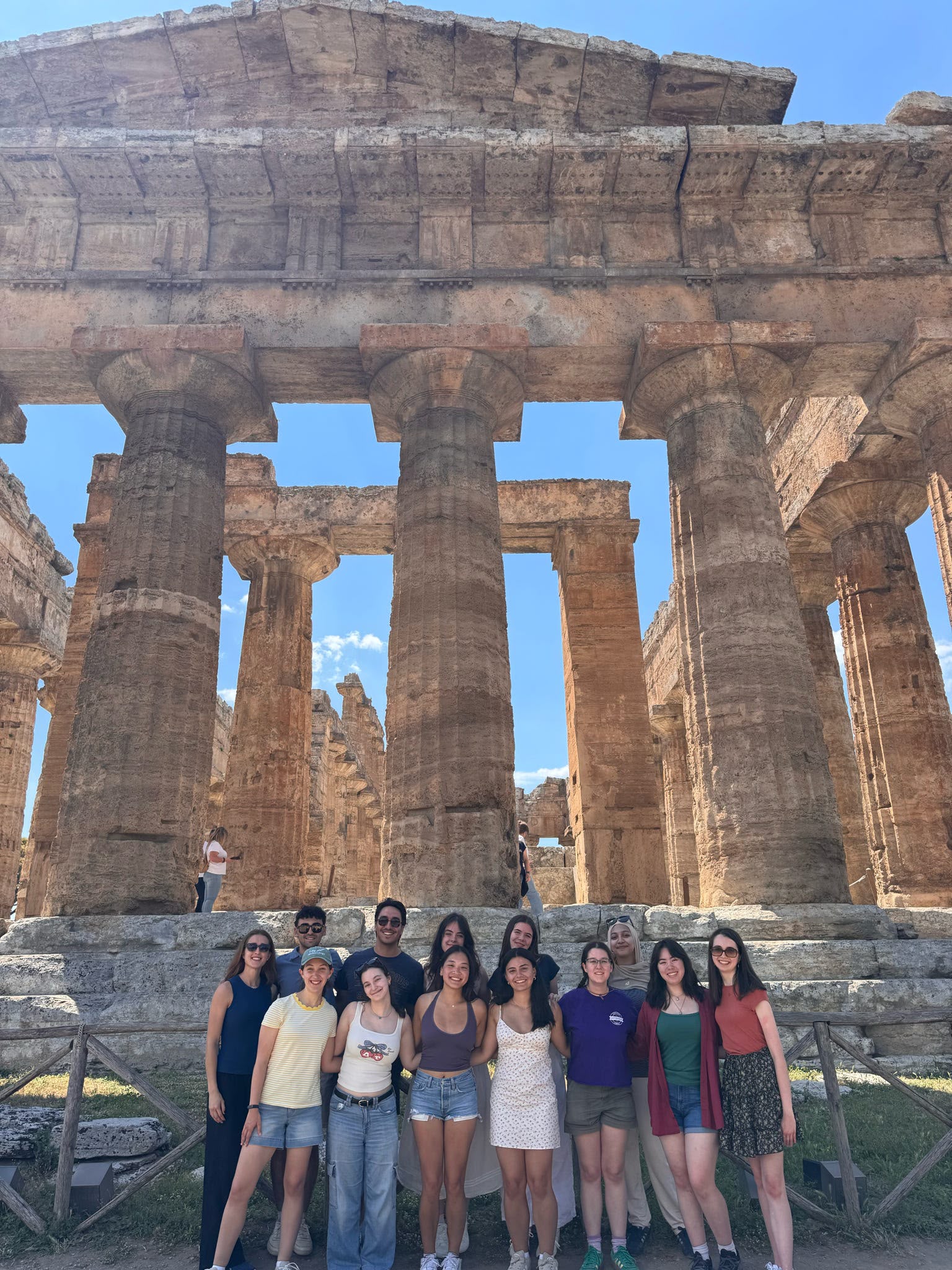
Paestum/Poseidonia will always stick with me. We visited this site, a coastal town a little south of Naples, during our first week in Italy. Paestum is most well known for its three well-preserved Doric temples still standing. It was surreal to be able to stand on and touch some of the first temples I’d learned about in my coursework. We also got to talk about the convergences of cultures at this site. Paestum is a site touched by Greek, Roman, and Etruscan civilizations. Though it is located in Italy, Paestum was founded as a Greek colony in the 6th century BCE and was converted into a Roman colony in 273 BCE. Walking through the city and the adjacent museum, you can really see the influences of each of the cultures on the buildings, artifacts, and burials. Through the exploration of this site, the diversity of life and people in ancient times is on display.
What other research experiences did you have this summer?
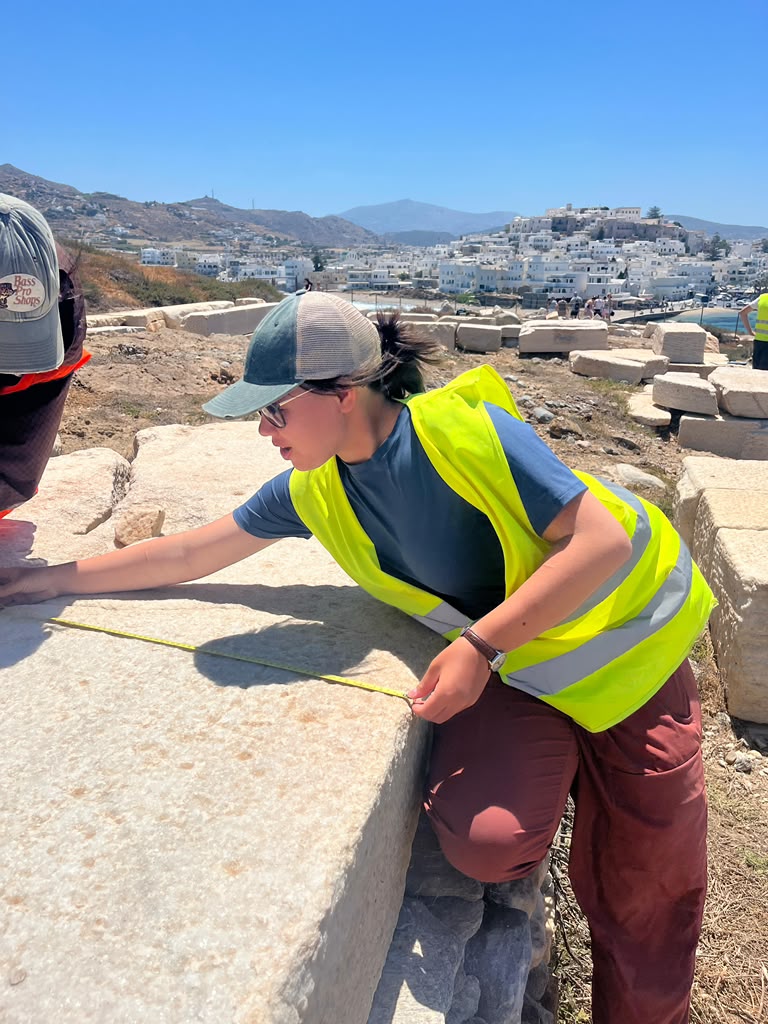 I jumped from Italy to Greece this summer to join Professor Paga on her Naxos Quarry Project. The project studies the quarries of the island of Naxos and their potential link to the unpublished monumental temple colloquially known as Portara. As a student, I was able to help with fieldwork, which included survey sweeps and documentation of the blocks of Portara. The opportunity to join this project was special and allowed me to compare what I learned about the ancient past in Rome with the site in Greece. Additionally, I learned aspects of how to conduct fieldwork and how to interpret the material finds into the broader context of the site.