 Skip to main content
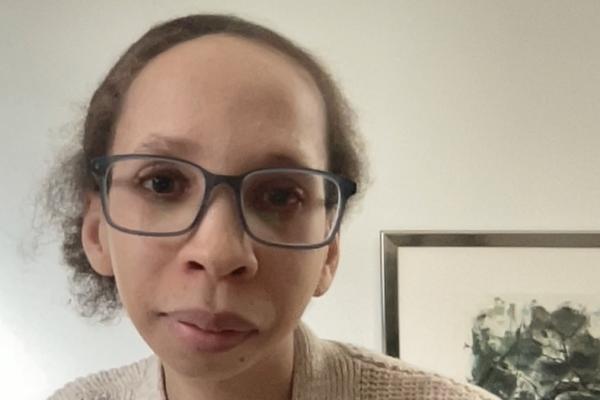
Irene Morrison-Moncure (W&M ‘11) Shares About Her Work at NYU
 What is your graduation year, and did you have a double major?
I graduated in 2011. Although I was on track to double major in economics, I fully dedicated my schedule to Latin, Greek, and German my senior year to better prepare for graduate school. However, my focus within economics—historical periods of economic anxiety, such as the Great Depression, and how they affect trust in governments—became the core of my research in Classics, which continues that work on history and emotion.
Can you tell us a little bit about your experience at William & Mary? What drew you to Classical Studies?
I loved my time at William & Mary. What drew me in was the sense of history, the small class sizes and 1:1 faculty attention, the research opportunities, and it was also a very good financial deal at the time. What drew me to Classical Studies was a lot of the same, especially the small classes, the personalized mentorship, and I might have been the only one who truly didn’t mind Morton Hall (what’s now Boswell). There was something end-of-days about it, perfect for studying dead languages.
What are you doing now and what is your favorite thing about your job?
I have a hybrid administrator-faculty role at NYU’s Gallatin School of Individualized Study. The main thrust of my role is guiding students through crafting a self-designed major, while also teaching small, interdisciplinary seminars to help students meet their premodern requirement. (At Gallatin, students must take at least one premodern course, which is super cool). I teach one course on Roman history and one on Roman philosophy and the best thing about it is introducing my favorite authors, Lucan and Lucretius, to students who might otherwise never take a Classics course. Lucretius in particular is always a hit; he has a lot to say to help us navigate the modern age.
How has your experience studying the ancient world helped you in your career?
I’ve always liked working behind the scenes of higher education. At William & Mary, I worked for the Charles Center and the Dean of Students Office, then in graduate school with the Provost’s Office and the Office of Educational Opportunity and Diversity. I think I knew early on in my academic career that I wanted to go into administration, but what tickled me was how Classicists were received in that space—that is, often with very high regard. For better and for worse, there are assumptions about what it means to “study Classics” and the professional skills that come from it, which has been interesting to navigate but generally a positive experience.
More broadly, how has that experience shaped you as a person?
I’ve become better at articulating the value of Classics and the humanities in general. With another Classics colleague, I’m the co-editor for a series of case studies through Sage Publishing that draw from the ancient world to teach lessons about leadership to business students. This series has been useful for my own thinking about economic history, about how to add dynamism to courses and to engage students with increasingly diverse and professional interests, and for connecting the humanities to the modern world. It’s work that feels urgent given where we are in terms of AI, in particular.
What advice would you give a student who is interested in your field?
At the undergraduate level, students should take advantage of general education requirements to sample courses across the liberal arts. Notice similarities in the sorts of questions each field poses. Consider the ways these questions stretch back to the past and how they become more critical in the future. That future is interdisciplinary—and thankfully so is classics