 Skip to main content

Honors Research
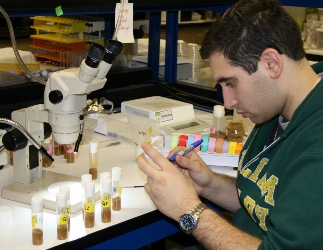
Students planning to pursue research careers after graduation should strongly consider the Departmental Honors program. This experience offers a realistic preview of graduate-level thesis writing and demonstrates a student's ability to maintain academic excellence while managing a substantial research commitment.
Getting Started with Honors
Most students begin collaborating with a faculty mentor during their sophomore or junior year. This foundational work is essential before officially enrolling in Honors research during the fall of your senior year.
-
Administration: The Honors program is administered by the Charles Center, which provides detailed guides and advice.
-
Inspiration: Students are encouraged to consult the Archive of Completed Honors Projects in Biology to see the scope of past research.
Eligibility and Advisor Policies
To ensure the academic integrity of the project, the following departmental policies apply:
-
Major Requirement: You must be a declared Biology major.
-
Faculty Advisor: Your primary research advisor (or co-advisor) must be a member of the W&M Biology Department faculty.
External Co-Advisors and Committees
If your research involves a mentor from outside the W&M Biology Department:
-
Committee Structure: The thesis committee must include your W&M Biology co-advisor, the external co-advisor, a second W&M Biology faculty member, and one additional external faculty member.
-
Case-by-Case Review: Proposals involving an external co-advisor who is not a W&M faculty member require a departmental review, including an evaluation of the co-advisor’s CV.