 Skip to main content

The M.S. in Biology
Program Goals & Career Paths
A master’s degree provides essential research experience and specialized training, whether as a stepping stone to a Ph.D. or as a terminal degree. Our graduates are in high demand in fields such as biotech, pharmaceuticals, and environmental consulting.
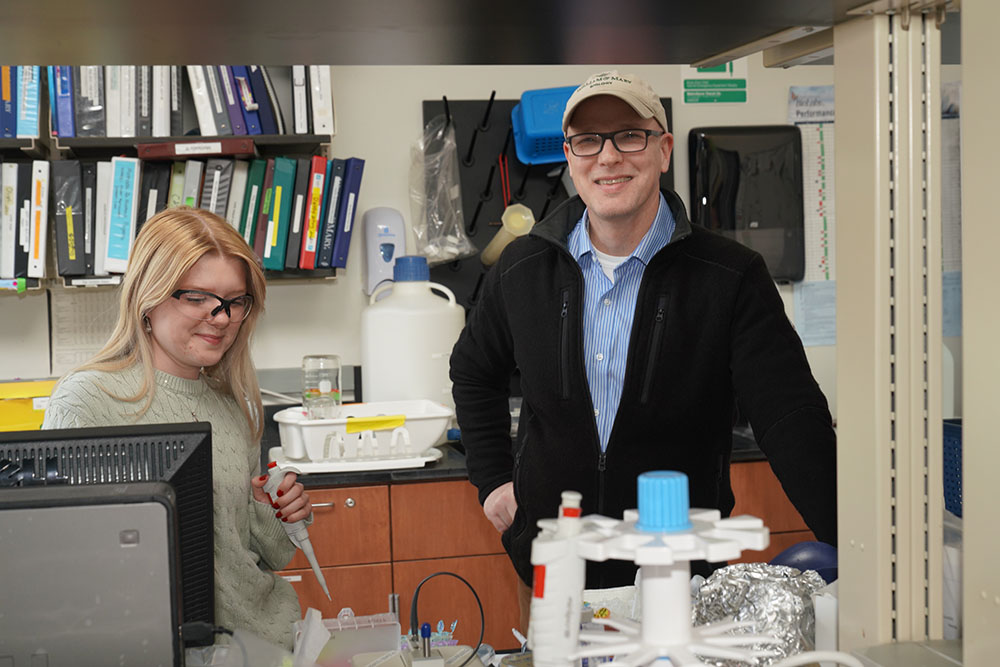
The goals of our program include:
-
Generating a productive academic community dedicated to high-quality, publishable research.
-
Equipping students with research and teaching proficiencies.
-
Fostering close interactions between faculty and graduate students.
Degree Requirements
As outlined in the Graduate Handbook, M.S. candidates must fulfill the following:
-
Credit Hours: Completion of 30 graduate credit hours.
-
Thesis Committee: Each student must have a committee consisting of a major adviser and at least two other department faculty members.
-
Examination: Students must pass a qualifying examination and a final oral thesis defense.
-
Residency: A minimum residency period of one year is required.
The Research Thesis
The research thesis must be presented in a seminar open to the entire department, followed by an oral examination.
Note for Applicants: Students interested in working with a specific faculty member are strongly encouraged to contact them prior to entering the program.
Academic Prerequisites
To ensure a broad understanding of the biological sciences, graduate students must complete a program of study consistent with our undergraduate requirements.
-
Organic Chemistry: At least one semester of organic chemistry is required.
-
Note: Credits taken to fulfill this prerequisite cannot be applied toward the 30 graduate credit hours required for the degree.
See the Graduate Catalog and the Graduate Handbook for details.