 Skip to main content

Everything Is Not Darkness: A Profile on Dr. Sergio Palencia
On a September afternoon, Dr. Sergio Palencia and I met over Zoom to discuss his research and how he came to William & Mary. The socioculturalist began teaching in the Anthropology Department in Fall of 2023 with courses titled “Introduction to Native Studies” and “Indigenous Politics and Plantations in Latin America.” He has since then also taught “Indigenous Narratologies: Image, Dream, and History” inviting esteemed artist and friend María Elena Curruchíche, a painter and weaver who documents resistance and heritage in the Kaqchikel town of San Juan Comalapa before, during, and after the genocide in Guatemala, to campus to discuss her work.
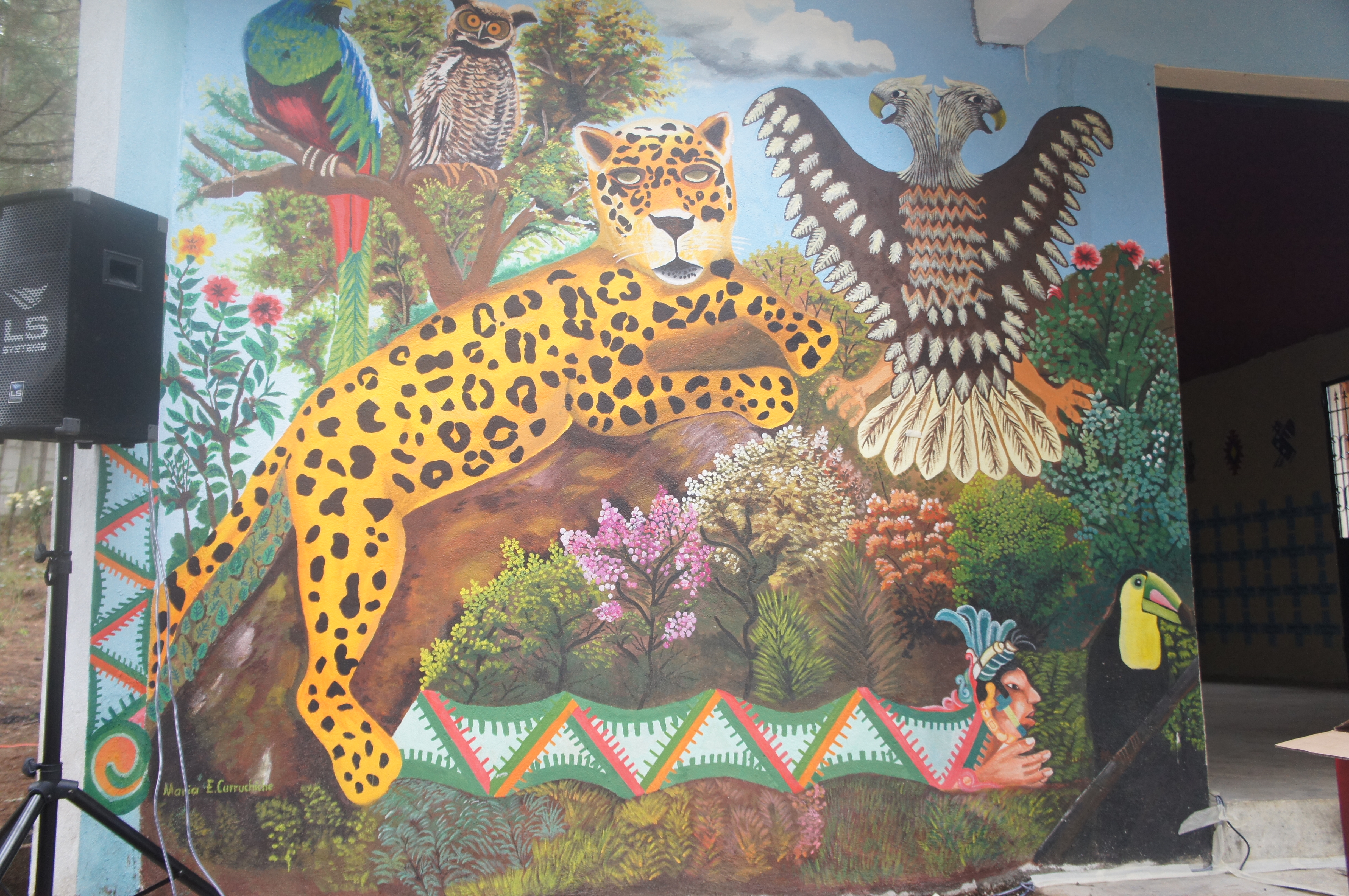 Dr. Palencia translated on behalf of Curruchiche before rooms full of undergraduates, graduate students, faculty, and staff alike in the Spring of 2025. María Elena Curruchiche shared her experience as an artist in her home where she processed the physical, emotional, and mental trauma of living through and after genocide. Loss and love survive alongside one another in her paintings wherein Maya belief and legend transcend the boundaries of time. Her murals uphold the souls of those murdered in 1980 and 1982 and those before and after. In murals of commemoration, jaguars, birds, and plants protect the remains and spirits of the living and the dead. Her depictions of life in Comalapa are referential of her father’s painting and her mother’s weaving, each artists in their own mediums.
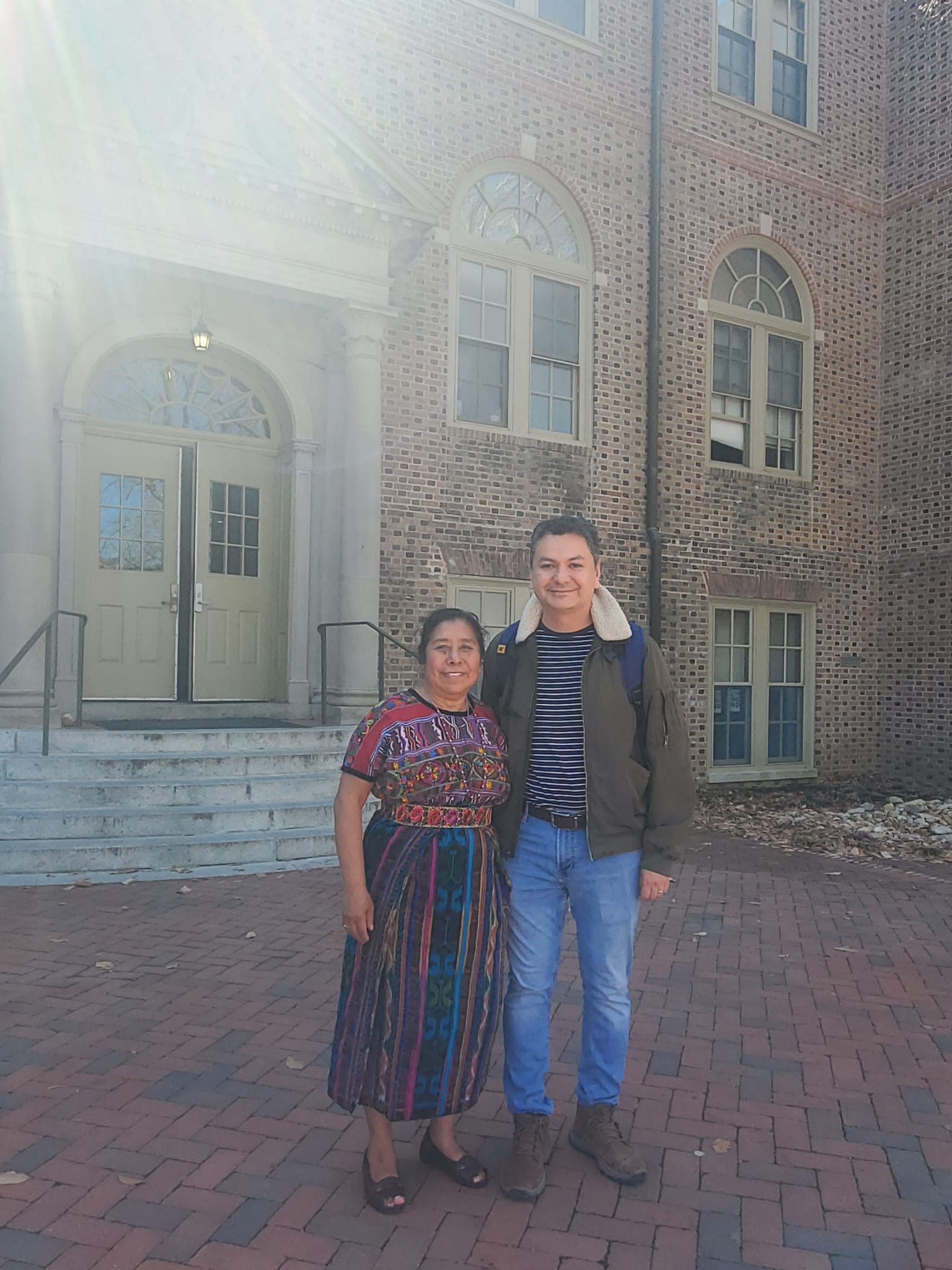
Upon our meeting that September afternoon, I asked Palencia how he came to know Curruchiche and why her work and friendship meant so much to him. In 2011 in Comalapa, Palencia visited Curruchiche’s gallery for the first time during a walking tour with community members. On a visit to her gallery, he acquired a painting and their friendship grew through his continued interest and care for her work and the stories she sought to tell. Palencia’s work pairs well with Curruchiche’s own in that he focuses on the latter half of the 20th century in Guatemala, especially in Mayan highland communities, where both seek to illuminate collective experiences of resistance during the war.
In 2014, Ixil, Kaqchikel, and Achi’ former resistance fighters invited Palencia to join “Comunidad 29 de Diciembre” Historical Memory Group. In the following years, the Group and Palencia participated in photo exhibition, went on hikes through the mountain highlands, and carried on collaborative ethnography in places of Indigenous revolutionary memory. It was an act of memory-keeping. “Walking the mountains” in community he “receive[d] as a gift,” he said. It was a chance for him to de-center himself in the process early on in his studies and to interrogate his own positionality as a Mestizo person. He spoke with great care about his interpretation of anthropologists’ role in the social sciences as those who are responsible for rescuing what is happening in the past.
During the summer of 2025, Palencia spent much time studying the connection between photography and memory. The “Archive of Resistance” was the focus of his research as material from Guatemala survives outside of the nation today in Mexico since the collection and archiving of such records were banned. Palencia analyzes the local complexities and global entanglements through “anti-plantation mnemonics” within photos and interviews like those referenced in his article “‘There Was a Time of Dancing’—Visual Memory of the Maya Uprising in Guatemala, 1980–1981” (2022). His research directs readers to engage with the agency of Indigenous Maya peoples in the highlands when they are otherwise characterized as outliers and vulnerable groups with a desire to be left alone. His research continues to center Maya histories, resistance, interethnic solidarities, and Indigenous autobiographies through the Cold War era and to prioritize indigenous experience through visual ethnographies.