 Skip to main content
Digging Deep: Reflections on TA-ing the Peter Scott Field School
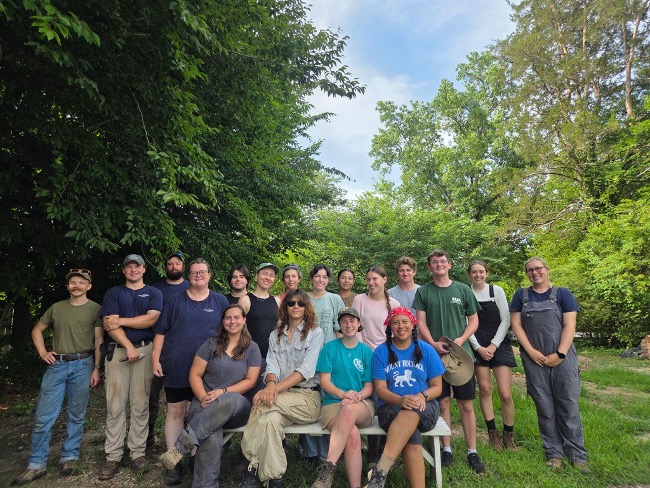
This past summer the Archaeology Department at Colonial Williamsburg welcomed two William & Mary Anthropology Graduate students onto the team as Teaching Assistants for the 2026 Peter Scott Field School. Excavations have been underway since February 2025 at the site that was the home and shop of cabinetmaker Peter Scott from 1733 to 1775, and where two enslaved craftsmen worked alongside him. The field school was split across two sessions (May 26 to June 26 and June 29 to July 31). Mornings were spent excavating at the public-facing site on Duke of Gloucester Street, in the heart of Williamsburg, where the two TAs, Jenn Browne and Jonas Darko, guided students through hands-on fieldwork. In the afternoons, students moved to the Campbell Archaeology Center for lectures and lab-based work, where the TAs assisted students with washing and processing artifacts. Here, Jenn and Jonas reflect on their experiences.
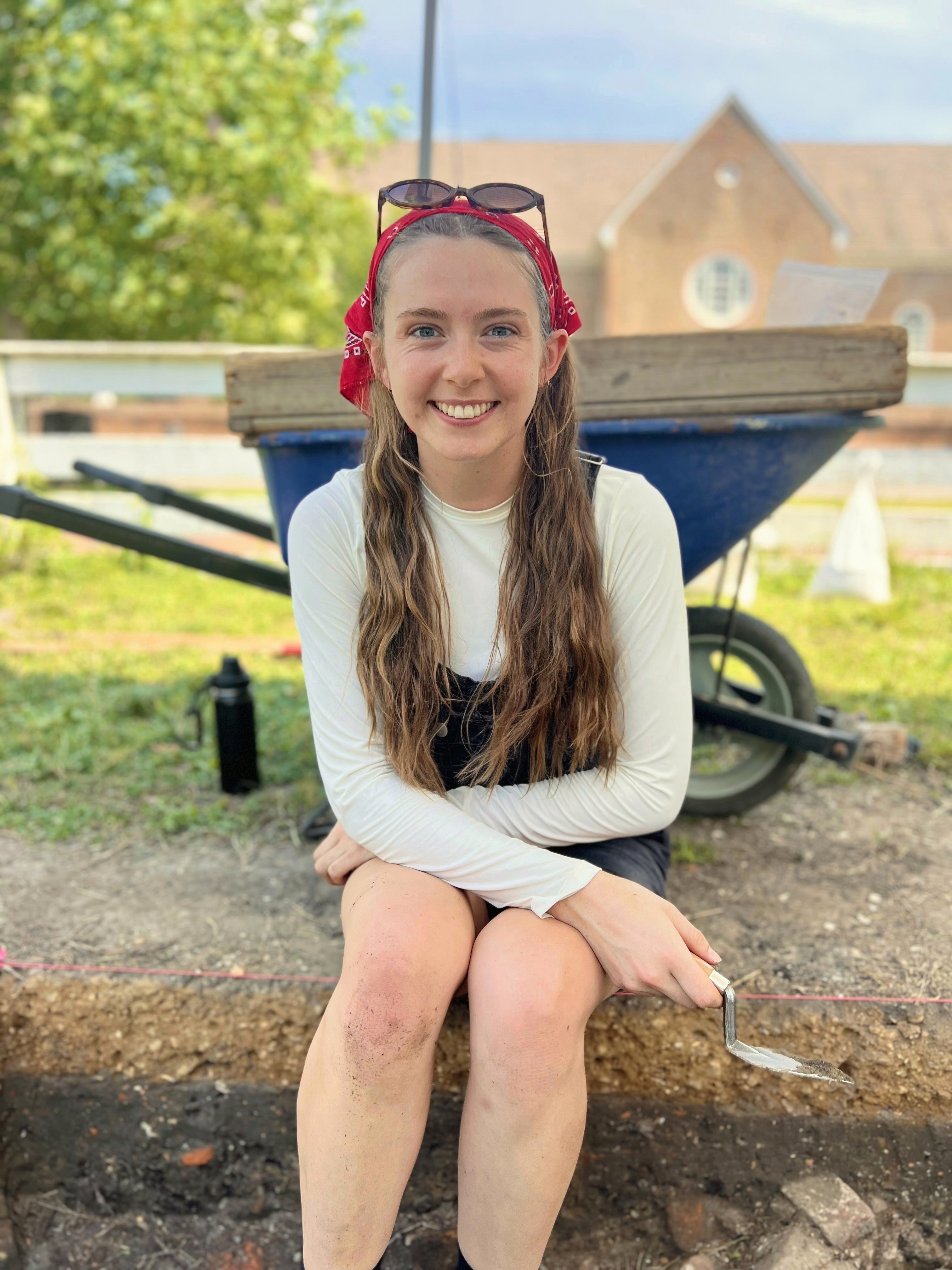
“This program was the first time I got to rely on the skill set I have built over my academic career. Having always been in a student role, this was daunting at first, but it ultimately gave me the confidence to step outside of that role and recognize that I was capable of applying what I had learned in a meaningful, professional setting.”
- Jenn Browne (Third Year PhD Student)
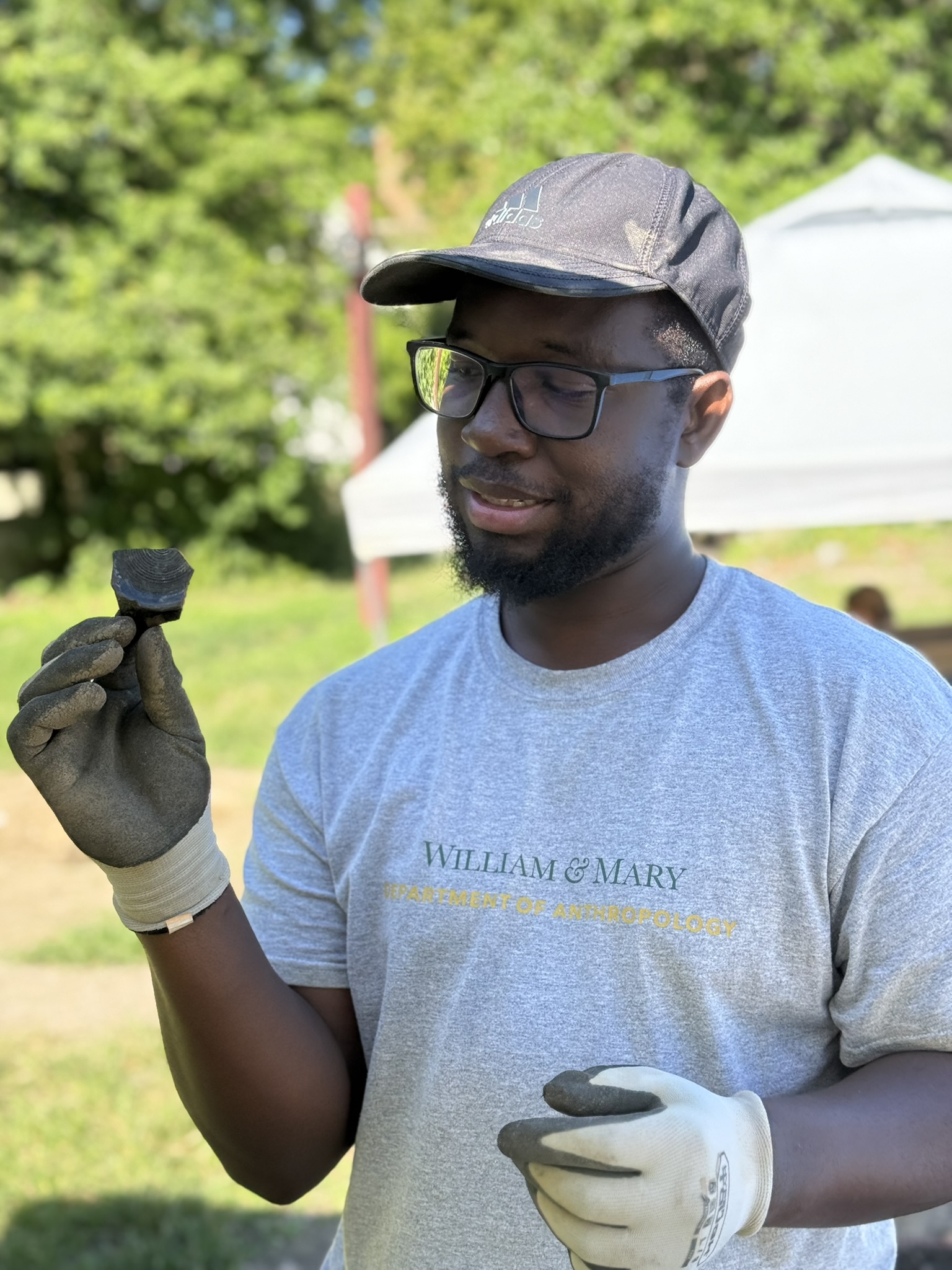
"This experience helped me strengthen my teaching, communication, and leadership skills. Because students regularly came to me with questions and challenges. I had the opportunity to practice explaining archaeological concepts and field techniques in ways that were clear and accessible.”
- Jonas Darko (Second year MA/PhD Student)
Reframing Research and Shifting Interests
The living-history setting of Colonial Williamsburg and the richness of material deposits allowed both TAs the opportunity to think in new ways about their own research. For Jenn, whose research is centered around Revolutionary War-era burials in Williamsburg, watching historic trades interpreters demonstrate period trades and tasks, allowed her to visualize just how labor-intensive daily life would have been for the town’s 18th-century residents. Being immersed in the environment gave her research a visual dimension, adding color and texture. For Jonas, whose research has shifted from West African archaeology toward African Diaspora archaeology, the field school provided him with his first excavation experience in the US, encouraging him to think more critically about how material culture reflects broader economic and colonial relationships. Jonas also caught the GIS bug while seeing it applied in an archaeological setting. He is now taking coursework at the Center for Geospatial Analysis to build on that skill set.
The Best Part of the Job
When asked what they enjoyed most about participating in the dig, each TA pointed to something different. For Jenn, it was the people:
"Definitely the students! By working with them day in and day out, you really got a chance to get to know them, whether it be over the screen in the field or identifying artifacts in the lab. In that same vein, it was really nice to watch the students bond with each other. I'm sure any archaeologist can attest; nothing bonds you closer quite like manual labor in the sun and heat for hours on end."
For Jonas, it was the quieter rhythms of lab-based work:
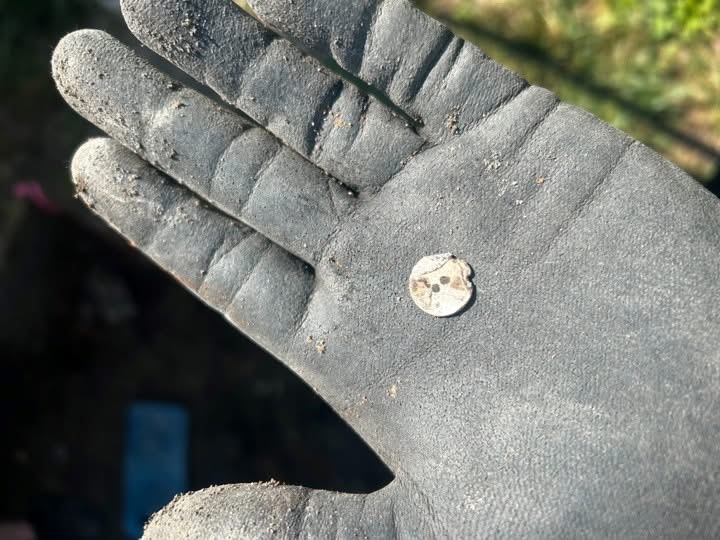
"My favorite part of the experience was the classroom sessions and the activities we engaged in after fieldwork, particularly washing and rebagging artifacts. I enjoyed these activities because they provided an opportunity to work directly with the recovered materials while also discussing their archaeological significance."
Their Advice? Do it.
Both Jenn and Jonas enthusiastically endorse any student weighing to TA a future field school.
“Absolutely do it! It is super rewarding for yourself to see it come full circle from your experience as a field school student to a field school TA.” Jenn Browne
“Working closely with students in the field provides an opportunity to develop teaching, communication, and leadership skills while also strengthening one's own archaeological knowledge. The experience also teaches you how to adjust your leadership style. I learned that being an effective leader requires patience, flexibility, and the ability to accommodate students with different levels of experience and learning styles.” - Jonas Darko
 For interested students, the call for applications to TA the Colonial Williamsburg field school is typically open in the Spring. Keep an eye out!