Skip to main content
Nicholas Montemarano Brings Emotional Weight and a Masterclass in Poetry
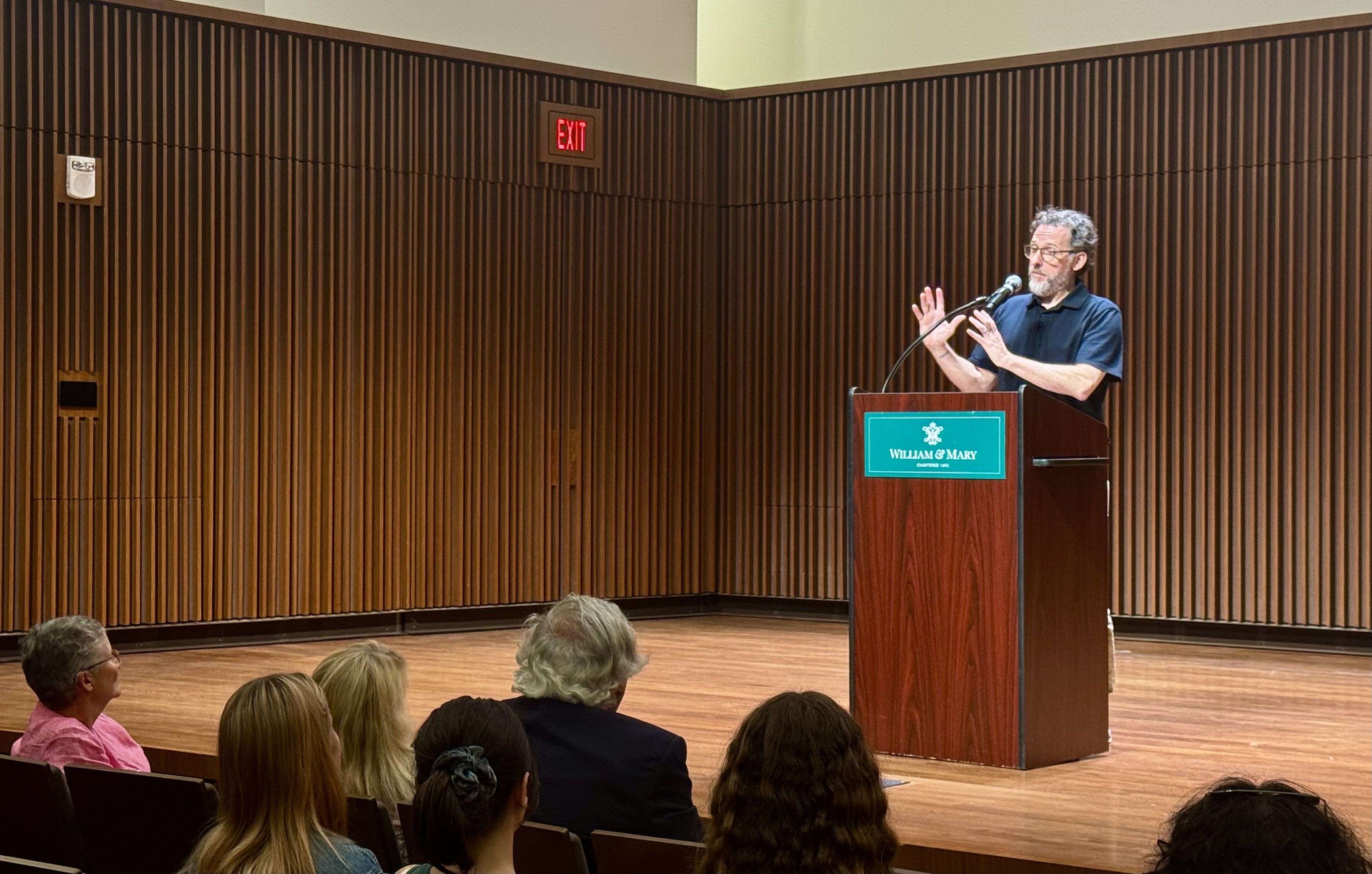
Outside Comey Recital Hall on October 1st, William & Mary’s bustling campus carried on as usual. Inside, Nicholas Montemarano read from his memoir If There Are Any Heavens, recounting the final months of his parents’ lives during the COVID-19 pandemic. Montemarano is the author of three widely acclaimed novels, The Senator's Children, The Book of Why, and A Fine Place, and the short story collection If the Sky Falls. For the second installment of the English Department’s Patrick Hayes Writers Series, Montemarano chose to read from his memoir If There Are Any Heavens, a narrative following the decline of both his mother and father in their struggle against the pandemic’s brutal sickness.
“Be not afraid— this is not a poem,” Montemarano began as he opened his memoir to its first page. As he spoke, he described a scene of his ill parents, forever frozen in time amidst the COVID-19 pandemic. He recited the memoir in pauses, interjecting with commentary and additional poetry readings that supplement his prose. In fact, Montemarano called the memoir a poem itself. To a question about comparing the novel to a poem, he responded:“Is there even a difference?”
Intensely personal images of his own parents’ frailties, ailments, and struggles with their pandemic-related illnesses live in his writing. As he paints a scene of the January 6 riots unraveling through a buzzing car radio, Montemarano reflected on how he paid no mind to the news as he drove to see his mother in the hospital, her sickness growing in severity. He recalls Beckett’s short stories, the Bible, and Death of a Salesman laying in the passenger seat. Literature accompanies him even in his most difficult moments.
In between readings of If There Are Any Heavens, Montemarano took the liberty of breaking up his memoir readings with poetry from his collection of “Plague Songs,” an unfinished series of poems referencing the losses of loved ones during the pandemic. The poems cover topics like familial trauma, life after death, and the macabre wish to be “sick too,” or more specifically, to “catch what killed you”—an act of tragically beautiful empathy. In this way, Montemarano joins innocence with brutal grief: to wish to share another person’s illness simply to understand and reconcile with their death.
“It is like writing a poem in itself,” Montemarano admitted when discussing what it’s like to finish the Plague Songs manuscript. The structure of Plague Songs, he explained, is almost as important as the written material. Broken into three sections, the manuscript contains poems about the loss of his mother, other victims of pandemic loss, and ultimately fabricated “plagues” in a creative-fiction fashion.
Similarly, the verbal delivery of his writing is what he finds most important and therefore the most compelling aspect of his work.
“Sound in my writing is intuitive,” he said, stating that it lies embedded “in the drafting process” of everything he writes. His fascination with sound was obvious throughout the event— every syllable he stressed was charged, and every sentence was a lesson learned from a time marked by familial grieving and internal anguish.
Nicholas Montemarano’s lecture for the Patrick Hayes Writers Series was, without a doubt, one of emotional weight and a masterclass in poetry. His readings, heavy in bereavement and social relevance, served as an ode to both those who have passed before us and the writers chosen to carry their voices. And, despite the fast-moving campus bustling right outside the doors of Comey Recital Hall, the room sat breathless, sitting with those legacies that remain.