 Skip to main content

Solidifying the Core of W&M’s Network
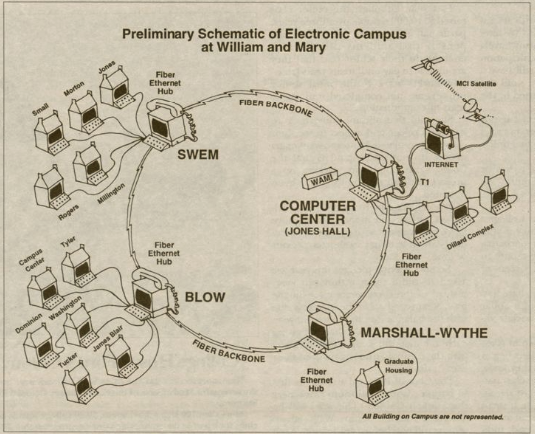
In 1996, William & Mary became one of the first universities in Virginia to provide high-speed network access in residence halls. Over the last 30 years, the network has grown into a robust fiber-optic system, snaking through a campus of 243 connected buildings. Whether it’s used for research, learning, work, business, entertainment, or keeping up with friends and family, everyone on campus depends heavily on having a reliable network connection.
Currently, the network relies on two buildings for connectivity: Swem Library and Blow Hall. W&M Information Technology has long recognized the need for redundant pathways in the fiber-optic plant to prevent disruptions. “That way, if a backhoe inadvertently ‘finds’ one of our lines, we can avoid outages by having a secondary pathway for data to travel,” explained Melissa Palacios, Technology Project Manager. Other occurrences that can take the campus offline include plumbing issues, such as pipes bursting, or electrical problems.
Although redundancy projects, or the purposeful duplication of network infrastructure, are costly, W&M is currently in the midst of securing funding for many of these critical projects. The good news is that the first step has already begun, bringing us closer to a redundant and resilient network.
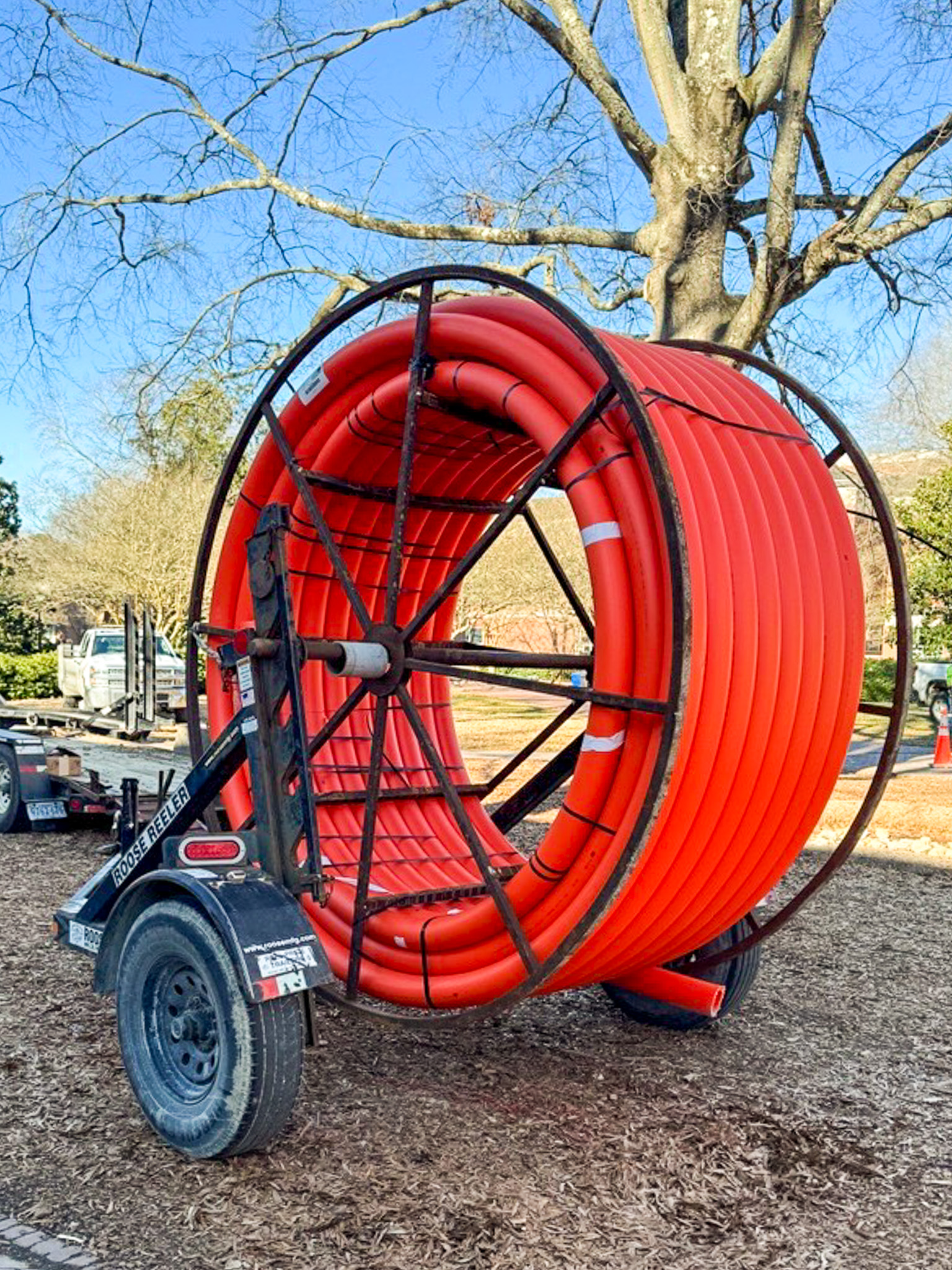
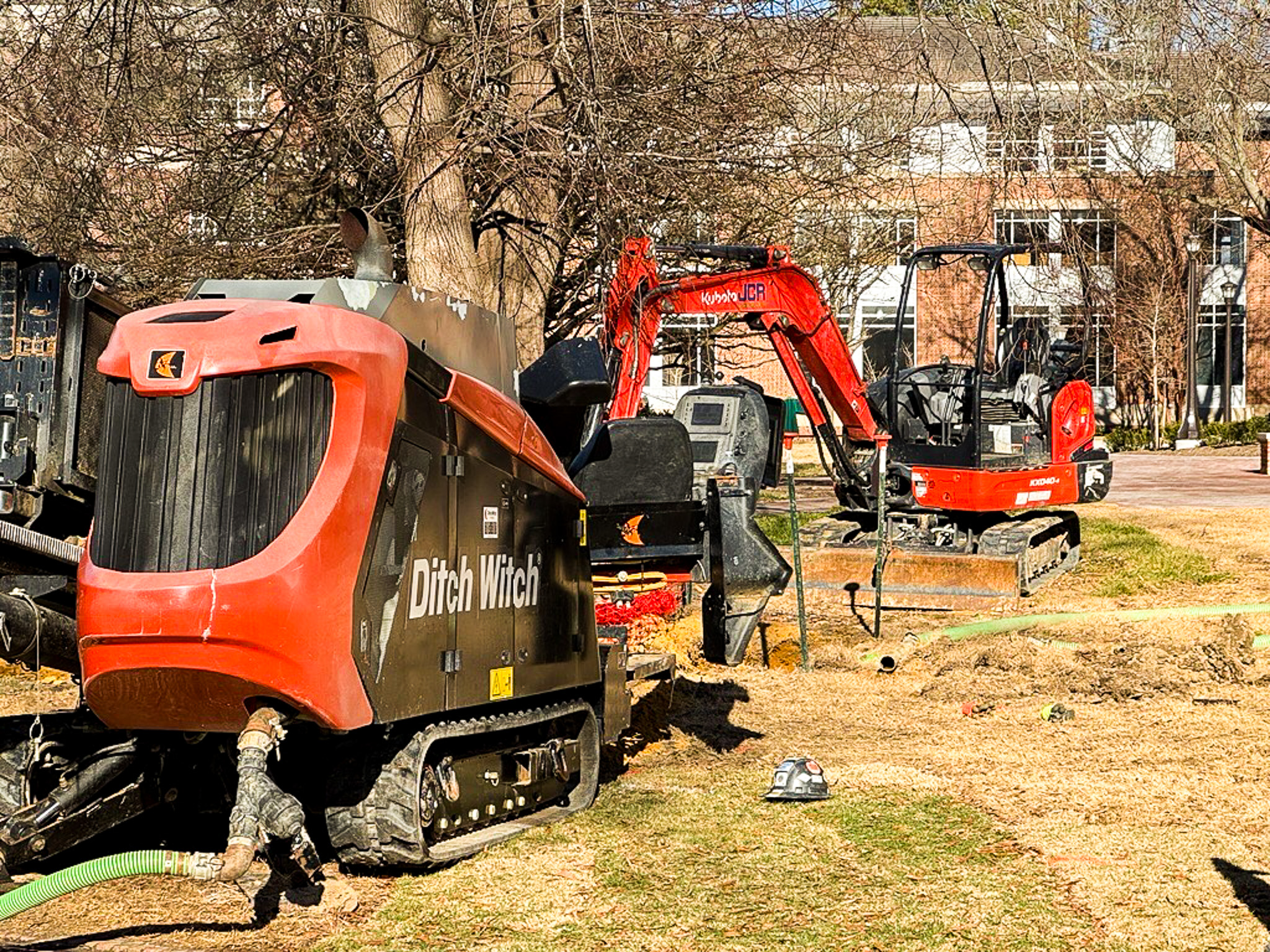
Recently, a new fiber pathway was installed between the Swem Library and the Integrated Science Center (ISC). This provides a critical redundant pathway for the core network equipment and data center housed in Swem, which feeds network service to a third of campus. Although this is an important first step, a full redesign of our 30-year-old campus architecture is vital, especially in the age of global connectivity.
“This is a great opportunity to make a long-term investment, enabling reliable connectivity for an entire generation of W&M students, faculty, and staff,” said Director of Infrastructure Norman Elton, who began as an Intern with W&M in 1999 and has witnessed the evolution of the university’s network from its inception.
The next portion of the project will be to move the Jones Hall data center and core equipment to the ISC. Because ISC is a newer, more modern building, it can provide better facilities and stable support for equipment. W&M IT is currently working with Facilities Management, the Office of the University Architect, and Pace Engineering firm, which just completed a feasibility study for the project, to kickstart the next phase of this plan. They will also provide a design plan for the ISC space.
A future project includes setting up a prototype of the “Spine & Leaf” network architecture for testing by connecting the buildings around the Sunken Garden to Tucker Hall, the “leaf”. Meanwhile, Tucker Hall will connect to both Blow Hall and Swem Library, which will serve as “spines”. Following successful trials, this architecture will roll out over the next several years and consist of 18 different “leaves” throughout campus. It will strengthen W&M’s network infrastructure by further enhancing redundancy, efficiency, and overall resiliency.
“If we get all these projects off the ground, it’s going to be an exciting time! We are going to stay very busy over the next few years,” Palacios added. “And when it’s all over, we’ll have quite a sense of accomplishment – and a ‘new and improved’ network design to show for it!”
Perhaps the most remarkable improvement is that, on most days, you won’t even notice a difference—because everything will simply work as it should. Gone are the days when a single mishap could plunge a large section of campus into darkness. Thanks to these transformational changes, network outages will be rare, and the entire campus will enjoy the quiet confidence of reliable connectivity. In the end, that seamless experience is a true sign of progress.
“This initiative is strategically important because our network is the backbone of everything we do at William & Mary—teaching & learning, research, safety, and day-to-day operations,” said Ed Aractingi, Chief Information Officer. “By investing in redundancy and modernizing the core architecture, we’re strengthening the university’s resilience and creating the dependable foundation our community needs today and for the next generation. I’m deeply grateful to the W&M IT infrastructure team and our campus partners in Facilities Management and the Office of the University Architect for their expertise, collaboration, and steady commitment to getting this right.”