Skip to main content
Batten School of Coastal & Marine Sciences & VIMS
Vision for a Resilient Future
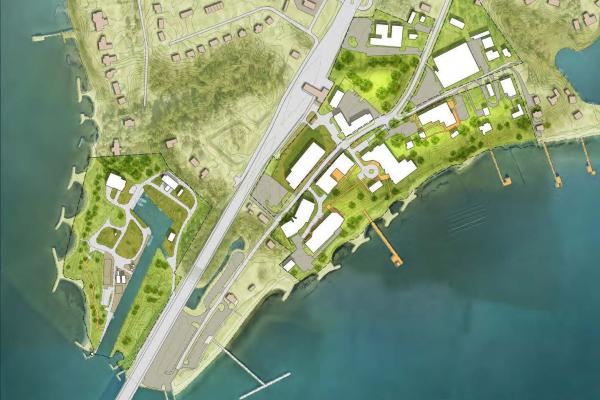
William & Mary's Batten School of Coastal & Marine Sciences & Virginia Institute of Marine Science (VIMS), located on a 42-acre campus in Gloucester Point, Virginia, is one of the largest marine science centers in the U.S. This comprehensive plan outlines a strategic roadmap to guide future campus development and resilience efforts in the context of climate change. The plan's goal is to create a resilient future for the Batten School while maintaining and enhancing its academic and research potential.
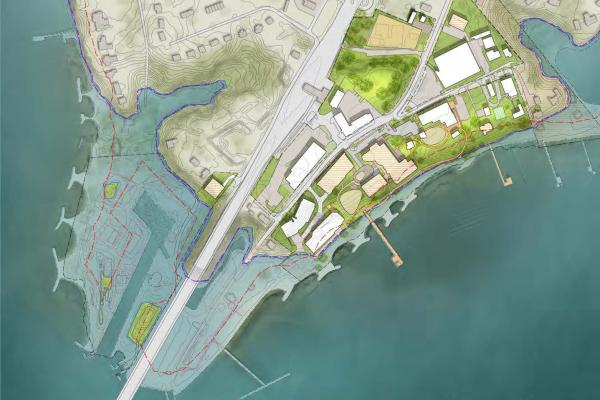
The consulting team utilized existing conditions information as well as state and federal climate impact projections to create a set of planning scenarios that are specific to the Batten School & VIMS. The resulting plans integrate knowledge gathered from individuals, documented plans, observations and climate projections.
Key Challenges & Planning Principles
The campus is divided into two areas by Highway 17: the Upper Campus and the Boat Basin. The site's topography creates three elevation zones: high ground (30-34 feet), mid ground (10-30 feet), and low ground (0-10 feet). This topography, combined with the risks of coastal storms like hurricanes, tropical storms and Nor'easters, as well as sea-level rise, presents significant challenges for the campus.
The plan is guided by overarching principles that emphasize history, landscape and sustainability. A key part of the planning effort is to integrate green infrastructure, such as bioswales and permeable surfaces, to manage stormwater runoff and improve campus resilience. The plan also seeks to leverage the landscape, recognize the university's past and place and commit to a sustainable future.