Any event can be a green event! Check out our tips or planning in an environmentally friendly way.
What is a Green Event?
What is a "green" event? It is an event that refers to a strategy used to make an event planned more sustainable. Green events reduce resource use, reuse what is possible, and recycle or compost 90% of the event's waste. A green event organizer emphasizes resource stewardship and sustainable practices. Green events make a difference to environmental and organizational value, and demonstrate how gatherings can be held sustainably.
Why a Green Event?
In 2018, Americans threw out 292.4 million tons of waste, of that number, 69 million tons were recycled and 25 million tons were composted. Unfortunately, the amount of waste produced increased from 2013 by about 15.12%, but the percentage of waste recycled/composted decreased by around 2.1% from 5 years earlier.
Food and food packaging or containers account for almost 45% of landfilled materials. Most of the waste materials sent to the landfill can be reused, recycled or composted, all of which could reduce generated greenhouse gases, decrease environmental impacts and reduce health and odor concerns. Buying in bulk means you are using less packaging and fewer delivery miles, so less fuel is used and fewer pollutants are emitted into the air. This often also makes your purchases more economically friendly!
Planning is the most important phase in greening an event and reducing resource use. These are a few considerations for your planning committee. Determining your event format and message is crucial!
Steps for planning for a greener event.
Marketing
Use digital media where possible, and printed media strategically.
Print on recycled content or FSC Certified paper.
Consider Your Energy Use
Hold your event outdoors, in LEED-certified buildings, or pull up the shades and use natural light if appropriate.
Try to adjust to different seasons. For example, wearing a sweater in the winter rather than turning up the heat, and recognizing that turning the AC up in the summer is not always necessary.
Transportation
Encourage your guests to carpool and use alternative transportation such as biking, walking or public transit.
If attendees and speakers are traveling great distances, encourage them to offset their greenhouse gas emissions, or explore how you may do this for the event (if your funding type allows).
Events with Activities
For events with activities, consider the following options:
Yoga sessions
Nature and tree/plant ID walks
Greenhouse tours
Hydroponic wall tours
VIMS tours
Trash clean-ups
Partnering with another organization or department to discover the intersections between the organizations and sustainability
Giveaways and Swags
Avoid giveaways that will produce waste or become waste, particularly plastics.
Consider the distance that items will be shipped, what they are made of and how those that are making them are compensated. Give preference to items that are sustainably produced by those receiving appropriate compensation.
Think about what your audience will actually use or need and what type of lifestyle your item will promote.
Food is a major part of an event. Consider your food selection, food recovery, catering, and communications as you plan for your event!
Steps for food selection, food recovery, catering and communication.
Food Selection
Consider the type and variety of food you will serve as well as the distance it must travel. These factors contribute to greenhouse gas emissions, resource use and nutritional value. Try to prioritize plant-based options (vegan/vegetarian); catering is helpful with offering alternatives.
Ask your caterer for local and seasonal options.
Consider serving vegan and vegetarian options or reducing meat options.
Explore whole grains and less-processed foods.
W&M Catering provides local, sustainable and vegan/vegetarian options.
Food Recovery
Avoid over-ordering and purchasing.
For large events, express your interest in food recovery options with your catering provider as early as possible.
Catering providers must store unserved food properly before, during and after an event for it to be eligible for recovery.
Catering providers will often require recovery groups to sign waivers.
Food that has been served is not safe or acceptable for most recovery programs.
Consider connecting with the student organization, W&M Food Recovery Network to find local non-profits willing and able to collect safely stored, unserved food from your event.
Food already served? Set up with students in advance to share on social media that there is free food available for a short period after the event. Hungry students nearby will swing in to grab a bite on the go.
Catering and Communications
Express your interest in green options with your caterer from the beginning, at least two weeks in advance. Early notice provides them time to determine if they are able to make the event greener or if there will be any additional cost.
W&M Catering offers the following:
An emphasis on local and sustainable food.
Chef crafted vegan and vegetarian options.
Compostable service ware, plates, bowls and cups.
Compost bins.
Signs labeling the compost bins and informational table signs.
A drink station with coolers/pitchers/thermos.
Consultation on reduced waste serving, such as buffet-style.
Elimination of single-use plastics.
Contact [[catering]] about your event!
For off-campus catering providers:
Notify your caterer that you want to opt-out of single-use items.
Notify your caterer that you do not want any single-serve packets.
Specify the type of service ware you would like to use.
For a list of local green caterers, try using America to Go.
For America to Go:
If purchasing through America to Go, please use the sustainability filters to help determine what options are available through local restaurants.
One small change can lead to a huge difference. Think about decoration, serviceware, waste station plans and what bins you are using.
Steps to eliminate single-use items, determine serviceware needs, waste station plan, and recycling/waste bins.
Eliminate Single-Use Items
Evaluate your decorations, table coverings, trays, serviceware and giveaways for the event. Purchase materials that can be washed and reused or composted.
Avoid foil-wrapped butter, individually wrapped utensils, plastic coffee stirrers and other individually packaged items.
Consider if there are any items better served in bulk (large containers):
Ketchup, salt, pepper and salad dressings are common items. Plastic packets are not compostable or recyclable and could contaminate the compost or recycling.
Determine Your Serviceware Needs
Consider the needed serviceware and decorations and determine whether you will use reusable, compostable or recyclable options.
Reusable serviceware produces the least waste.
If the event format permits, encourage your attendees to bring their own utensils, water bottles or other containers.
Compostable serviceware is a good option, but make sure your event will support composting. Compostables that end up in a landfill become do not provide the same benefits as composting.
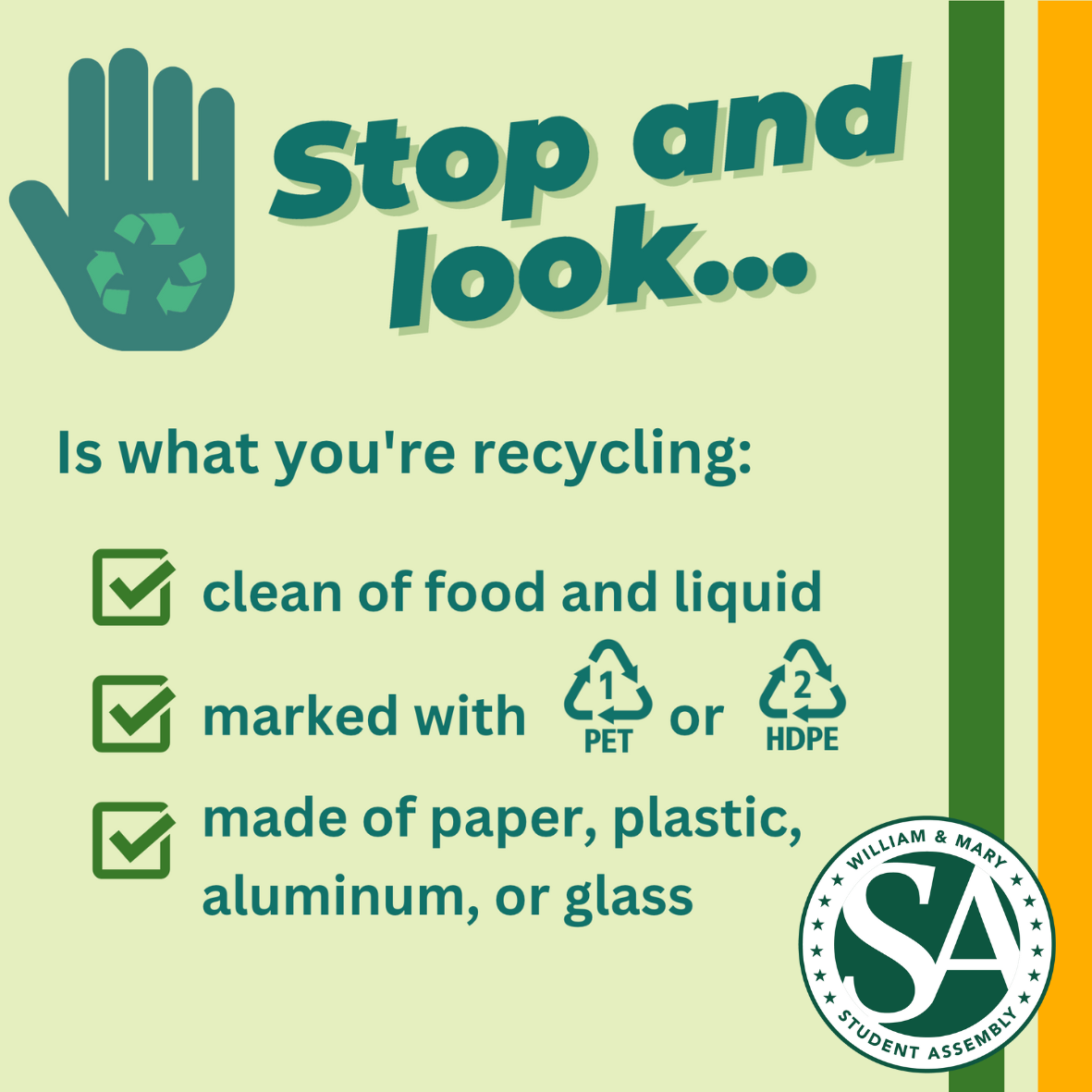
If you choose recyclable serviceware, it must be clean of food waste before it can be recycled.
Avoid using materials made up of styrofoam/polystyrene, as it is a landfill item.
Waste Station Plan
Know what you want to accept at your waste station. If you will be composting, consider having your station manned by trained volunteers or staffto ensure the station is never cross-contaminated with other waste. This also helps inform people who don’t have the same baseline knowledge when it comes to sorting waste.
Campus bin liners should follow this standard:
Black bag = trash.
Clear bag = recycling.
Green biodegradable bag = compostables.
Volunteers
Purchase compostable gloves in case they have to handle food waste.
Contact the Dining Sustainability Intern team at [[compost]] for guidance on compostable training for your volunteers and possible volunteers to monitor bins.
Recycling and Waste Bins
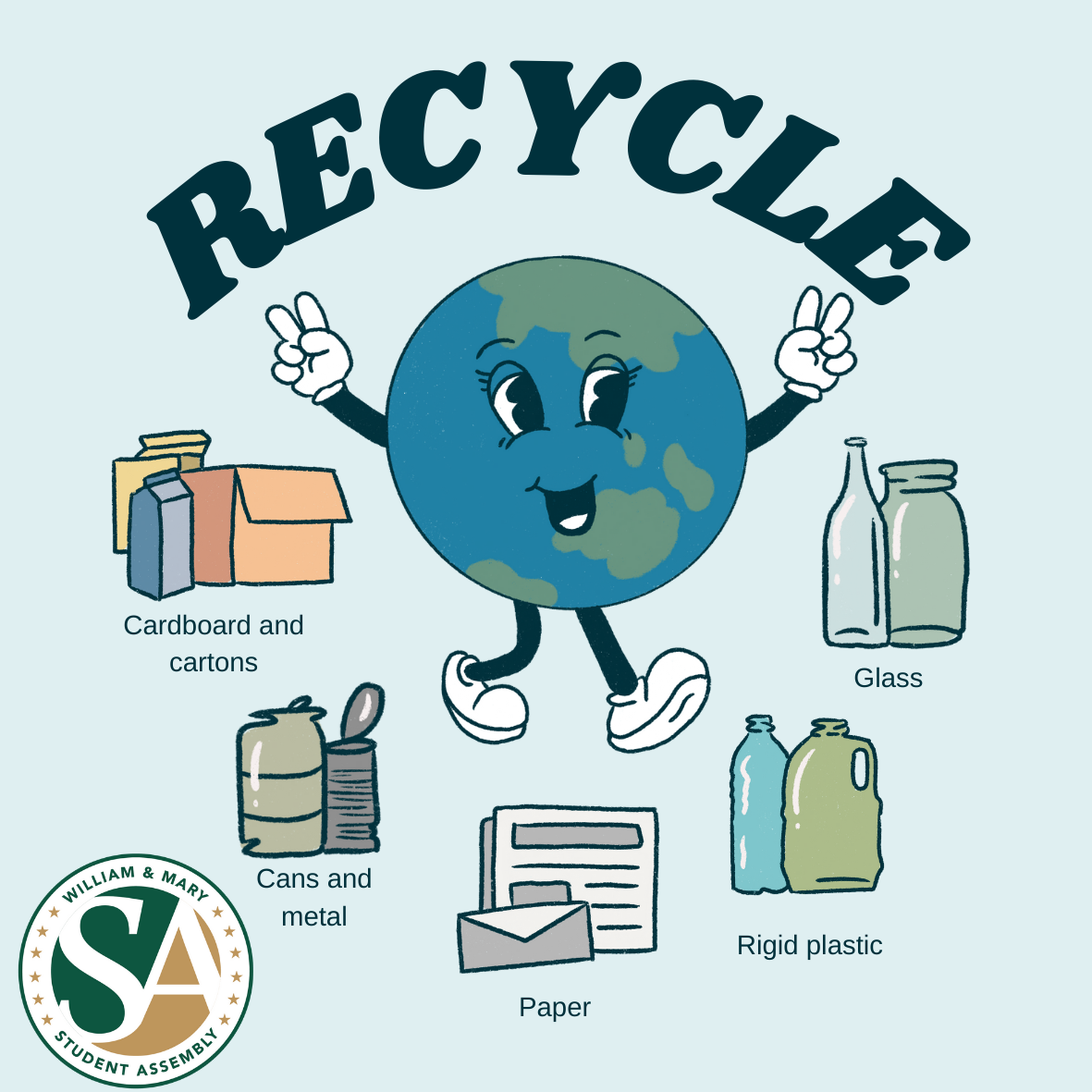
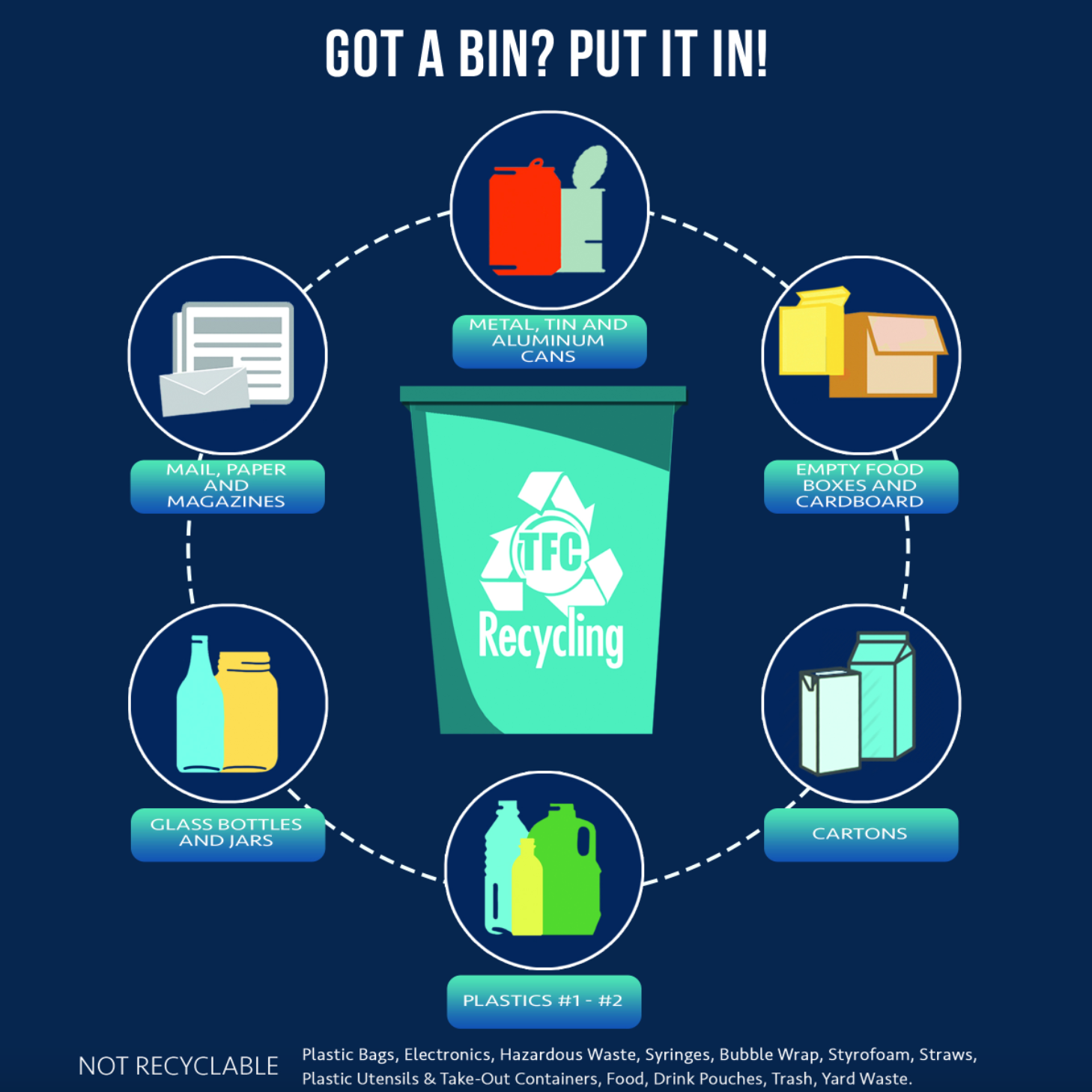
W&M is a mixed recycling campus, all recyclables go into one bin and are sorted at the recycling facility.
Recycling containers for outdoor events can be reserved through Facilities Operations. Place a work order or contact [[workor]] directly for containers.
Most indoor locations already have recycling containers, although this should be confirmed during the site visit.
Recycling containers for indoor events should be reserved through the building's event coordinator if not already in the rooms.
W&M was one of the first Virginia universities to institute a dining hall composting program! Compostables are collected from the campus by Natural Organic Processes Enterprise (NOPE), and taken to an industrial facility in Waverly, VA.
What can and cannot be composted, composting locations and options, composting event formats and purchasing compostable items.
What can and cannot be composted?
Unlike at-home composting, industrial composting allows W&M to accept all food and many compostable items.
Three column table listing materials that are compostable, recyclable or neither.
Compost
Recycling
Trash
ALL food waste (including meats, bones and dairy)
Napkins and paper towels
Compostable plates, cups and utensils
Wooden coffee stirrer
Non-plastic tea bags (but not the packet)
Coffee grounds
Sugar packets
Pizza boxes
Plastics #1 and #2 (recyclable if clean)
Paper and cardboard
Aluminum cans and metal
Glass
Wax-lined cartons (recyclable if clean)
Wax-lined paper cups (Trash)
Single-serve condiment packets (ketchup, dressing or sauce packets)
Plastic bags/wrap
When in doubt, throw it out!
Composting Locations and Options
Currently, there are more than 15 composting bins across campus! You can find the one nearest you using this map! These bins accept any compostable item, loose or in a compostable bag.
All W&M dining halls compost pre- and post-consumer food waste behind the scenes.
Pre-consumer is the food scraps that are created while you are cooking or preparing food (stems, seeds, corn husk, etc.), while post-consumer is what gets left behind on someone’s plate!
How to make your event compost-friendly!
Sit-Down Meals & Reusable Serviceware
Composting for food can be added to W&M Catering events.
If present, serving staff can scrape plates into compost bins.
Self-Serve Meals & Compostable Serviceware:
Make it easy. Ask people to sort as little as possible. Compost bins contaminated with non-compostables must be landfilled.
Reduce waste and confusion by eliminating or reducing non-compostable items such as individual creamers, ketchup packets, chip bags and plastic/wax paper wrapping. Ideally, everything being discarded should be compostable.
Provide compostable plates, cups, and service ware. Line bins with compostable bags.
Post signage and make announcements so attendees are aware of what goes where.
If through W&M catering, staff will properly deposit the compost collection.
If you will not have catering staff at your event, designate someone in your organization to be in charge of bringing compostable waste to the nearest compost bin.
Purchasing compostable items
Compostable bags
Request compostable bags from W&M Catering when you order food from W&M Catering.
Compostable bags can also be purchased online.
OfficeMax and Eco-Products have compostable materials that are BPI (Biodegradable Products Institute) certified.
As compostable items continue to improve and become more accessible, you can find compostable replacements of most single-use plastic items almost anyware!
Clear directions and information are important for a successful green event. Make sure to put up enough signs to direct your event participants to the right waste stations and information on what can and cannot be recycled or composted.
Signages to display at the event
Where to post signs?
Post signs at the bins to clarify what is accepted.
Keep in mind that if using plant-based catering, you can include a sign explaining why the food chosen for an event is vegetarian/vegan.
Post signs on the table to remind guests of the compostable products and/or sustainable food.
Downloadable Graphics
Preparation can be tedious but we got you covered! Here's a day-of-checklist to help you run through everything again.
We would love to highlight your office, department or organization for participating in our effort for a greener campus! If you have used our Green-Your-Event Guide and want to be featured on our social media platforms and webpage, please email details and photos of your event to [[sustain]].
 Skip to main content