The minor in Native Studies explores the culture, history, language and collective identities of the Native peoples of the Americas and Polynesia. You will learn about tribal affairs, education and public policies at the local and global levels. The minor is interdisciplinary. Courses include Native history, literature, art history, archaeology, ethnography, museum studies and linguistics. The list of approved courses is in the Undergraduate Catalog.
The required introductory course is ANTH 250 - Introduction to Native Studies, plus five additional courses with the Native Studies attribute (NATV). A sample of course offerings includes:
Native Studies Minor courses
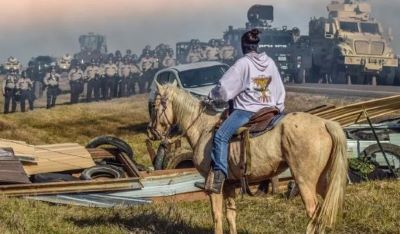
ANTH 250 - Introduction to Native Studies Credits: (3) This course is an introduction to the cultural, political, and historical experiences of Native peoples in North America. Students will examine current movements and trends in select American Indian communities, from recent public protests and unrest on the Great Plains, to Supreme Court rulings on sovereignty, to federal acknowledgment in Virginia. Other cross-cutting topics include tribal citizenship, race and identity politics, culture loss and revitalization, mobility and increasing urbanity, stereotypes and pop-culture representations, and communities’ specific historical relationships to the state.
ANTH 324 -Native People of the American Southwest Credits: (3) This course surveys the history and culture of Native peoples of the American Southwest from prehistoric settlement to the present day. These include the Hopi, Zuni, Rio Grande Pueblos, Navajo, Apache, Akimel O’odham, and Tohono O’odham. Special attention will be given to Indigenous perspectives on history, contemporary political life in these communities, and their rich traditions of arts and crafts. Issues of continuity, change, and revitalization will be considered.
ANTH 325 - Native People of the Great PlainsCredits:(3) This course introduces students to the culture and social history of selected tribes of the Great Plains. Special emphasis will be placed upon the historical forces and conflicts that developed on the Plains from the 1700s to the present. Attention will be given to issues of settler colonialism, sovereignty, revitalization movements, treaties, and federal legislation pertaining to American Indians.
ANTH 341 -Ethnographic FieldworkCredits: (1-6) Ethnographic Fieldwork prepares students to conduct a guided ethnographic inquiry in a fieldwork setting. Classroom instruction provides an overview of the basics of research design and field methods in cultural anthropology, including techniques in field observation and interviews, fieldnote-taking and organization, qualitative data analysis, and approaches to ethnographic writing. Preparatory materials related to specific cultures are provided during the classroom time before going into the field. Field sites and fieldwork lengths vary. May be repeated if the topic varies.
ANTH 350 - Peoples and Cultures of MesoamericaCredits: (3) First inhabited around 8,000 years ago, Mesoamerica has been interpreted as the “cradle of milpa agriculture” in the world, home to the maize-beans-squash-chili pepper agricultural complex, a combination that has sustained from “autonomous sedentary villages” to centralized civilizations. Mesoamerica encompasses populations sharing “cultural traits” based on similar crop productions, religious and calendric traditions, social complexities, trade and warfare practices, in a region covering the Motagua River (Guatemala-Honduras) and the Nicoya Gulf (Costa Rica), in Central America, to the Sinaloa and the Panuco Rivers, in its northmost Mexican part. This course re-examines Mesoamerica’s original definition as a culture area, focusing on people’s own narratives, diasporas and counternational ethnos. This course studies Mesoamerica as a “particular historical tradition of aboriginal cultures” undergoing transformation prior and after Spanish contact, within –and against– colonial and capitalist formations. This course examines its multi-ethnic, multi-linguistic, and multireligious diversity, in complex histories with Indigenous, Mestizo, Ladino, African, and European populations.
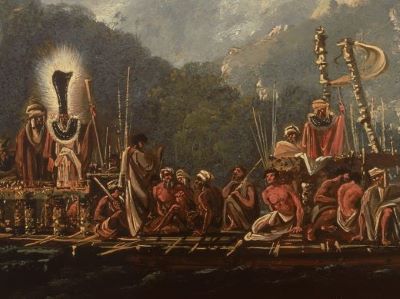
ANTH 351 -People, Cultures, and the Environment of Polynesia Credits: (3) This course introduces the environments and cultures of Oceania and the Polynesian Islands, from the earliest peopling to the post-colonial era. Consideration is given to the culture histories throughout the region, starting with the earliest Pleistocene settlement of Near Oceania, voyaging and settlement of Remote Oceania, the development of Ancestral Polynesian society, and the eventual settlement of the remote Eastern Polynesian triangle. The class focuses on how all Eastern Polynesian societies descended from a common ancestral culture, but how, through time, with isolation and adaptation to differing island environments, each Eastern Polynesian society developed their own unique localized identity.
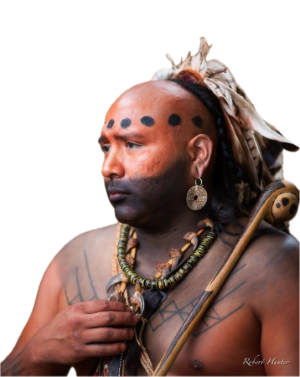
ANTH 427/527 – Native Peoples of Eastern North AmericaCredits: (3) This course explores American Indian peoples, cultures, and historical experiences by surveying select communities indigenous to eastern North America (the Eastern Woodlands). Through the lens of historical anthropology, the course materials address issues of culture change, adaptation, and persistence, particularly during the period of Euro-Indian contact and colonization, and later as dependent sovereigns of the United States.
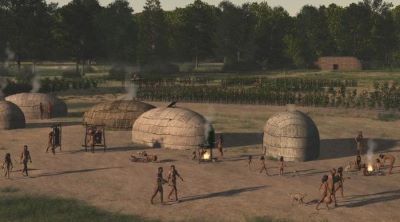
ANTH 459 - Tsenacomoco: Native Archaeology of the ChesapeakeCredits: (3) This class explores the “deep history” of Native Chesapeake societies by tracing a 15,000-year sequence resulting in the Algonquian social landscape of “Tsenacomoco”. We consider Pleistocene-era settlement, hunter-forager cultural ecology, migration, agricultural adoption, chiefdom emergence, and Native responses to colonialism.
ANTH 470 - Senior Seminar in Native SovereigntyCredits: (4) This seminar explores the dynamic and co-constitutive relationship between the Indigenous people of North America and the U.S. federal government, with close attention to the ongoing struggle over issues related to tribal sovereignty and identity. Students will connect the historical constructs of colonialism to the direct political action of the mid to late twentieth century and beyond to grasp the renewal and resurgence of tribal sovereignty more fully at the present time. Emphasis will be placed on the role of anthropology in the study of American Indians, shifts in the legal and political framework of the U.S., and its relationships with indigenous peoples.
To declare a minor in Native Studies, it is important to work with a professor to design a series of courses that meet your goals. Talk to one of the faculty members (below) and ask to set up a meeting to discuss your plan. At the meeting, you can complete the Declaration of Academic Minor form[pdf] and they can sign off on it. The following faculty members teach in Native Studies may serve as your minor advisor.
Anthropology:
English:
Hispanic Studies:
History:
Linguistics:
Sociology:
William & Mary has many historical ties to Native peoples of the Eastern Woodlands. These ties began with the establishment of the Brafferton Indian School. Today, the American Indian Research Center conducts wide-ranging research in Native Studies by W&M faculty across disciplines.
 Skip to main content