Skip to main content

Test Unit Excavation
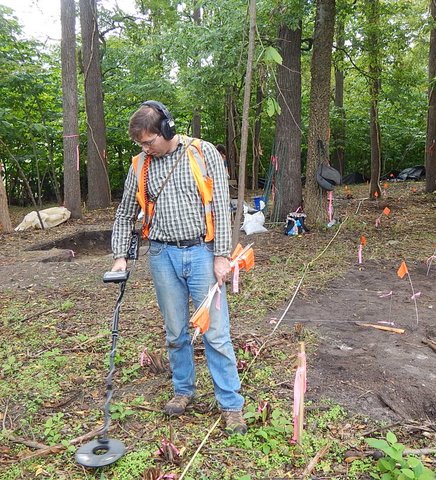
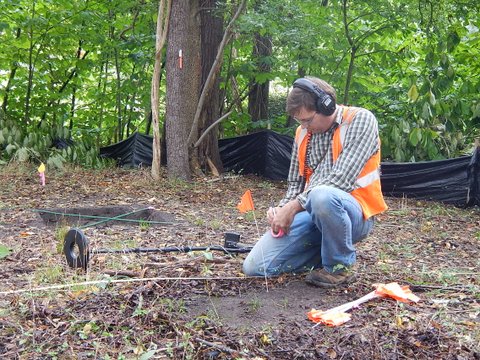
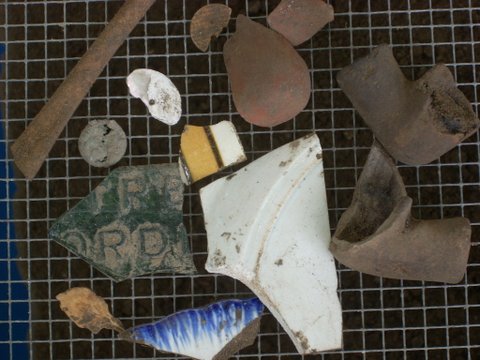
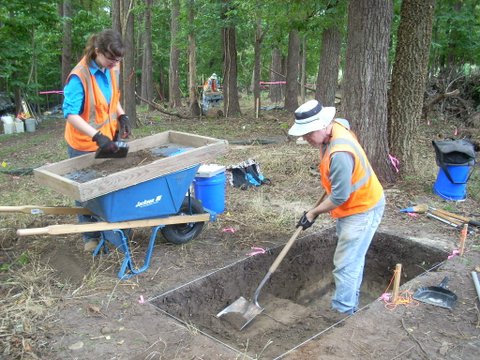 Data recovery excavations typically focus on exposing archaeological features. These intrusions in the soil made by humans include the traces of posts or foundations that supported a building, cellars, and wells, for example. Often, these features stand out from surrounding subsoil once the top layer of plowed soil, mixed by centuries of tilling for crop cultivation, has been removed. In the case of Site 44JC1140, though, it was apparent that the upper layer was undisturbed and could reveal much about the locations of specific activity areas and different periods of use of the site. To sample this upper soil, the archaeologists dug square test units at regular intervals across the site. When the test unit results showed a significant Civil War presence on the site, an additional layer of sampling was done with a metal detector along regularly spaced paths across the site.
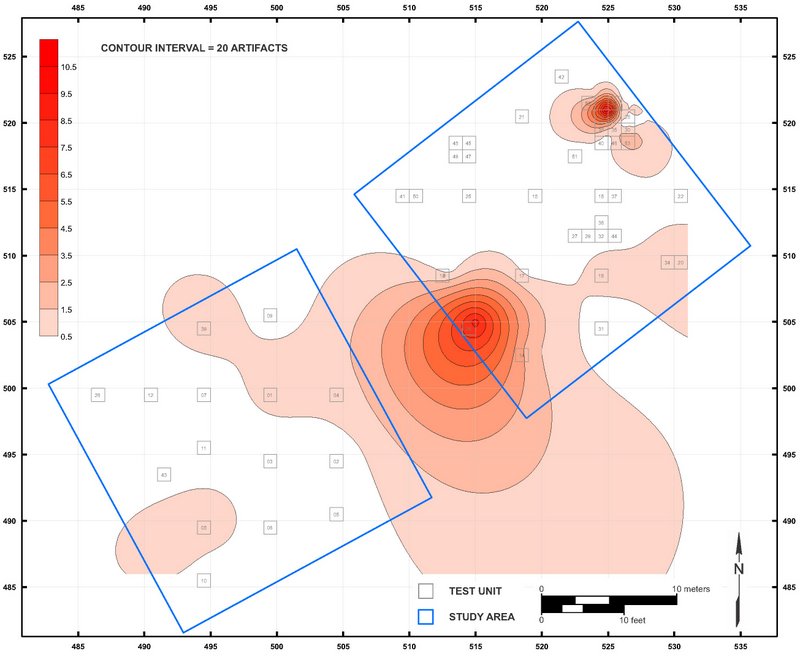
  Since specifically military artifacts tend to be made of metal (bullets, uniform accessories, weapon parts, etc.), areas of intensive use by soldiers can be identified in the artifact density patterns that result from the metal detector survey (see map below).