 Skip to main content

Front Street Privies (Outhouses)
 Efforts were underway in Danville at the close of the nineteenth century
to improve public health. Civic and business leaders recognized the need
to fight the spread of disease and insure the health and economic survival
of the community. One such action was the City Council’s resolution
for mandatory vaccination to fend off a smallpox epidemic that struck
the region in the late 1890s. Danville’s population was deemed highly
vulnerable to the disease due to the general transience of mill workers
(Beardsley 1987:46). The late nineteenth
and early twentieth centuries was a time of increasing public awareness
of health and sanitation, as was expressed in local advertisements and
lighthearted humor. Development of Danville’s sewer system at the
close of the nineteenth century was intended to address the rising concern.
However, the course of sewer expansion in North Danville excluded the
mill tenements along Front Street, much as it did in Schoolfield.
Efforts were underway in Danville at the close of the nineteenth century
to improve public health. Civic and business leaders recognized the need
to fight the spread of disease and insure the health and economic survival
of the community. One such action was the City Council’s resolution
for mandatory vaccination to fend off a smallpox epidemic that struck
the region in the late 1890s. Danville’s population was deemed highly
vulnerable to the disease due to the general transience of mill workers
(Beardsley 1987:46). The late nineteenth
and early twentieth centuries was a time of increasing public awareness
of health and sanitation, as was expressed in local advertisements and
lighthearted humor. Development of Danville’s sewer system at the
close of the nineteenth century was intended to address the rising concern.
However, the course of sewer expansion in North Danville excluded the
mill tenements along Front Street, much as it did in Schoolfield.
 City Council records suggest that Danville’s emerging sanitation
system was available to some owners of “improved” properties
in the vicinity of Front Street by the turn of the century, but it was
not accessible to Front Street’s occupants until decades later. The
expanding water and sewer systems permitted indoor “water closets”
to replace “earth closets” or privies. The number of privies
that remained may have been quite large, however, and required regulation
because of potential health threats. The major concern was their potential
to contaminate cisterns, wells, and the Dan River, all of which were sources
of water for city residents. Although sources of contamination were known,
it may have been thought that access to the municipal water system early
on helped to diminish the threat for tenants along Front Street and in
Schoolfield, and may have (along with cost considerations) contributed
to the lack of initiative on the part of the mill to buy into the sewer
system.
City Council records suggest that Danville’s emerging sanitation
system was available to some owners of “improved” properties
in the vicinity of Front Street by the turn of the century, but it was
not accessible to Front Street’s occupants until decades later. The
expanding water and sewer systems permitted indoor “water closets”
to replace “earth closets” or privies. The number of privies
that remained may have been quite large, however, and required regulation
because of potential health threats. The major concern was their potential
to contaminate cisterns, wells, and the Dan River, all of which were sources
of water for city residents. Although sources of contamination were known,
it may have been thought that access to the municipal water system early
on helped to diminish the threat for tenants along Front Street and in
Schoolfield, and may have (along with cost considerations) contributed
to the lack of initiative on the part of the mill to buy into the sewer
system.
The abandonment and filling of the service alley behind 44PY181 sometime between 1920 and the late 1940s may reflect diminishing maintenance services by the company, and its desire to end the “burdens of operating a real estate business and supervising the living conditions of...workers” (Mitchell 1968:vii). Concrete footings/foundations were added to some privies as these were either rebuilt or replaced, but the privies themselves were not superseded by sanitary sewers until after the mill sold the properties around 1950. Abandonment dates of privy-related deposits and features indicate that several of these features were probably utilized and/or abandoned as late as the 1940s and 1950s. The late abandonment dates indicate that periodic cleaning must have occurred, but the presence of numerous slop holes suggest lapses in maintenance. Tenants were forced to seek other options for the disposal of their waste.
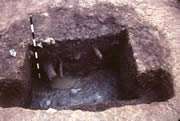
 The
excavation of privies at Sites 44PY178 and 44PY181 provides clues about
their construction costs and potential hazards. The relatively shallow
depths of the privies were probably due in part to difficulties posed
by cutting into the underlying bedrock, and cost considerations for the
mill, which required regular maintenance as stipulated in the ordinances
for continued use and a more sanitary environment. These Front Street
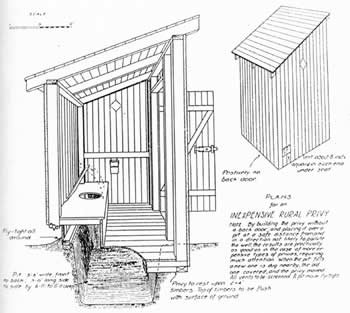
privies do not appear to have met the design standards advocated by early
twentieth-century health reformers for “sanitary urban privies,”
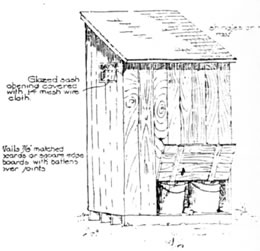
which utilized a pail
system. The examples at Sites 44PY178 and 44PY181 probably
resembled a less expensive and less sanitary type proposed for rural
use. Shallow privies like those on the Front Street properties
were also cheaper to build than deeper versions, but were usually more
expensive over the long term due to higher cleaning costs. The use of
wood lining, as opposed to brick or some other lasting material, reflects
a limited financial investment. Historian Nell C. Thompson noted that
privies in Schoolfield used the pail system initially and later, concrete
tanks. Wood lining in the shallow Front Street privies may have been considered
sufficient, where stability (for cleaning purposes) was not essential.
The traditional perception in the nineteenth century was that deep privies
were more sanitary and more sociably acceptable because deposits were
“out of sight, out of mind.” Although deep privies reduced the
frequency of cleaning, these frequently contaminated groundwater. Some
privies were even intentionally dug beneath the water table so deposits
could be flushed out naturally (Stottman
2000:55). Privies were rarely intended to be leak proof, even those
lined with brick. The use of brick allowed for greater depth, and increased
stability for cleaning purposes.
The
excavation of privies at Sites 44PY178 and 44PY181 provides clues about
their construction costs and potential hazards. The relatively shallow
depths of the privies were probably due in part to difficulties posed
by cutting into the underlying bedrock, and cost considerations for the
mill, which required regular maintenance as stipulated in the ordinances
for continued use and a more sanitary environment. These Front Street
privies do not appear to have met the design standards advocated by early
twentieth-century health reformers for “sanitary urban privies,”
which utilized a pail
system. The examples at Sites 44PY178 and 44PY181 probably
resembled a less expensive and less sanitary type proposed for rural
use. Shallow privies like those on the Front Street properties
were also cheaper to build than deeper versions, but were usually more
expensive over the long term due to higher cleaning costs. The use of
wood lining, as opposed to brick or some other lasting material, reflects
a limited financial investment. Historian Nell C. Thompson noted that
privies in Schoolfield used the pail system initially and later, concrete
tanks. Wood lining in the shallow Front Street privies may have been considered
sufficient, where stability (for cleaning purposes) was not essential.
The traditional perception in the nineteenth century was that deep privies
were more sanitary and more sociably acceptable because deposits were
“out of sight, out of mind.” Although deep privies reduced the
frequency of cleaning, these frequently contaminated groundwater. Some
privies were even intentionally dug beneath the water table so deposits
could be flushed out naturally (Stottman
2000:55). Privies were rarely intended to be leak proof, even those
lined with brick. The use of brick allowed for greater depth, and increased
stability for cleaning purposes.
 Research on other sites has shown that shallow privies, like those at
44PY178 and 44PY181, were actually more sanitary and environmentally sound
if regularly cleaned (Stottman 2000:54).
The many slop holes clustered around the privies at 44PY178 and 44PY181
suggest that the amount of waste exceeded privy capacities, however, and
households had to resort to disposal into informal pits. The occupants
probably cleaned overflowing privies themselves and deposited the excess
waste into pits, as well as waste from slop jars sent from the house (Thompson
1984:26). Considerable effort went into digging them based upon their
overall size and the fact that many cut well into bedrock. Most of these
pits appear to have been left open for short periods of time and were
used more than once based upon their depths and fill characteristics.
Tenants in New York City nearly a half-century earlier disposed of waste
in a similar fashion to those along Front Street, although perhaps a little
more indiscriminately. Sanitary inspector Dr. Robert Newman observed in
1866:
Research on other sites has shown that shallow privies, like those at
44PY178 and 44PY181, were actually more sanitary and environmentally sound
if regularly cleaned (Stottman 2000:54).
The many slop holes clustered around the privies at 44PY178 and 44PY181
suggest that the amount of waste exceeded privy capacities, however, and
households had to resort to disposal into informal pits. The occupants
probably cleaned overflowing privies themselves and deposited the excess
waste into pits, as well as waste from slop jars sent from the house (Thompson
1984:26). Considerable effort went into digging them based upon their
overall size and the fact that many cut well into bedrock. Most of these
pits appear to have been left open for short periods of time and were
used more than once based upon their depths and fill characteristics.
Tenants in New York City nearly a half-century earlier disposed of waste
in a similar fashion to those along Front Street, although perhaps a little
more indiscriminately. Sanitary inspector Dr. Robert Newman observed in
1866:
Perhaps one-half of these [tenant] houses have well-arranged drainage pipes throughout, for the removal of house-slops, which arrangement works well if the sewerage is good, and the sewers not blocked up. But if the former evils are superadded to bad sewerage, the locality is rendered insalubrious by foul emanations, stagnant water, etc. The tenants of houses without house-drainage generally throw their house-slops indiscriminately anywhere into the streets, alleys, courts, yards, and sometimes even into cellars and passages (Wade 1970:151).
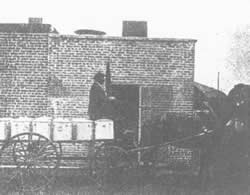
The economic circumstances of the households at Sites 44PY178 and 44PY181 may have been such that they could not afford to have their privies cleaned regularly, or the company failed to do so. Schoolfield had a sanitation staff, so the mill probably provided this service for its Front Street tenants (Thompson 1984:26, 27). The city appears to have provided this service to its residents for a fee, though it is not clear how long it continued to do so (DCCP MR#537; Danville’s General Ordinances 1907). As the city tried to eliminate privies and provide sewer hookup in the decade prior to World War II, it may have become increasingly difficult to find scavengers to do the work on a regular basis. Nevertheless, evidence suggests that some privies on Sites 44PY178 and 44PY181 continued in use as late as the early 1950s. A 1949 Sanborn insurance map indicates a sewer line on the Front Street properties. However, City Council minutes from April 10, 1953, contain a resolution for the appropriation of funds “to cover the cost of sewer main on Lower Keen Street.” This suggests that the Front Street properties may not have been connected to the sewer system until the early 1950s, over a half a century after the first families made Front Street their home. Similarly, the Schoolfield community did not receive a sewer system until annexed by Danville in 1951 (Hoffman 1985: Ella Paxton interview). Years earlier, in 1923, “consideration [by the mill] was given to the construction of a sewer system but the residents declined because of the higher rent costs that would result” (Thompson 1984:25).