 Skip to main content
From Chaguar to Jaguars: Exploring Multispecies Coexistence with Wichí Communities
Research Location:
Argentine Chaco, localities of Misión Nueva Pompeya and Miraflores
Conservation Partner:
Instituto de Investigaciones Geohistóricas (Consejo Nacional de Investigaciones Científicas y Técnicas- Universidad Nacional del Chaco Austral)
Faculty Mentor
Dr. Mara DicentaPast Student Researchers
Julia Peavey '28, Majors: Neuroscience and Integrative ConservationHarrison Greenberg '27, Majors: Data Science and Environmental Science
Project Description
How do Wichí communities understand and sustain their relationships with plants and animals, and how can these knowledges inform conservation? This project, developed with Wichí community partners, explores multispecies coexistence in the Argentine Chaco through collaborative research and audiovisual storytelling.
The project builds on our work with the Indigenous bilingual intercultural school Cacique Francisco Supaz in El Sapo. Last year, we learned to create websites alongside Wichí high school students and worked with Wichí translators to document and make accessible existing writings about Wichí peoples, their relationships with plants, and artisanal economies. This year, responding to community interest, we will continue collaborating with students, teachers, translators, and community members to develop an audiovisual project, potentially involving oral histories or short documentaries.
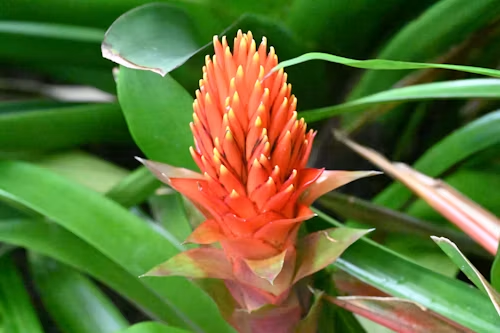
Our research may explore relationships with chaguar, a plant whose fibers are central to Wichí weaving; jaguars being reintroduced in the area of El Impenetrable National Park; and a third animal to be selected with community partners, potentially dogs, goats, or pigs. These relationships offer different perspectives on how people live with, care for, use, and respond to plants and animals amid environmental change.
William & Mary students will work alongside Wichí students and community partners to develop research questions, learn recording and interviewing techniques, and help create audiovisual materials. The stories, formats, languages, and uses of these materials will be decided collaboratively. The project will also seek opportunities for dialogue with park staff and scientists about different understandings of the environment and conservation.
The conservation goal is to bring Wichí knowledge, experiences, and priorities into discussions about forest conservation, species reintroduction, and everyday coexistence. By creating materials that community partners find useful and accessible, the project aims to strengthen their participation in conservation planning and support dialogue among communities, schools, parks, and researchers.
Skills and Prereqs
Spanish fluency is required. A background in videography is preferred but not required. Students should be interested in working with and learning from multicultural teams and demonstrate the maturity to travel and collaborate with multidisciplinary research teams and communities. A hard-working, flexible, and collaborative attitude is essential.Travel
This project requires international travel to Argentina, including travel to Wichí communities and field sites in the Argentine Chaco. Students should be prepared for long-distance international and ground travel, time in remote locations, and field schedules that may vary depending on community and project activities.Notes for Applicants
This project is a good fit for students interested in Indigenous knowledge, community-based conservation, human–environment relationships, and audiovisual storytelling. Students should bring flexibility, cultural humility, strong communication and listening skills, and a willingness to work collaboratively with and learn from Wichí students, community members, and other partners.
Number of Students
TwoProject ID - Format
26-001-27 - CRP YearInterested in this project?
Review the CRP application requirements and submit your application by October 25, 2026.