 Skip to main content

The Enemy of My Enemy: Do Predators Protect Humans from Lyme Disease?
Research Location:
Northern California, USA
Conservation Partners:
Alliance for Predator Exchange (APEX). This group is composed of researchers from San Francisco State University, UC Davis, Audubon Canyon Ranch, True Wild, the Golden Gate National Park Conservancy, UC Santa Cruz, and William & Mary
Faculty Mentor
Dr. Heather Broughton2026 Student Researchers
Allison Heib '28, Majors: Biology and Biochemistry; 2026 CRPAlessandra Pezzimenti '28, Majors: Biology and Chemistry; 2026 CRP
Project Description
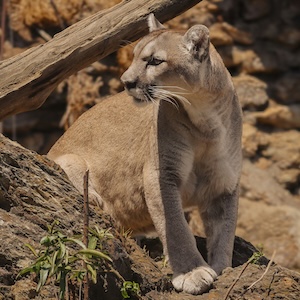
This research project investigates how large predators, like bobcats and pumas, may help reduce the transmission of Borrelia burgdorferi, the bacterium responsible for Lyme disease, by disrupting disease cycles in Californian ecosystems. Under the mentorship of Dr. Heather Broughton and in collaboration with the APEX group, the study aims to inform public health and conservation policy by examining the interplay between predator presence, biodiversity, and environmental changes.
Borrelia burgdorferi, the bacterial agent that causes human Lyme disease, infects one in every seven people over their lifetime and results in a global economic impact of between $200 million and $1 billion annually. Moreover, threats from this debilitating pathogen are increasing as climate change, species biodiversity loss, and habitat fragmentation enable its expansion into new environments and human populations. Transmitted by Ixodid ticks and maintained in wild animal populations, the disease causes significant inflammatory illness in both human and animal hosts. Despite these concerns, one unexpected ally has emerged in the fight to reduce Lyme disease in humans.
Large carnivores, especially apex predators, play essential roles in disease mitigation throughout ecosystems by removing infected prey and redistributing resources, which often disrupts disease transmission cycles. While this effect is well established among wildlife communities involving other predators, new evidence suggests this mechanism may also be active in Californian ecosystems with bobcats and pumas. This research project will focus on the role of species biodiversity, particularly predators, in controlling B. burgdorferi transmission and maintenance using an established study system in the San Francisco Bay area.
Under the mentorship of Dr. Heather Broughton, this student-led research supports the broader collaborative group APEX (Alliance for Predator Exchange). APEX includes researchers from San Francisco State University, UC Davis, Audubon Canyon Ranch, True Wild, the Golden Gate National Park Conservancy, UC Santa Cruz, and William & Mary. APEX’s goal is to facilitate information exchange and communication between scientists, veterinarians, and human medical providers to enhance scientific discovery and accessibility concerning predator conservation (pumas, bobcats, gray foxes, bears, and coyotes) and public health issues, particularly where these concerns overlap. This project examines the role of large predators in reducing or supporting B. burgdorferi transmission while considering species biodiversity, habitat fragmentation, and land use in Lyme disease dynamics in California.
In addition to gaining rigorous skills in field sampling, laboratory diagnostics, data analysis, grant writing, and publication, students involved will have a unique opportunity to influence policy at the intersection of human public health and conservation through these collaborative efforts.