 Skip to main content

Strengthening Indigenous Capacity in Artisan and Sustainable Economies in the Argentine Chaco
Research Location:
Argentine Chaco, localities of Misión Nueva Pompeya and Miraflores
Conservation Partner:
Instituto de Investigaciones Geohistóricas (Consejo Nacional de Investigaciones Científicas y Técnicas- Universidad Nacional del Chaco Austral)
Faculty Mentor
Dr. Mara Dicenta2026 Student Researchers
Julia Peavey '28, Majors: Neuroscience and Integrative Conservation; 2026 CRPHarrison Greenberg '27, Majors: Data Science and Environmental Science; 2026 CRP
Project Description
This project, co-designed with Wichí communities, aims to build a bilingual, digital information system that documents and supports Indigenous craft practices in the Chaco, emphasizing deep ecological, cultural, and economic connections to the forest. By involving local institutions and promoting language accessibility, the initiative seeks to center Indigenous knowledge in conservation efforts and recognize crafts as vital expressions of sustainable, interconnected ways of life.
W&M students are invited to join this project to compile written and audiovisual documents related to the valorization of Indigenous Chaco crafts. Co-designed with Wichí communities, teachers, and students, William & Mary students are invited to help build this system, organize the data, and address key questions:
How can we create a sustainable, intercultural, and accessible repository?
How can we involve local institutions (national parks, schools, municipalities, NGOs, and Indigenous community associations) in its ongoing use and maintenance?
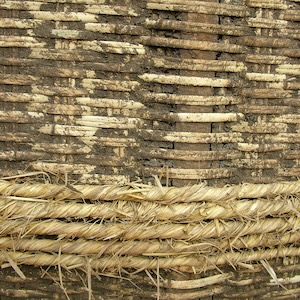
This project aligns with broader biodiversity conservation goals in the dry Chaco, responding to the needs and aspirations of local communities. It recognizes the cultural and economic value of artisanal practices as a way of life deeply connected to native forest ecosystems. By developing a bilingual (Wichí–Spanish), accessible, and living repository of projects, scientific papers, technical reports, and audiovisual materials, the initiative supports the sustainable use of local plants, trees, and materials, such as chaguar fibers and natural dyes used in Wichí artisanal production. These practices are rooted in traditional ecological knowledge and involve the careful identification, harvesting, and processing of resources in ways that maintain biodiversity and ecological balance.
The project also addresses a critical gap in conservation strategies that often prioritize tourism and external NGOs while sidelining Indigenous knowledge, particularly that of women. A key priority is language accessibility. Through bilingual translation and intercultural collaboration, this project promotes inclusive practices that view crafts not merely as market commodities, but as living expressions of a way of life woven through native forest ecosystems.