 Skip to main content

Community Voices, Collaborative Science: New Publication Explores Human-Carnivore Conflict in Nepal’s Annapurna
When conservation research begins with community voices, it can unlock solutions to some of the world’s most complex environmental challenges.
A new study published in Nature Scientific Reports highlights how integrative, community-engaged research is reshaping understanding of human–carnivore conflict in Nepal’s Annapurna Conservation Area. Through direct collaboration with communities and conservation leaders in Nepal, William & Mary students gained hands-on experience conducting applied research with real-world impact.
Household perspectives and predictors of human–carnivore conflict in Nepal’s Annapurna Conservation Area is the result of a collaboration among William & Mary undergraduates Liam McLinda ’25 and Kate Marston ’25; faculty mentors Dr. Sapana Lohani and Dr. Fernando Galeana Rodriguez; Erica Garroutte; and Rinzin Phunjok Lama and the conservation team from Upper Karnali Landscape Initiative (Ukali), a nonprofit organization supporting community-led conservation in Nepal.
The project was conducted through the Institute for Integrative Conservation’s year-long Conservation Research Program, which brings interdisciplinary student and faculty teams together with external partners to produce actionable science while training future conservation leaders.
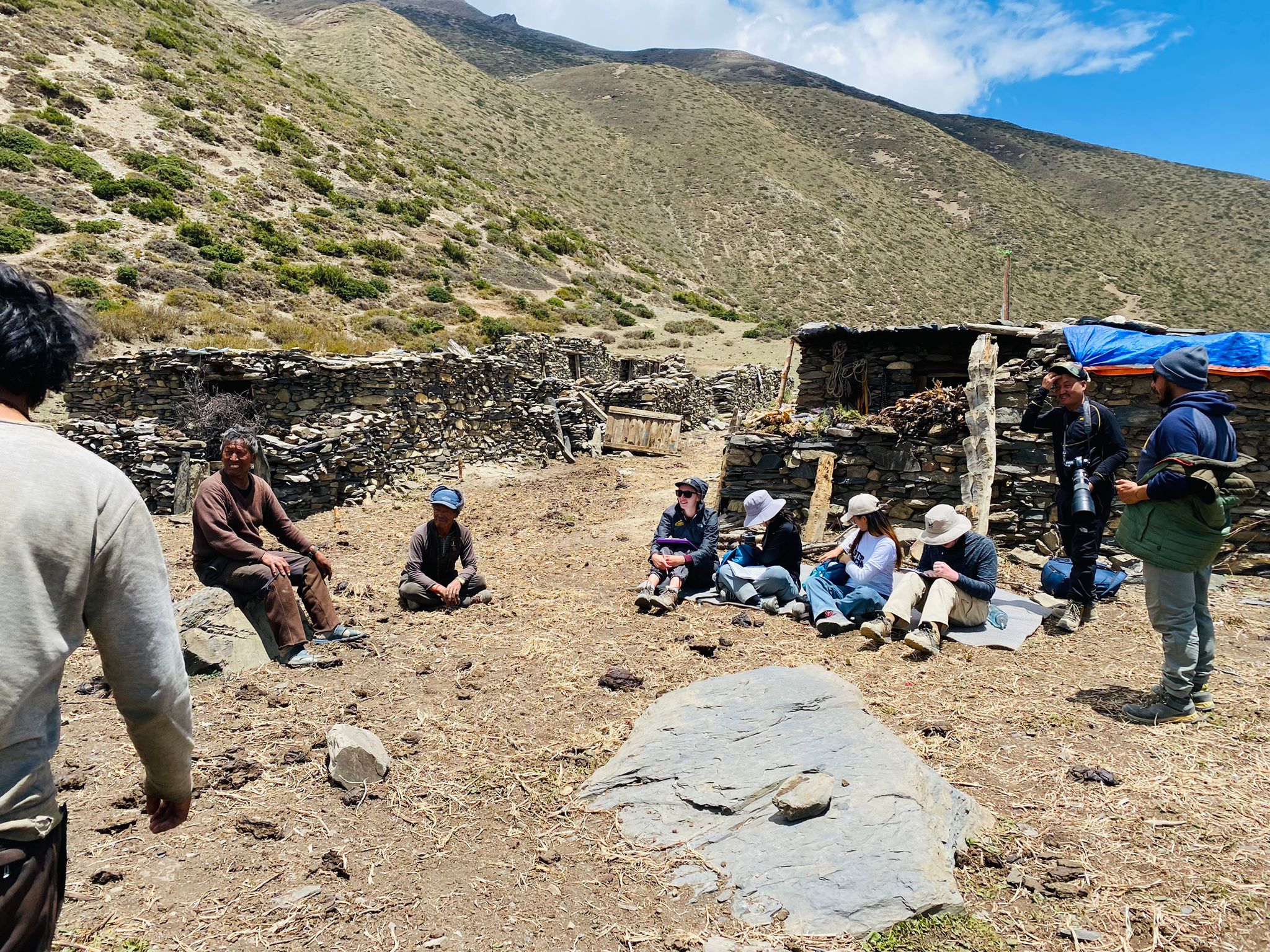
W&M students, faculty and partners from Ukali interview herder communities in Annapurna about their perceptions of carnivores and human-carnivore conflict. Photo by Kate Marston '25
Shifting attitudes in a changing landscape
Since its establishment in 1986, the Annapurna Conservation Area has been recognized globally for integrating biodiversity conservation with community development. Over nearly four decades, attitudes toward the snow leopard (Panthera uncial) have improved significantly.
However, livestock depredation by carnivores continues to threaten agropastoral livelihoods, creating tension between local residents and conservation authorities.
Drawing on 2024 household surveys and focus groups, the research team reassessed the factors shaping community perceptions today.
“One of the most encouraging findings is that attitudes toward snow leopards have improved significantly over the past three decades,” said Rinzin Phunjok Lama, conservation biologist and founder of Ukali. “This demonstrates that sustained investment in conservation, education and livelihood diversification can yield positive results.”
“At the same time, the overwhelmingly negative perceptions of wolves remind us that coexistence is species-specific and context dependent. Livestock loss remains a serious economic burden for herders, and compensation mechanisms can become sources of tension if they are not transparent, timely and trusted. Conservation success with one carnivore does not automatically translate to another.”
The findings will directly inform Ukali and other Nepali partners working to strengthen community-based conflict mitigation and sustainable livelihood strategies amid economic and climate change.
“This research provides evidence that helps us better align conservation strategies with community realities,” Lama added. “By understanding what shapes local attitudes toward the snow leopard and the recolonizing gray wolf, we can design conflict mitigation measures that communities genuinely feel ownership over. Stronger local voices, fairer compensation systems and alternative livelihood options are essential for long-term coexistence.”
“The findings help us move beyond assumptions. They show that when conservation delivers tangible benefits, such as tourism income, community tolerance increases. That insight is critical for strengthening truly community-led conservation.”
A community-centered model for applied research
For Dr. Sapana Lohani, IIC’s Geospatial Data Scientist, the study underscores the importance of centering conservation in community perspectives.
“This project and similar work will have immense impact in addressing human–carnivore conflict by looking at it from local communities’ perspectives,” Lohani said. “When we seek to understand and prioritize those perspectives, people feel heard and involved. Nepal functions not only as a site of study but also as a lens through which to rethink broader debates around human–carnivore conflict across the region and the world.”
The project demonstrates how community-driven research in Nepal can generate insights with global relevance—showing that conservation is most durable when it is collaborative, locally grounded and socially equitable.
For Dr. Fernando Galeana Rodriguez, Assistant Professor of Sociology and Integrative Conservation, the findings show that attitudes toward human–wildlife conflict are shaped by wider rural transformations. “As tourism grows, young people migrate, and climate pressures intensify, households are renegotiating their relationship with wildlife. Human–wildlife conflict must be understood within these broader economic and social transitions.”
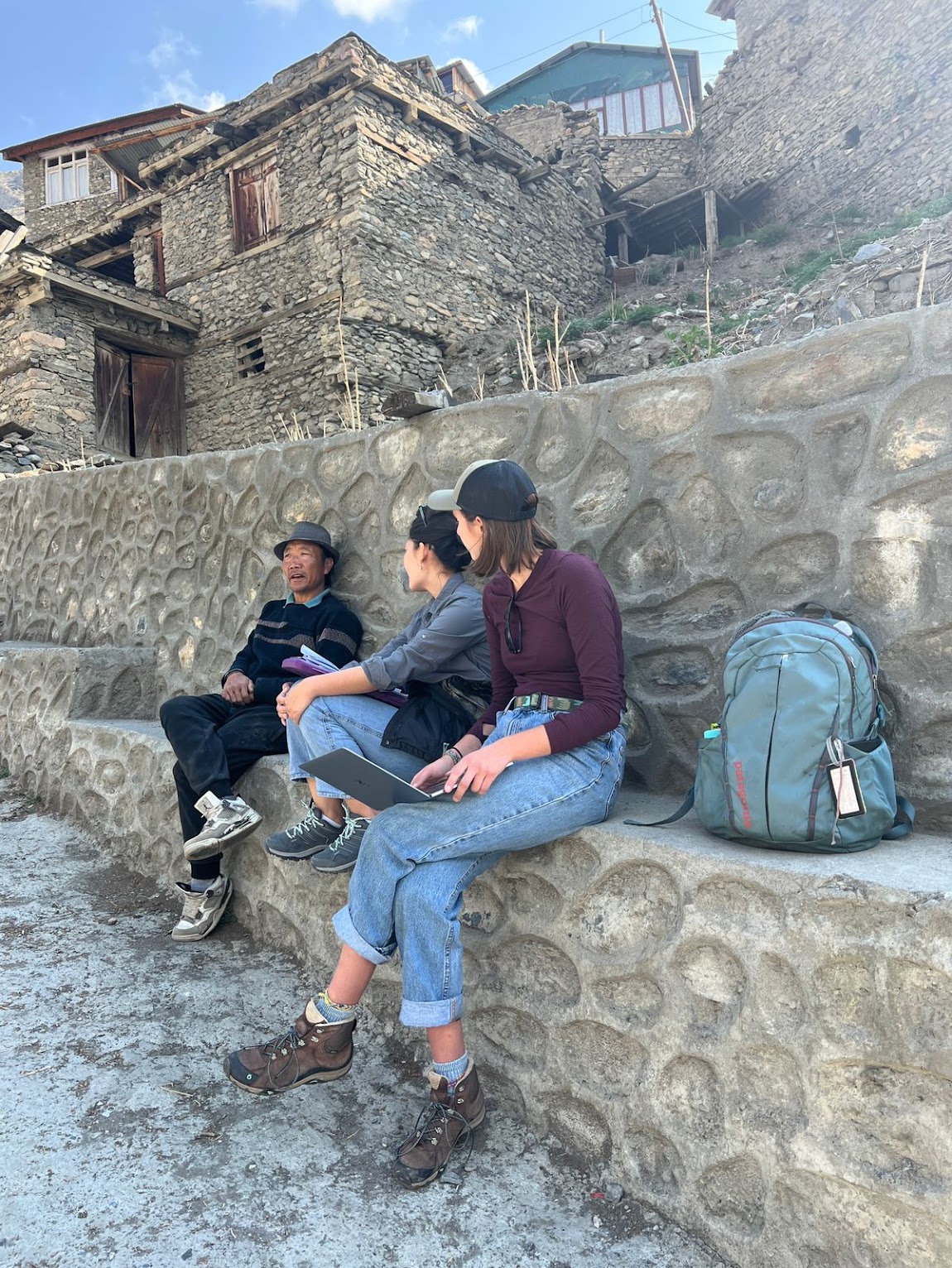
Kate Marston'25 and Ukali researchers interview a herder in Annapurna about carnivores. Photo by Kate Marston'25
Training the next generation
By pairing William & Mary students with faculty mentors and external conservation experts, the program allows students to apply classroom learning to real-world challenges while learning directly from practitioners working alongside communities to design and implement solutions.
Lohani emphasized the collaborative nature of the research process.
“I see this paper as a strong example of meaningful collaboration, showing how students, faculty and external partners each contributed distinct but complementary expertise,” she said. “Students were actively involved in proposing and designing the project, conducting data collection and analysis, and writing the manuscript. Mentors ensured scholarly rigor, while partners grounded the research in real-world priorities. The result was research that advanced academic knowledge while also addressing practical challenges.”
Beyond its empirical contributions, the project offered students immersive international field experience. Working alongside Ukali’s team in the Annapurna region, they engaged directly with herder communities, explored the intersections of tourism and conservation governance, and navigated the complexities of conducting research across cultures.
“It gave a face to everything that I had been learning, as the case was no longer historical or hypothetical,” said Liam McLinda’ 25, an International Relations and Integrative Conservation major, “We were speaking to people about their lived experiences and how conservation policy affected their everyday lives.”
“I learned a lot about the process of science, especially in a team setting. Despite the hard work, getting to collaborate with such a dedicated team inspired me every day. After all the hours of coding, writing and meeting, it feels amazing to finish the work and reflect on the process.”
The publication stands as both a scholarly contribution and a model of integrative conservation in action—demonstrating how community engagement, interdisciplinary collaboration and applied research can advance solutions that help both people and wildlife thrive.
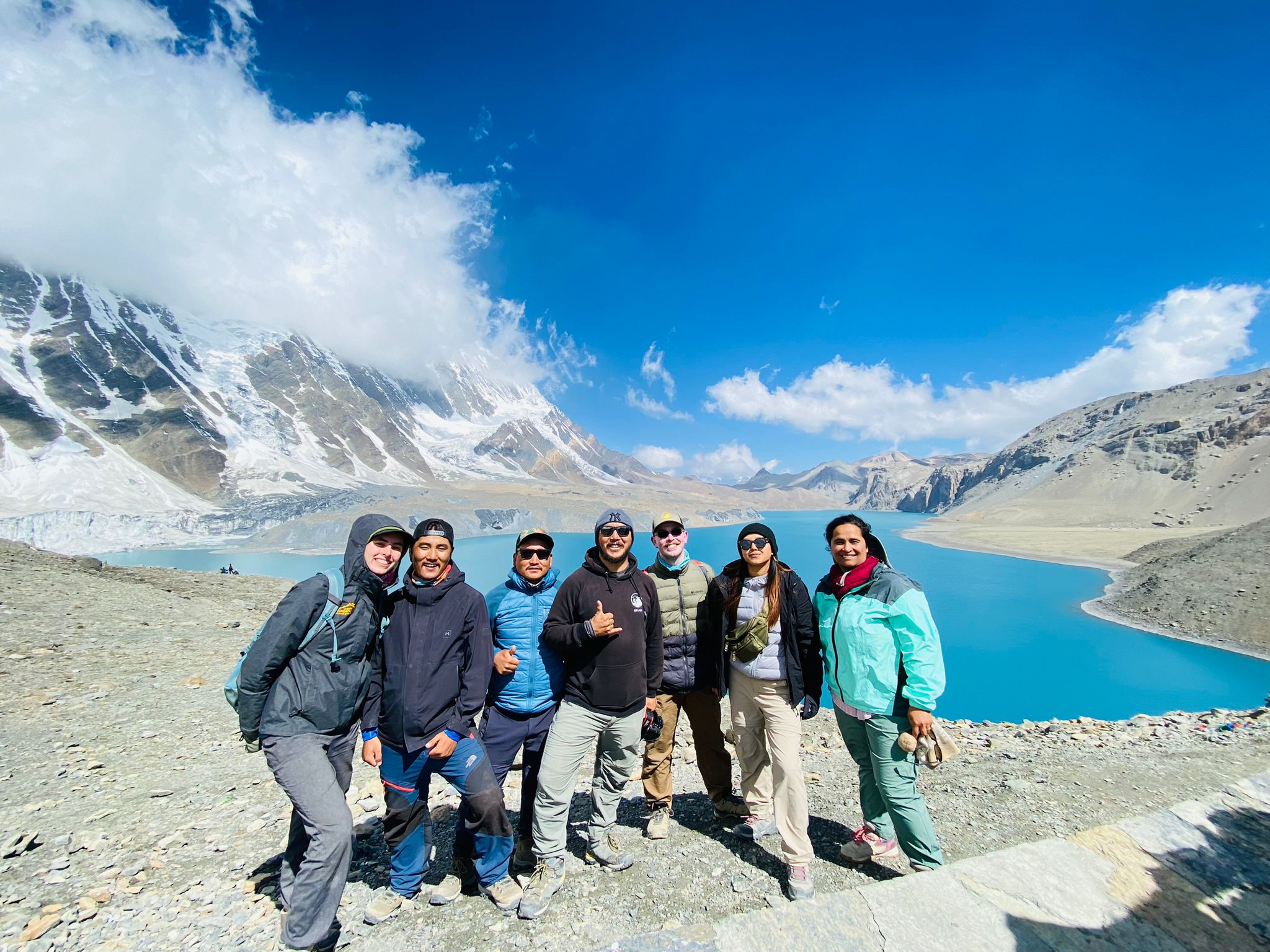 W&M students, faculty and conservation experts from Ukali collaborated to conduct research on community perspectives of human-carnivore conflict in the Annapurna Conservation Area of Nepal. Photo by Kate Marston '25