 Skip to main content
From Campus to Communities: William & Mary Students Transform Conservation in 2025
What happens when students are given the tools and the responsibility to help shape the future of conservation?
Williamsburg, VA — In 2025, William & Mary undergraduates answered that question with transformative research through the Institute for Integrative Conservation (IIC) year-long Conservation Research Program (CRP). The program is designed to advance the conservation goals of IIC partners while equipping emerging scholars with the research, professional, and leadership skills needed for successful careers in conservation. Students are mentored by W&M faculty as they work directly with external partners on applied conservation challenges. As a result, the program drives timely conservation outcomes, and at the same time shapes emerging scholars into future leaders in the field.
This year’s projects underscore the IIC’s commitment to scaling integrative conservation approaches across local and global landscapes. Here’s a look at the 2025 students and their projects — what they accomplished and why their work matters.
Driving Conservation through Data
Understanding biodiversity conservation relies on the data behind it—how it’s gathered, managed, and translated into action. Two data-centered projects advanced knowledge of rare species and global biodiversity trends.
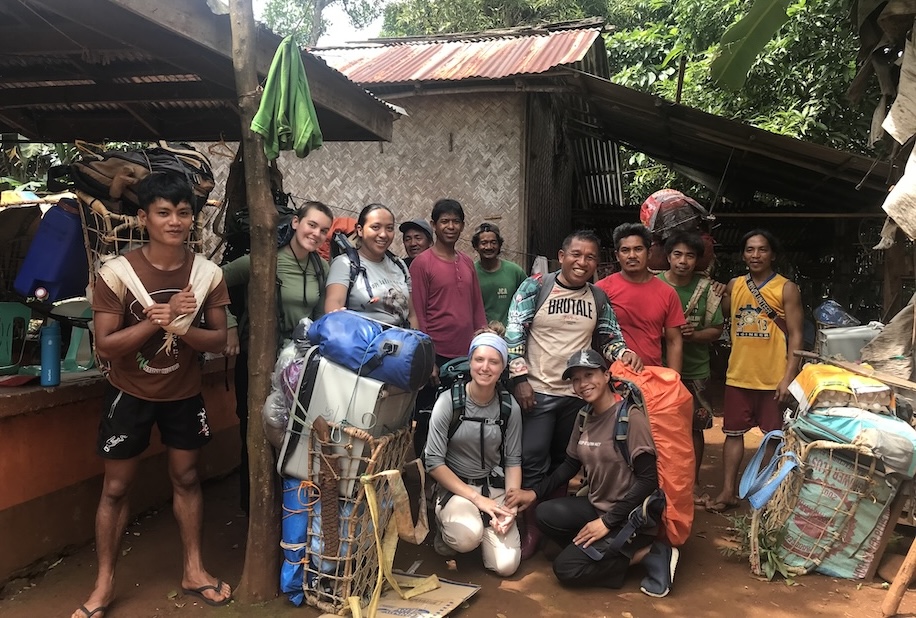 In the Philippines, students Charlotte Toomey ’26 and Lydia Slater ‘26, mentored by Dr. Sapana Lohani and Dr. John Swaddle, worked with the Centre for Sustainability PH and Palawan State University to document the mammalian diversity in the Sultan Peak Critical Habitat.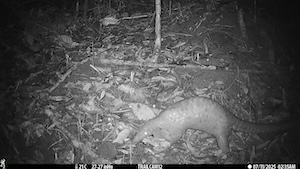
The team used non-invasive camera traps placed at multiple forest layers, from ground to canopy, to track how mammals occupy different strata. Their findings provide essential baseline data for protecting this biologically rich habitat and help inform conservation policies that uphold Indigenous-led stewardship in this region.
Back in the U.S., Pranjali Gupta ‘27 applied her expertise in AI to compile and make available lessons learned globally on solutions to species extinction. Gupta worked with Conservation X Labs to refine the Extinction Solutions Index, a tool designed to identify species most threatened by extinction and guide intervention strategies. Gupta's work evaluates how to use AI to find relevant datasets, improve compilation methods, and assess which solutions have the greatest positive impact on species conservation. By making the Extinction Solutions Index more data-driven, work supports global conservation partners in identifying high-impact strategies for preventing extinction.
While data on species provides important insight for understanding ecosystems, conservation also requires recognizing the intricate links between human and environmental health.
One Health: Linking People and Ecosystems
A “One Health” approach to conservation recognizes the interconnection between human, animal, and environmental health to better prevent and manage global health threats. Two projects this year approached this concept from different angles. 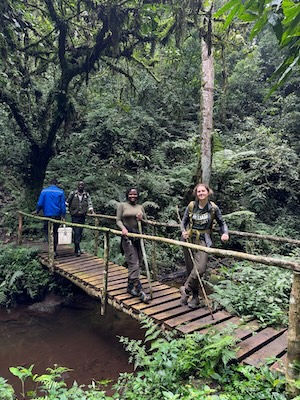
Helen Tiffin ‘26 and Saoirse Dowd ’27, working with Conservation Through Public Health and Makerere University, researched how climate change–driven shifts in water resources influence the transmission of waterborne zoonotic diseases among livestock, humans, and mountain gorillas in Uganda. Mentored by W&M faculty Dr. Scott Ickes, Dr. Sapana Lohani, and Dr. Heather Broughton, they used GIS mapping to analyze spatial disease patterns and community surveys to assess local perceptions. Their work helps identify hotspots of shared risk and inform conservation and public-health strategies to prevent cross-species disease spread.
In South Africa, students explored how One Health can serve as a lens for understanding historical injustices and present-day environmental challenges. Lindsay Fisher ‘26 and Kylee Ledford ‘27, mentored by Camille Andrews and Dr. Mara Dicenta, collaborated with the Battle of Lurwayizo Development (BOLD) initiative and the Mbhashe Municipality to apply a One Health framework that links community health, development, conservation, and environmental justice in the Mbhashe region. Their work involved collecting oral histories from veterans and local community members about apartheid-era struggles and exploring how those histories connect to environmental degradation, displacement, and biodiversity conservation.
“Getting to speak to them about what they want to see in future generations was one of the most important and honestly impactful parts of this.” - Kylee Ledford
Their research informs an integrative management strategy addressing public health, biodiversity conservation, local economic development, youth empowerment, and social justice aimed at transforming conflict into pathways for peace and prosperity.
Water Security and Community Resilience
Water shapes ecosystems, cultures, and livelihoods. As water scarcity grows and quality declines in many regions, water becomes both an environmental and cultural touchstone, influencing community identity, public health, and the resilience of the landscapes people depend on. 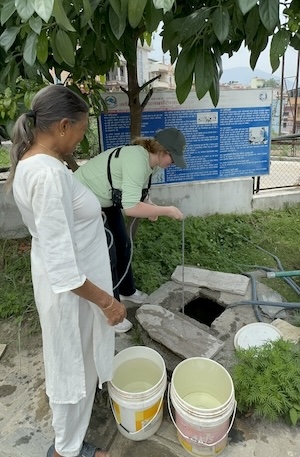 Two CRP projects advanced knowledge about local scale water issues.
In Nepal’s Kathmandu Valley, climate change and commercial groundwater extraction have undermined water security. Working with Nepal Engineering College, W&M students Lauren Nash ’26 and CeCe Sturman ’26 assessed how this insecurity affects communities, especially women, who manage water at the household level.
Under the mentorship of Dr. Sapana Lohani, they utilized a gendered research lens to understand the public health risks, resource conflicts, and policy gaps that arise when women, who often bear the burden of household water gathering, are pushed to the margins of water decision-making.
The team examined management of different types of water systems and explored ways to reduce water conflicts and improve water management communications between communities and governments. Their work supports sustainable co-management of water resources, including traditional hitis, communal spouts that have supplied groundwater for centuries.
“The understanding reflected in Lauren’s research will be invaluable to our local activities and company-based organizations as they work to manage these resources more sustainably.” - Robert Dongal, Nepal Engineering College
As students in Nepal explored how water insecurity shapes daily life and decision-making, another team worked to equip communities with the tools to measure water change themselves.
Through an ongoing research and design project in collaboration with Conservation International Madagascar and the Moore Center for Science, W&M students are developing a low-cost water sensor to allow communities to test the impact of erosion on water quality in the Lake Aloatra region of Madagascar.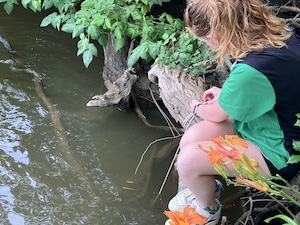
Earlier years of the project focused on developing the sensor and making it waterproof. This year, Mandy Joyce ’26 and Cy Strain-Seymour ’26, mentored by Dr. Nathan Kidwell and Malagasy collaborators focused on making the device affordable and locally maintainable. They advanced development of the sensor, identified priority locations for sensor deployment, and developed a plan for community involvement in testing. This important work empowers communities to directly monitor the water resources they depend on.
Linking Livelihoods and Landscapes
Sustainable conservation is intertwined with livelihoods. Protecting ecosystems supports communities, and community-driven ventures strengthen long-term stewardship. W&M students collaborated with IIC partners to on projects that supported both environmental resilience and economic opportunity.
In Kenya, Sharanya Dutt ’28, Skylar Hartgerink ’27, and Emma Hugo ‘26 teamed up with the Amboseli Ecosystem Trust (AET) and the South Rift Association of Landowners (SORALO) to learn what makes women-led conservation enterprises in Maasai communities thrive in Kenya’s southern Rift Ecosystems, a wildlife-rich savanna famous for its stunning views of Mount Kilimanjaro, expansive savannas, iconic African wildlife, and vibrant culture of Maasai communities who have lived there for generations. Mentored by Graham Henshaw and Dr. Troy Wiipongwii, the students conducted on-the-ground interviews to explore how communities and NGOs define success and what sets women-led initiatives apart. Their insights help to strengthen women-driven ventures that support both local livelihoods and conservation. 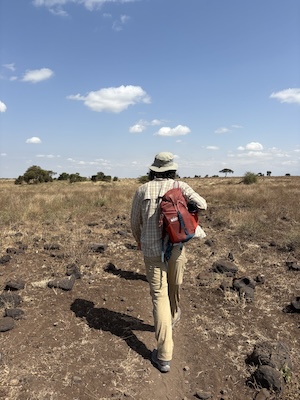
Leah Connell ’27 and Thomas Lohman ’28 also worked with AET to develop a community science framework for tracking rangeland productivity in Kenya’s Amboseli region. Their work underscores how ecological monitoring can be strengthened when scientific tools and local expertise work in tandem. Guided by mentors Erica Garroutte and Dr. Fernando Galeana Rodriguez, they learned how Maasai pastoralists are monitoring rangeland productivity in Kenya’s Amboseli region. Their work highlights the importance of connecting ecological goals with community priorities and local expertise.
Across the world in Montana, similar principles guided research into one of North America’s most threatened ecosystems: the prairie. Noa Rudisch ‘27, mentored by Dr. Robert Rose and Dr. Pallabi Kundu, partnered with American Prairie, to identify priority zones for large-scale prairie restoration in Montana. Noa’s research supports the American Prairie with making decisions about where to prioritize their grassland restoration efforts by exploring the linkages between wetland ecosystem protection, beavers, and aquatic amphibian species.
Closer to home, Kate Ingle ’27 and Amelia Kim ’27 explored how regenerative agriculture can help restore soils while supporting farmers across Virginia. Regenerative agriculture is a resilient farming approach focused on improving soil health and by extension, the nutritional quality of food, community health, and farm resilience. 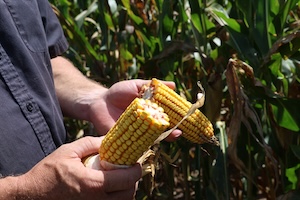
Mentored by Dr. John Swaddle, Ingle and Kim worked with Virginia farmers to explore how regenerative agriculture can help restore soils while supporting farmers across Virginia. They then integrated farmer perspectives into an actionable decision-making model that incorporates conservation values such as soil health, biodiversity, ecosystem resilience, cultural factors such as farmer and community identities, and economic factors such as capital and access to resources and education.
Their work on farmer perspectives and decision-making provides important insight critical for development of workable regenerative agriculture systems that align ecological restoration with food systems and community resilience.
Confronting Human–Wildlife Conflict
Where people and wildlife share space, conflict is inevitable. This year CRP students advanced ongoing projects aimed at transforming these challenges into opportunities for coexistence.
Mentored by Dr. Sapana Lohani and Erica Garroutte, students Ava Fischer ’26 and Srija Upadhyay ’27 traveled to Colorado, Wyoming, and Montana to interview ranchers, hunters, government agencies, and conservation organizations and document lessons learned and best practices for managing human-carnivore conflict in the Western United States. The insights gathered from these communities in the American West are being shared with herders in Humla, Nepal to inform locally relevant mitigation efforts that balance ecological and economic needs.
 In Nepal, herders contend with predators like wolves, snow leopards, and bears, which threaten livestock and livelihoods. Part of a long-term, community-led research and conservation initiative led by IIC partner Ukali, this cross-continental exchange is helping Ukali pilot mitigation interventions that are culturally informed, evidence-based, and locally driven. The connections formed between herding communities in Nepal and ranching communities in the U.S. are facilitating the co-sharing of strategies, tools, and mutual support between diverse communities.
“Getting a chance to build relationships and learn from ranchers who are facing similar challenges was important for us, so that we can share their knowledge with herders here in Nepal. It enables us to build connections between herder communities living in two parts of the world facing similar challenges.” - Rinzin Phunjok Lama, Ukali Nepal
In Virginia, Percy Zimering ‘26 and Taylor Uem ‘26 turned their attentions to human wildlife conflict unfolding on highways.
Roads are increasingly fragmenting wildlife habitat, leading to more wildlife-vehicle collisions, which are costly and harm both animals and motorists. Crossing structures can reduce collisions, but more information is needed to increase their efficacy and to grow public and policymaker understanding and support for them.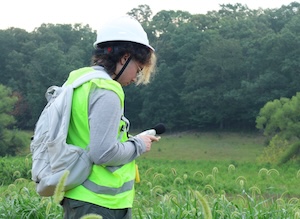
Under the mentorship of Dr. John Swaddle, Zimering and Uem advanced a multi-year project in collaboration with the Virginia Department of Wildlife Resources aimed at reducing wildlife-vehicle collisions in Northern Virginia. Zimering and Uem collected data on the impacts of traffic noise on crossing structure efficacy and assessed factors that may limit community and decision-maker support for crossing structures in Loudoun County, VA.
“ The work [the students] have done has helped provide guidance on where and how the in state-appropriated funds should be spent, and the work these students have accomplished played a role in the appropriation of these funds.” - Jordan Green, VDWR
Linking Cultural History, Environmental Justice, and Stewardship
Cultural and social histories shape values, practices, and knowledge systems that guide stewardship, while environmental justice ensures equitable access to resources and shared responsibility for ecological health. Several CRP teams explored conservation through the lenses of environmental engagement and environmental justice.
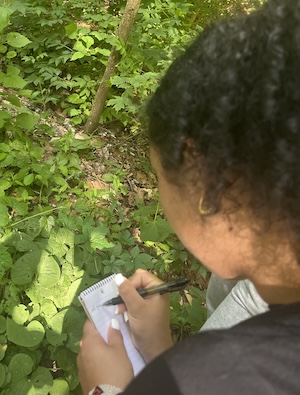
Jude Heatley ‘26, Cindia Romero Araujo ‘26, and Chloe Thompson ‘27, guided by Dr. Troy Wiipongwii, partnered with the Traditional Eastern Woodlands Foodways Alliance (TEWFA) and its member organizations to explore potential integration of Indigenous plant-based food systems, polyculture practices, and traditional ecological knowledge into child nutrition programs. Their research examined the systems from farm to table to identify challenges and opportunities for integrating traditional foods into child nutrition programs across Maryland, Virginia, and North Carolina. Thompson studied how Indigenous communities define success in economic, ecological, and community terms; Heatley assessed the market potential of over 4,000 Indigenous foods; and Romero Araujo explored replacing monocropping with polycropping to enhance biodiversity, soil health, and resilience. Their work supports TEWFA’s efforts to build a regional catalog of sustainable Indigenous foods, linking conservation with cultural continuity and local food resilience.
Focusing on Virginia, another team explored how conservation work can confront damaging historical legacies while supporting descendant communities in shaping the future of their landscapes. 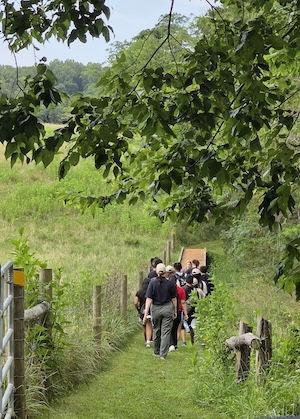
Sage Futrell ’26 and Eliana Rougle ‘28, working with the Highland Council of Descendant Advisors and mentored by Dr. Sara Bon Harper and Dr. Lisa Armstrong developed an environmental justice learning model for James Monroe’s Highland that centers the perspectives and histories of the descendants of those who were enslaved there. Their project combines public history, conservation, and community engagement to “repair” the layered legacies of slavery on Highland’s landscape and develop a model for future environmental justice work in historic places.
In Virginia'sDragon Run watershed, invasive species management brought together community partners and students to protect one of Commonwealth's most pristine ecosystems. Arie Van Dam ‘26 and Noah Kreig ‘27 partnered with the Friends of the Dragon Run to tackle invasive species in Dragon Run, a blackwater swamp that is home to rare and endangered species.
Mentored by Dr. Robert Rose, Van Dam and Kreig identified key invasive species, mapped their presence across the watershed using GPS, and developed habitat suitability models that targeted where these species were most likely to thrive. Utilizing information about the species and their current spread, they developed an integrative monitoring and mitigation plan and identified potential means and costs of mitigation. Their work bridges ecology, economics, and public engagement to help local communities take proactive, science-based steps to protect the unique Dragon Run ecosystem.
Sydney Foxx ’28, explored how early learning and outdoor experiences can ignite lifelong environmental understanding. Under the mentorship of Kathryn Lanouette and in collaboration with the Blue Sky Fund and William & Mary’s School of Education, Foxx studied how children in Richmond, VA develop their understanding of socio-ecological systems through outdoor environmental education. Foxx evaluated how children collect and visualize data, recognize patterns, and tell “data stories” about their place in the environment through experiences in urban green spaces.
Guided by W&M mentor Brian Plum, Rebecca Fuchs ’26 completed a separate project researching how personal narratives shape young people’s engagement with the environment. She explored how youth articulate their own conservation stories, why they care, and how they envision the future. Ultimately, Fuch's work highlights the influential role of personal storytelling in shaping environmental engagement. By illuminating how young people make meaning of their experiences and hopes, the project suggests that these narratives not only explain why they care now, but also help chart the paths they may pursue as future environmental leaders.
A Cohort Shaping the Future of Conservation
Students in the 2025 Conservation research program must utilize creativity, research skills, and a special brand of tenacity to complete their research projects. They have done so with remarkable professionalism, demonstrating that emerging scholars can contribute meaningful, sophisticated insights to the global conservation field. 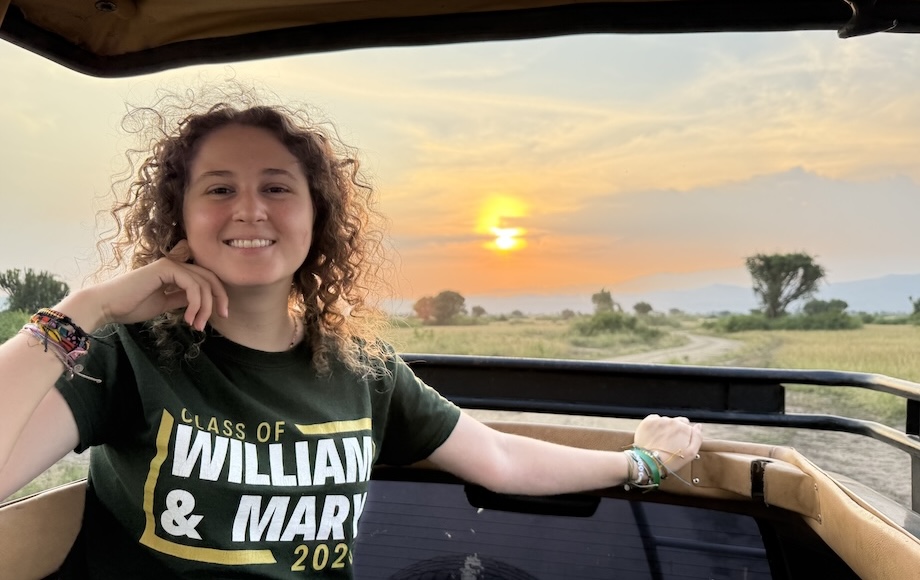
Around the world, the 2025 CRP students tackled challenges from biodiversity monitoring and water security to sustainable livelihoods, human-wildlife conflict, and environmental justice, while enganging with different cultures and navigating diverse social systems. Their work illustrates that effective conservation goes far beyond protecting ecosystems, and is fundamentally about people, communities, and the connections between them and the natural world.
Conservation succeeds when ecological goals are aligned with social equity, cultural understanding, and community empowerment. The 2025 cohort exemplified an integrative vision of conservation – a holistic one that values data, history, culture, and human well-being as inseparable from the health of the planet.