 Skip to main content

Fume Hoods
Overview
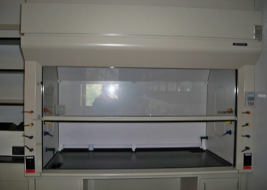
A fume hood is one of the leading safety devices used to protect individuals from exposure to chemicals. This ventilated enclosure is connected to an exhaust fan, which draws air from the room, through the hood opening, and out through the ductwork. A conventional fume hood is used for the manipulation of hazardous or volatile materials and column chromatography.
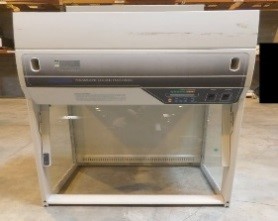
Ductless fume hoods are stand-alone enclosures that filter out hazardous fumes and vapors using HEPA and carbon filters. When the hood is on, air is drawn in from the front side, filtered, and released back into the room. Ductless fume hoods are ideal for soldering, histology, sample preparation, and work involving small quantities of low-hazard chemicals.
Annual Inspection & Certification
For conventional fume hoods, EH&S inspects the hoods and tests the face velocity to ensure it is working as designed. Face velocity is a measure of the speed of the laboratory's air that enters the fume hood’s face opening. The face velocities need to be high enough to contain fumes, but not high enough to cause air turbulence between the hood's face and laboratory workers. The EH&S Office contracts an external company to inspect and certify ductless fume hoods annually. Contact [[safety]] to obtain the most recent inspection data.