 Skip to main content
Professor pioneers intersection of art and ecology
For centuries, artists have used nature as subject matter, from idyllic Tuscan landscapes during the Italian Renaissance, to the majestic beauty of Yosemite captured during the era of American westward expansion. But how has art shaped society’s understanding of the environment?
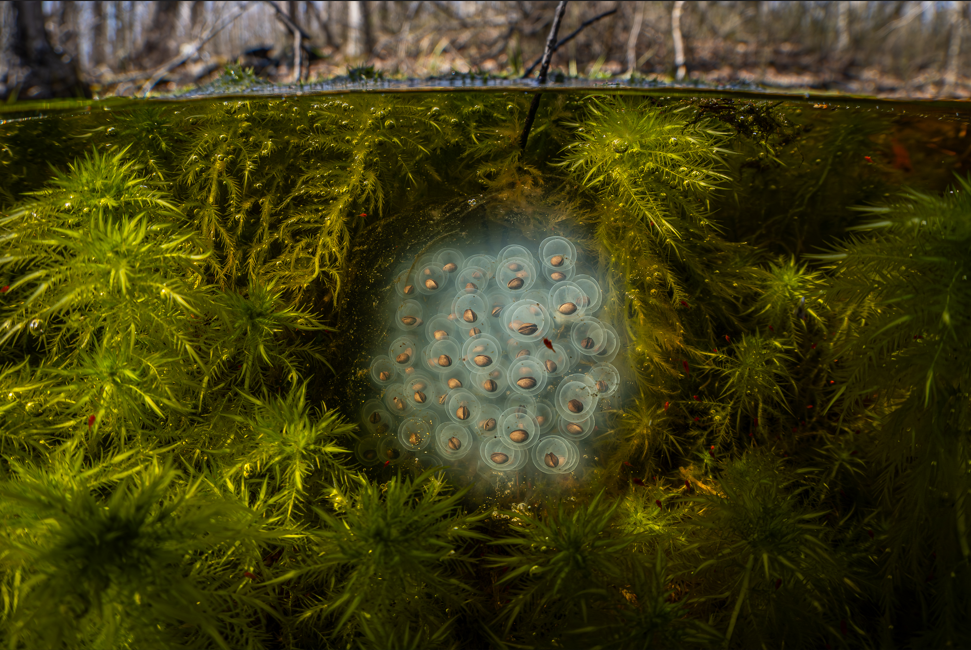
Alan Braddock, Ralph H. Wark professor of art history, environment & sustainability and American studies, explores this question through an interdisciplinary approach. This semester, he led the Curatorial Project titled “Liquid Commonwealth: The Art and Life of Water in Virginia” as a collaboration between the Art & Art History Department and the Muscarelle Museum of Art to showcase the beauty of water in Virginia. A recent book by Braddock, “Nature's Nation: American Art and Environment,” delves further into exploring the connections between art and nature.
Braddock’s curiosity dates back to his early career, long before he taught classes on art and environmental justice at William & Mary.
During his first teaching role at Syracuse University, he considered: “Environmental issues were much on my mind. And so I began to ask myself, is there some way in which I can make those issues part of my work? Or do I have to just keep them separate?"
As Braddock, who joined W&M in 2012, began researching interdisciplinary work that connected the environment with other fields of study, he realized art and environment intersect in very much the same way, eventually leading him to pen his first book on the topic, “A Keener Perception.” 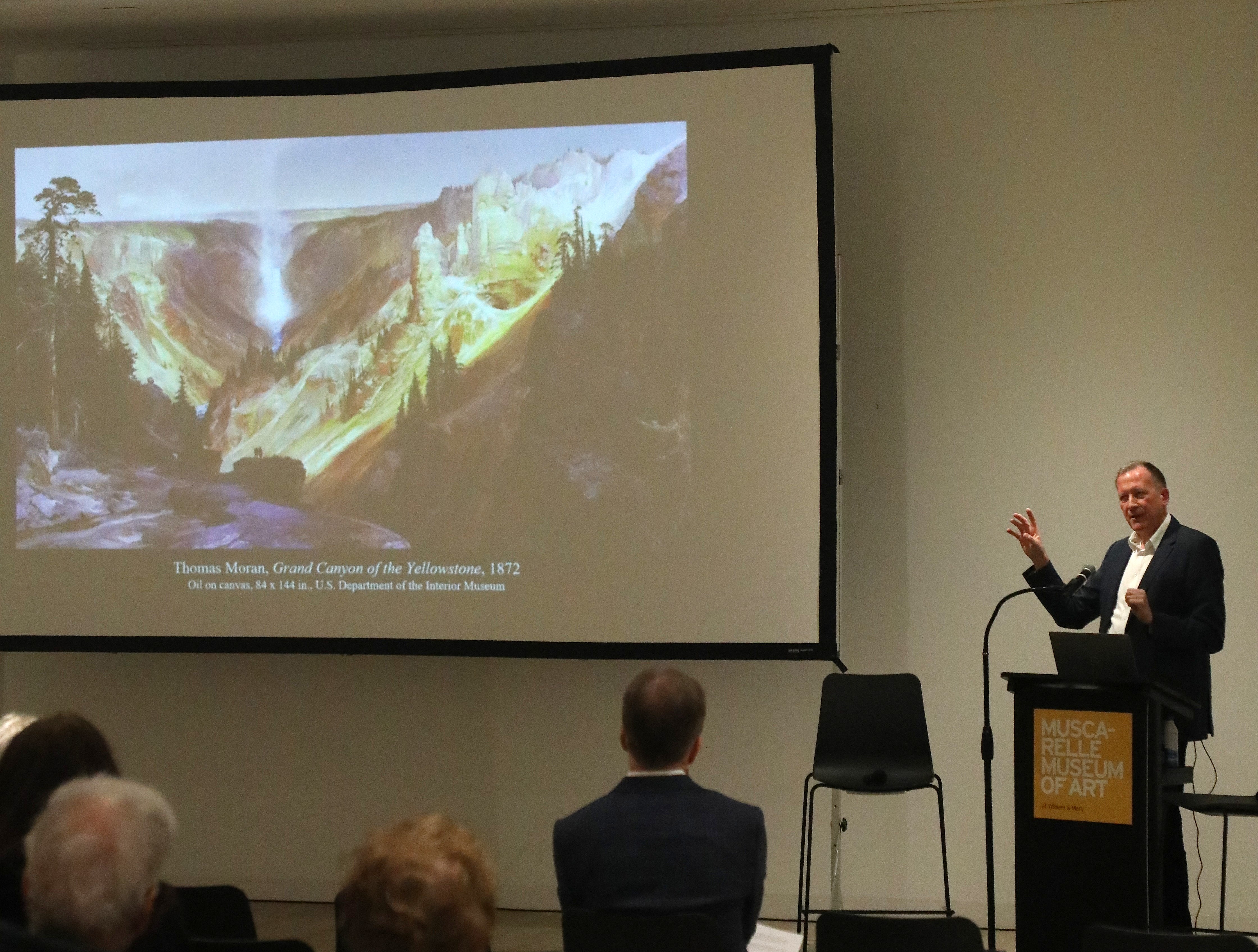
Now serving as the art & art history department chair, Braddock champions the interwoven nature of art and the environment through teaching courses such as Art and Ecology, as well as scholarship. “Nature’s Nation” was published in 2018 to accompany a traveling art exhibition Braddock co-curated with Karl Kusserow of Princeton University, which was displayed in three different museums across the U.S., starting at the Princeton University Art Museum. Braddock noted: “It's pretty rare, especially for a university museum, to stage an exhibition that has over 100 works of art like this, borrowed from 70 museums around the country.” The “Nature’s Nation” exhibition later traveled to the Peabody Essex Museum, in Salem, Mass., in the fall of 2018. It finished its run at the Crystal Bridges Museum of American Art in Bentonville, Ark. the following year.
The exhibition featured paintings and other art mediums illustrating how artists have grappled with environmental issues over the course of centuries. The exhibition and accompanying book encompass three sections: Colonization and Empire, Industrialization and Conservation, and Ecology and Environmentalism. Based on these groupings, he and his co-curator selected artwork that fit into each category. However, there was one unique aspect: “At each of the different venues of the exhibition, the works that were displayed varied a little bit,” he said. “There was a core selection of works that appeared in every venue, but the local museum could complement and enhance and amplify certain things with their own collections.”
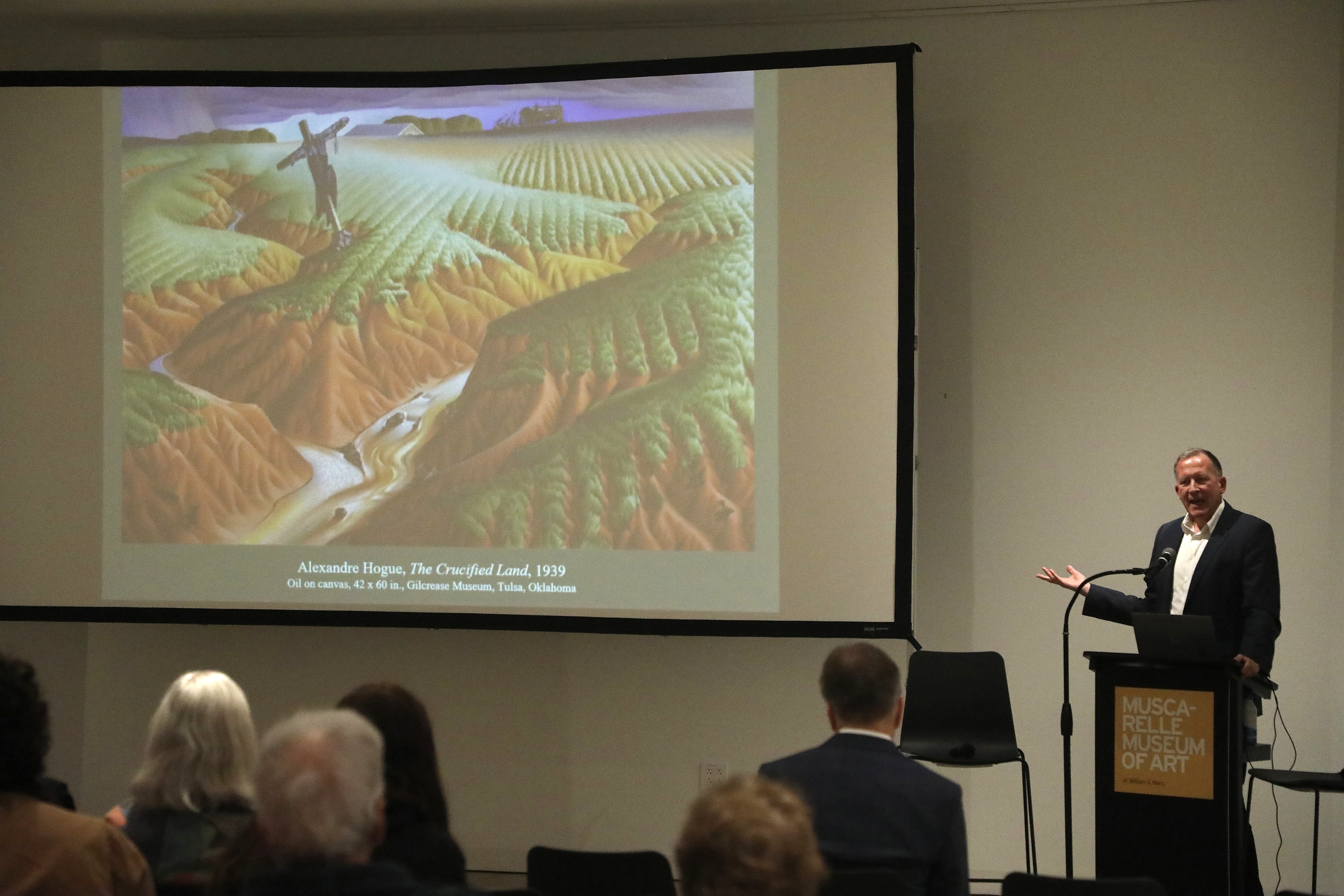
“Nature’s Nation” was a resounding success; it saw over 100,000 visitors over the course of the exhibition’s run and received three national awards for the book. Since then, Braddock has continued to study the ties between art and ecology. He released “Implication: An Ecocritical Dictionary for Art History” in 2023, which expanded beyond American art to a global perspective.
Under Braddock’s leadership, student curators for the current “Liquid Commonwealth” exhibit examined almost 800 submitted artworks, choosing 56 for the exhibition. The exhibit runs from Nov. 14 to Feb. 15.
Braddock’s forthcoming book, “Art History: Before and After Ecology,” continues to explore the relationship between art and the environment through a collection of essays co-edited as part of the Getty Research Institute’s Art and Ecology program and is slated to be released in 2026.