Skip to main content

Ospreys Score a W&M Campus First at Zable Stadium in 2025
Does your list of New Year’s resolutions include remembering to check out W&M’s Osprey Cam this spring? Of the many highlights of 2025, the success of Zable Stadium’s ospreys was most certainly near the top!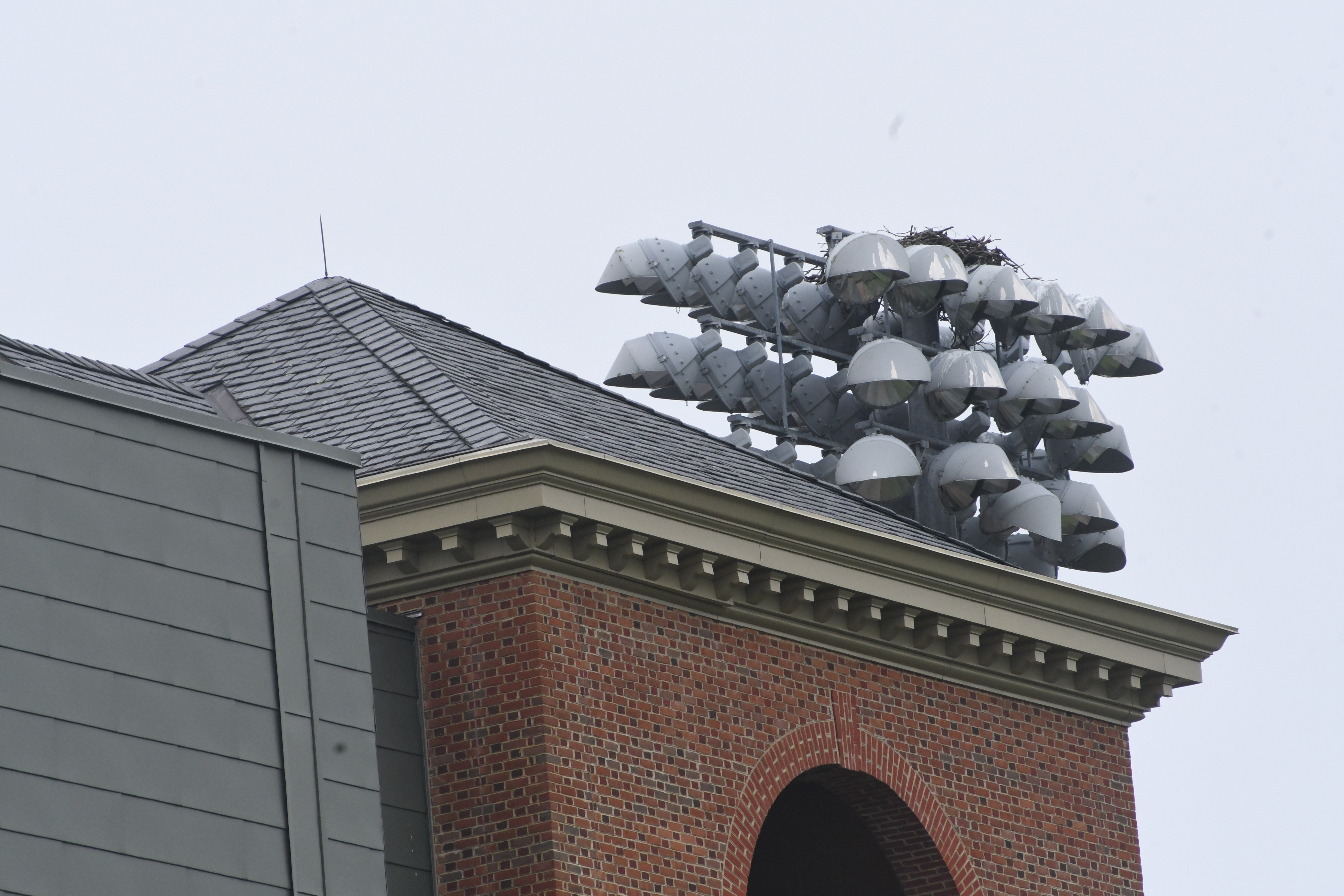
Ospreys have long been a seasonal sight and sound in the College Woods around Lake Matoaka, but the charismatic "fish hawks” don’t usually stick around very long. The Chesapeake region’s osprey currently are wintering in South America, to return this spring, coincident with the Atlantic menhaden runs.
Ospreys seen flying over campus typically are on their way to nesting sites in the Bay’s plentiful riverine habitats. According to Bryan Watts (director of the Center for Conservation Biology), no one has reported ospreys nesting on campus within the last 100 years of W&M’s institutional knowledge.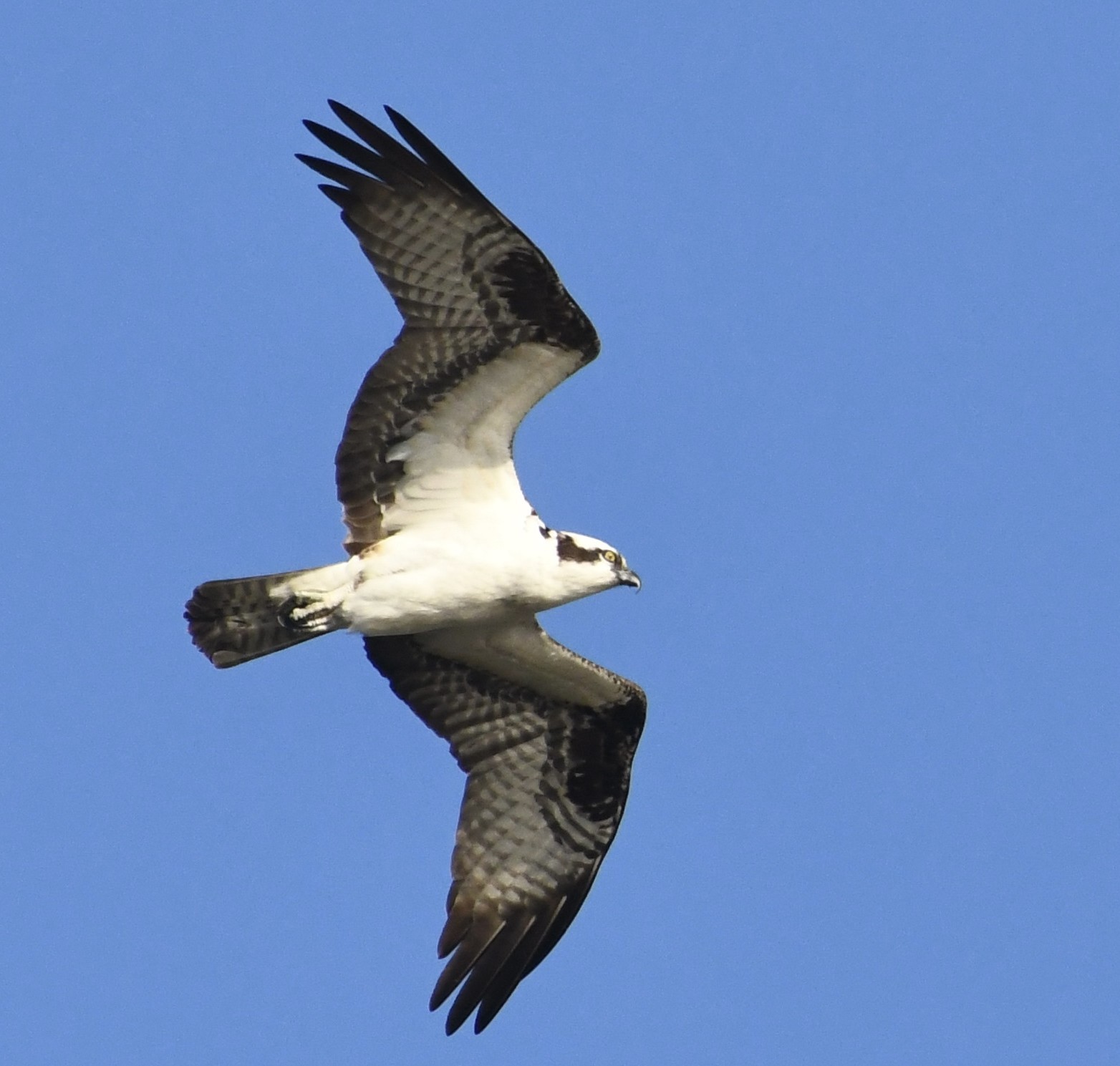
Dr. Randy Chambers, Director of the Keck Environmental Field Laboratory, while looking out a window at the Sadler Center, happened to catch a glimpse of ospreys carrying branches. Over the next few days, he confirmed that ospreys were indeed attempting to nest on top of a light tower at Zable Stadium. A long-time osprey aficionado, Chambers sprang into Green Fee action.
“We knew this would be an exciting moment for our community and wanted to share the experience across campus and elsewhere,” Chambers said of the proposal he put together with fellow osprey enthusiasts from W&M IT: Jeff Jolly, Jamie Wick, and Ryan Smith. A successful osprey nest would reflect the health of the College Woods and waterways. The team submitted a successful university Green Fee grant proposal to install a camera at the stadium that would broadcast the live feed of the nest on YouTube.
“Unfortunately, the ospreys were not successful that spring. They never even spent the night at the nest,” recalled Chambers.
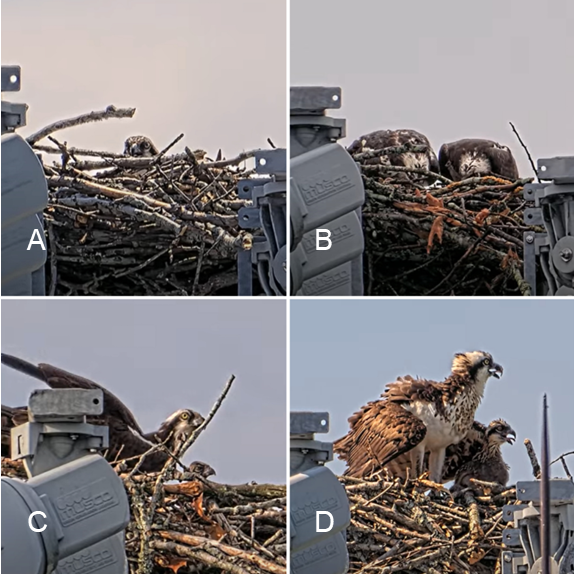
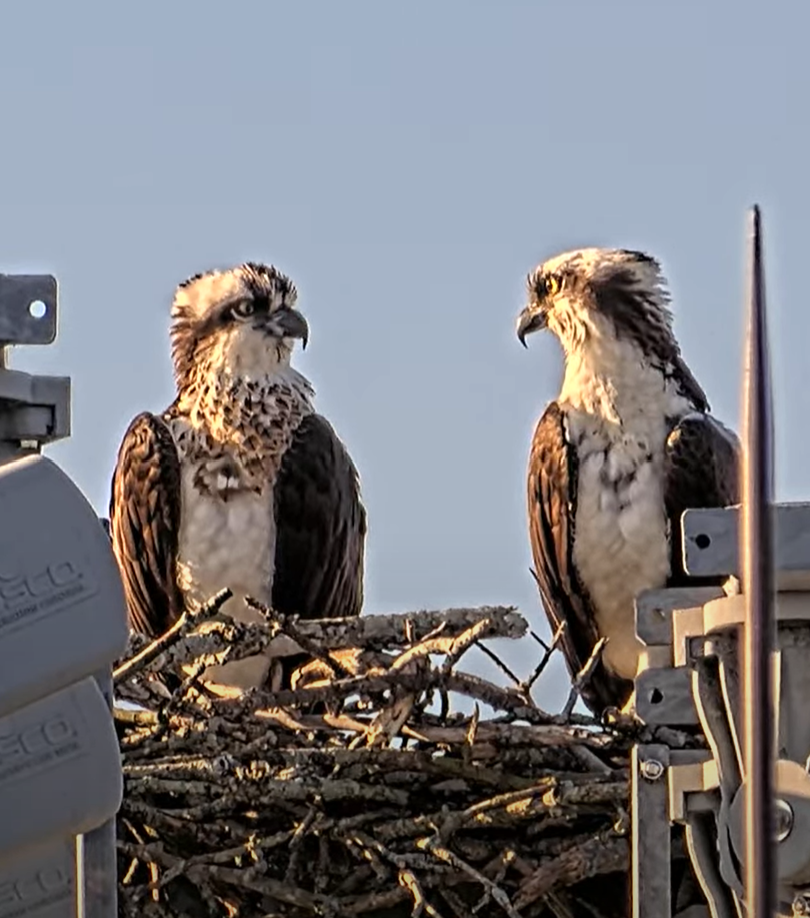
It was a huge disappointment, but a temporary one. In Spring 2025, the ospreys returned. They not only spent the night, but they spent weeks hatching and raising a chick that fledged by the end of July. Shortly thereafter, the nest was empty, and the osprey pair and fledgling were presumably readying for their return migration to South America. William & Mary had its first-ever successful osprey nest on campus!
How big of a deal is this? Watts summarizes, “My feeling is that although campus and (Lake) Matoaka is consistent with what ospreys use today, it is not really consistent with what they used in the early 1900s.” So, it’s not unexpected but still very welcome.
Our osprey pair is following a trend Watts has noted elsewhere: inland nests near low salinity waters are having greater breeding success than nests near coastal waters. Watts documented catastrophic nest failure along the Eastern shore and steep declines among high and moderate salinity areas of the Bay. Osprey chicks appear to be starving to death, which Watts infers is due to overfishing of the menhaden runs that Bay ospreys rely on.
Ospreys eat fish almost exclusively. From Lake Matoaka, the ospreys are likely eating a lot of gizzard shad and catfish. The gizzard shad is a non-migratory, distant cousin of the Atlantic menhaden that is tolerant of turbid water. This slimy, stinky species is of little commercial value to fishermen, but high forage value to wildlife like ospreys and river otters. With a bit of luck and lots of learning from last year’s nesting season, perhaps “our” Zable Stadium osprey pair will be back again this spring.
You can be sure that Chambers and the IT team will be ready! They hope to re-position the camera to get a better view into the nest and to include sound. Follow along at WMOspreyCam on YouTube, with Instagram updates at WMKeckLab.
Further information on ospreys below.
Ice Fishing? No Thanks!
Our resident pair and their chick are probably in Central or South America at the moment, though they traveled independently to separate locations. If all goes well, we may get to see the adults again in early March. The chick will likely stay in its wintering location for another year and a half before returning. Ospreys may fly about 100 miles per day, though individual flights of up to 500 miles per day and journeys of 2,500 total miles (Venezuela) to 5,000 miles (southern Brazil) have been recorded. Ospreys don’t stop flying when they reach their destinations. All the nesting and feeding miles rack up. It’s estimated that an osprey may fly 160,000 total miles over its 15-20 year lifetime.
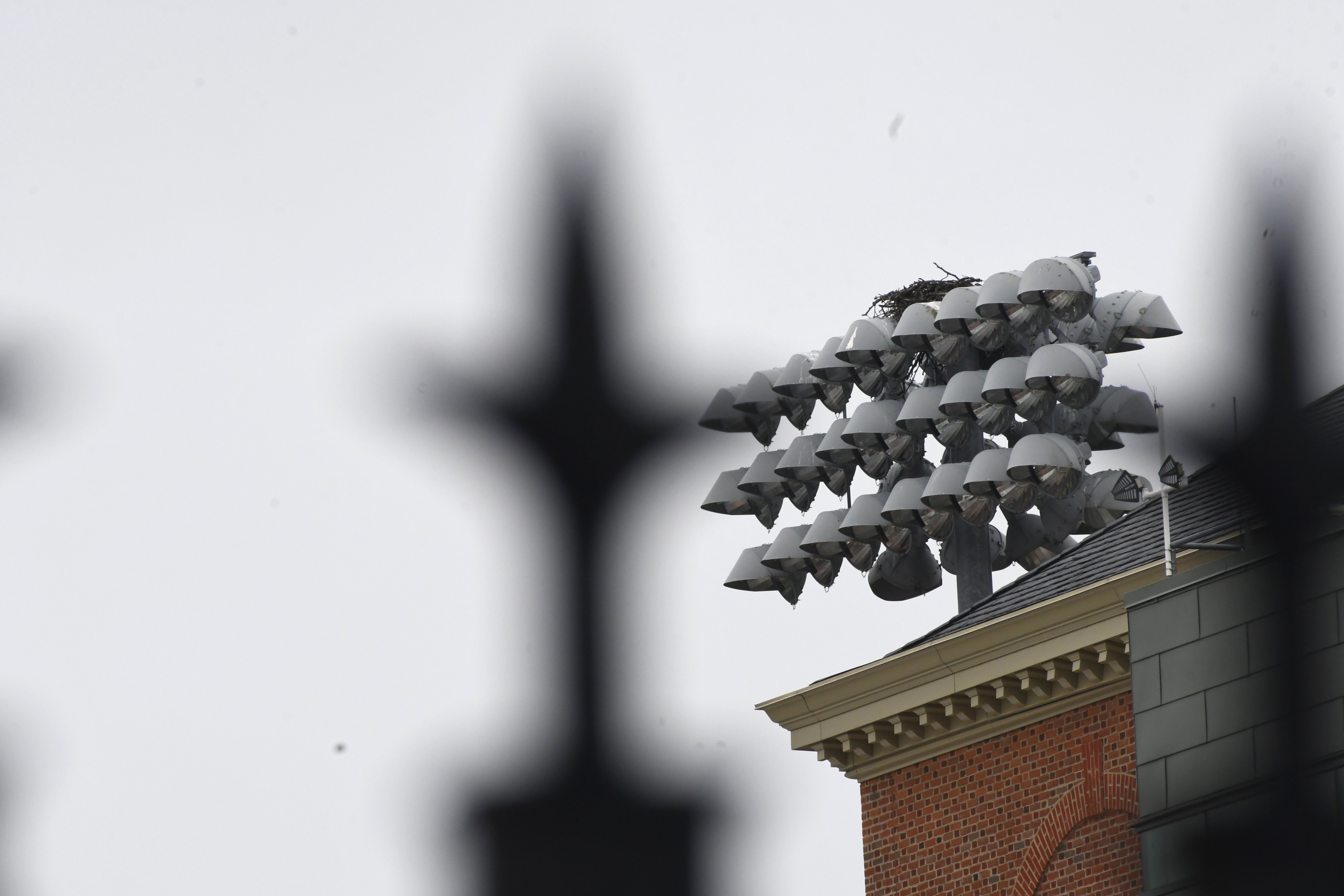
A Room With a View... and Clearance!
The ability of ospreys to use human-made nest sites is key to their modern day survival. The Zable Stadium tower lights not only have great views, proximity to fishing, and protection from ground predators; they also have wide open space for easier access. When you have a 5-6 foot wingspan more adapted to diving and soaring than maneuverability, clear travel lines are essential.
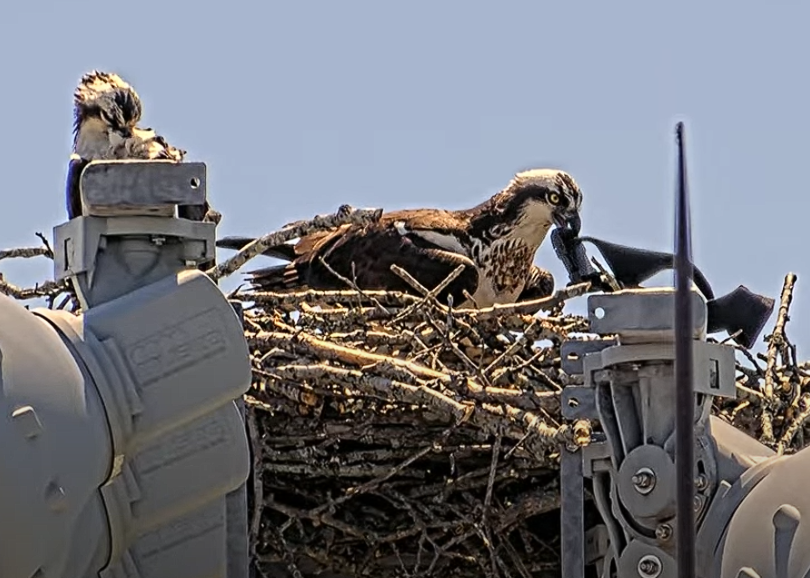
Ospreys generally mate for life and build new nests on top of their old ones. Over time, nests can reach 10-13 feet deep and 3-6 feet wide. Ospreys line their stick nests with softer materials like bark, grass, algae, etc. Our pair even added anthropomorphic objects, most notably a long, black scarf and a strap of some sort!
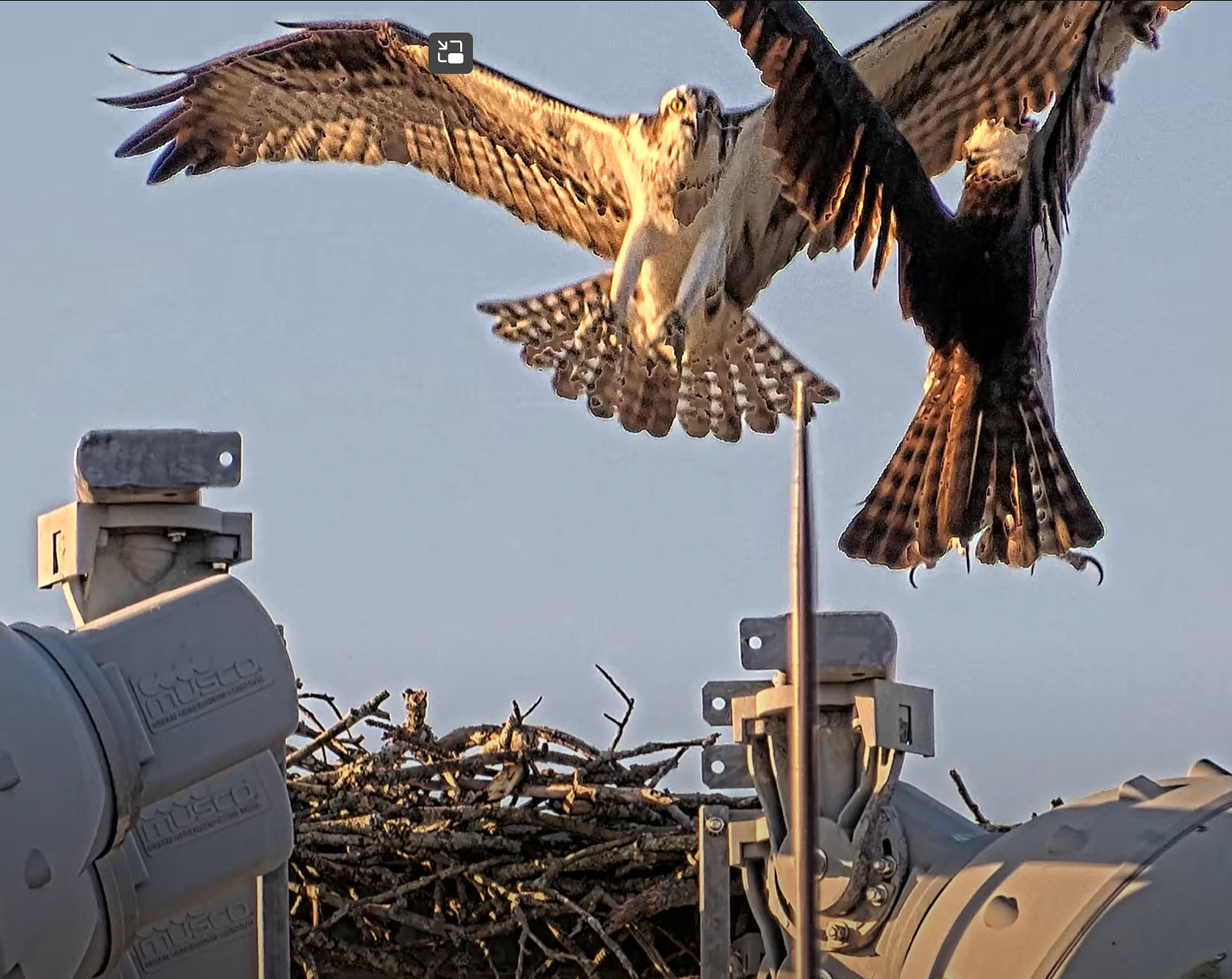 Dancing, Dining, and Timing!
Males usually arrive before females, bringing nesting materials that the female will eventually rearrange. Watch for “sky dances” where a courting male may fly up 300 feet or more, hover for a bit, then dive back down, often with a fish or nesting material in its talons.
The entire nesting process takes about 4-5 months. Females typically lay 2-3 eggs but not synchronously. Starting with the first egg, there are 34-40 days of incubation. This gives the first egg a size advantage over its siblings as it will also hatch first. We don’t know how many eggs were laid in the Zable Stadium nest this year.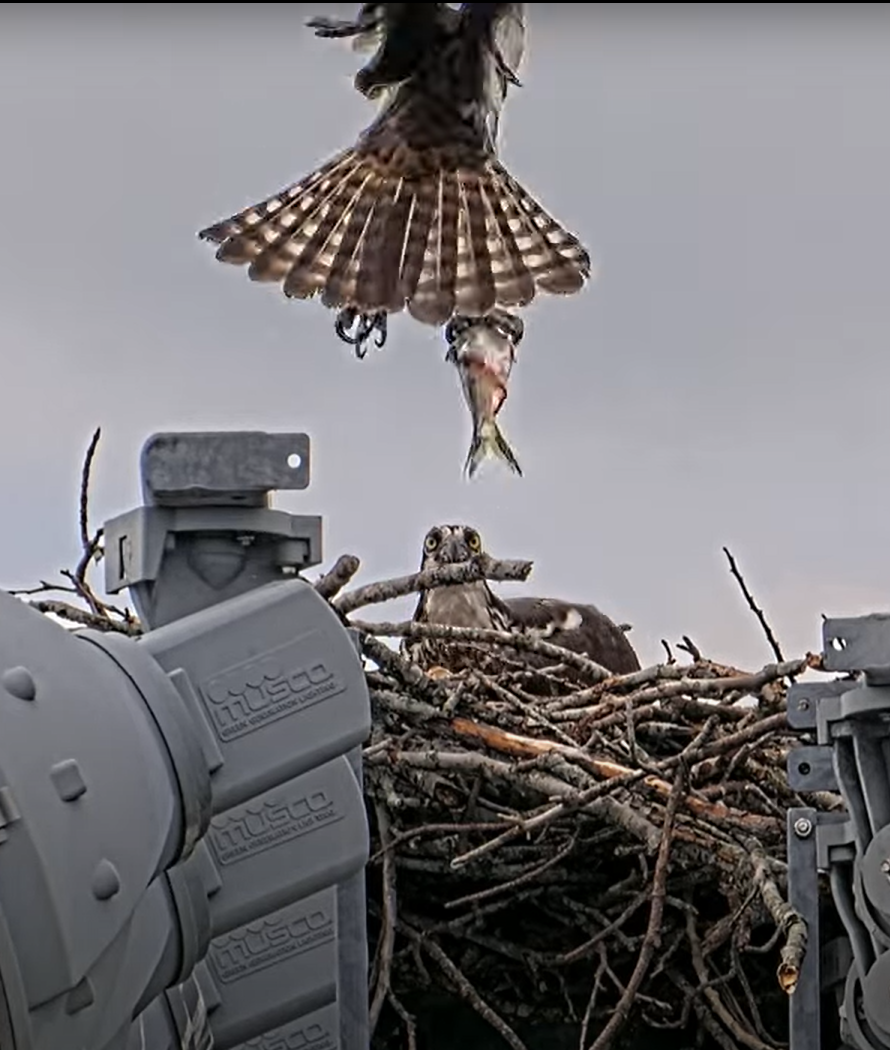
The female broods the newly hatched chicks continuously for about 10 days while the male brings in food. At about 6 weeks, the nestlings are able to feed themselves, so both parents bring food to the nest. After another week or two, the young are able to fly, but they will hang around the nest for another month while begging from parents and learning to fish for themselves. When food resources are scarce, the first chick often is the only survivor.
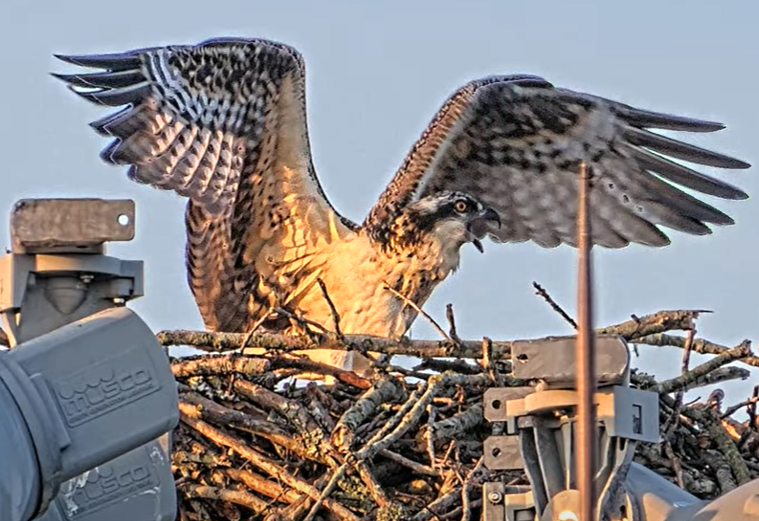
Photo Credits: Keck Environmental Field Laboratory, 2025
Citation: Watts, Bryan. (2025, October 8). Deficit in breeding performance expands for Chesapeake Bay ospreys. The Center for Conservation Biology. https://ccbbirds.org/2025/10/01/deficit-in-breeding-performance-expands-for-Chesapeake-bay-ospreys/ Accessed January 5, 2025