Our Internship Philosophy & Model
Philosophy of Training
The training program at the WMCC embraces the responsibility of providing supportive, comprehensive doctoral-level internship training in a counseling center setting. Our training program is consistent with the overall mission of the WMCC, providing quality and culturally sensitive professional services to students facing developmental and clinical issues that could interfere with the fulfillment of their educational and personal goals.
Developmental-Experiential-Mentorship Based Training
The WMCC internship program is based on a Developmental-Experiential-and mentorship philosophy of training. The internship builds on the foundation of knowledge and skills acquired through the diverse experiences of graduate coursework, research, practica and other applied activities. The center considers the internship a capstone to a doctoral training in health service psychology. We strive to facilitate the integration of research, knowledge, and skills and the consolidation of a professional identity as a psychologist. As such, our mission is to provide a training environment that facilitates the transition from graduate student to culturally sensitive, clinically skilled and ethically sound psychologist.
Integration of Research/Scholarly Work and Practice
An important component of the WMCC philosophy of training is the belief in the need to integrate scholarly knowledge, research findings, and critical thinking into clinical practice and clinical decision making. We encourage the consumption and implementation of scholarly research across roles within the agency.
Mentoring, Modeling, and Supervision
Trainees are supervised by senior staff members who model the highest ethical, legal, and professional standards of the profession and provide a safe and supportive environment that would foster interns’ learning and development. It is in this type of environment that interns could effectively develop conceptual, methodological, therapeutic, and case management skills while engaging in a self-exploration process that would be conducive to personal and professional growth.
In addition to the intense clinical supervision interns receive, they also participate in formal training activities that are structured to promote a theoretical and clinical foundation in health service psychology. The structured training activities include an orientation program, training seminars, case conferences, and group supervision.
Mentoring and an “open door policy” are highly valued at the center. Interns are encouraged to utilize and consult with all professional staff regardless of supervision assignments.
Aims of the Internship
Trainees are supervised by senior staff members who model the highest ethical, legal, and professional standards of the profession and provide a safe and supportive environment that would foster interns’ learning and development. It is in this type of environment that interns could effectively develop conceptual, methodological, therapeutic, and case management skills while engaging in a self-exploration process that would be conducive to personal and professional growth.
I. RESEARCH
Interns are presented with multiple opportunities to consume research to inform their clinical practice during the training year. Interns will regularly read research articles for seminars, supervision, and are expected to integrate research in presentations. In addition, interns are expected to present their personal research (e.g., dissertation) to their peers and the staff at the Center. Interns will be expected to demonstrate knowledge, skill, and competence to critically evaluate research and apply research findings in the different professional roles assumed during the internship year.
II. ETHICAL BEHAVIOR AND LEGAL STANDARDS
An overarching goal of the WMCC is to instill a commitment to ethical practice. Interns will have opportunity to discuss ethical issues in the different didactic seminars offered during the year, as well as in group supervision meetings (e.g., case conference, group therapy supervision, etc.), and in supervision. Interns will be expected to behave according to the Ethical Principles of Psychologists and Code of Conduct of the American Psychological Association (2002) and demonstrate knowledge regarding the rules, regulations and standards governing health service psychology. In addition, interns are to familiarize themselves with the Virginia Law regarding the ethical practice of psychology. Interns will be expected to recognize ethical dilemmas and apply ethical decision-making processes competently. In addition, interns are expected to follow the Counseling Center policies and procedures, maintain an appropriate professional role with clients, develop appropriate interaction with staff and trainees, and maintain accurate documentation records.
III. INDIVIDUAL AND CULTURAL DIVERSITY
Interns participate in didactic and experiential training regarding multicultural competence. Sensitivity to issues of power and privilege as well as social justice issues are central to the mission of the Counseling Center and the Training program. As such, interns are to demonstrate ability to engage in self-reflection about the way in which their own personal/cultural history affects how they understand and interact with people different from themselves, including peers, colleagues, supervisees, supervisors, other staff/professionals, and those seeking services. Interns are expected to demonstrate cultural sensitivity and competence in service delivery with clients, groups, and organizations from diverse cultural backgrounds and other forms of individual difference. Multicultural competence is defined according to APA Guidelines (see Training Manual, VII. ETHICS & LAWS).
IV. PROFESSIONAL VALUES, ATTITUDES AND BEHAVIORS
A significant goal of the internship is to instill a commitment to professionalism, integrity, self-reflection, and lifelong learning. The internship attempts to foster the development of interns' reflective practice and self-assessment so that they can recognize the boundaries of their competencies, demonstrate ability to monitor their own professional behavior, and recognize strengths and areas of growth. Similarly, the internship offers opportunities for interns to consolidate their professional identity. It is anticipated that interns will gain a sense of competence, confidence, and autonomy in the practice of health service psychology. As the year progresses, it is expected that interns will respond professionally in increasingly complex situations with a greater degree of independence. As such, interns are to demonstrate ability to effectively use supervision, being receptive feedback and new ideas as well as open to looking at own issues that may impact professional behavior.
V. COMMUNICATION AND INTERPERSONAL SKILLS
Appropriate communication and interpersonal skills are essential for positive interactions and effective work with others. Communication and interpersonal skills are the foundations for many of the other vital competencies in the field of health service psychology. It is expected that Interns will demonstrate understanding of professional language and concepts, and produce and comprehend oral, nonverbal, and written communication. Interns are to demonstrate the ability to maintain effective relationships with a wide range of individuals including clients, peers, colleagues, supervisees, supervisors, and other staff/professionals, being sensitive to individual and cultural differences as well as to issues of power and privilege. Interns are expected to utilize and develop appropriate interpersonal skills, appropriately managing emotional reactions while interacting with others, particularly when engaged in difficult communication.
VI. ASSESSMENT
Interns participate in didactic and experiential assessment training as well as in weekly supervision to assure competent assessment practices. They will have ample opportunity to engage in initial assessments and clinical interviews with clients seeking services. Interns are expected to accurately assess clients' psychological needs, write comprehensive conceptualizations, and make appropriate treatment recommendations such as the need for individual or group therapy, psychiatric referral, or other interventions including referrals to other professionals or community services. Interns are also expected to be able to make clinical decisions about the selection and utilization of psychological tests in their clinical practice; they are to demonstrate ability to accurately interpret data from assessment instruments. Interns will demonstrate sensitivity to the context of the client's culture when selecting, implementing, and interpreting test results. Interns will be able to demonstrate ability to use assessment data to inform their clinical interventions.
VII. INTERVENTION
A. Individual Psychotherapy:
Interns demonstrate the ability to offer individual psychotherapy to college students with a variety of presenting concerns and identities during the internship year. Interns will receive didactic and experiential training as well as weekly supervision to assure competent service delivery. Interns are expected to appropriately apply therapeutic knowledge, multicultural guidelines, and evidenced-based treatments in clinical work. It is expected that interns demonstrate the ability to gather data, establish therapeutic rapport, develop accurate diagnostic impressions, and appropriately conceptualize cases, with consideration of client diversity variables. Interns will demonstrate effective timing and flexibility in therapeutic interventions. Interns are expected to timely and accurately document their clinical interventions with clients.
B. Crisis Intervention:
Interns receive didactic and experiential training as well as ongoing supervision and consultation regarding crisis intervention skills. During working hours or through after-hours on-call duties (with a back-up supervisor), interns will be able to provide crisis intervention for clients experiencing acute personal distress or symptomatology. Interns are to be aware of best practices and evidence-based strategies related to crisis intervention. Interns will appropriately consult when assessing and responding to crisis situations. Interns are expected to appropriately assess the magnitude of the crisis situation, the clients' needs, and to implement appropriate interventions to reduce distress. Interns are expected to demonstrate ability to evaluate clients' safety regarding risk of danger to self and/or others and mobilize resources accordingly. Interns will also maintain timely and accurate documentation records.
C. Group Psychotherapy:
Interns receive didactic and experiential training in group therapy intervention. They work with a group co-leader from the earlier stages of group referral, pre-group screenings and group formation, through the working and termination stages of group. Interns are expected to demonstrate ability to facilitate process-oriented therapy groups and/or theme/population-oriented groups. They are to be able to collaborate with co-leaders and accurately document the clinical interventions with groups.
D. Outreach Programming:
Interns are presented with multiple opportunities to engage in outreach programming. Interns are expected to be able to design and implement psycho-educational presentations and workshops for audiences within the campus community. Interns are expected to demonstrate the ability to develop programming based on current research, with sensitivity to different cultural variables, and based on the needs of the target audience. Interns will exhibit competency in their presentation skills. Interns receive didactic and experiential training in crisis management; it is expected that interns will be able to respond to critical incidents or crisis debriefing outreach events if there are situations of this caliber during their internship year.
VIII. SUPERVISION
Interns provide supervision for doctoral level practicum students. Interns receive didactic and experiential training in supervision. Interns are expected to model ethical practice, provide a safe environment for practicum students to discuss their cases, and demonstrate ability to assist supervisees with conceptualization and treatment planning. As supervisors, interns provide feedback and help supervisees develop self-reflective skills, encouraging identification of strengths as well as areas of growth. Interns are to apply the criteria for evaluation in a fair and developmentally appropriate manner.
IX. CONSULTATION AND INTERPROFESSIONAL/INTERDISCIPLINARY SKILLS
Interns are expected to gain knowledge and skills regarding consultation. Interns receive didactic and experiential training as well as supervision regarding consultation with the multidisciplinary staff of the Center, faculty, staff, parents, Student Affairs professionals, and any other members of the university. Interns will be expected to exhibit ability to use their assessment and clinical judgment as they consult with others. Similarly, interns are expected to demonstrate knowledge and respect for the roles and perspectives of other professions and apply this knowledge in interprofessional/interdisciplinary consultation with individuals, groups and/or systems.
*Questions related to the program’s accredited status should be directed to the Commission on Accreditation:
Office of Program Consultation and Accreditation American Psychological Association
750 1st Street, NE, Washington, DC 20002
Phone: (202) 336-5979
E-mail: apaaccred@apa.org
Web: www.apa.org/ed/accreditation
|
Training Requirements
Hours
- Direct Service Hours: Interns must accrue a minimum of 500 direct service hours over the course of the internship for successful completion of the program.
- Overall Internship Hours: Interns must accrue a minimum of 2,000 overall hours over the course of the internship for successful completion of the program.
Individual, Couples, & Group Therapy
- Individual/Couples Therapy: Schedule individual/couples for an average of 16 clinical hours/week.
- Group Therapy: Co-facilitate one therapy group with a senior staff member during the Fall and Spring semesters.
- Initial Consultations: Schedule three initial consultations per week on Team Day, weekly throughout the Fall and Spring semesters.
- Intakes: Schedule three intake appointments/week in the Fall and Spring semesters.
- Urgent/Crisis & Consultation Appointments: In collaboration with one’s teammate, urgent/crisis and consultation appointments are distributed throughout the day.
- On call: Provide at least one week of on-call/after-hours coverage per semester and one week of on-call/after-hours coverage during the summer.
Special Interest Areas/Concentrations
The training program seeks to offer training experiences and mentorship tailored to interns’ specific interests where possible. Opportunities for additional training and mentorship may include, but are not limited to:
- Group Therapy
- Outreach
- Suicide Prevention Coalition
- Multicultural Consultation
- UCC Leadership/Student Affairs
- Program Evaluation
- Specific Clinical Populations
Interns are encouraged to express if they would like to pursue additional training opportunities to the Training Director. The program's Training Committee would meet to determine if offering additional training experiences are feasible. The program does not guarantee that additional training/mentorship in a specific area will be available each year. Special interest areas do not take priority over standard requirements of the internship. There is no consequence to an Intern’s standing with the program if they do not express a desire to pursue additional training opportunities beyond the standard requirements of the internship.
Outreach
- Orientation: Observe or co-facilitate at least two outreach programs during the W&M students’ orientation.
- If the RA Suicide Risk Reduction/Campus Connect Training is conducted during orientation, Interns are required to co-facilitate this program in addition to the two other orientation outreach programs.
- Screening Programs: Participate in at least one screening program during the internship year, if offered.
- Didactic/Interactive Presentations: Facilitate a minimum of three didactic/interactive outreach presentations per semester (minimum of six didactic outreach programs over the course of the internship year).
- Campus Connect: Facilitate at least one Campus Connect suicide prevention training per semester, if offered. During the Spring semester, Interns will assist in training practicum students in the program and co-facilitate the program with a practicum student, if offered.
Assessment
- CCAPS-62: Interns administer and interpret the CCAPS-62 at initial consultation, urgent appointments, and every three sessions of individual therapy.
- Clinical Interviewing: Interns regularly engage in assessment via clinical interviews during initial consultations, urgent/crisis appointments, and intakes.
- Case Presentations: Interns complete one case presentation during the Fall and Spring semesters. Case presentations occur during weekly Case Conference meetings attended by all staff (see Supervision below for details on Case Conference). Case Presentation requirements are described below:
- Complete a short write up of the case (no more than 3 pages single-spaced) including:
- Demographics
- Relevant Background/History
- Medical History
- Presenting Concerns
- Assessment Data (Instruments, Rationale, Results)
- Diagnosis
- Treatment Summary
- Theoretical Approach and Conceptualization
- Relevant Research/Literature (include citations)
- Discussion Questions
- References
- During the presentation, provide a summary of the case/write-up for no more than 10-15 minutes
- Show a video clip illustrating your work approximately 10 minutes in length
Supervision
- Individual Supervision: Interns receive two-hours per week of clinical supervision for individual cases, initial consultations/intakes, on-call and crises.
- Provision of Supervision: Interns provide 2 hours per week of individual supervision to a practicum student in the Spring semester. Based on the number of practicum students being trained each year, interns will supervise the equivalent of at least half a caseload of a practicum student during the Spring semester. Interns will meet with their practicum supervisee for 2 hours per week.
- Supervision of Supervision: During the Spring semester, interns receive 1 hour of supervision of supervision per week (in additional to individual supervision) overseeing their supervision of a practicum student.
- Group Therapy Supervision: Interns receive 1.5 hours per week of group therapy supervision. One hour of group therapy supervision occurs during weekly meetings attended by all staff members facilitating groups. This meeting will include regular discussion of group progress and informal presentations (including showing video recordings) of group therapy. The remaining 0.5 hours per week of supervision occurs during a meeting with the intern’s group co-leader to discuss and process issues relevant to your specific group.
- Case Conference (1-2hr/week). This meeting is considered supervision in a group format, attended by all staff members. Trainees take turns showing clips of sessions and discussing clinical issues in order to hear different perspectives and receive feedback from those in attendance. Peer input is valued and encouraged. Practicum students also bring cases to these meetings and interns are able to provide input as a way to demonstrate their consultation, conceptualization, and clinical skills.
- Supervision Logs: Interns maintain a weekly supervision log for individual supervision and supervision of supervision caseloads, presenting concerns, any safety/risk concerns, and supervision discussions.
Seminars
- Integrated Seminar: Interns meet for two hours per week during the Fall semester for this seminar covering various topics. More details provided in seminar syllabus.
- Diversity Seminar: Interns meet for one hour biweekly (once every other week) throughout the Fall and Spring semesters for this seminar focused on issues of identity, diversity, and social justice. More details provided in seminar syllabus.
- Supervision Seminar: Interns meet for one hour biweekly (once every other week) throughout the Fall and Spring semesters for this seminar focused on supervision.[1] More details provided in seminar syllabus.
Meetings
- Staff Meetings: Attend and participate in “All Staff” meetings scheduled throughout the Fall and Spring semesters, typically one hour per month.
- Meetings with Training Director: Attend and participate in meetings with the Training Director, scheduled 0.5-1.0 hour per month during the Fall semester (alternating group-individual meetings), 0.5-1.0 hour per month (alternating group-individual meetings) during the Spring semester, and as needed/as requested during the summer. The purpose of these meetings is to address potential questions or concerns and/or provide feedback about the training program to the Training Director.
- Student Affair Meetings: Interns attend all Student Affairs meetings, typically two hours per month, including semester “Kickoffs” and end of semester celebrations.
Research
Interns present on their personal research to the Counseling Center staff. This presentation can be scheduled at any time during the training year.
Teaching
Interns present on a topic of their choice during the practicum seminar (fall or spring semester).
Summer Project
Interns will complete a summer project of their choosing. Examples include creating psychoeducational brochures, completing a program evaluation using internal data, developing resource guides, developing training resources, improvements to counseling center website, projects identified as Counseling Center needs, etc.
|
Internship Admissions, Support, & Initial Placement Data
Program Disclosures
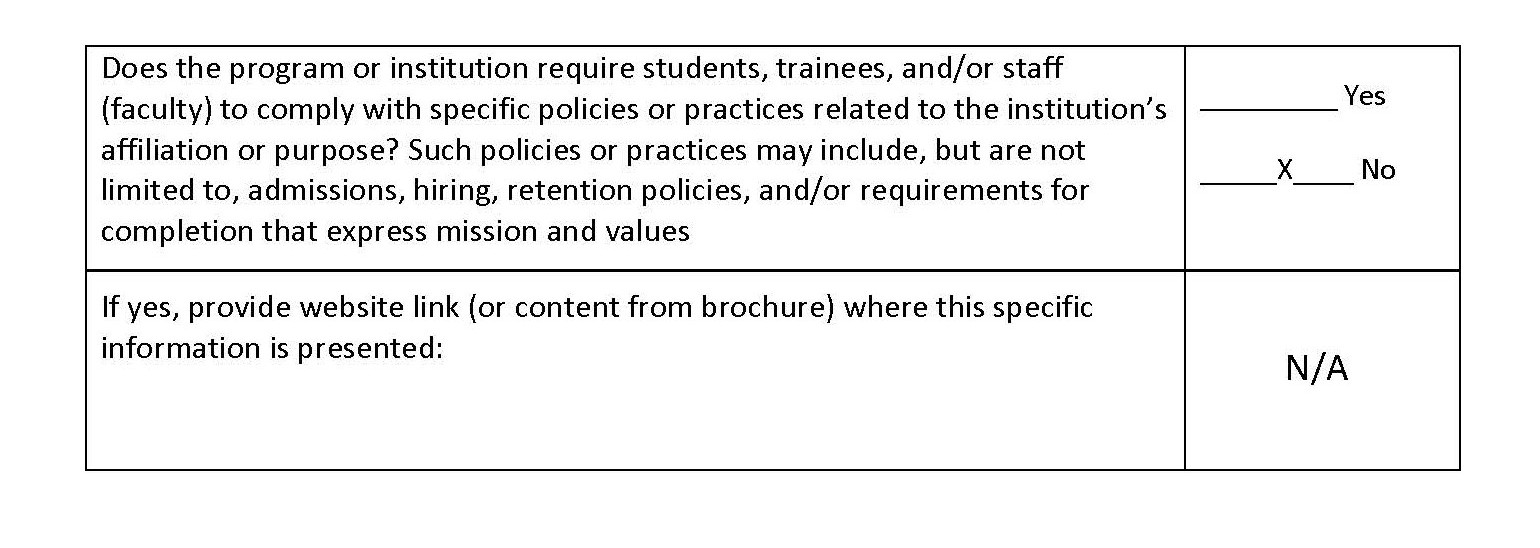
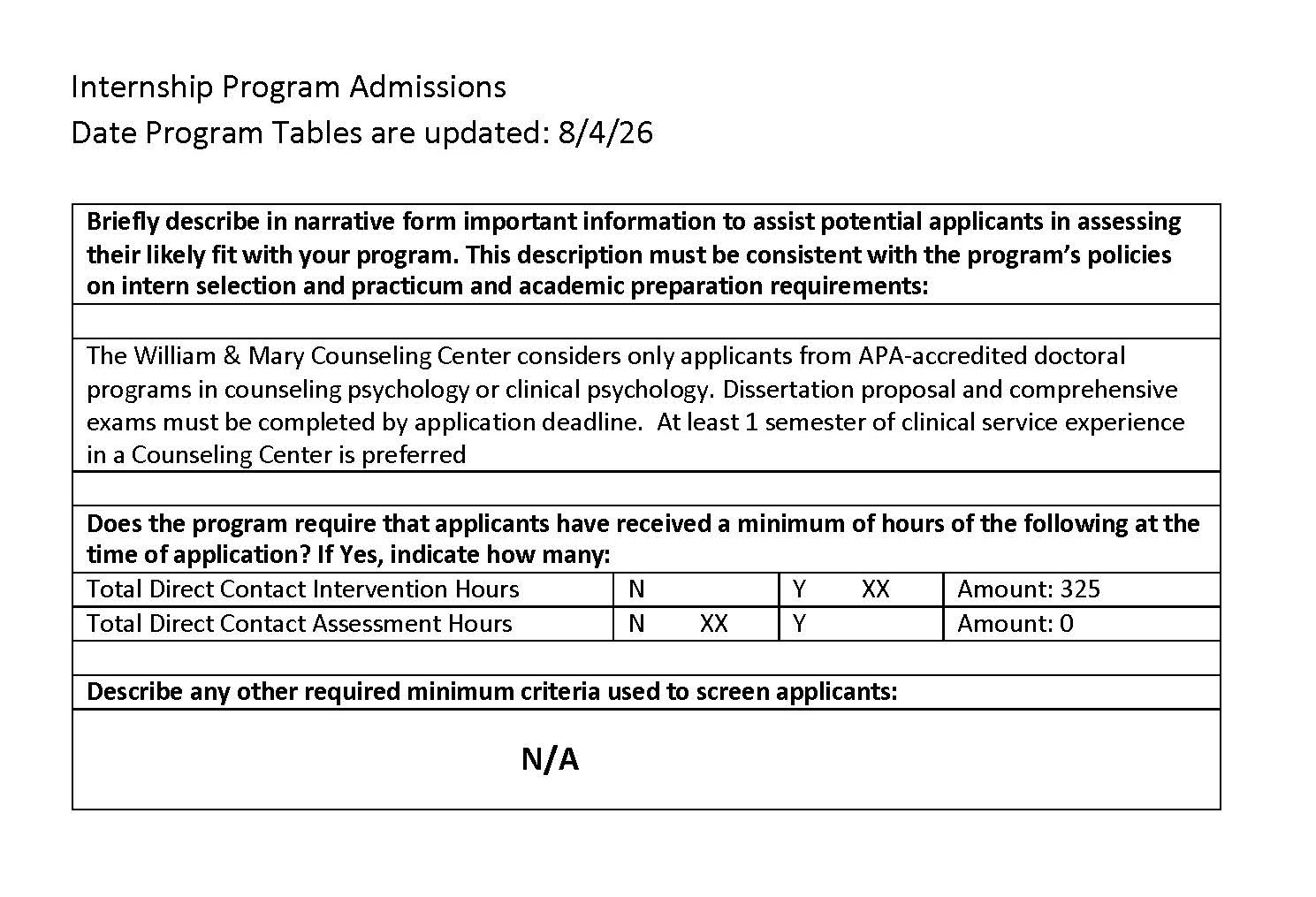
Internship Program Tables
Date Program Tables are updated: 8/4/2026
Application Procedure
We will be participating in the APPIC matching program. All materials must be available for review online by our due date of November 5, 2026 (midnight EST). The Selection Committee will use the following information to determine which candidates will be invited for interviews:
- Completed AAPI as via AAPI CAS at www.appic.org
- Cover letter explaining why you believe you would be a good fit with the internship program at the William & Mary Counseling Center. Be specific about your goals for internship and how our program - in particular - will help you meet these goals.
- Three letters of reference with at least two from people who have supervised your clinical work. References should reflect your most recent work if possible.
This internship site agrees to abide by the APPIC policy that no person at this training facility will solicit, accept, or use any ranking-related information from any intern applicant.
Interviews
Dates of interviews are communicated to selected applicants via email and are offered via a virtual (Zoom) format. Applicants who receive an interview offer are to schedule their interview through an online scheduling platform where they will select their preferred day. Scheduling of interview days occurs on a first-come, first-serve basis. The interview starts with an introduction to the selection committee (Training Director, permanent staff/supervisors, and interns) and a thorough description of the agency and the work we do. The interview continues with two individual meetings during which interview teams (2-3 per team) ask the applicant questions. Applicants then have a meeting with current interns and end with time with the Training Director. A virtual lunch meeting may also be included in the course of the interview day. There are opportunities for applicants to ask questions during the different components of the interview. It is our goal that, by the end of the interview day, applicants have a good sense of who we are, how we work, and the specifics of our training program. We believe that a good fit is predictive of interns' satisfaction and success during internship; as such, we have developed an informative, transparent, and thorough process by which our site and our applicants can evaluate degree of fitness.
Based on William & Mary Human Resources policies and congruent with APPIC Match policies, appointments of applicants to internship positions will be contingent upon the applicants satisfying a background check. Psychology interns are classified to be in "sensitive" positions, as such, criminal history checks are required. Information collected from the following databases: Sex Offender registry, County Criminal database (Felony, Misdemeanor and Other Offenses), Federal Criminal database (Felony, Misdemeanor and Other Offenses), National Criminal database, are reviewed in this process. Violent crimes, identity theft, felony charges, domestic abuse, are examples of offenses that would interfere with someone being hired for positions requiring criminal history checks. These procedures are carried out after the Match and solely for matched interns. Please see APPIC Match Policy #6b for more information.
Accreditation
The William & Mary Counseling Center is accredited by the American Psychological Association through 2027. We are also ACCTA and APPIC members and the Counseling Center is accredited by IACS (International Association of Counseling Services, Inc.).
For information regarding our APA accreditation, please contact the APA Commission on Accreditation with the following information:
Phone: (202) 336-5979 or (202) 336-6123 TDD
Web: http://www.apa.org/ed/accreditation/
Email: apaaccred@apa.org
USPS: 750 First Street, NE, Washington, DC 20002-4242
Training Year
The internship training experience begins on August 1st (unless it falls on a Saturday or Sunday; in this case, internship starts the following Monday) and ends July 31st. During the internship year, interns will accrue and document a minimum of 2,000 professional hours, of which a minimum are to be 500 hours of direct clinical service during the internship year.
Positions
The Counseling Center provides 3 internship positions.
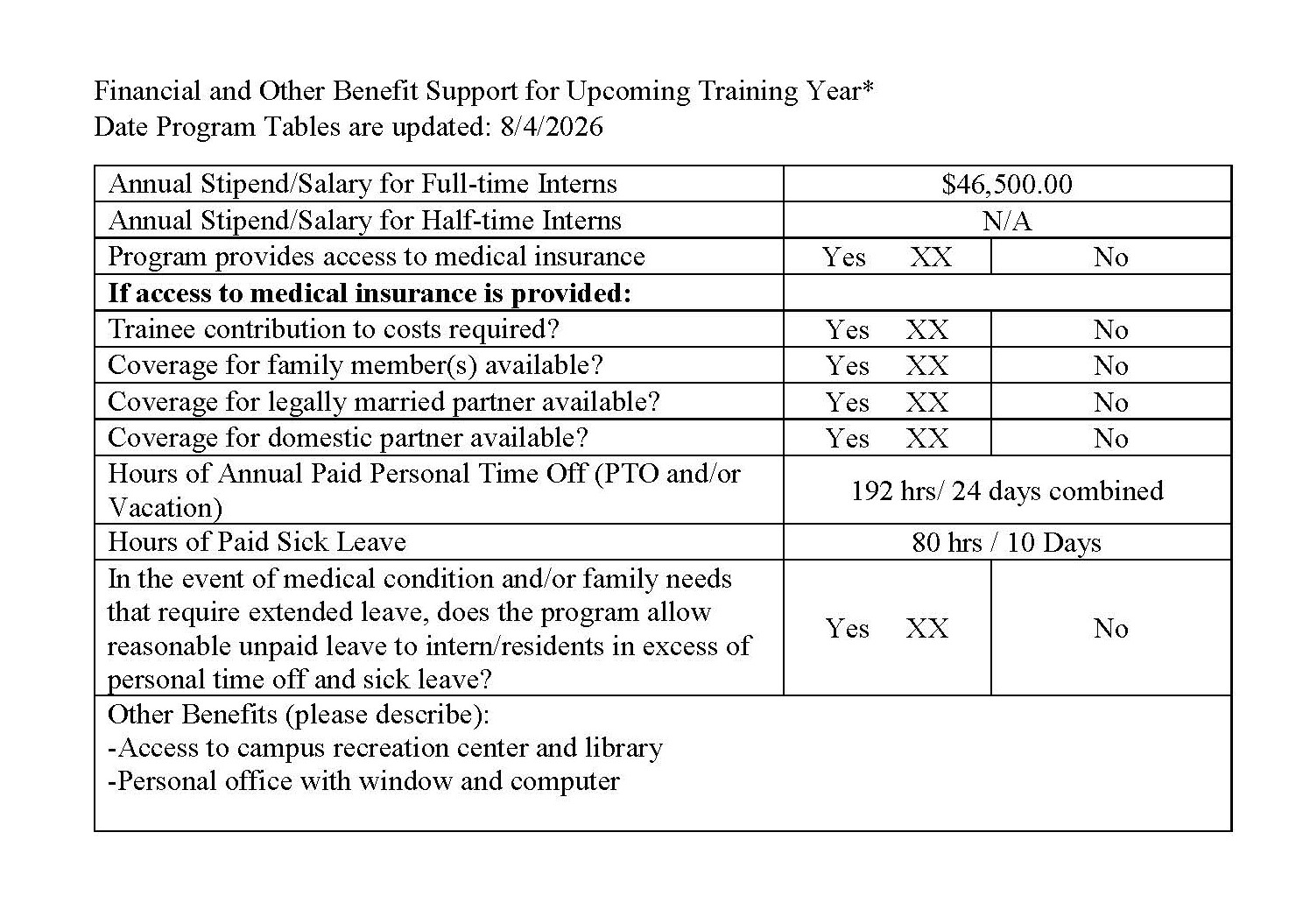
Stipend and BenefitsPolicies/Procedures
Additional information regarding the internship training can be found in the Training Manual.
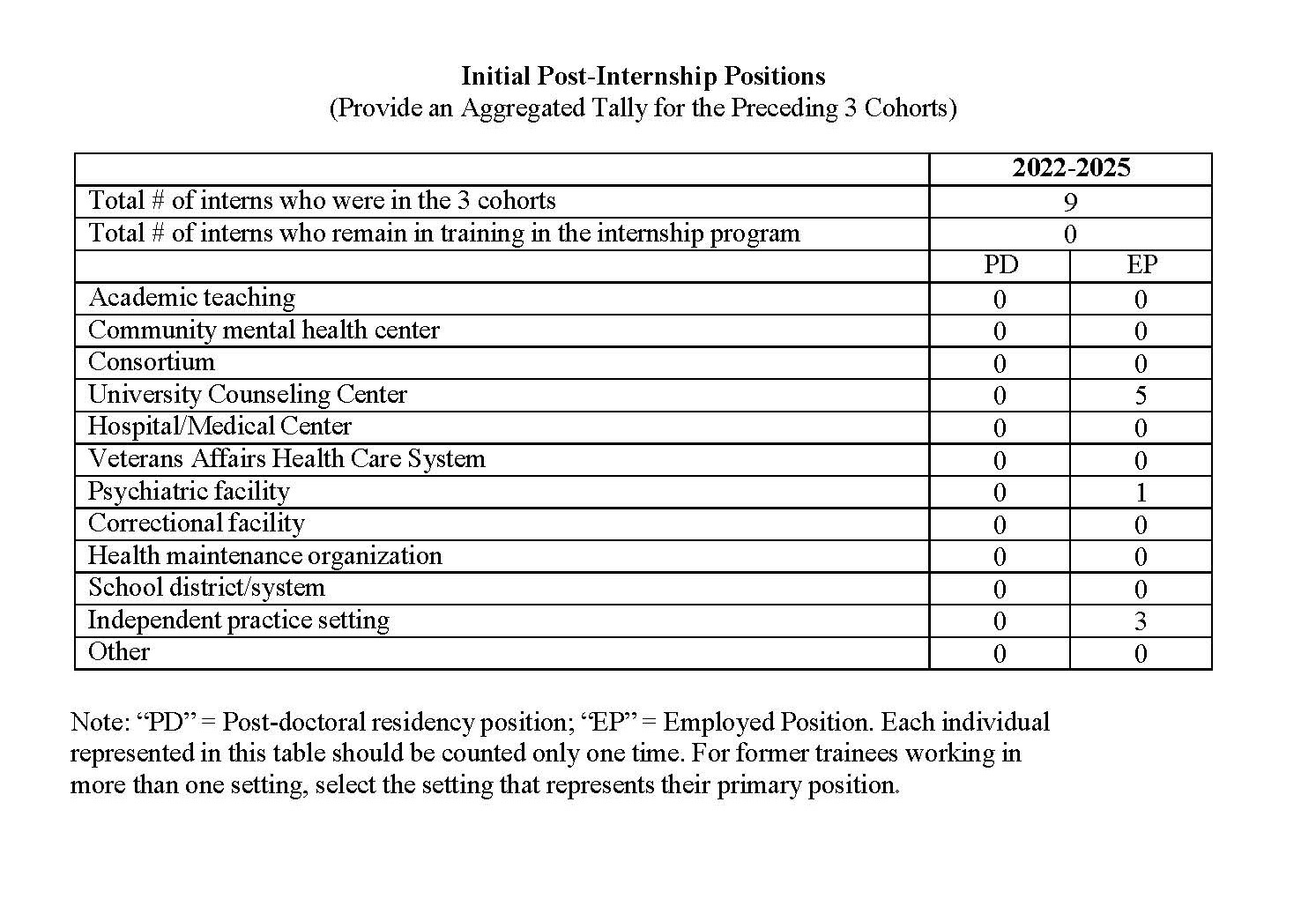
Initial Placement Data
Initial Post Internship Positions 2021-2024
Date Program Tables are updated: 8/4/2026
Contact Information
Alexandra Pappas-Bourdage, Ph.D.
Associate Director and Director of Training
Counseling Center
William & Mary
P.O. Box 8795
Williamsburg, VA 23187-8795
Phone: (757) 221-3620
Fax: (757) 221-3615
Email: agpappas@wm.edu
|
 Skip to main content