 Skip to main content
Alumna Abroad
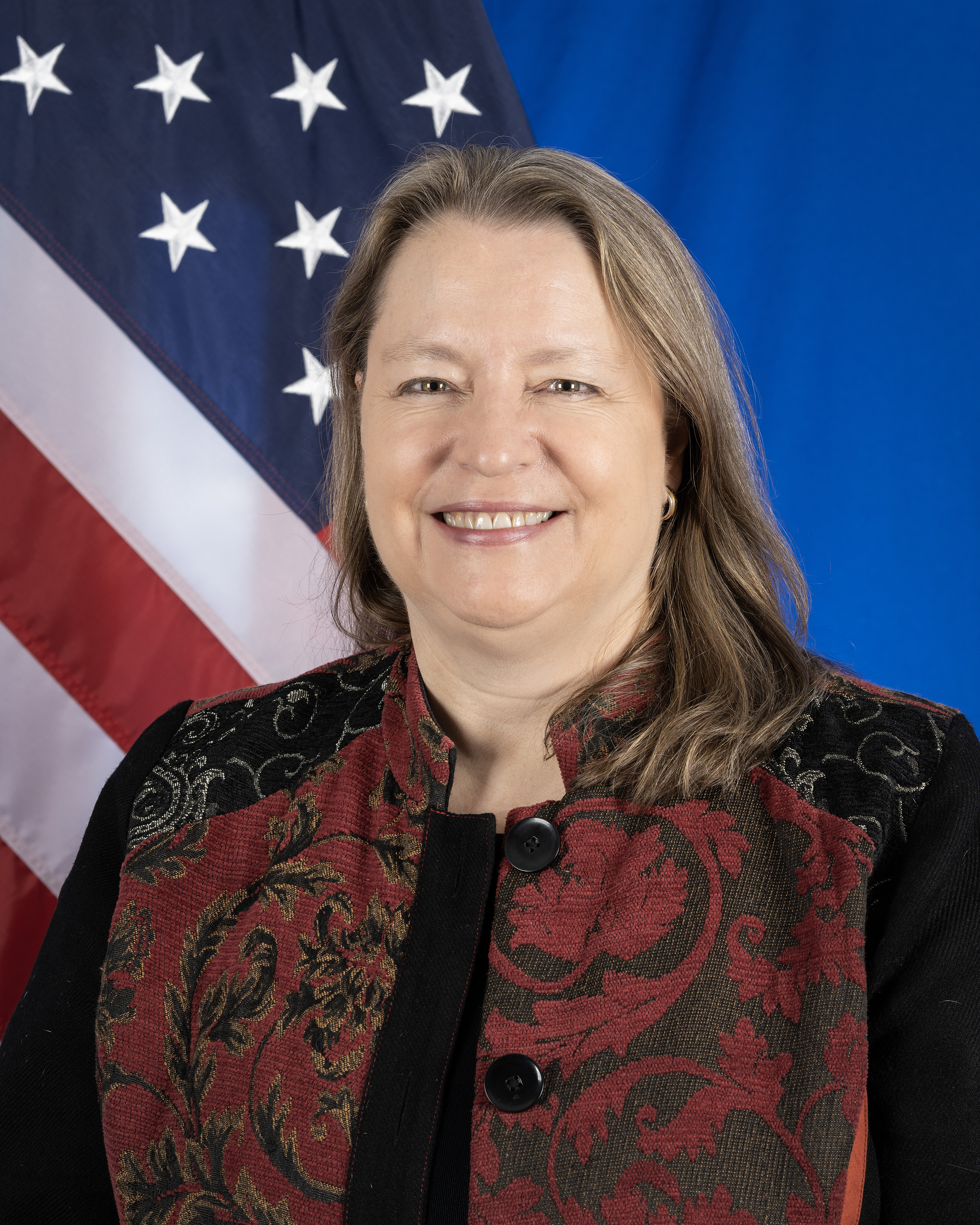
Q&A with Ambassador Marie Damour '87, Ambassador to the Republic of Fiji, Kiribati, Tonga, Nauru and Tuvalu
Where were you born? What do you consider your hometown?
I was born in Ft. Knox, KY when my father was stationed there as an officer in the U.S. Army. We lived in four States before I was four, so I consider Pittsburgh, PA my hometown as that’s where I lived the longest. Go Steelers!
Why did you choose to attend William & Mary?
For a few reasons, really. We moved to Virginia when I was a junior in high school, so it was in-State for me and only about an hour from home. But the main reason was my love of history and the knowledge that W&M had a terrific liberal arts program. I didn’t have a clear idea of what I wanted to focus on in university, so the program there was perfect for helping me discover what I was passionate about.
What was your major? Did it prove useful in your future career(s)?
I double-majored in history and government – there was no International Relations program when I attended – and I chose those because they interested me. I loved the courses. I discovered subjects I’d never thought about before, like foreign policy and international law. I loved both disciplines and couldn’t choose between them, so I pursued both.
Did you have a favorite course or professor while you were at W&M?
There were so many courses that I loved and remember very fondly, but if you force me to pick one, I’d say Professor Ward’s U.S. Foreign Policy course. I think I was initially waitlisted for it as a sophomore, and I’m so glad I was able to get in. I didn’t know at the time that I would make diplomacy my career, but that course probably set me on the path.
Did you study abroad while you were a student? Is so, where and why?
I did not, and it’s one of the few things in life that I will always regret – that I didn’t take advantage of that opportunity.
Do you have a favorite memory or memories of your time at W&M?
So many. From freshman year in Dupont Hall, to two years living in the Creative Arts House, to all the terrific courses that I took. But if there is an iconic memory for me, it was going to the Cheese Shop to get bread ends and sauce for a picnic in Crim Dell. And avoiding the attack ducks who liked those too.
Why did you pursue a career in the foreign service?
After W&M, I went to American University in Washington, DC, to pursue a Masters in International Relations because those were the courses I enjoyed the most. I didn’t have a career goal in mind at that time either, but I knew I wanted to learn more. While living, working, and studying in DC, I met people who were in the Foreign Service. Through talking to them about what they did, I became convinced that was what I wanted to do with my life. It’s thanks to those people who probably never knew the influence they had on my decision.
In your confirmation hearing in the Senate for your current position, you said that public service was an important value in your family. Would you like to share a little about that?
I have numerous family members who served in the armed forces, including my father. Several others are in federal service, and my mother was an occupational therapist for a school system in Virginia. It just seemed that public service was a way of making a living while contributing meaningfully to the community.
To many Americans, Fiji evokes an “island paradise” or vacation destination. You are in a unique role, in that the U.S. Embassy in Suva – which is accredited to Fiji, Kiribati, Nauru, Tonga, and Tuvalu – represents and works with many Pacific Island countries and territories and governments. What is the embassy’s role – and it is unique in interfacing with multiple entities? That seems to be especially challenging. Has it been?
At its core, the Foreign Service serves two basic functions – to represent the Government and people of the U.S. to foreign governments, people, and international organizations; and to share information and perspectives we garner on those governments and organizations with decisionmakers in Washington so they can formulate policy with the best data available. Because Embassy Suva covers numerous countries as well as the Pacific Islands Forum, our job is a little more complex, but those core responsibilities remain the same.
What would you like our readers to know about Fiji, Kiribati, Tonga, Nauru and Tuvalu – its people and culture and challenges as well as opportunities – a fuller picture of the region.
The real joy of my job is that I learn something new every day. Probably the most interesting thing I’ve learned here is how different all the countries of the Pacific Islands are from each other. We have a bad habit of talking about “the Pacific Islands” as if they are all the same. Living here, you quickly learn they all have unique histories, cultures, languages, challenges and opportunities. It’s one of the unexpected beauties of the region.
This year is the 50th anniversary of the end of the Vietnam War. You served in Ho Chi Minh City, and your father served in the Army in Vietnam. Has the anniversary evoked any thoughts or memories or your time in Vietnam or what the role of the U.S. is in that region today?
So many good memories of Vietnam. Because of my father’s service there, it was a special privilege to live and work in HCMC for about five years over the course of my two tours. My greatest realization was probably understanding the remarkable things we can accomplish if we acknowledge the shared tragedy of the past while being committed to building a positive future together. It’s always shocking for me to realize that I’ve been in the Foreign Service longer [32 years] than we’ve had bilateral relations with Vietnam [30 years].
You have worked five different regions of the world in a variety of leadership and policy-making roles – from London to Iraq; Paris to Mauritania; Brazil to New Zealand. Did you expect that’s where your career would take you? Has there been a common thread to your postings? Does any region have special meaning or connection for you?
I had exactly zero idea of where I would be going when I first started! The common thread of my career is picking interesting jobs in interesting places. Each posting becomes my favorite, which means I’m either very adaptable or very fickle.
How do you think your experience at W&M has affected your life and decisions you have made?
I attribute a great deal of my success to what W&M gave me. The single most useful thing I learned for my FS career came out of the first words spoken by the professor in my History 101 class – “there is no such thing as the history of anything; only a history depending on who recounts it.” That has been so useful for analyzing events during my postings overseas. And the liberal arts, multidisciplinary approach that W&M encourages informed my wider choices in life. I like to think I’ve had a wide-ranging interest in the world around me that enriches my life.
Do you have any advice for current students?
Enjoy everything that your W&M experience has to offer. Don’t worry so much about what comes after.
Is there any advice you wish you had received?
Be more ambitious for yourself. Not necessarily in the sense of career goals, but in pursuing possibilities. I wasn’t very creative in my approach to what I imagined my life would be. Certainly, anything I envisioned for my future when I was between the ages of 17 and 21 is absolutely not where I find myself now. And I couldn’t be happier that’s the case.
Do you think international experience as a student is helpful in future life and career?
Absolutely. The broader your experience, the more resources you can draw from when those curveballs come your way.
Anything else you would like to add?
W&M has a long history of preparing students for the Foreign Service. I feel confident speaking for my FS colleagues that we’d be happy to talk to anyone interested in learning more about the career. Don’t hesitate to reach out.