Close menu William & Mary

Black History Month: Study Abroad

In celebration of Black History Month, the Global Education Office is highlighting and saluting some of the prominent Black Americans who have studied abroad. Each week we will post below the name of our honoree and their story.

2026 Honorees

We also invite you to view previous honorees to learn about their extraordinary stories and experiences studying and living abroad.

202520242023 2022 2021  

Video: Legacy of scientist Dr. Percy Julian (WTHR)

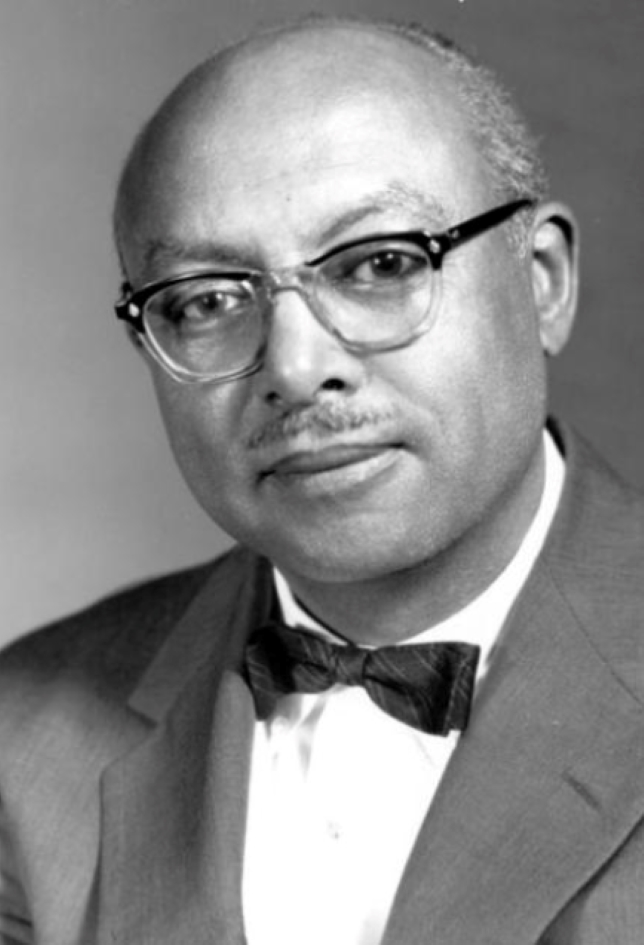
Dr. Percy Julian: Austria

Dr. Percy Julian pioneered the creation of drugs and other chemicals from substances previously found only in plants. His synthesis of physostigmine, found in the Calabar bean, yielded a treatment for glaucoma. From the soybean, he wrested a fire retardant used to douse gasoline fires on aircraft carriers during World War II; the soybean also became the foundation for hydrocortisone treatments for arthritis and for hormonal treatments. In his lifetime, Julian registered more than 130 chemical patents.

Julian was born in Montgomery, Alabama, in 1899. Alabama's educational system was segregated, and public school for Blacks ended after eighth grade. Julian continued his education at a two-year teacher training school for Black students before entering DePauw University in Greencastle, Indiana, in 1916. Julian graduated from DePauw in 1920 at the top of his class. When he applied to Harvard University's PhD program, the leading chemists there said nobody would hire a Black researcher. Julian then taught at Fiske University. He eventually received his master's degree from Harvard, only to be thwarted again when he aimed for a doctorate that would allow him to pursue research. He taught chemistry at several universities before getting Rockefeller Foundation support to pursue his doctorate at the University of Vienna in 1929. 

[Source: National Endowment for the Humanities]

Watch a short video about Dr. Walter Lincoln Hawkins.

Dr. Walter Lincoln Hawkins: Montreal, Canada

Walter Lincoln Hawkins was born on March 21, 1911. He was orphaned as a young child and was raised by his sister.  He attended the acclaimed, all-Black Dunbar High School in Washington, D.C., where he showed promise in math and science and developed a sense of self-confidence that propelled him toward his dreams. Hawkins pursued a degree in chemical engineering at Rensselaer Polytechnic Institute in Troy, New York, from where he graduated in 1932. He went on to complete a master's degree in chemistry at Howard University and a doctoral degree at McGill University in Montreal. His specialization was cellulose chemistry.

After completing his education, Hawkins took on a postdoctoral fellowship at Columbia University. In 1942, he was offered a position at AT&T’s Bell Laboratories in Murray Hill, New Jersey, where he became the first African American scientist on staff.  Over the course of his 34-year career at Bell Labs, he developed a reputation for adding years to the life of plastics, enabling universal telephone service, and, even more important to service providers, making it economical. 

Video by the University of Glasgow: The Life and Legacy of James McCune Smith

Dr. James McCune Smith: Glasgow, Scotland

James McCune Smith (1813-1865)--first black American to obtain a medical degree, prominent abolitionist and suffragist, compassionate physician, prolific writer, and public intellectual--has been relatively neglected by historians of medicine. No biography of Smith exists to this day, though he has been the subject of several essays. Born, in his own words, "the son of a self-emancipated bond-woman," and denied admission to colleges in the United States, his native land, Smith earned medical, master's, and baccalaureate degrees at Glasgow University in Scotland. On his return to New York City in 1837, Smith became the first black physician to publish articles in US medical journals. Smith was broadly involved in the anti-slavery and suffrage movements, contributing to and editing abolitionist newspapers and serving as an officer of many organizations for the improvement of social conditions in the black community. In his scientific writings Smith debunked the racial theories in Thomas Jefferson's Notes on the State of Virginia, refuted phrenology and homeopathy, and responded with a forceful statistical critique to the racially biased US Census of 1840. Frederick Douglass, Gerrit Smith, and John Brown personally collaborated with James McCune Smith in the fight for black freedom. As the learned physician-scholar of the abolition movement, Smith was instrumental in making the overthrow of slavery credible and successful.

[Source: Journal of the National Medical Association]

In 2013, Yaya Alafia played Black Panther Carol Hammie in The Butler. (NPR)

YaYa DaCosta: Brazil

Successful actress, model, business executive and doula, YaYa DaCosta was raised in New York City and landed her first acting job at age eleven in an educational film. She earned a scholarship to Brown, where she concentrated in international relations and Africana studies. After modeling to cover expenses during her junior year abroad in Brazil, she was encouraged by a classmate to audition for America’s Next Top Model. She began shooting the third season of the reality show the day after graduation, driving to the airport in her cap and gown. After that, DaCosta refocused on acting, finding theater work and supporting parts in such films as the Oscar-nominated The Kids Are All Right and the television shows Ugly Betty and All My Children. Her big-screen break came as a student activist in Lee Daniels’ The Butler, acting opposite heavyweights Forest Whitaker and Oprah Winfrey. [Source: Brown Alumni Magazine

Where do you want to go?