 Skip to main content
Co-Creating Soil Maps: A Participatory Approach to Strengthen Indigenous Agriculture in Ecuador
Research Location:
Cotacachi and Puyo, Ecuador
Conservation Partner:
Kinray Hub
Faculty Mentors
Dr. Troy Wiipongwii and Dr. Sapana Lohani
2026 Student Researchers
Naomi Heilen '27, Major: Coastal and Marine Science, Biology; 2026 CRPSofia Meyerle '27, Major: Data Science and Economics; 2026 CRP
Project Description
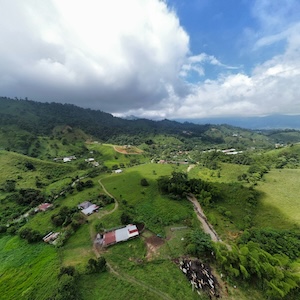
Kinray Hub is a community-driven research organization based in Ecuador that bridges Indigenous knowledge and scientific research to promote regenerative agriculture and climate resilience. As part of a collaboration between Kinray Hub and IIC, William & Mary students are invited to learn from and work alongside the Chichupamba clan and other Indigenous partners in Cotacachi and Puyo, Ecuador, to conduct environmental DNA (eDNA) analysis, agroecological fieldwork, and community education. Students will support fungal diversity research, help manage sustainable farming plots, and co-develop bilingual educational materials, all while learning about their collaborative effort to preserve traditional agricultural knowledge and enhance food security, soil health, and biodiversity in the Andes.
Through collaboration on research, students will explore how to build and nuture relationship-driven partnership and collaboration to support collective conservation learning and outcomes.