 Skip to main content
Exploring Conservation-focused Livelihood Initiatives in Southern Kenya
Research Location:
Implemented: Southern Kenya
Conservation Partners:
Amboseli Ecosystem Trust and the South Rift Association of Land Owners
Past Student Researchers
Sharanya Dutt '28, Major: Business Analytics (2025)Skylar Hartgerink '27, Majors: History and Environmental Policy (2025)
Emma Hugo '26, Majors: Biology and Innovation & Entrepreneurship (2025)
Sydney Hintz '26, Major: Environmental Policy; Major: Integrative Conservation (2024)
Asha Nair '27, Major: Public Policy and Environmental Science (2024)
Aggie Saitta Riggo '24, Major: Innovation for Sustainable Business (Self-Designed) (2024)
Faculty Mentors
Graham Henshaw and Dr. Troy WiipongwiiProject Description
Solutions that balance biodiversity and the livelihoods of local communities is essential for effective and sustainable conservation, yet there lacks a clear framework or shared best practices for how to balance community livelihoods and biodiversity conservation. In collaboration with Amboseli Ecosystem Trust and the South Rift Association of Landowners, W&M students explored lessons learned from conservation non-governmental organizations and local communities about the impact of their enterprise initiatives on conservation and community livelihoods in Kenya.
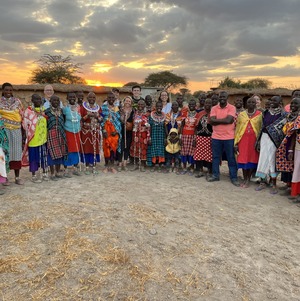
The Maasai communities of southern Kenya play a critical role in climate mitigation and biodiversity conservation. However, in the face of frequent droughts and land conversion, they are forced to adjust their pastoralist practices to balance conservation and the livelihoods of their family. While many conservation NGOs have adopted livelihood strategies to support both conservation and local community enterprises, there is a lack of a clear framework and best practices for how to effectively balance sustainable community livelihoods with conservation impact.
In collaboration with the Amboseli Ecosystem Trust and the South Rift Association of Landowners, a team of William & Mary and Kenyan students documented lessons learned from conservation organizations regarding their enterprise initiatives, viewed through the lenses of conservation, business, and women’s empowerment. In 2024, the team interviewed several women’s collectives in the Amboseli Ecosystem to understand their goals and lessons learned from conservation-oriented businesses. The research emphasized the importance of communication between conservation organizations and women’s collectives, the significance of women’s empowerment in decision-making, and the entrepreneurial capabilities of Maasai women.
In 2025, a team of William & Mary and Kenyan students interviewed conservation organizations and Maasai communities involved in conservation-focused livelihood initiatives across southern Kenya to identify best practices and lessons learned in supporting profitable, conservation-focused enterprises. The lessons learned included the need for local community empowerment in all stages and elements of the enterprise, the importance of sustainable local markets, and clear role definition to ensure the livelihood initiative meet both the conservation and the livelihood goals of local communities. The goal is for this research to support conservation organizations and local communities share lessons learned and promote conversation about how to best balance community livelihoods and biodiversity conservation in the face of global change.
Project ID - Format
24-005-24 - CRP Year
24-005-25 - CRP Year