 Skip to main content
William & Mary awarded funding to support dining sustainability efforts
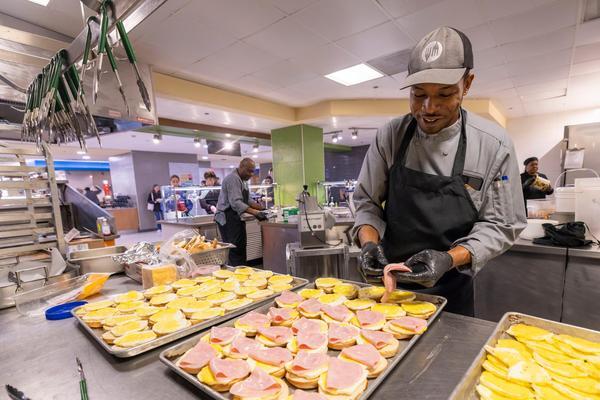 William & Mary has received a funding award from the Virginia Department of Environmental Quality (DEQ) to support a new food recovery initiative in campus dining, advancing the university’s efforts to reduce waste and strengthen sustainability practices.
The Food Rescue & Composting Program Subaward, designed to reduce food waste sent to landfills by investing in recovery and composting solutions at colleges, universities and state agencies, awarded William & Mary $41,121 to support the purchase and installation of a commercial-grade industrial blast chiller in West Woods Dining Hall. The unit is expected to be installed by August, reaching full operational capacity within the following year, and will increase W&M Dining’s ability to safely recover and repurpose prepared food.
“W&M Dining shares in the university’s commitment to sustainable practices,” said Jackson Mathews, Assistant Vice President for Auxiliary Services. “This award will not only elevate our daily operations, but will allow for long-term sustainable menu planning.”
With the addition of the blast chiller, W&M Dining will implement a Cook–Chill system that allows food to be rapidly cooled and safely stored for future use. The technology can bring cooked food through the temperature danger zone in under 90 minutes, preventing microbial growth and extending usability for several days.
The university estimates that the new system will allow for the recovery of approximately 5,000 pounds of cooked food each year. This builds on existing efforts that diverted more than 234,000 pounds of material from landfills during the 2024-25 academic year.
“Not only will this reduce food waste, but it will allow W&M Dining to support food insecure community members by increasing the amount of available options,” said Mathews.
Rapid cooling is a key requirement for donating prepared food, and the new system will allow W&M Dining to safely provide more meals to local food banks and organizations serving food-insecure populations in the region. The equipment also supports increased sourcing from local farms by allowing kitchens to process and preserve larger volumes of seasonal, perishable ingredients. Students will play a role in the initiative’s implementation by supporting food recovery processes and tracking outcomes.
As part of a broader commitment to sustainability and resource stewardship, the initiative reflects William & Mary’s focus on practical and scalable solutions that reduce waste, support community partnerships and enhance campus operations.