 Skip to main content

Dr. Mara Karlin: Legacies of Post 9/11 Wars
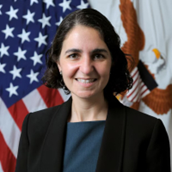 On September 18th, the Public Policy Program hosted Dr. Mara Karlin, one of the country’s leading voices on national security strategy, defense policy, and civil-military relations. The evening lecture gave students and faculty the opportunity to hear from a scholar-practitioner who has shaped American defense strategy at the highest levels of government.
Dr. Karlin’s career spans more than two decades of public service and academic leadership. She has advised six secretaries of defense from both Republican and Democratic administrations, served as the Assistant Secretary of Defense for Strategy, Plans, and Capabilities, and later as Acting Deputy Under Secretary of Defense for Policy. In those roles, she oversaw the development of the National Defense Strategy that guides the $850 billion defense budget and managed an office of more than 700 personnel. She is also the author of two books and currently teaches at Johns Hopkins University’s School of Advanced International Studies, where she co-leads the Security, Strategy, and Statecraft program. In addition, she is a Visiting Fellow at the Brookings Institution.
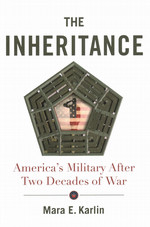 The focus of her lecture was her latest book published in 2021, The Inheritance: America’s Military After Two Decades of War. Drawing on extensive interviews with senior military leaders, Dr. Karlin examined the legacies of the wars in Iraq and Afghanistan, which she argued continue to shape American military institutions and their relationship with the public. She emphasized that, despite the length and cost of these conflicts, there has been remarkably little public debate or systematic reflection on what lessons they leave behind. “We have a military that can find, fix, and finish any target almost anywhere in the world,” she noted, “but a public that doesn’t know, understand, or care about what its military does.”
According to Dr. Karlin, the military’s experience of the post-9/11 wars can be understood through three interrelated crises. The first is a “crisis of confidence,” as senior officers wrestle with ambiguous outcomes and attempt to define success for themselves, sometimes defining it narrowly as the survival of their troops rather than as clear victory. The second is a “crisis of caring,” as the gap widens between the American public and the military. Fewer Americans serve, and the consolidation of military bases means that many communities have little day-to-day contact with military personnel. Public support, she pointed out, has declined steadily since 2018, leaving the armed forces increasingly isolated. The third is a “crisis of meaningful civilian control,” which arises from tensions between military leaders and their civilian counterparts in the national security establishment. In her research, Dr. Karlin found a tendency among some senior officers to view civilian policymakers as obstacles rather than partners, framing disagreements as a clash between “best military advice” and political decision-making.
These crises, she argued, carry profound implications for democracy. A society that is disconnected from its military risks both overreliance on professional soldiers and a lack of accountability for decisions about war and peace. Dr. Karlin urged the audience to reflect on how to preserve norms of civilian oversight, strengthen transparency, and learn from the 9/11 conflicts in order to prepare for future challenges. “How do we think about lessons learned from the 9/11 wars?” she asked. “We often analyze other nations’ wars but not our own.”
The lecture concluded with a Q&A session, where students asked about emerging technologies, such as artificial intelligence and unmanned drones, and their potential to reshape decision-making in future conflicts. Dr. Karlin highlighted the promise and perils of AI, which can accelerate the speed of battlefield analysis but also create overwhelming complexity for decisionmakers by offering immense quantities of information on which to base decisions. Other questions focused on the growing partisan divide in public perceptions of the military, as well as the recent domestic deployment of troops in Los Angeles and Washington D.C. When asked what younger generations can do to address the “crisis of caring,” she encouraged students to engage directly with peers in ROTC or others with military experience as a way to bridge the widening gap between civilians and service members.
Dr. Karlin’s visit offered a rare chance to learn from someone who has operated at the intersection of scholarship and policymaking. Her reflections on the legacies of the post-9/11 wars challenged students to think critically about accountability, civil-military relations, and the responsibilities of citizens in a democracy. As the United States confronts new global challenges, from great-power competition to rapid technological change, Dr. Karlin reminded the audience that the lessons of the last two decades must not be forgotten.