Skip to main content

Celebrating Día de los Muertos with culture, tradition and community
Día de los Muertos (Day of the Dead), celebrated Nov. 1-2, is a special time of the year for many Latin American communities to honor the memory of loved ones by displaying food and personal items on an altar to celebrate the lives they lived while on earth. 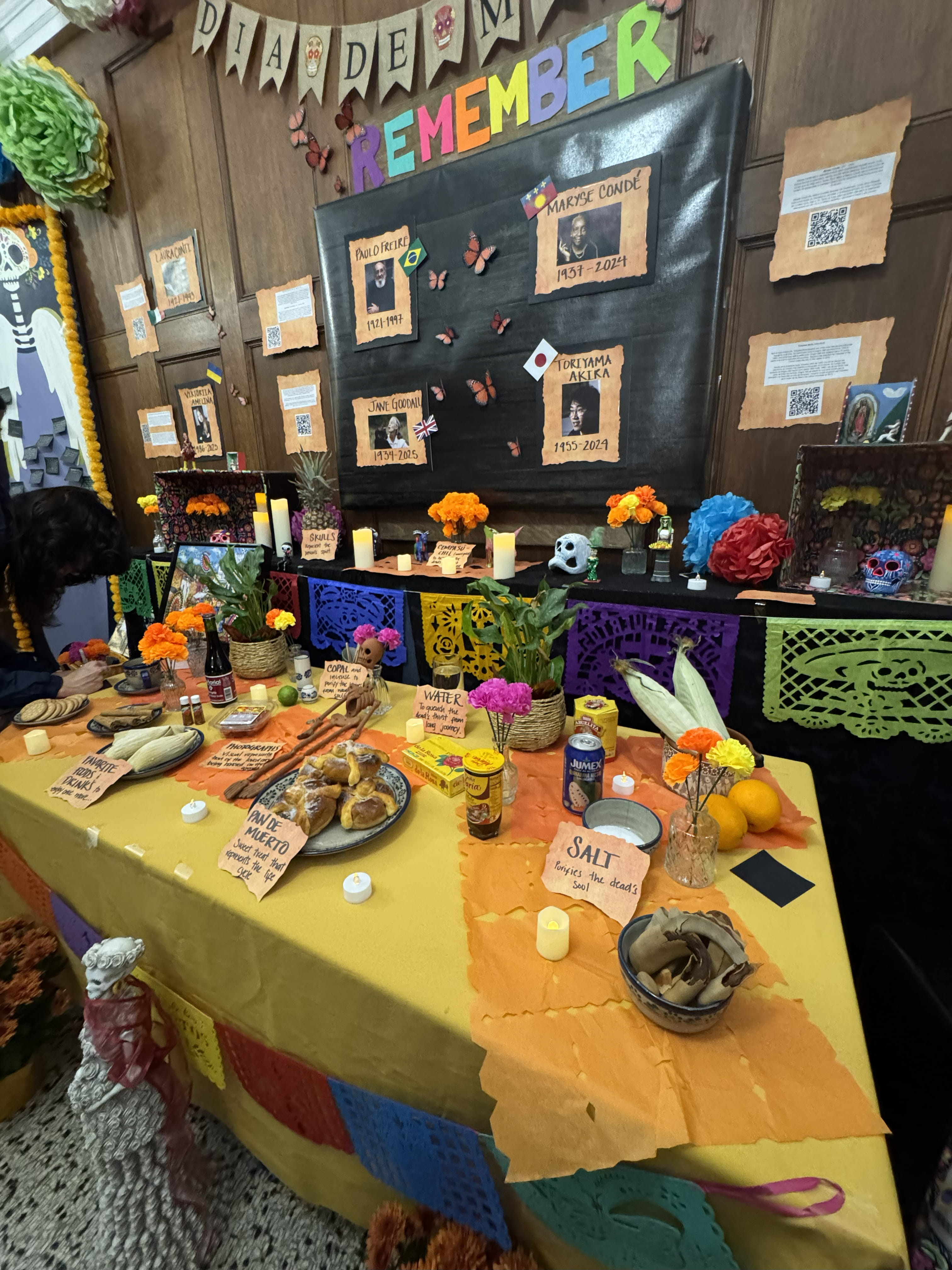
Around 50 students, faculty and staff gathered around the altar in the lobby of Washington Hall on Oct. 28 for an intimate Día de los Muertos ceremony organized by the Modern Languages and Literatures department and Hispanic House, or La Casa Hispanica. 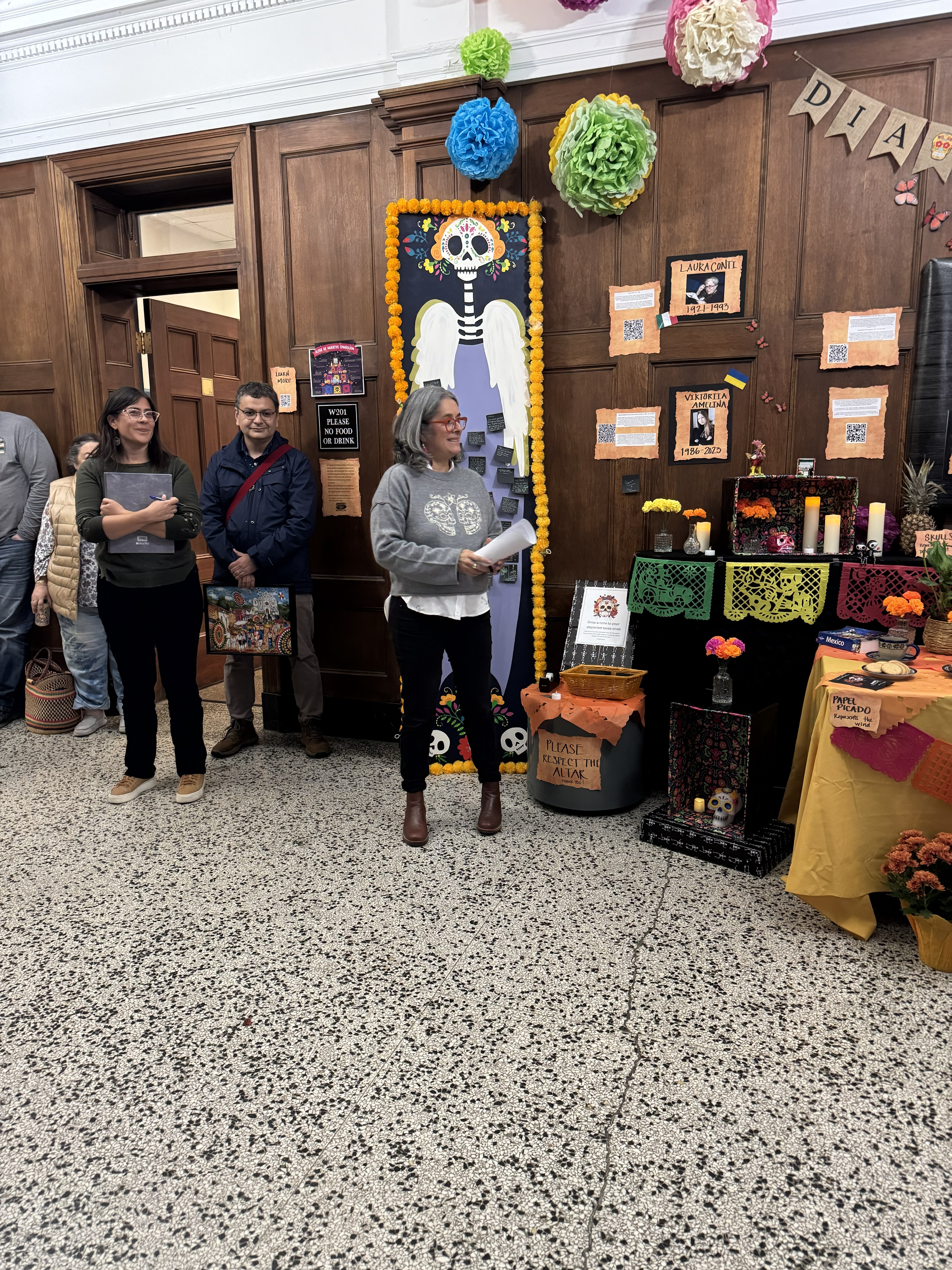
Paulina Carrion, Hispanic Language House advisor and teaching professor of Hispanic Studies, explained to the crowd that the Día de los Muertos tradition dates back to early Mesoamerican civilizations, such as the Aztecs, who believed in the cyclical nature of life and death, and that death signified a soul's journey to another realm. 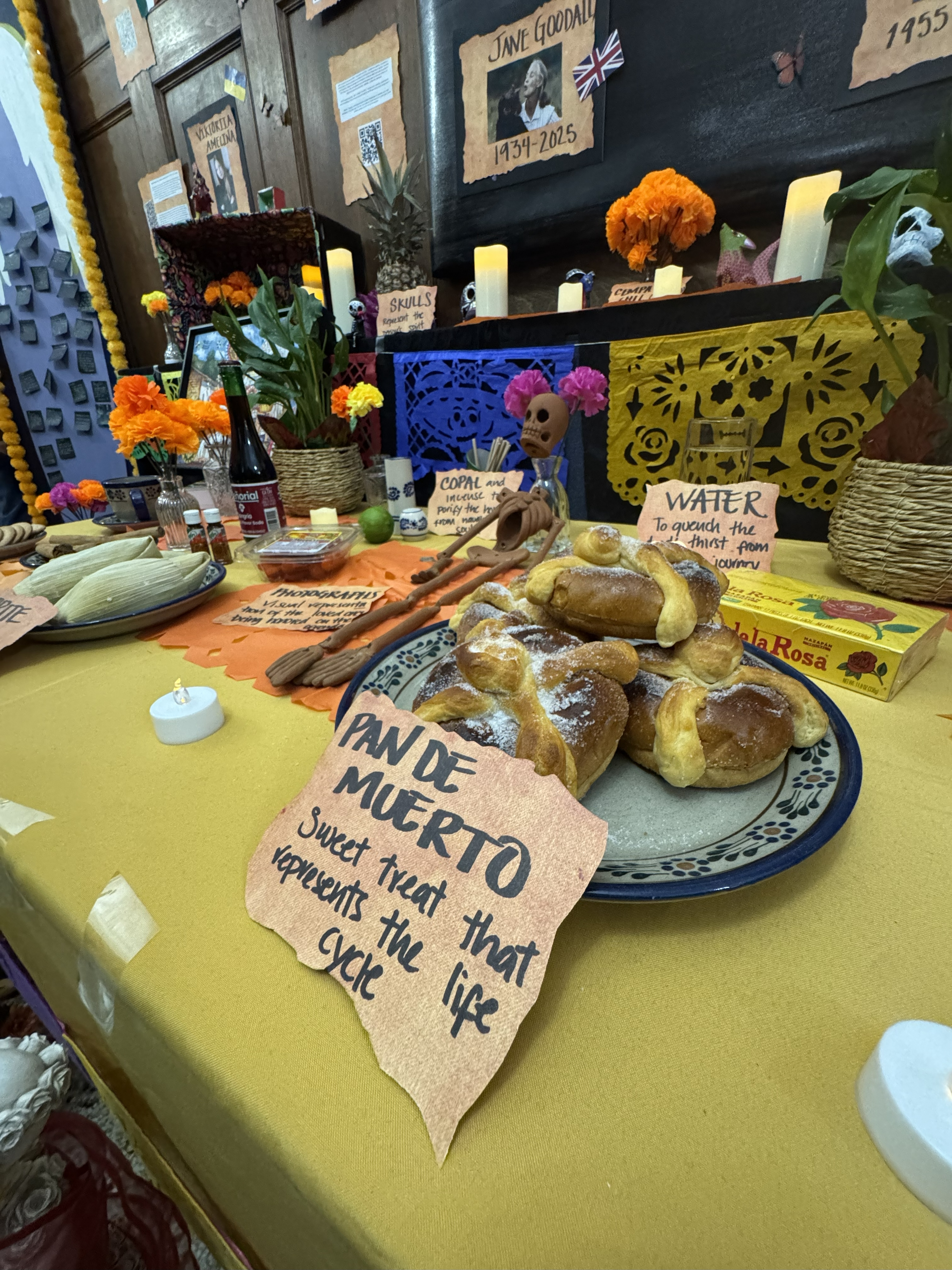
“It is a time to reflect on the fragility of life and that death is a natural part of it, and to remember that our departed loved ones remain with us, they visit us, and they bring their memories and echoes of their time on earth,” Carrion said. 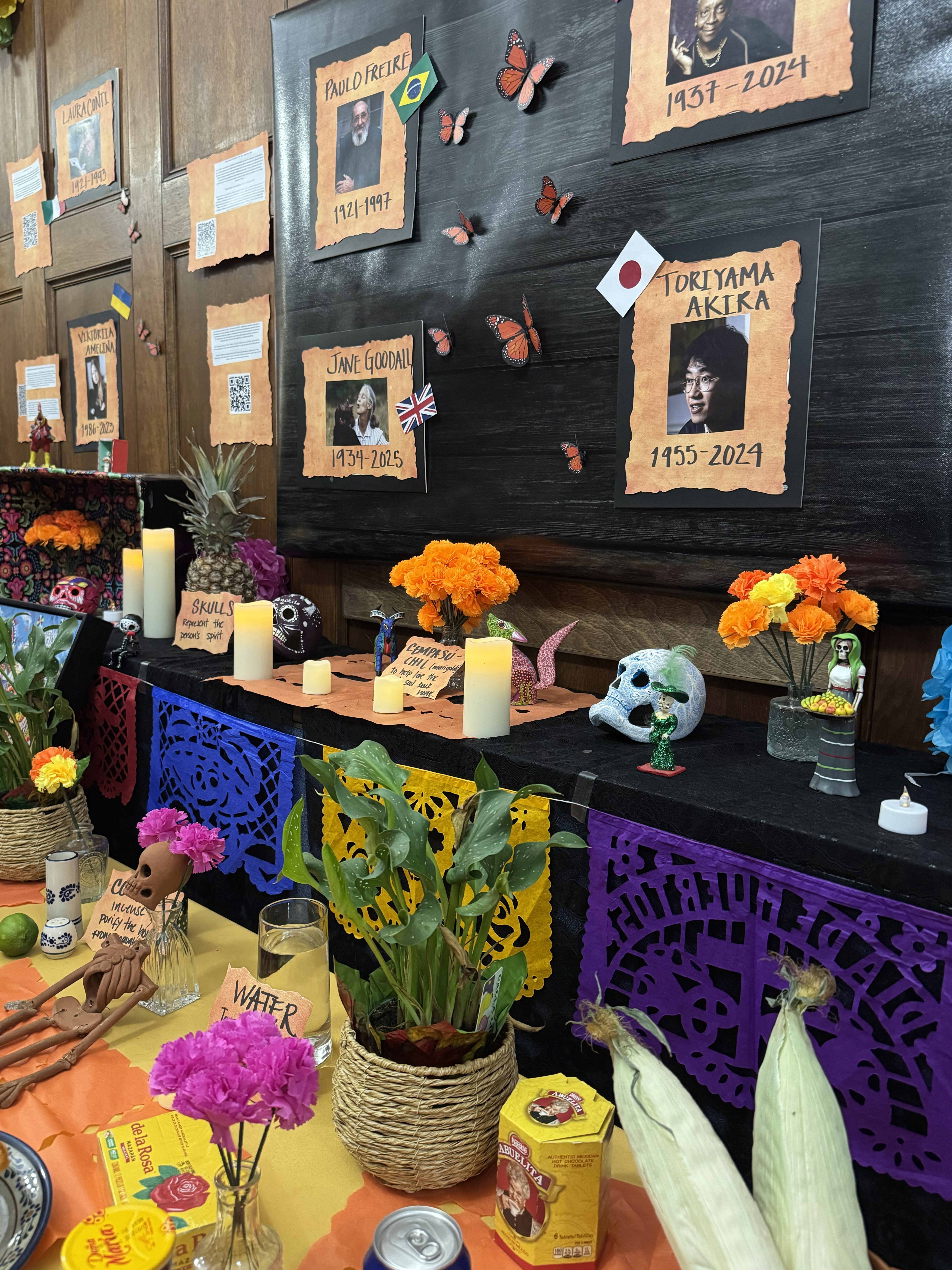
Anthropology professor Sergio Palencia shared a painting which depicted the Guatemalan tradition of flying kites as a means of communicating with ancestors. Afterwards, students had the opportunity to make their own kites in honor of loved ones. 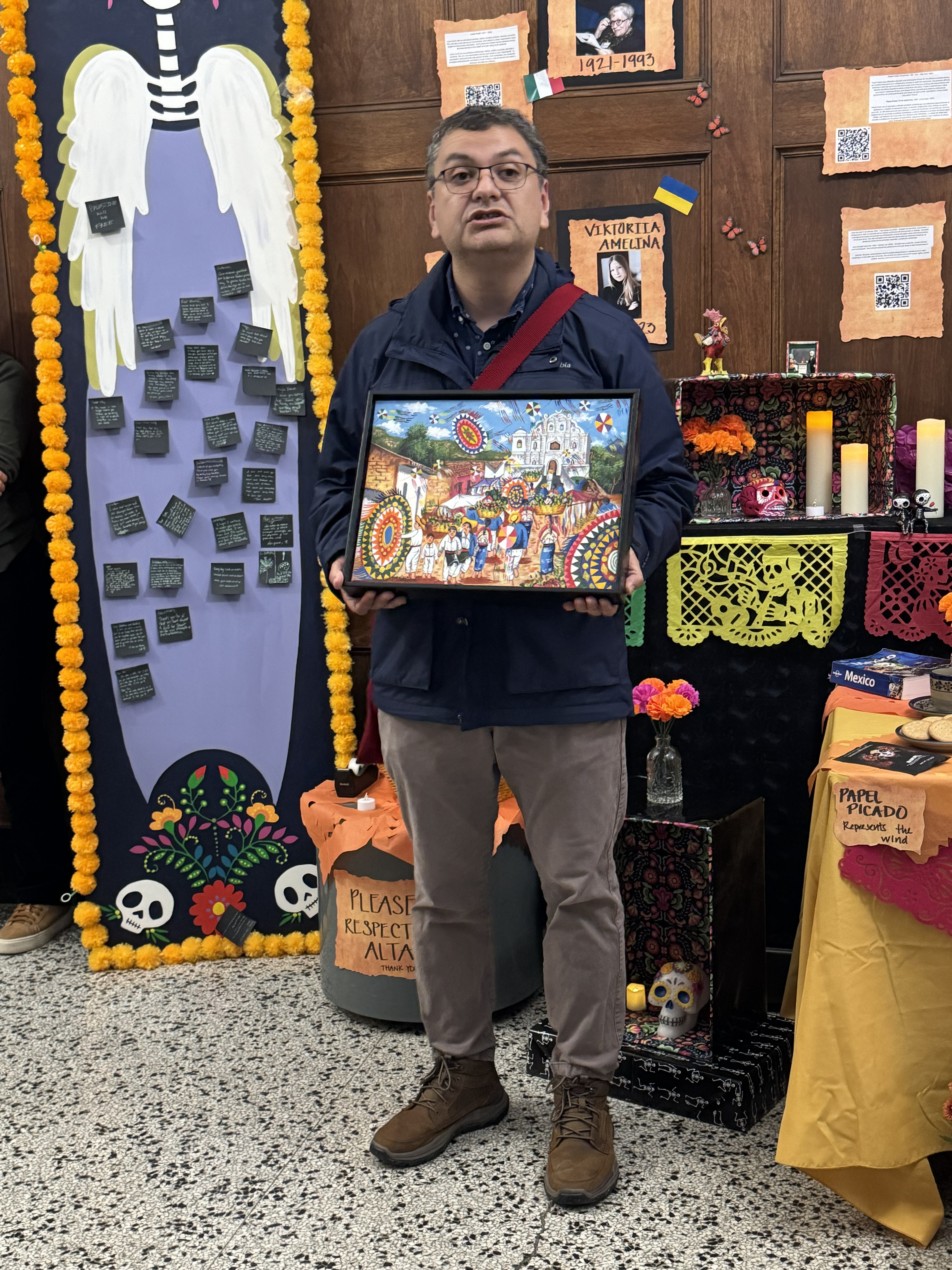
Amanda Sobrado ‘27 captivated the audience with her rendition of “La Llorona,” a beloved Mexican folk song from the Oaxaca region traditionally performed during Día de los Muertos. Sobrado was joined by associate professor of Hispanic Studies John Riofrio, who strummed along on the guitar. 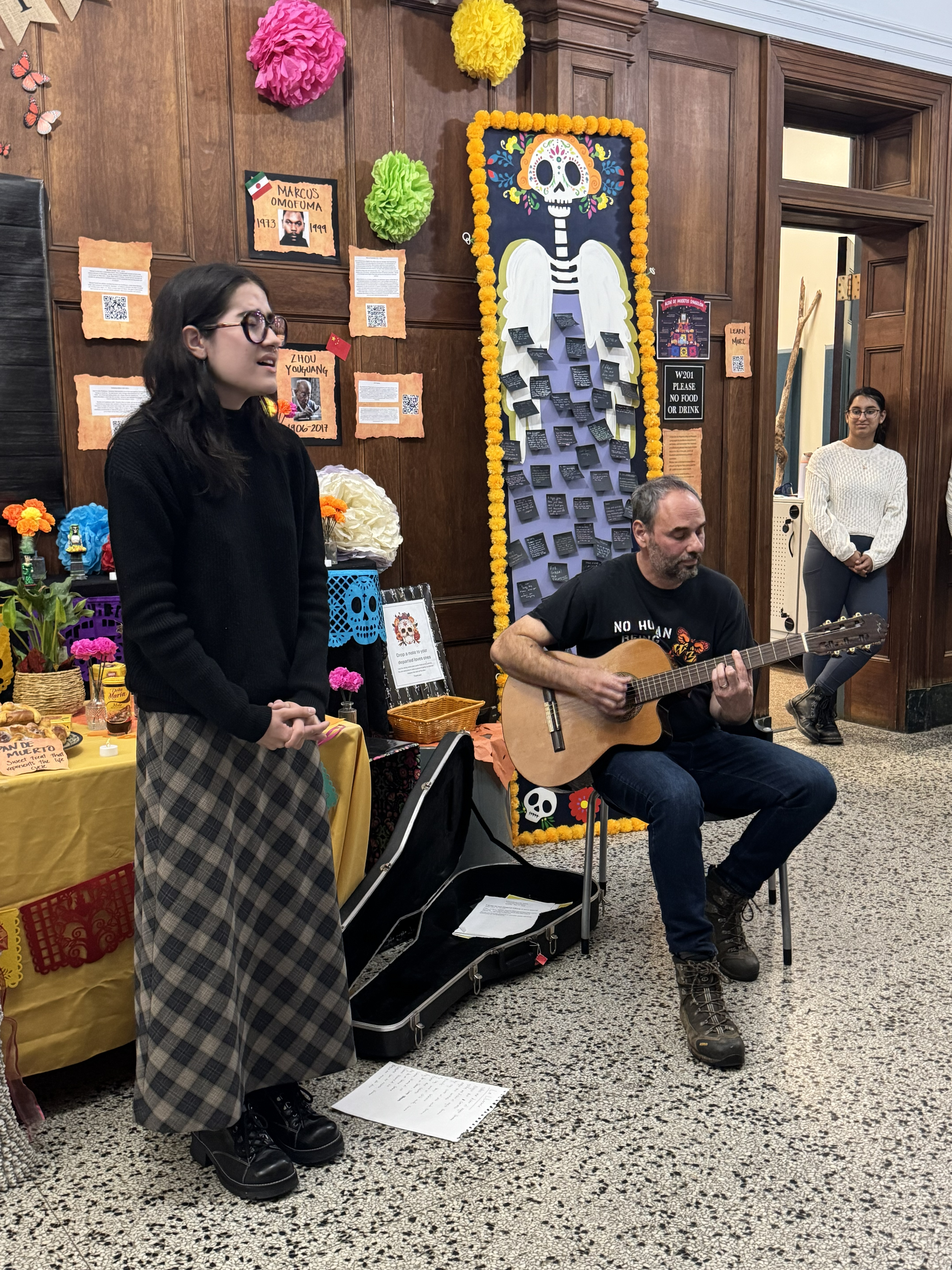
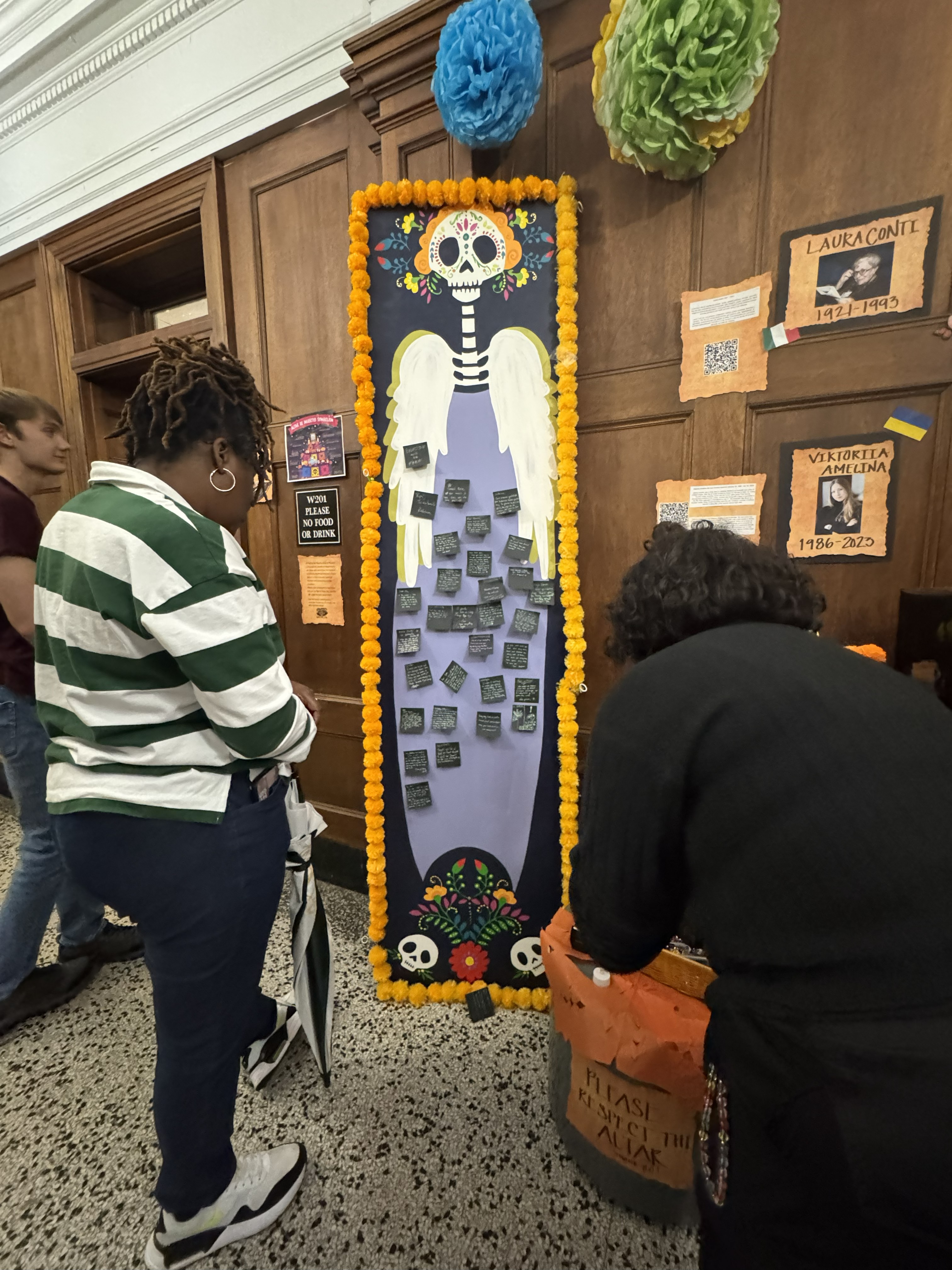
After the ceremony, guests were invited to write their own notes to a deceased loved one for display on the altar. 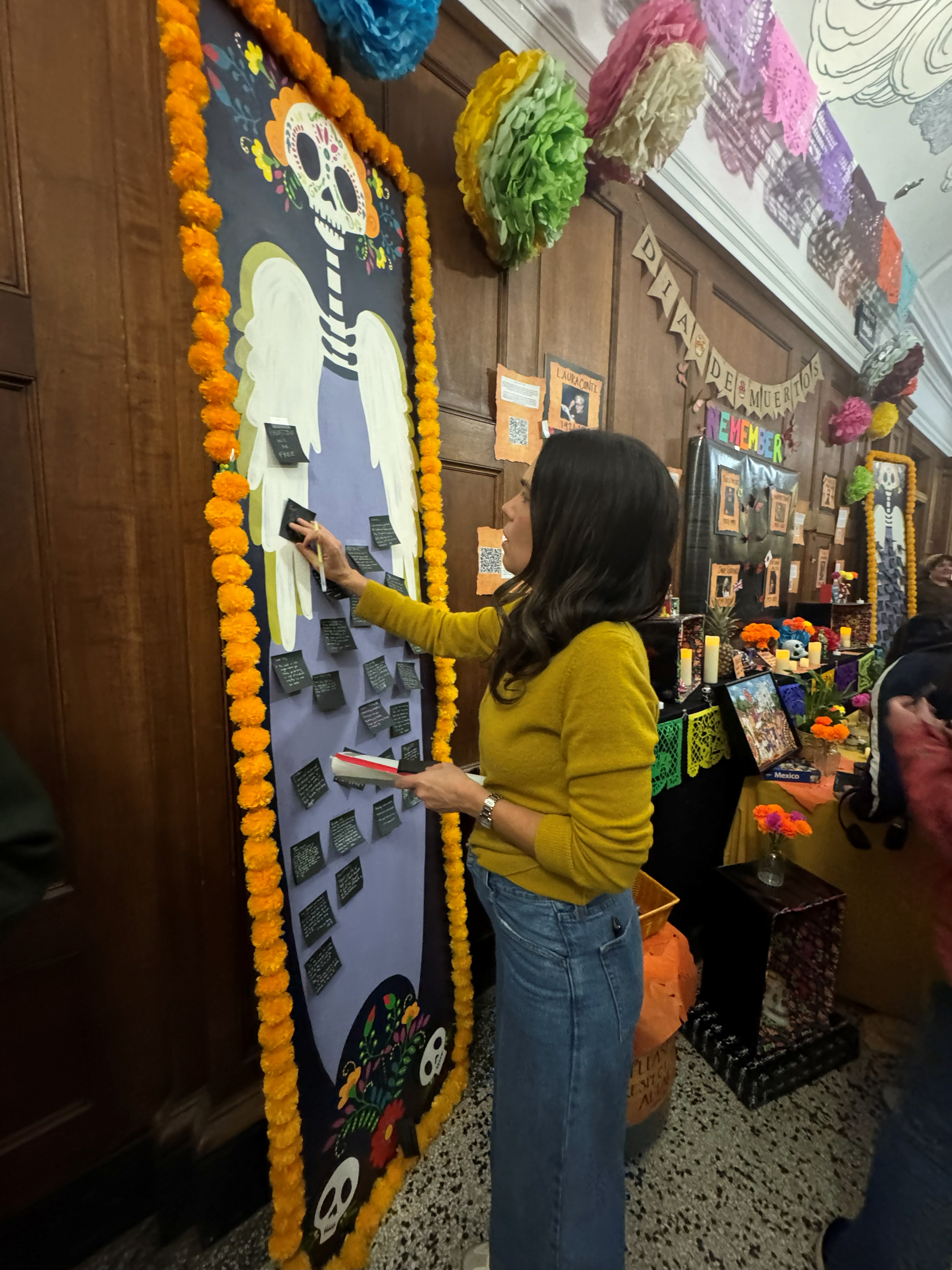
The messages left on the altar were deeply personal, allowing students and faculty to reflect on their families and this meaningful cultural tradition. 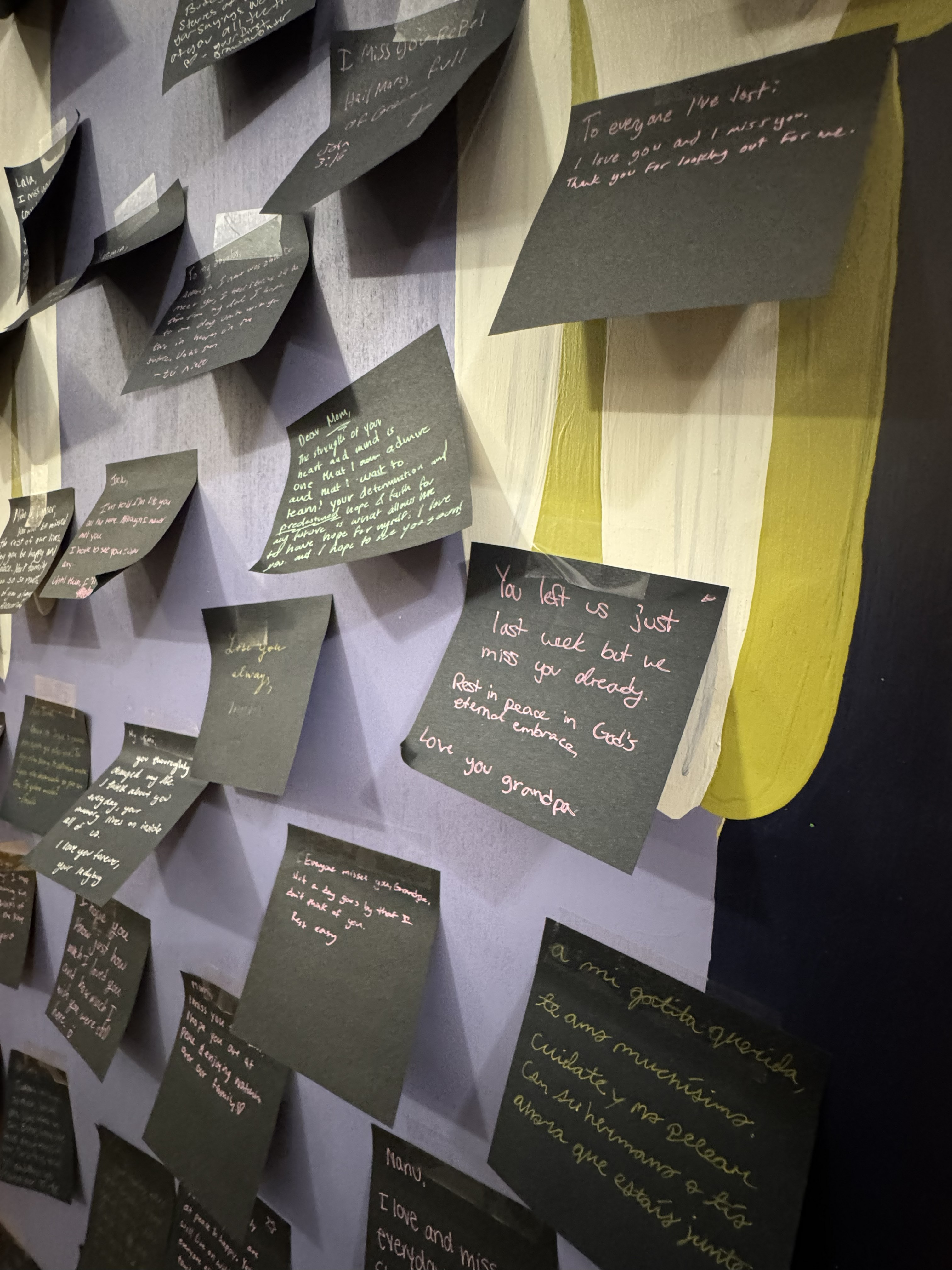
Over the following days, students and faculty continued writing notes on the altar while quietly paying tribute to loved ones.